
7 Best Motorcycle Oils for Kawasaki Ninjas, Z Bikes and Versys (My Tested Picks)
 Jake Miller
10 min read
Jake Miller
10 min read
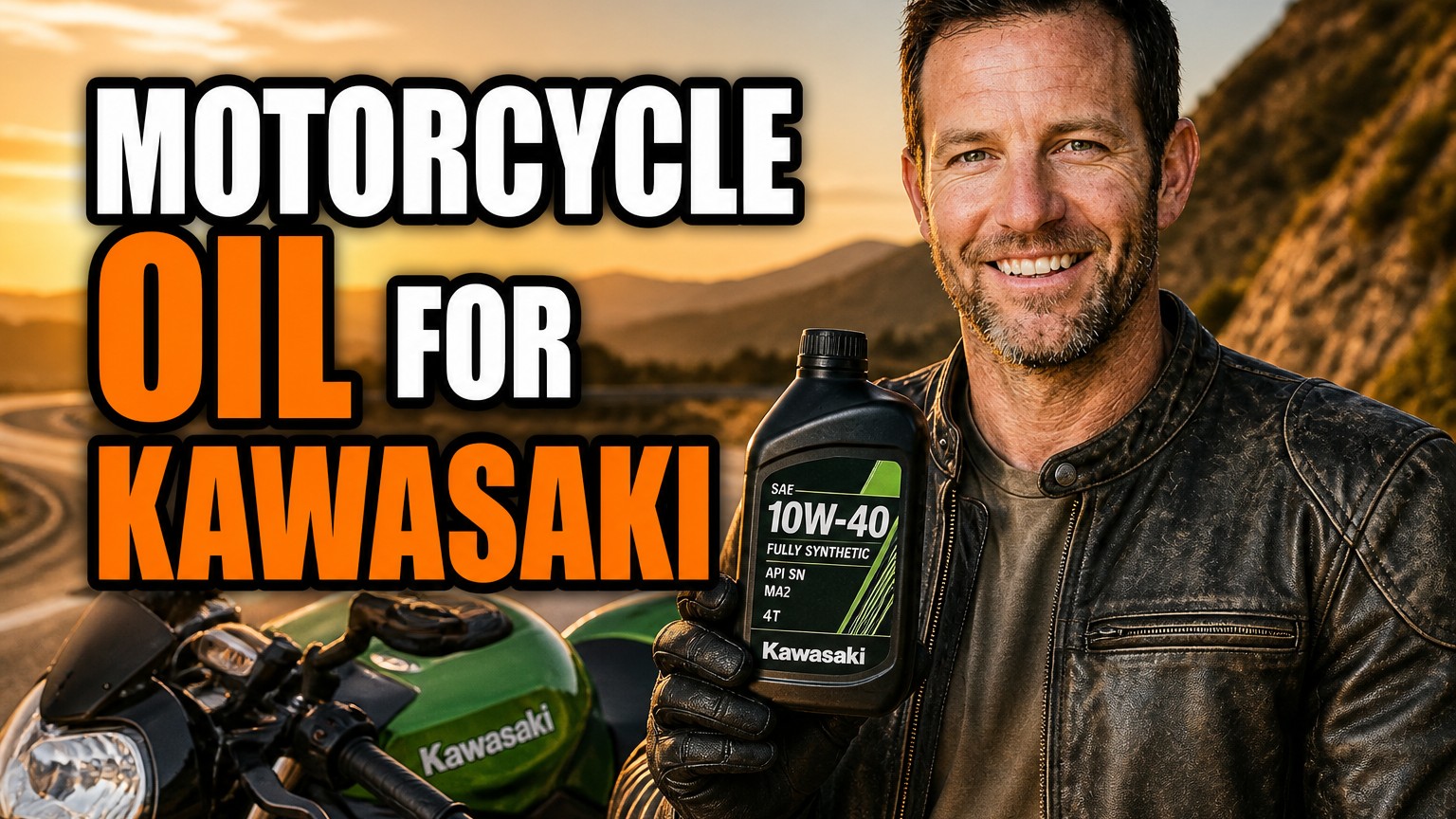
I’ve been wrenching on and riding Kawasakis for years, from a beat-up Ninja 250 to a snarling Z900 and a dusty KLR650. If there’s one maintenance question that lands in my inbox more than any other, it’s about oil. Which one is actually right for a green machine?
The answer depends on your engine, your riding style, and your climate. But after plenty of oil changes, a few cooked clutches I’d rather forget, and more oil-analysis chatter than I care to admit, I’ve landed on seven oils I trust. Here’s what I run, why I run it, and who I think each one suits.
- Most Kawasakis want a 10W-40, JASO MA or MA2 oil, so check your manual first.
- My overall pick for performance bikes is Motul 7100 4T 10W-40, and my budget pick is Castrol Power1 4T.
- Never use car oils labeled Energy Conserving, because they can make a wet clutch slip.
- Change oil and filter every 3,000 to 4,000 miles if you ride hard, even if the manual allows more.
How I Chose These Oils for My Kawasakis
I didn’t pick these oils from a spec sheet alone. I’ve used most of them in my own bikes and talked with fellow riders at track days and bike nights. I judged each one on a few things that matter on a Kawasaki.
The Criteria I Care About
JASO MA or MA2 certification is non-negotiable for me. Kawasaki engines share one oil supply across the engine, transmission, and wet clutch, so friction behavior matters a lot.
Next I look at shear stability. Kawasaki’s high-revving inline fours and parallel twins chew through weak oils quickly, and gearbox gears are especially hard on the oil. Finally, I consider price, because oil changes are frequent and the cost adds up.
1. Motul 7100 4T 10W-40: Best Overall for Performance Kawasakis
If I could only pick one oil for my Ninja ZX-6R, Z900, or Ninja 650, it would be the Motul 7100 4T 10W-40. It’s a 100% synthetic, ester-based oil that meets JASO MA2 and API SN. That combination makes it an excellent fit for the wet clutch and high-revving engine in most sport Kawasakis.
Why I Like It
The Motul 7100 holds its viscosity impressively well under heat. On hot summer rides in traffic, my Z900 felt noticeably smoother, and shifting was crisp with no clutch chatter.
Expect to pay about $13 to $17 per liter. That’s not cheap, but I find the protection worth it for a bike that regularly sees redline.
Who It’s For
I recommend the Motul 7100 for sport and sport-touring riders, track day regulars, and anyone who lives in a hot climate. If you want to read more about picking oil in general, my guide on the best engine oil for motorcycle engines covers the broader landscape.
2. Kawasaki Performance 4-Stroke Engine Oil 10W-40: Best OEM Choice
Sometimes the simplest answer is the right one. Kawasaki sells its own branded 10W-40 four-stroke oil formulated specifically for its engines. I use it on bikes still under warranty because it removes any doubt about spec compliance.
What Stands Out
It’s blended for the shared engine, gearbox, and clutch design that Kawasaki uses, and it meets the JASO MA standard the manuals call for. In my experience, shifting feels exactly like the factory fill, with no surprises.
Pricing usually runs around $10 to $15 per quart at dealers and online retailers. It’s not the most advanced formula on this list, but it’s reliable and easy to find.
Who It’s For
This is my pick for riders with newer bikes under warranty, commuters on a Ninja 400 or Z400, and anyone who just wants peace of mind. I also like that I can grab a bottle with my filter at the dealer.
3. Castrol Power1 4T 10W-40: Best Budget Pick
When I’m doing a quick oil change on my friend’s Ninja 250 or a Versys-X 300, the Castrol Power1 4T 10W-40 is what I reach for. It’s a widely available, affordable synthetic-blend oil that meets JASO MA2.
Real-World Impressions
Castrol’s Power1 uses its “Power Release” technology, which is aimed at quick throttle response. I can’t measure that on a dyno, but I did notice smooth clutch engagement and consistent gear changes through the interval.
It typically costs around $8 to $12 per liter, so it’s very kind to your wallet. If you change oil often, the savings really add up.
Who It’s For
I recommend it for commuters, beginners, and riders who change oil frequently. It’s also a solid choice if you’re comparing the best motor oil for 4 stroke motorcycle options on a tight budget.
4. Shell Advance Ultra 4 10W-40: Best for Daily Riders and Commuters
The Shell Advance Ultra 4 10W-40 is a fully synthetic oil made with Shell’s PurePlus technology, which converts natural gas into a base oil. It carries JASO MA2 and API SL ratings and is easy to find almost anywhere.
Why It Works on a Kawasaki
I ran it for a full season in a Ninja 650 that handled my daily commute. The engine felt quiet and clean, and the oil stayed in good condition through stop-and-go traffic.
Price is usually about $11 to $16 per liter. For a fully synthetic oil with good availability, I think that’s very fair.
Who It’s For
This is a great fit for daily commuters and riders who live in busy cities. It’s also popular in Asia, so riders searching for the best engine oil for 4 stroke motorcycle in india will often see Shell on the shortlist.
5. Mobil 1 Racing 4T 10W-40: Best for Track Days and Hard Riding
When I take a ZX-10R or ZX-6R to the track, I trust the Mobil 1 Racing 4T 10W-40. It’s a fully synthetic oil built for high-performance four-strokes and meets JASO MA2.
What I Noticed
It handles sustained high RPM and heat very well. After a few hard sessions, the oil still looked healthy at the drain plug, and the gearbox stayed smooth with no notchy shifts.
Expect about $13 to $18 per quart. That’s a premium price, but on a race-ready engine the extra protection is worth it to me.
Who It’s For
I’d point this at track day riders, sport riders, and anyone with a high-output engine. It’s overkill for a mellow commuter, but great for aggressive riding.
6. Liqui Moly Motorbike 4T Synth 10W-40 Street Race: Best European Alternative
The Liqui Moly Motorbike 4T Synth 10W-40 Street Race is a fully synthetic oil from a German brand popular with European riders. It’s JASO MA2 certified and designed for modern high-performance engines.
Why I Rate It
I put it into a Versys 650 for a long touring season. The shifting was smooth, oil consumption stayed minimal, and it held up well during loaded highway riding.
Pricing ranges from roughly $14 to $20 per liter, depending on where you buy. It’s a bit harder to find in some regions, but worth hunting for.
Who It’s For
I recommend it for touring riders, Versys and Z1000SX owners, and anyone who prefers European formulations. If you’re weighing brand reputation, my breakdown of the best motorcycle engine oil brand contenders will help.
7. AMSOIL Synthetic 10W-40 Motorcycle Oil: Best for Extended Intervals
The AMSOIL Synthetic 10W-40 Motorcycle Oil is a fully synthetic oil with a strong reputation for durability. It’s JASO MA2 certified and built to resist shear in shared-sump engines.
Real-World Take
I like it for bikes that sit a lot or get ridden long distances between services. It held up well on my KLR650 during a long adventure trip, even in dusty conditions.
It usually costs $14 to $18 per quart. I still follow my own change schedule, but I appreciate the extra margin of protection.
Who It’s For
I’d recommend AMSOIL for adventure riders, high-mileage tourers, and riders who want a long-lasting synthetic. It pairs especially well with KLR, Versys, and Vulcan owners. For more picks from the wider market, see my list of the top engine oil for 4 stroke motorcycle engines.
Understanding Viscosity on Your Kawasaki
Picking the brand is only half the battle. The viscosity grade matters just as much, and I see riders get it wrong often.
Decoding 10W-40
The first number, with the “W,” describes how the oil flows when cold. The second number describes thickness at operating temperature. A 10W-40 is thin enough for easy cold starts and thick enough to protect when hot.
Most Kawasaki owner’s manuals specify 10W-40 for typical conditions. Some allow 10W-30 or 20W-50 for other temperature ranges, so I always check the manual first.
When I Would Change It
In very hot climates, I sometimes lean toward a slightly thicker grade like 10W-50 if the manual allows it. In very cold climates, a 5W-40 can ease cold starts. Never stray far from the manual’s recommended range.
Why JASO MA2 Matters So Much
I’ve seen riders put regular car oil in a Ninja to save a few dollars. It rarely ends well. Car oils often contain friction modifiers that cause a wet clutch to slip.
JASO MA and MA2 ratings guarantee the oil is clutch-friendly. Look for that label on the back of the bottle, and avoid anything marked Energy Conserving. It’s a small detail that saves a lot of headaches.
How Often I Change Oil on My Kawasakis
The factory schedule is a good starting point, but I’m more conservative. For daily riding, I change oil and filter roughly every 3,000 to 4,000 miles, or at least once a year.
If I’m riding hard, doing track days, or making lots of short trips, I shorten that interval. Short trips are tough on oil because moisture and fuel never fully burn off.
Don’t Skip the Filter
I always replace the filter with every oil change. A fresh filter costs a few dollars and protects the oil you just paid for. I also replace the crush washer on the drain plug each time to avoid leaks.
Common Mistakes I See Kawasaki Riders Make
After years of helping friends with their bikes, I notice the same errors repeat. Here are the big ones I’d steer you away from.
- Overfilling the engine. Too much oil can cause foaming and leaks, so check the level on the sight glass with the bike upright.
- Using car oil. It may save money now, but it can wreck clutch feel.
- Ignoring the manual. Capacity and viscosity vary between models.
- Stretching intervals. Cheap oil changed on time beats expensive oil left too long.
My Final Verdict
For most Kawasaki riders, I’d go with the Motul 7100 4T 10W-40 if performance and protection are the priority. It’s the oil I trust most in my high-revving bikes. If you want simple and affordable, the Castrol Power1 4T or the Kawasaki branded oil are both easy, dependable choices.
Whichever you choose, make sure it’s a JASO MA or MA2 oil in the viscosity your manual recommends, and change it on time. Do that, and your Kawasaki will reward you with smooth shifts, strong performance, and many happy miles.
Frequently Asked Questions
What viscosity oil should I use in my Kawasaki?
Most modern Kawasaki street bikes call for 10W-40, but always check your owner’s manual. Some models and climates allow 10W-30 or 20W-50, and the manual is the final word.
Do I need JASO MA or MA2 oil for a Kawasaki?
Yes. Kawasaki engines share oil between the engine, gearbox, and wet clutch, so you need an oil rated JASO MA or MA2. Car oils labeled Energy Conserving can make the clutch slip.
How often should I change the oil in my Kawasaki?
Many Kawasaki models use intervals of roughly 6,000 to 7,500 miles on the schedule, but I change mine every 3,000 to 4,000 miles or once a year. Hard riding, track days, and short trips call for shorter intervals.
Is synthetic oil better than mineral oil for a Kawasaki?
Synthetic oil resists heat and shear better, which helps high-revving engines like the Ninja 400, ZX-6R, and Z900. Semi-synthetic or mineral oil still works fine if it meets the spec and you change it on time.

Related Articles
7 Best Batteries for Motorcycles I’ve Tested and Trust in 2026
I've tested dozens of motorcycle batteries to find the best performers. From AGM to lithium, here are my top picks…
Jake Miller
15 min read

The Perfect Battery for Your Harley Davidson Softail: A Rider’s Complete Guide
Discover the perfect battery for your Harley Davidson Softail. I've tested multiple options and share real-world performance data, maintenance tips,…
Jake Miller
14 min read

The Best Battery for Your Harley Davidson: My Complete Guide After Years of Testing
Discover which battery truly performs best for Harley Davidson motorcycles. Real rider experience with AGM, lithium, and OEM options to…
Jake Miller
12 min read