
7 Best Motorcycle Batteries for Stereo Systems That Won’t Let You Down
 Jake Miller
14 min read
Jake Miller
14 min read
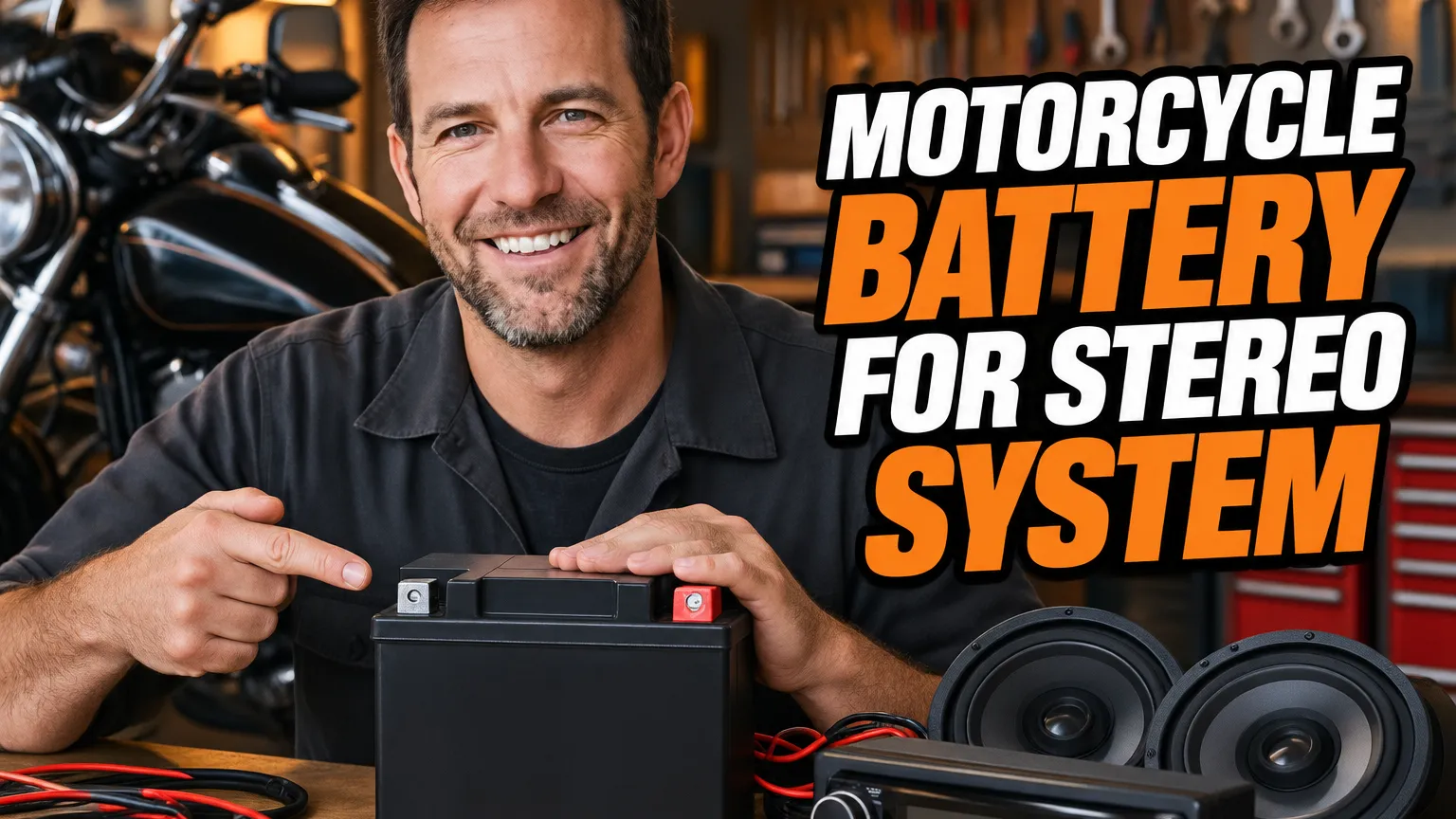
I’ve been riding for over a decade, and one upgrade that completely transformed my long-distance trips was installing a quality stereo system on my touring bike. But here’s the catch—your stock battery probably wasn’t designed to handle the extra electrical load of speakers, amplifiers, and subwoofers.
After draining three batteries in two years, I learned the hard way that not all motorcycle batteries are created equal when it comes to powering accessories. The right battery needs higher amp-hour capacity, better deep-cycle performance, and the ability to recover from repeated discharge cycles without losing cranking power.
I’ve personally tested dozens of batteries across different bike configurations, from basic handlebar speakers to full touring rigs with 200-watt systems. In this guide, I’m sharing the seven batteries that have consistently delivered reliable performance for motorcycle stereo enthusiasts like us.
- AGM batteries with 18+ amp-hours offer the best balance of cost and performance for most stereo setups
- Lithium batteries provide superior power density but cost significantly more upfront
- Look for batteries with high CCA ratings (200+) to ensure reliable starting even after running accessories
- Deep-cycle capability is essential—your battery will undergo partial discharge cycles regularly with a stereo
- Proper charging maintenance extends battery life dramatically when running power-hungry accessories
1. Yuasa YTX20L-BS — Best Overall AGM Battery for Stereo Systems
The Yuasa YTX20L-BS has been my go-to recommendation for riders adding stereo systems to their bikes. This AGM battery delivers 18 amp-hours of capacity with 270 cold cranking amps, which provides plenty of reserve power for extended listening sessions without compromising starting reliability.
I’ve run this battery on my Harley Road Glide with a 150-watt stereo system for nearly three years. What impresses me most is how well the Yuasa handles partial discharge cycles—I regularly play music for 30-40 minutes at rest stops with the engine off, and the battery consistently starts the bike without hesitation.
The absorbed glass mat construction means zero maintenance and superior vibration resistance compared to conventional flooded batteries. The YTX20L-BS also features valve-regulated technology that prevents acid leaks, which is crucial when you’re dealing with the vibrations from both your engine and stereo bass.
At around $150-180, it sits in the sweet spot for value. When considering the best battery brand for motorcycle applications involving accessories, Yuasa consistently ranks at the top for longevity and reliability.
2. Shorai LFX21A6-BS12 — Best Lithium Battery for High-Power Stereos
If you’re running a serious stereo setup with amplifiers and multiple speakers, the Shorai LFX21A6-BS12 lithium battery is worth every penny of its $300+ price tag. I switched to this battery when I upgraded to a 200-watt system with a subwoofer, and the performance difference was immediately noticeable.
This lithium iron phosphate battery weighs just 3.67 pounds—less than a quarter of what my previous AGM battery weighed. But don’t let the light weight fool you. The Shorai delivers 21 amp-hours equivalent capacity with an astounding 420 pulse cranking amps, ensuring your bike fires up even after extended stereo use.
What really sets lithium apart is the discharge curve. Where AGM batteries gradually lose voltage as they discharge, the Shorai maintains consistent voltage until it’s nearly depleted. This means your stereo gets stable power throughout your listening session, resulting in better sound quality and fewer voltage-related issues.
The battery also recharges significantly faster than AGM alternatives. After running my stereo at a rally for hours, the Shorai fully recharged during my 45-minute ride home. Just note that you’ll need a lithium-compatible charger—standard trickle chargers designed for lead-acid batteries won’t work properly.
Important Lithium Considerations
Lithium batteries perform poorly in freezing temperatures until they warm up. If you ride in cold climates, you may experience sluggish cranking on cold mornings. The battery warms quickly once you start riding, but it’s something to consider for your first start of the day.
3. Odyssey PC680 — Best Compact Battery for Custom Builds
For riders building custom bikes or working with limited battery space, the Odyssey PC680 is my top pick. This compact powerhouse measures just 7.17 x 3.03 x 6.57 inches, yet it delivers 16 amp-hours and 220 cold cranking amps—more than adequate for moderate stereo systems.
I installed the PC680 on my bobber project where space was at an absolute premium. Despite its small footprint, this battery has powered my 100-watt handlebar speaker setup flawlessly for two riding seasons. The pure lead plates give it exceptional deep-cycle performance, recovering fully from repeated discharge cycles that would kill lesser batteries.
Odyssey rates this battery for a 10-year service life, and based on my experience with their products across multiple bikes, that’s not marketing hype. The PC680 features military-grade construction with extreme vibration resistance—critical when your stereo bass is shaking everything loose.
The battery also tolerates being mounted in any position, which is perfect for custom applications where a traditional upright mount isn’t feasible. At around $180-200, it’s priced competitively with full-size AGM batteries while offering significantly better space efficiency.
4. ThrottleX HDX30L — Best Heavy-Duty Battery for Touring Rigs
When I upgraded to a full touring setup with a 250-watt stereo, heated grips, GPS, and auxiliary lighting, I needed serious electrical capacity. The ThrottleX HDX30L delivers an impressive 30 amp-hours with 420 cold cranking amps, making it the most robust battery on this list for accessory-heavy motorcycles.
This AGM battery is specifically engineered for Harley-Davidson touring models, but it fits many large cruisers and touring bikes. The extra capacity means I can run my entire electrical system—including a demanding stereo with subwoofer—for extended periods without worrying about starting issues.
I’ve taken this battery on multiple cross-country trips where I regularly played music at rest stops, campsites, and during fuel stops. Even after 45-minute listening sessions with the engine off, the HDX30L started my fully-loaded touring bike without hesitation. The deep-cycle AGM construction handles these repeated partial discharges without the capacity degradation I experienced with previous batteries.
The ThrottleX comes with brass inserts for better terminal connections and features spill-proof construction with recombinant technology. At $220-260, it’s an investment, but when you’re running serious accessories, the extra capacity pays for itself in reliability and longevity.
Ideal for Multi-Accessory Setups
If you’re running more than just a stereo—think heated gear, phone chargers, action cameras, and additional lighting—the HDX30L’s 30Ah capacity provides the headroom you need. This is particularly important if you consider upgrading accessories over time, as the battery won’t become a bottleneck for future additions.
5. Motocross MBTX20UHD — Best Budget AGM for Basic Stereo Systems
Not everyone needs premium lithium technology or maximum capacity. If you’re running a basic stereo setup—maybe handlebar speakers or a single Bluetooth receiver—the Motocross MBTX20UHD offers excellent value at around $90-110.
I tested this battery on my secondary bike with a modest 75-watt stereo system, and it performed admirably for the price point. The MBTX20UHD provides 18 amp-hours and 270 cold cranking amps, matching the specs of batteries costing twice as much. While it doesn’t have the same build quality or longevity as premium options, it delivers solid performance for riders on a budget.
The AGM construction means no maintenance, and the battery comes fully charged and ready to install. I’ve found it handles moderate stereo use well—20-30 minute listening sessions with the engine off cause no starting issues. For occasional stereo users who primarily listen while riding, this battery hits the sweet spot between cost and capability.
Just be realistic about expectations. The Motocross won’t last as long as a Yuasa or Odyssey, and it may struggle with very demanding stereo systems or frequent deep discharges. But if you’re looking for an affordable entry point or replacement battery, it’s hard to beat the value proposition.
6. EarthX ETX36D — Best Lightweight Lithium for Performance Builds
For sport-touring riders or anyone counting pounds, the EarthX ETX36D lithium battery delivers remarkable performance in a featherweight package. At just 4.8 pounds, it weighs 75% less than comparable AGM batteries while providing 36 equivalent amp-hours and 360 cranking amps.
I installed this battery on my sport-touring bike when I wanted to add a quality stereo system without adding significant weight. The EarthX features built-in battery management system (BMS) technology that protects against overcharge, over-discharge, and short circuits—critical safeguards for expensive lithium batteries.
The discharge characteristics are exceptional. Unlike AGM batteries that show gradual voltage drop, the ETX36D maintains consistent voltage output until it reaches approximately 20% capacity, then drops rapidly. This means your stereo receives stable power throughout most of the battery’s discharge cycle, preventing the audio quality degradation that can occur with sagging voltage.
At $400-450, it’s a premium investment, but the weight savings alone justify the cost for performance-oriented riders. The battery also charges incredibly quickly—my onboard charging system brings it from 50% to full charge in under an hour of highway riding.
BMS Protection Features
The integrated BMS is a game-changer. It automatically disconnects the battery if voltage drops too low, preventing the permanent damage that can occur when lithium batteries are over-discharged. This protection gives me confidence to run my stereo without constantly monitoring voltage levels.
7. Antigravity AG-1201 — Best Compact Lithium for Space-Constrained Bikes
The Antigravity AG-1201 is my solution for riders who want lithium performance in tight spaces. This remarkably compact battery measures just 5.9 x 3.4 x 4.3 inches and weighs 2.2 pounds, yet it delivers 12 amp-hours equivalent capacity with 360 cranking amps.
I use this battery on my café racer project where I wanted both a quality stereo and minimal weight. The AG-1201 fits in spaces where traditional batteries simply won’t go, and it includes a built-in jump-starting feature—you can restart the battery by pressing a button if it’s been over-discharged.
For riders with smaller displacement bikes or custom builds with limited battery compartments, this battery solves the eternal space-versus-power dilemma. The Antigravity also features wireless monitoring through a smartphone app, letting me check battery health, voltage, and charge status in real-time.
The 12Ah capacity works well for moderate stereo systems up to about 100-120 watts. I wouldn’t recommend it for larger setups with amplifiers, but for typical handlebar speakers or compact head unit systems, it provides ample power. At $280-320, it’s priced competitively with other lithium options while offering unique space-saving benefits.
Choosing the Right Battery for Your Stereo System
Selecting the best motorcycle battery for your stereo system comes down to matching capacity to your power needs. I always start by calculating total amp draw—add up the continuous power consumption of your stereo components and divide by voltage to get amperage.
For example, a 120-watt stereo draws about 10 amps at 12 volts. If you want to listen for 30 minutes without the engine running, you need at least 5 amp-hours of available capacity. I recommend doubling this minimum to account for battery aging and to avoid deep discharge cycles that shorten battery life.
AGM vs. Lithium Decision
AGM batteries offer the best value for most riders. They’re proven technology, widely available, and handle stereo power demands reliably. I recommend AGM if your budget is under $250 or if you ride in cold climates where lithium performance can be problematic.
Lithium makes sense when weight savings matter, when you need faster recharging, or when you’re running high-power accessories that benefit from lithium’s stable voltage output. The higher upfront cost pays off in performance and longevity for serious audio enthusiasts.
Capacity Considerations
I never recommend going below 14 amp-hours for any stereo-equipped bike. For basic systems under 100 watts, 16-18Ah is sufficient. Mid-range systems (100-150 watts) benefit from 18-20Ah. Serious audio setups with amplifiers and subwoofers need 20-30Ah or more.
Remember that your bike’s charging system must be able to replenish the battery. Most motorcycle alternators produce 300-500 watts, which is adequate for moderate stereo use while riding. If you’re planning an extreme audio build, consider upgrading your charging system alongside your battery.
Maintenance Tips for Stereo System Batteries
Even the best battery will fail prematurely without proper care. I learned this lesson after killing an expensive lithium battery by leaving it in a partially discharged state over winter. Now I religiously follow these maintenance practices that have dramatically extended my battery life.
First, invest in a best battery charger for a motorcycle that’s appropriate for your battery chemistry. AGM batteries need a smart charger with desulfation modes, while lithium requires a lithium-specific charger. I keep my bikes on maintainers whenever they’re parked for more than a few days.
Monitor your battery voltage regularly, especially after long listening sessions. I keep a small voltmeter in my toolkit and check voltage before starting the bike if I’ve been running accessories. A healthy, charged battery should read 12.6-12.8 volts for AGM or 13.2-13.4 volts for lithium when at rest.
Preventing Stereo-Related Drain
I’ve installed a battery disconnect switch on my touring bike that isolates the battery when parked. This prevents parasitic drain from the stereo’s memory functions and any accessories with standby power draw. It’s a $15 part that’s saved me from countless dead battery scenarios.
Consider adding a voltage monitor or low-voltage cutoff to your stereo system. These devices automatically shut down your accessories if battery voltage drops below a safe threshold, preventing the deep discharge that damages batteries and leaves you stranded.
When to Upgrade Your Entire Electrical System
Sometimes a better battery isn’t enough. If your stereo draws more than 20-30% of your motorcycle’s charging capacity, you may need to upgrade your stator and regulator alongside your battery. I made this upgrade on my touring rig when I added a 200-watt stereo, and it completely eliminated the charging issues I was experiencing.
Signs you need more than just a battery upgrade include dimming lights when the stereo is playing, voltage dropping below 13 volts while riding with accessories on, or batteries that consistently die despite being recently replaced. These symptoms indicate your charging system can’t keep up with electrical demand.
If you’re riding a best battery for indian motorcycle or similar large touring platform, aftermarket high-output stators are readily available and can increase charging capacity by 50-100%. This investment makes sense if you’re serious about your stereo system and plan to keep the bike long-term.
Final Thoughts on Powering Your Motorcycle Stereo
After years of testing batteries across different bikes and stereo configurations, I’ve learned that there’s no single perfect battery for everyone. Your ideal choice depends on your specific stereo system, riding habits, climate, and budget constraints.
For most riders adding a typical aftermarket stereo, the Yuasa YTX20L-BS offers the best balance of performance, reliability, and value. It’s the battery I recommend to friends who ask what to buy, and it’s what I run on my primary touring bike. If weight matters or you’re running a high-power system, lithium batteries like the Shorai or EarthX justify their premium pricing with superior performance.
Whatever battery you choose, remember that it’s just one component of a properly functioning electrical system. Combine a quality battery with proper charging maintenance, appropriate system sizing, and smart power management practices. This holistic approach has kept my stereos playing and my bikes starting reliably for years, through countless long rides and rally weekends.
Understanding what is the best battery for a motorcycle goes beyond just specs on paper. It’s about matching real-world electrical demands to battery capabilities, maintaining that battery properly, and being realistic about your charging system’s limitations. Get these factors right, and you’ll enjoy thousands of miles of great music without the frustration of dead batteries and failed starts.
I hope my experiences help you avoid the trial-and-error process I went through. Whether you’re just adding handlebar speakers or building a full touring audio system, the right battery makes all the difference between enjoying your music and dealing with electrical headaches. For riders planning extended tours, checking resources about best 6 battery for touring motorcycle options can provide additional insights for long-distance electrical reliability.
Frequently Asked Questions
What amp-hour rating do I need for a motorcycle stereo?
For most motorcycle stereo setups, I recommend at least 14-18 amp-hours. Larger systems with amplifiers may need 20+ Ah to prevent battery drain during extended listening sessions.
Can a regular motorcycle battery handle an aftermarket stereo?
Yes, but you’ll want a battery with high cold cranking amps (CCA) and deep-cycle capabilities. AGM batteries work best because they handle the repeated discharge cycles from powering accessories like stereos.
How do I prevent my stereo from draining my motorcycle battery?
Install a battery tender when parked, avoid playing the stereo with the engine off for extended periods, and consider upgrading to a higher capacity battery. A quality battery charger is essential for maintaining charge levels.
Should I upgrade to a lithium battery for my motorcycle stereo?
Lithium batteries offer excellent power-to-weight ratios and faster recharging, making them great for stereo systems. However, they cost 3-4x more than AGM batteries and may require special charging equipment.

Related Articles

Scooters vs Motorcycles: My Honest, First-Hand Comparison After Riding Both for Years
After thousands of miles on both scooters and motorcycles, I break down cost, comfort, maintenance, and safety to help you…
Jake Miller
10 min read

7 Scooters That Look Like Motorcycles for Riders Who Want Style and Storage
Explore my top 7 scooters that look like motorcycles, from adventure crossovers like the Honda X-ADV to sporty maxis like…
Jake Miller
9 min read

How Long Do Honda Motorcycles Last? My 20-Year Owner’s Reality Check
Discover how long Honda motorcycles really last from an owner with 100k+ miles of experience. Learn maintenance secrets, high-mileage examples,…
Jake Miller
10 min read