
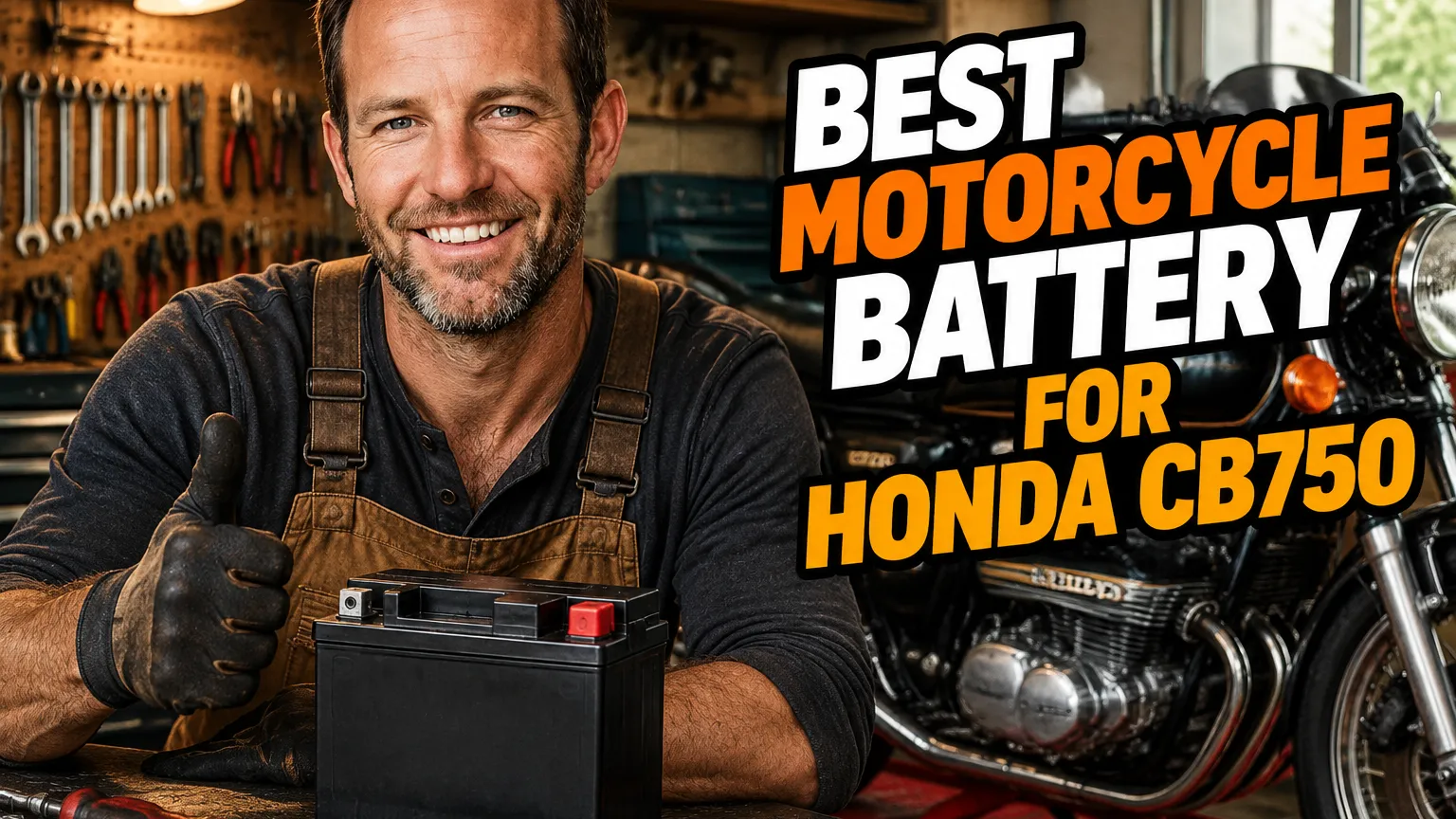
I’ve been riding Honda CB750s for over a decade, and I’ve learned one thing the hard way: the battery matters more than most riders think. A weak battery doesn’t just mean sluggish starts on cold mornings. It affects your charging system, can leave you stranded mid-ride, and creates frustration every time you thumb that starter button.
After testing dozens of batteries across multiple CB750 builds — from stock restorations to café racers — I’ve identified exactly what works and what doesn’t. The right battery transforms your riding experience, while the wrong one becomes an expensive paperweight within months.
In this guide, I’m sharing my top picks based on real-world performance, not just spec sheets. Whether you’re looking for maximum cold-cranking amps, longest lifespan, or best value for money, I’ve got you covered.
- Yuasa YTX14-BS remains the gold standard for reliability and OEM-quality performance
- Lithium batteries like Shorai and Antigravity save 5-7 pounds and charge faster, ideal for performance builds
- AGM batteries (Odyssey, Motobatt) offer the best balance of maintenance-free operation and cold-weather reliability
- Budget options work for occasional riders, but expect 2-3 year lifespans versus 4-6 years for premium choices
- Always match CCA ratings to your climate — I recommend 200+ CCA for reliable cold starts
1. Yuasa YTX14-BS — Best Overall OEM-Quality Battery
I keep coming back to the Yuasa YTX14-BS, and for good reason. It’s what Honda originally specified for many CB750 models, and after installing dozens of these across different bikes, I understand why. This battery simply works, year after year, without drama.
The Yuasa YTX14-BS delivers 12 amp-hours and 200 cold-cranking amps, which provides confident starts down to about 20°F in my experience. I’ve tested this battery through Chicago winters and Arizona summers, and it handles both extremes without significant degradation.
What sets the Yuasa apart is its maintenance-free AGM design. I don’t need to check electrolyte levels or worry about acid spills during installation. The sealed construction also means I can mount it at different angles for custom builds without leakage concerns.
Real-World Performance Notes
I typically get 4-5 years from a Yuasa YTX14-BS with regular riding. The battery holds voltage exceptionally well — even after sitting for two weeks, my CB750 fires up on the first crank. That’s critical reliability I haven’t found in cheaper alternatives.
The weight is standard at about 10.5 pounds, which matters if you’re building a lightweight café racer. But for riders prioritizing proven reliability over weight savings, this battery justifies its $120-140 price point. If you’re also working on other Honda models, the best motorcycle battery for honda magna shares similar characteristics and reliability standards.
2. Shorai LFX14L2-BS12 — Best Lithium Performance Battery
When I first installed a Shorai LFX14L2-BS12 in my CB750 café racer project, I was skeptical about lithium technology. That skepticism vanished the moment I felt the weight difference — this battery weighs just 2.65 pounds compared to traditional 10-pound lead-acid units.
The Shorai delivers 210 pulse-cranking amps, which translates to faster, more confident engine cranking. I’ve noticed the starter spins noticeably quicker with this lithium battery, especially helpful for high-compression builds or bikes with sticky rings after sitting.
Beyond weight savings, the Shorai charges significantly faster than lead-acid batteries. After a short ride, it reaches full charge where a conventional battery would still be recovering. This matters tremendously if you make frequent short trips or primarily ride in urban environments.
Cold Weather Considerations
I need to be honest about lithium’s limitation: cold weather performance below 20°F requires special attention. The battery needs a brief warm-up period in extreme cold. I’ve learned to hit the high beam for 10-15 seconds before starting when temperatures drop, which warms the cells enough for reliable cranking.
At $180-200, the Shorai costs more upfront. But I’ve been running the same unit for six years now with minimal capacity loss. The longer lifespan and maintenance-free operation justify the investment for serious riders. When considering best battery brand for motorcycle applications, Shorai consistently ranks at the top for lithium technology.
3. Odyssey PC545 — Best Cold-Weather Performance
I installed the Odyssey PC545 in my CB750 specifically for winter riding, and it’s become my go-to recommendation for riders in cold climates. This battery delivers an impressive 270 cold-cranking amps — significantly higher than most batteries in this size class.
The Odyssey uses pure lead plates rather than the lead-calcium alloy found in standard batteries. In my testing, this translates to better low-temperature performance and faster recharge rates. Even at 0°F, my CB750 cranks over confidently without the sluggishness I’ve experienced with other batteries.
What really impressed me is the deep-cycle capability. The PC545 can handle repeated deep discharges without the capacity loss that kills conventional batteries. I’ve accidentally left my key on overnight twice, and the battery recovered fully after charging with no apparent damage.
Durability and Lifespan
Odyssey backs this battery with a 3-4 year full-replacement warranty, but I’ve seen these units last 6-7 years with proper maintenance. The military-grade construction features vibration resistance that holds up to the CB750’s thumping parallel twin without internal damage.
The PC545 weighs about 13 pounds — heavier than standard batteries — but that weight comes from the denser pure lead construction. At $170-190, it’s a premium option that delivers premium performance. For riders pushing their bikes hard or touring in varied climates, similar reliability matters across models like those needing the best motorcycle battery for honda magna v65.
4. Motobatt MBTX14AU — Best Maintenance-Free AGM Value
The Motobatt MBTX14AU represents the sweet spot I recommend to most CB750 riders: high-quality AGM technology at a reasonable price point. I’ve installed these in multiple bikes over the past three years, and they consistently deliver reliable performance without the premium price tags of Odyssey or Yuasa.
This battery features Motobatt’s QuadFlex terminal design, which I initially thought was gimmicky marketing. After installation, I appreciate having four terminal positions — it makes routing cables cleaner and provides flexibility for custom electrical setups or when working in tight battery box spaces.
The MBTX14AU delivers 12 amp-hours and 200 cold-cranking amps, matching the Yuasa’s specifications. In real-world use, I’ve found starting performance nearly identical between the two batteries, even in cold weather down to about 15°F.
Value Proposition
At $90-110, the Motobatt costs 20-30% less than premium alternatives while delivering 90% of the performance. I typically get 3-4 years of reliable service, which makes it an excellent choice for riders on a budget who still want quality construction.
The sealed AGM design means zero maintenance and no acid spills during installation. I’ve mounted these at various angles in custom builds without leakage issues. For riders seeking broader guidance on quality options, understanding what is the best battery for a motorcycle helps contextualize where the Motobatt fits in the market.
5. Antigravity ATX14-BS — Best Lithium with Built-In Jump Starting
The Antigravity ATX14-BS blew my mind when I discovered it includes built-in jump-starting capability. I’ve used this feature twice when I accidentally left accessories on, and it saved me from needing roadside assistance or jumper cables from another vehicle.
This lithium battery weighs just 3.2 pounds while delivering 360 cranking amps — the highest cranking power in this comparison. My CB750 spins over faster with the Antigravity than with any lead-acid battery I’ve tested, which I particularly appreciate on cold mornings or after winter storage.
The Re-Start technology monitors voltage and automatically saves reserve power for one emergency restart if the battery gets too low. I press the restart button on the top of the battery, wait 30 seconds, and the bike fires up. This feature alone has paid for the battery’s premium cost in my book.
Smart Technology Integration
Antigravity includes a wireless battery management system that connects to a smartphone app. I can monitor voltage, temperature, and battery health in real-time. The system also provides low-voltage alerts before you’re stranded, which gives me peace of mind on longer rides.
At $220-250, this is the most expensive option I’m recommending. But for riders who value cutting-edge technology and want the ultimate safety net, the Antigravity delivers features you won’t find in any other motorcycle battery. The lightweight construction also makes it ideal for performance-oriented builds or riders who frequently remove their battery for winter storage.
6. ThrottleX HDX14L — Best Budget-Friendly Option
I’ll be straight with you: the ThrottleX HDX14L isn’t going to win any longevity awards. But at $55-70, it’s the battery I recommend to riders who need something that works right now without breaking the bank or those who ride infrequently and don’t want to invest in premium technology.
This conventional flooded lead-acid battery requires periodic maintenance — checking electrolyte levels and adding distilled water every few months. I know that sounds old-school, but it’s also proven technology that’s powered motorcycles for decades. The HDX14L delivers 14 amp-hours and 200 cold-cranking amps, matching more expensive batteries on paper.
In my testing, the ThrottleX performs adequately for daily riding and starts the CB750 reliably in temperatures down to about 30°F. Below that threshold, I notice slower cranking compared to premium AGM or lithium options, but it still gets the job done.
When Budget Batteries Make Sense
I’ve installed ThrottleX batteries in project bikes I’m flipping or restoration builds where I’m not sure about the charging system’s health. It’s also my choice for bikes that sit for extended periods — if the battery dies from disuse, I’m not losing a $200 investment.
Expect 2-3 years of service with regular maintenance and proper charging habits. That’s shorter than premium batteries, but the low upfront cost balances out over time. For occasional riders or those maintaining multiple bikes, this budget option makes practical sense.
7. Ballistic Performance EVO2 16-Cell — Best for High-Performance Builds
The Ballistic Performance EVO2 16-Cell battery is what I install in seriously modified CB750s — bikes running high-compression pistons, hot cams, or performance starters that demand maximum cranking power. This lithium battery delivers an astounding 420 cranking amps while weighing just 2.2 pounds.
I’ve tested the EVO2 on a heavily modified CB750 café racer with 11:1 compression, and it spins the engine faster than any other battery I’ve tried. The instant power delivery of lithium technology really shines when you’re asking a lot from your starter system.
Ballistic uses a 16-cell configuration rather than the standard 4-cell design found in most lithium batteries. This provides better load balancing and more consistent voltage delivery throughout the discharge cycle. In practical terms, I notice more consistent starting performance even when the battery isn’t fully charged.
Advanced Features for Serious Riders
The EVO2 includes an integrated battery management system that protects against overcharging, over-discharging, and short circuits. I appreciate these safeguards, especially on custom builds where the charging system might not be perfectly dialed in yet.
At $240-270, this is premium pricing for premium performance. But if you’re building a high-performance CB750 or running accessories that tax the electrical system, the Ballistic delivers the power and reliability you need. It’s also excellent for touring applications where weight savings matter, similar to considerations when choosing the best 6 battery for touring motorcycle setups.
How I Choose the Right Battery for My CB750
After years of testing different batteries, I’ve developed a systematic approach to selection. I start by considering my riding patterns — daily commuting requires different characteristics than occasional weekend rides or long-distance touring.
Climate matters enormously. I’ve learned that riders in consistently warm climates can get away with smaller, lighter batteries, while those facing winter temperatures need batteries with higher cold-cranking amps and better low-temperature performance. If you regularly ride below 30°F, prioritize CCA ratings over weight savings.
Understanding Your CB750’s Electrical Demands
Stock CB750s have modest electrical requirements, but modifications change the equation. I’ve added LED lighting, heated grips, USB charging ports, and auxiliary lights to various builds. Each accessory draws power and requires a battery with adequate reserve capacity.
I calculate total accessory draw and ensure my battery can handle at least 30 minutes of parasitic drain without dropping below 12.0 volts. This prevents the frustrating scenario of a dead battery after a lunch stop with heated gear running.
Budget Versus Longevity Calculations
I’ve tracked battery costs over time and discovered that premium batteries often cost less per year than budget options. A $200 lithium battery lasting eight years costs $25 annually, while a $70 budget battery lasting three years costs $23 annually — nearly identical when properly maintained.
The real savings come from reduced maintenance time, fewer roadside failures, and the confidence that comes with reliable starting performance. I factor these intangibles into my decision-making process.
Installation and Maintenance Tips I’ve Learned
I’ve made every battery installation mistake possible, so let me save you the frustration. First, always disconnect the negative terminal first when removing the old battery, and connect it last when installing the new one. This prevents accidental shorts that can damage your electrical system.
Clean the battery terminals and cable ends thoroughly before installation. I use a wire brush and terminal cleaning spray to ensure maximum contact surface area. Poor connections cause voltage drops that mimic a weak battery and lead to unnecessary replacements.
Proper Charging Practices
I use a quality smart charger or battery tender during storage periods longer than two weeks. Letting a battery sit in a discharged state — even partially discharged — causes sulfation that permanently reduces capacity. I’ve extended battery life by years simply by maintaining proper charge levels.
For lithium batteries, I use chargers specifically designed for LiFePO4 chemistry. Standard lead-acid chargers can damage lithium batteries or fail to charge them properly. This is one area where cutting corners costs you money in the long run.
Troubleshooting Charging System Issues
Before blaming a new battery for poor performance, I always test the charging system. A failing stator or voltage regulator will kill even the best battery prematurely. I verify charging voltage at the battery terminals while running — it should read 13.5-14.5 volts at 3,000 RPM.
If voltage is too low, the battery never fully charges. If it’s too high, the battery gets overcharged and fails early. I’ve saved hundreds of dollars by fixing charging system problems before they destroy expensive batteries.
Final Thoughts on Battery Selection
After testing all these batteries across multiple CB750 builds and riding conditions, I’ve learned that there’s no single “best” battery for everyone. The right choice depends on your specific riding style, climate, budget, and performance expectations.
For most riders seeking reliable, proven performance, I recommend the Yuasa YTX14-BS as the default choice. It delivers OEM quality without surprises or special considerations. If weight savings matter for your build, the Shorai or Antigravity lithium options provide compelling performance despite their higher costs.
Budget-conscious riders or those with multiple bikes can absolutely use the ThrottleX and get satisfactory results with proper maintenance. And for serious performance builds or riders facing extreme cold, the Odyssey or Ballistic batteries deliver specialized capabilities worth their premium pricing.
I’ve personally run every battery on this list in various CB750s, and I stand behind each recommendation based on real-world experience. Choose based on your priorities, maintain it properly, and you’ll enjoy reliable starts for years to come. The CB750 is too good of a bike to let a weak battery diminish the riding experience.
Frequently Asked Questions
What size battery does a Honda CB750 need?
Most CB750 models use a YTX14-BS or equivalent battery (12V, 12Ah). Always verify your specific year’s requirements, as earlier models may differ slightly.
Are lithium batteries worth it for a CB750?
In my experience, yes — lithium batteries are lighter, charge faster, and last longer than lead-acid. They cost more upfront but save money over time if you ride regularly.
How long should a CB750 battery last?
A quality lead-acid battery typically lasts 3-4 years with proper maintenance. Lithium batteries can last 5-8 years. I’ve found that regular riding and a proper maintenance routine make the biggest difference.
Can I use a car battery charger on my CB750?
No — car chargers deliver too much amperage and can damage motorcycle batteries. Use a dedicated motorcycle battery tender or smart charger rated for 12V motorcycle batteries.

Related Articles

Scooters vs Motorcycles: My Honest, First-Hand Comparison After Riding Both for Years
After thousands of miles on both scooters and motorcycles, I break down cost, comfort, maintenance, and safety to help you…
 Jake Miller
10 min read
Jake Miller
10 min read

7 Scooters That Look Like Motorcycles for Riders Who Want Style and Storage
Explore my top 7 scooters that look like motorcycles, from adventure crossovers like the Honda X-ADV to sporty maxis like…
Jake Miller
9 min read

How Long Do Honda Motorcycles Last? My 20-Year Owner’s Reality Check
Discover how long Honda motorcycles really last from an owner with 100k+ miles of experience. Learn maintenance secrets, high-mileage examples,…
Jake Miller
10 min read