
Why Your Motorcycle Battery Drains While Parked (And How I Fixed Mine for Good)
 Jake Miller
12 min read
Jake Miller
12 min read
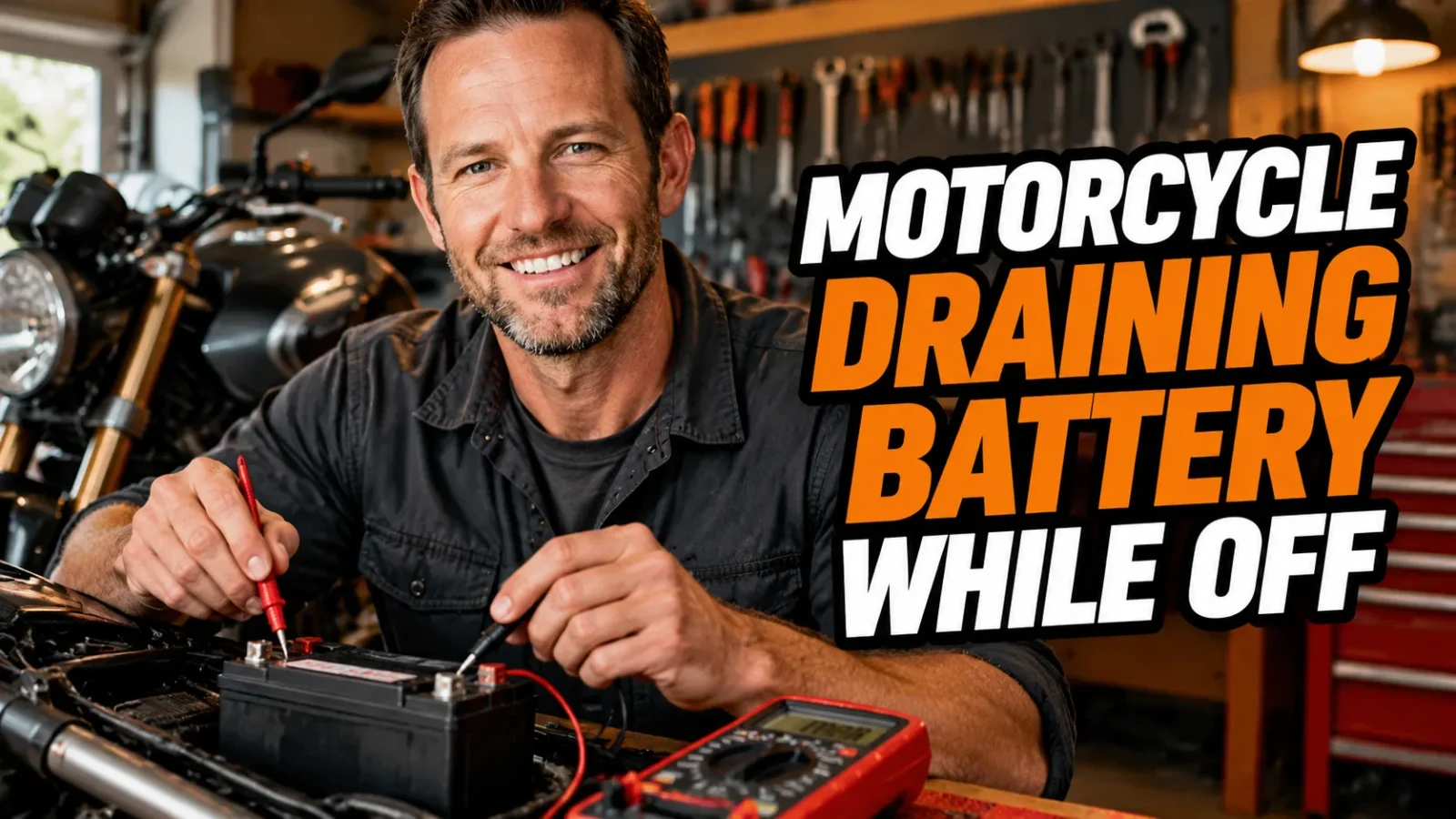
I’ll never forget the frustration of walking into my garage on a beautiful Saturday morning, ready for a ride, only to hit the starter button and hear that dreaded clicking sound. My motorcycle battery was completely dead—again. This wasn’t a one-time thing either. For months, I dealt with a battery that seemed to drain itself whenever my bike sat for more than a few days.
After extensive testing, research, and more than a few dead batteries, I finally figured out what was killing my battery and how to stop it. In this article, I’m sharing everything I learned about parasitic drain, the hidden culprits that drain motorcycle batteries, and the permanent solutions that worked for me.
- Most battery drain issues stem from parasitic draw—accessories or faulty electrical components pulling power when the bike is off
- A healthy battery should hold charge for 2-4 weeks; anything less signals a problem worth investigating
- Testing with a multimeter (looking for less than 50mA draw) helps identify the exact source of drain
- Common culprits include alarm systems, voltage regulators, corroded connections, and failing stators
- Long-term solutions include using a battery tender, disconnecting the battery during storage, and upgrading to quality components
Understanding Parasitic Draw: The Silent Battery Killer
When I first started investigating my battery drain problem, I kept hearing the term “parasitic draw.” Essentially, it’s any electrical current that continues flowing from your battery when everything should be off. Think of it like a slow leak in a tire—you might not notice it immediately, but eventually, you’ll be flat.
Modern motorcycles have more electrical components than ever before. My bike has an ECU, fuel injection system, clock, and alarm system—all of which can potentially draw power even when the ignition is off. The key word is potentially, because not all of these should be drawing significant current.
A normal parasitic draw for most motorcycles is between 20-50 milliamps (mA). Anything above 50mA will noticeably drain your battery over a few days. Above 100mA? Your battery will be dead within a week, guaranteed.
How I Measured My Parasitic Draw
The first step in solving my problem was actually measuring the drain. I picked up a basic digital multimeter for about $20 and learned how to test for parasitic draw. It’s easier than you’d think.
I disconnected the negative battery terminal, set my multimeter to measure DC amps (starting with the 10A setting for safety), and connected the meter between the negative cable and the negative battery post. With everything off and the key out of the ignition, my bike was pulling 180mA. That’s way too high.
This single test confirmed what I suspected: I had a real parasitic drain problem, not just a weak battery.
The Most Common Culprits I’ve Encountered
Over the years—both with my own bikes and helping friends troubleshoot theirs—I’ve found that battery drain issues usually come from a handful of common sources. Let me walk you through each one based on what I’ve actually seen in real garages.
Aftermarket Accessories and Electronics
This was my problem. I’d installed a combination alarm and GPS tracker the previous year, and while the installer assured me it had “negligible draw,” that little device was pulling nearly 120mA constantly. That’s enough to drain even a brand-new battery in less than a week.
USB charging ports are another frequent offender. Many aftermarket USB adapters continue drawing power even when nothing’s plugged in. I’ve measured some that pull 30-40mA just sitting there doing nothing.
If you’ve added any electrical accessories—heated grips, phone mounts with integrated charging, auxiliary lights, or communication systems—start your investigation there. Pull the fuse for each accessory one at a time while monitoring your multimeter to see which one causes the draw to drop.
Faulty Voltage Regulator or Rectifier
A failing voltage regulator can drain your battery in a particularly frustrating way. These components are supposed to manage the charging system, but when they fail, they can actually pull power from the battery instead of sending it.
I’ve seen voltage regulators with internal shorts that create a direct path for current to drain away. The tricky part is that they might work fine while the engine is running but become battery vampires when the bike is off.
Testing a regulator/rectifier properly requires checking the diodes with a multimeter, but honestly, given how critical these components are, I usually just replace them if they’re more than 5-6 years old and I’m experiencing drain issues.
Corroded or Loose Battery Connections
Before you start replacing expensive components, check your battery terminals. I once spent three days troubleshooting an electrical gremlin only to discover that a corroded positive terminal was creating enough resistance to prevent proper charging while simultaneously allowing a slow drain path.
Remove both battery cables and inspect them closely. Look for white, blue, or green crusty buildup—that’s corrosion, and it’s wreaking havoc on your electrical system. Clean everything thoroughly with a wire brush and baking soda solution.
While you’re at it, check where the negative cable grounds to the frame. A poor ground connection can cause all sorts of bizarre electrical issues, including battery drain.
Failing Stator or Charging System Issues
A bad stator won’t typically drain a battery while the bike is off, but a stator with damaged insulation or shorted windings can create a drain path. I’ve encountered this twice—once on my own bike and once on a friend’s older cruiser.
The way to test this is to disconnect the stator connector (usually a three-wire plug) and measure your parasitic draw again. If the draw drops significantly, your stator has internal issues and needs replacement.
Stator problems often show up alongside charging issues, so if your battery drains and doesn’t seem to charge properly while riding, the stator is your prime suspect.
Age and Battery Health Matter More Than You Think
Here’s something I learned the hard way: sometimes the problem isn’t a drain at all—it’s just a battery that’s reached the end of its life. Most motorcycle batteries last 3-5 years, depending on usage and maintenance.
As batteries age, they lose capacity. A battery that once held 14 amp-hours might only hold 8 or 9 after four years. Even with a normal 30mA parasitic draw, that older battery will go flat much faster than a new one.
I tested my battery’s voltage after charging it overnight with a best battery charger for a motorcycle, and it only reached 12.3 volts—it should have been 12.6-12.8V. That told me the battery itself was part of the problem.
When It’s Time for a New Battery
If your battery is more than three years old and you’re having drain issues, consider replacing it before you spend hours chasing electrical gremlins. I’ve wasted entire weekends troubleshooting only to realize a fresh battery solved everything.
When I finally replaced mine, I researched the best battery brand for motorcycle applications and went with a quality AGM battery. The difference was night and day—not just in starting power, but in how well it held its charge.
For those riding Indian motorcycles specifically, I found that choosing the best battery for indian motorcycle models made a noticeable difference in reliability. These bikes have specific electrical demands that generic batteries sometimes struggle to meet.
My Step-by-Step Troubleshooting Process
When I face a battery drain issue now—whether on my bike or helping someone else—I follow this systematic approach. It’s saved me countless hours of random part swapping.
Step 1: Measure the Baseline Draw
Always start by measuring what you’re dealing with. Use a multimeter to check the parasitic draw with everything off. Write down the number. This becomes your baseline for comparison as you test different components.
Remember to wait 10-15 minutes after turning everything off before taking your measurement. Some bikes have computers that take a few minutes to fully enter sleep mode.
Step 2: Pull Fuses Systematically
With your multimeter still connected and showing the draw, start pulling fuses one at a time. Pull a fuse, check if the draw drops, then replace it and move to the next one. This is tedious but effective.
When the draw suddenly drops, you’ve found the circuit causing the problem. Check your owner’s manual to see what components are on that circuit, then investigate those specific items.
Step 3: Inspect All Connections
If pulling fuses doesn’t reveal anything, start checking connections. I look at every electrical connector I can access, especially those exposed to weather. Moisture inside connectors can create drain paths.
Don’t forget to check under the seat, inside side covers, and near the battery box. Water has a sneaky way of finding its way into the worst possible places on a motorcycle.
Step 4: Test Major Components
If you’re still stumped, start disconnecting and testing major electrical components: the voltage regulator, stator, ignition system, and any aftermarket additions. This is where having a service manual really helps, as it shows you exactly where everything connects.
Long-Term Solutions That Actually Work
Once I identified and fixed my drain issue (that damned GPS tracker), I implemented several strategies to prevent future problems. These are the solutions that have kept my battery healthy for years now.
Use a Battery Tender for Storage
I now keep my bike connected to a smart battery tender whenever it’s parked for more than a few days. These devices maintain optimal battery charge without overcharging, and they’ve eliminated my dead battery problems entirely.
A quality tender costs $30-60 and will extend your battery life by years. For touring riders who might leave their bikes parked at a hotel for a few days, I’ve found that the best 6 battery for touring motorcycle applications paired with a portable tender makes all the difference.
Disconnect the Battery for Extended Storage
If you’re storing your bike for the winter or any period longer than two weeks, just disconnect the negative terminal. It takes 30 seconds and completely eliminates parasitic drain as a concern.
I keep a small wrench with my bike gear specifically for this purpose. Disconnect, tuck the cable aside so it can’t accidentally contact the terminal, and you’re done.
Install a Battery Disconnect Switch
For ultimate convenience, I installed a battery disconnect switch on my bike. Now I can kill all power to the electrical system with a simple twist of a knob. It’s especially useful if you have accessories you can’t easily remove or fuses that are difficult to access.
Upgrade to Quality Components
After my voltage regulator failed and caused drain issues, I replaced it with a high-quality aftermarket unit designed to handle more amperage than stock. Same with my battery—I invested in understanding what is the best battery for a motorcycle in my class and bought accordingly.
Quality electrical components cost more upfront but save money and frustration in the long run. Cheap voltage regulators, rectifiers, and batteries are false economy—they’ll fail sooner and potentially damage other components when they do.
Seasonal Considerations and Climate Impact
Living in an area with cold winters taught me that temperature dramatically affects battery drain issues. Cold weather reduces battery capacity by up to 50%, which means even a small parasitic draw becomes a much bigger problem.
If your bike sits outside or in an unheated garage during winter, you’re fighting an uphill battle. The battery naturally discharges faster in cold temperatures, and any parasitic draw compounds the problem.
I now bring my battery inside during the coldest months and keep it on a tender in my basement. It’s a minor inconvenience that completely eliminates winter starting problems.
When to Call a Professional
I’m fairly handy with a multimeter and basic electrical troubleshooting, but I’ve learned to recognize when a problem is beyond my skill level. If you’ve checked all the obvious culprits and still have significant drain, it might be time to visit a motorcycle electrician.
Intermittent electrical problems are especially tricky. I once had a drain issue that only occurred when the bike was sitting at certain angles—turned out to be a damaged wire in the steering head that only shorted under specific conditions. A professional found it in 20 minutes; I’d been chasing it for two weeks.
A good motorcycle mechanic with electrical diagnostic equipment can perform tests that are difficult for home mechanics. They can load-test batteries, check charging system output across RPM ranges, and trace circuits with specialized tools.
Prevention Is Worth a Pound of Cure
These days, I’m proactive about battery health rather than reactive. I test my parasitic draw every few months, clean my battery terminals twice a year, and keep my battery on a tender whenever the bike sits for more than a week.
I also keep a small log of my battery’s voltage readings. If I notice the resting voltage starting to drop over time, I know something is changing in my electrical system before it becomes a critical problem.
The peace of mind is worth it. There’s nothing worse than planning a ride, inviting friends, and discovering a dead battery in the morning. Been there, done that, got the frustration to prove it.
Final Thoughts on Battery Drain Issues
Dealing with a motorcycle battery that drains while parked is frustrating, but it’s almost always solvable. In my experience, the answer is usually straightforward once you commit to systematic troubleshooting rather than random part replacement.
Start with the basics: measure your draw, check your connections, and consider your battery’s age. Most problems fall into one of the categories I’ve covered here. The few that don’t usually require professional help, and that’s okay—knowing when to ask for help is part of motorcycle ownership.
Since solving my own drain issues and implementing proper battery maintenance, I haven’t had a single instance of a dead battery. My bike starts instantly every time, and I don’t worry about whether it’ll fire up after sitting for a week or two.
That reliability alone makes all the troubleshooting effort worthwhile. Now get out there, fix that drain, and get back to riding.
Frequently Asked Questions
How long should a motorcycle battery last when the bike is off?
A healthy motorcycle battery should hold its charge for 2-4 weeks when the bike is parked. If your battery dies in less than a week, you likely have a parasitic drain issue that needs attention.
What is the most common cause of motorcycle battery drain when off?
In my experience, the most common culprit is a faulty voltage regulator or rectifier, followed closely by aftermarket accessories like alarms, GPS units, or USB chargers that continue drawing power even when the ignition is off.
Can a bad stator drain a motorcycle battery while parked?
Yes, a failing stator can create a parasitic drain. When stator windings develop shorts or the insulation breaks down, they can draw current even when the engine is off, slowly depleting your battery over several days.
Should I disconnect my motorcycle battery when storing it?
Absolutely. I always disconnect the negative terminal during storage periods longer than two weeks. Better yet, use a quality battery tender to maintain optimal charge without overcharging.

Related Articles

Scooters vs Motorcycles: My Honest, First-Hand Comparison After Riding Both for Years
After thousands of miles on both scooters and motorcycles, I break down cost, comfort, maintenance, and safety to help you…
Jake Miller
10 min read

7 Scooters That Look Like Motorcycles for Riders Who Want Style and Storage
Explore my top 7 scooters that look like motorcycles, from adventure crossovers like the Honda X-ADV to sporty maxis like…
Jake Miller
9 min read

How Long Do Honda Motorcycles Last? My 20-Year Owner’s Reality Check
Discover how long Honda motorcycles really last from an owner with 100k+ miles of experience. Learn maintenance secrets, high-mileage examples,…
Jake Miller
10 min read