
Why Your Motorcycle Battery Drains When Starting (And How I Fixed Mine)
 Jake Miller
11 min read
Jake Miller
11 min read
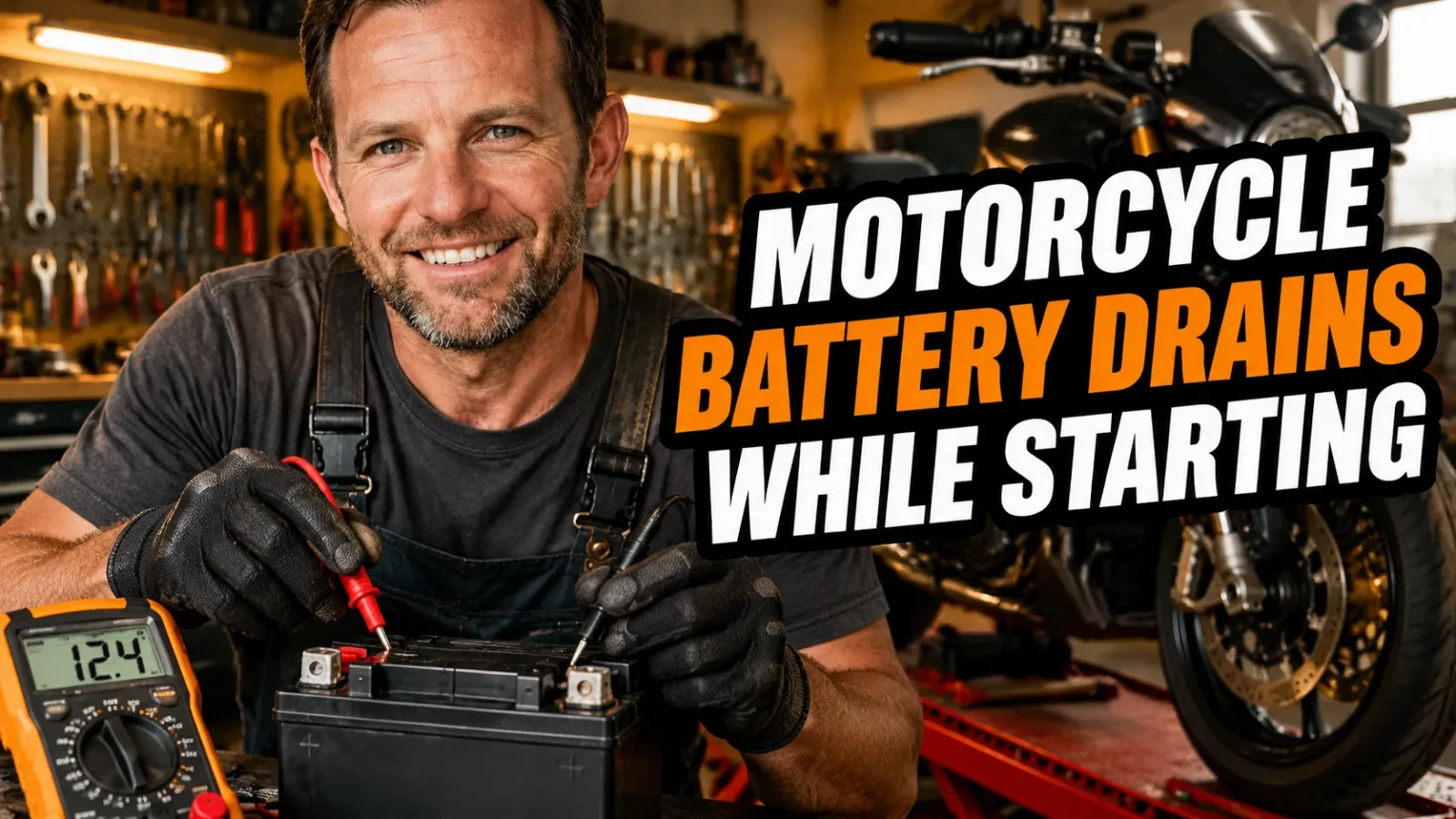
I’ll never forget the sinking feeling I had when my bike refused to start on a crisp Saturday morning. The engine would barely turn over, the dashboard lights dimmed to almost nothing, and after just a few cranking attempts, my motorcycle battery was completely dead. If you’re reading this, you’ve probably experienced the same frustration.
After dealing with this issue multiple times across different bikes, I’ve learned exactly what causes a motorcycle battery to drain while starting and—more importantly—how to fix it permanently. Let me share everything I’ve discovered through trial, error, and conversations with seasoned mechanics.
- Battery drain during starting usually indicates a weak battery, corroded connections, or a failing starter motor drawing excessive current
- Cold weather can reduce battery capacity by 30-50%, making existing problems much worse
- Simple maintenance like cleaning terminals and proper storage charging prevents 80% of starting issues
- Load testing is the only reliable way to diagnose whether your battery or starter system is at fault
Understanding What Happens When You Start Your Motorcycle
Before I dive into the problems, I need to explain what’s actually happening when you press that starter button. Your motorcycle’s starter motor is one of the most power-hungry components on your bike, drawing anywhere from 150 to 300+ amps during cranking.
This massive current draw means your battery needs to deliver enormous power in very short bursts. When everything’s working properly, a healthy battery can handle this without breaking a sweat. But when something’s wrong, the voltage drops dramatically and your battery can’t sustain the load.
I learned this the hard way when my own battery would start the bike fine in my garage but completely fail after a short ride to the coffee shop. The problem wasn’t just the battery—it was a combination of factors I hadn’t considered.
The Most Common Culprits Behind Starting Drain
Weak or Aging Battery
In my experience, this is the number one cause of starting problems. Motorcycle batteries typically last 3-4 years with proper care, but I’ve seen them fail in as little as 18 months under harsh conditions.
As batteries age, their internal resistance increases and their capacity decreases. What this means in practical terms is that an old battery simply can’t deliver the high current needed for starting. The voltage sags immediately when you hit the starter button, and after a few attempts, you’re completely dead.
I test my batteries twice a year now using a simple multimeter. A fully charged battery should read 12.6-12.8 volts at rest. If yours is consistently below 12.4 volts, it’s on its way out. When selecting a replacement, I always check reviews of the best battery brand for motorcycle applications to ensure I’m getting quality.
Corroded or Loose Battery Terminals
This problem sneaks up on you because it develops gradually. I once spent an hour troubleshooting a “bad battery” only to discover that crusty white corrosion on the terminals was creating so much resistance that barely any current could flow.
Corrosion acts like an insulator, and when you’re trying to pull 200 amps through corroded terminals, the voltage drop is catastrophic. Your battery might be perfectly healthy, but the current simply can’t get where it needs to go.
I now clean my terminals every spring and fall using a wire brush and baking soda solution. After cleaning, I apply a thin coat of dielectric grease to prevent future corrosion. This five-minute task has saved me countless headaches.
Parasitic Drain From Accessories
Modern motorcycles have more electronics than ever—GPS units, heated grips, USB chargers, alarm systems, and aftermarket accessories. Each one of these can slowly drain your battery even when the bike is off.
I discovered this issue on my touring bike after installing a USB charging port. I wired it incorrectly, and it was drawing 50 milliamps continuously. That doesn’t sound like much, but over a week of sitting, it would drain my battery enough that starting became difficult.
To check for parasitic drain, I disconnect the negative terminal and measure current flow with a multimeter in series. Anything over 50 milliamps suggests a problem. Most bikes should draw less than 25 milliamps when fully off.
Cold Weather: The Battery Killer
I live in a region with harsh winters, and I’ve seen firsthand how temperature decimates battery performance. At 32°F (0°C), a battery loses about 35% of its cranking power. At 0°F (-18°C), you’re down to about 50% capacity.
Meanwhile, cold engine oil is thicker and harder to turn over, meaning your starter motor needs more power at exactly the moment when your battery has less to give. It’s a cruel combination.
My solution has been to bring my battery indoors during winter storage or use a quality trickle charger. I’ve also learned to avoid repeated starting attempts in extreme cold—each failed attempt drains the battery further and makes the next attempt even less likely to succeed.
Starter Motor and Solenoid Issues
High-Resistance Starter Motor
A failing starter motor can draw excessive current while producing inadequate cranking power. I experienced this on an older bike where the starter brushes were worn down, causing the motor to pull 300+ amps while barely turning the engine.
The symptom was distinctive: the battery would drain rapidly during starting attempts, the starter would turn slowly or not at all, and I could actually feel the starter motor getting hot after just a few tries.
Testing a starter motor requires some electrical knowledge, but the basic process involves measuring current draw during cranking. If you’re pulling significantly more than manufacturer specifications (usually 150-250 amps for most bikes), your starter is the problem, not your battery.
Faulty Starter Solenoid
The starter solenoid is essentially a heavy-duty electrical relay that connects your battery to the starter motor. When it fails, it can create additional resistance in the circuit or fail to make a solid connection.
I’ve had solenoids that would click rapidly, indicating they were engaging and disengaging repeatedly. This cycling behavior drains the battery quickly and prevents the starter from working. Replacing the solenoid is usually straightforward and inexpensive compared to a new starter motor.
Charging System Problems
Here’s something I didn’t understand early in my riding career: if your charging system isn’t working properly, your battery never fully recharges between rides. Over time, this leaves you with a chronically undercharged battery that drains quickly during starting.
Your motorcycle’s stator and regulator/rectifier should maintain battery voltage between 13.5-14.5 volts at cruising RPM. I test this regularly by checking voltage across the battery terminals while the engine is running at 3,000-4,000 RPM.
If voltage stays below 13 volts or climbs above 15 volts, you have a charging problem that will eventually kill even a new battery. Fixing the charging system is essential before replacing the battery, or you’ll just kill the new one too.
How I Diagnose Battery Drain During Starting
The Load Test
This is my go-to diagnostic method. With a multimeter connected to the battery, I watch voltage while someone cranks the engine. A healthy battery should stay above 9.6 volts during cranking, even with a heavy load.
If voltage drops below 9.6 volts (or worse, below 9 volts), the battery is weak and needs replacement. If voltage stays strong but the starter barely turns, I know the problem is elsewhere—likely the starter motor, solenoid, or connections.
This simple test has saved me from replacing perfectly good batteries and from wasting money on new batteries when the real problem was something else.
Visual Inspection
I always start with the basics. I check battery terminals for corrosion, tightness, and physical damage. I inspect cables for fraying, especially where they attach to the terminals and where they run along the frame.
I also check the battery case itself for cracks, bulging, or leaking. A physically damaged battery can develop internal shorts that cause rapid drain and poor performance. When I’m looking for a replacement, I research what is the best battery for a motorcycle in my specific application.
Checking Specific Gravity (For Lead-Acid Batteries)
For conventional lead-acid batteries, I use a hydrometer to measure specific gravity in each cell. This tells me the actual state of charge and whether cells are balanced.
Significant differences between cells indicate a failing battery. I once had a battery where one cell read 1.200 while the others read 1.265—that battery was toast despite showing decent voltage at rest.
My Proven Solutions and Preventive Measures
Proper Battery Maintenance
I’ve found that consistent maintenance prevents most starting problems. Every few months, I clean terminals, check voltage, and ensure connections are tight. For long-term storage, I always use a best battery charger for a motorcycle to maintain optimal charge levels.
I also keep my battery topped off with distilled water (for conventional batteries) and avoid deep discharges whenever possible. Each time you drain a battery below 50% capacity, you reduce its overall lifespan.
Upgrading to Better Components
After years of dealing with battery issues, I’ve learned that investing in quality components pays off. I now use AGM or lithium batteries exclusively because they handle deep discharge better and maintain voltage more consistently during cranking.
For my touring bike, I researched best 6 battery for touring motorcycle setups to ensure I have reliable starting power even after running accessories for extended periods.
Similarly, upgrading to heavy-gauge battery cables reduced resistance in my starting circuit and improved cranking performance noticeably.
Temperature Management
In cold climates, I take extra precautions. During winter, I either remove the battery and store it indoors, or I keep it on a temperature-compensating charger in the garage.
Some riders use battery warmers or heated garages, but I’ve found that simply avoiding extended storage in extreme cold makes a huge difference. If I need to start the bike in freezing temperatures, I sometimes warm the battery indoors first.
Addressing Electrical Issues Promptly
I no longer ignore small electrical problems. That slightly dim headlight or intermittent gauge flickering is usually an early warning sign of charging system issues or poor connections.
By addressing these problems early, I prevent them from escalating into complete starting failure. Regular electrical system checks are now part of my routine maintenance schedule.
When to Replace vs. Repair
Through experience, I’ve learned when it makes sense to repair components versus simply replacing them. Batteries older than three years get replaced automatically if I have any starting issues—troubleshooting old batteries is usually a waste of time and money.
Starter motors can sometimes be rebuilt, but I’ve found that replacement is often more economical and reliable, especially on modern bikes where starters are relatively affordable. Solenoids are always worth replacing before condemning a starter motor.
For my Indian motorcycle specifically, I researched the best battery for indian motorcycle models to ensure compatibility and performance, as these bikes have specific electrical requirements.
Emergency Starting Techniques
Despite my best efforts, I’ve occasionally been caught with a dead battery away from home. I’ve learned several emergency techniques that have gotten me running again.
Jump-starting from another vehicle works, but I’m always careful about voltage compatibility and connection sequence. I connect positive to positive first, then negative to a ground point on the frame rather than directly to the battery.
For bikes with manual transmissions, bump-starting is my preferred emergency method. I’ve successfully bump-started my bike dozens of times by getting it rolling in second gear with the ignition on and popping the clutch.
I also carry a portable lithium jump pack in my touring luggage now. These compact units can provide enough juice for several starting attempts and have saved me multiple times.
Long-Term Battery Health Strategy
After dealing with too many battery failures, I developed a comprehensive approach to battery maintenance. I now test voltage monthly, keep terminals clean, and maintain charge during storage periods.
I’ve also learned to recognize the early signs of battery decline—slightly slower cranking, dimmer lights at idle, or needing to charge more frequently. When I see these signs, I start planning for replacement rather than waiting for a complete failure.
Record-keeping has been surprisingly valuable. I note when I install a new battery, when I notice performance changes, and when I perform maintenance. This history helps me predict when replacement will be needed and identify patterns in battery performance.
Final Thoughts on Motorcycle Battery Drain
Battery drain during starting is frustrating, but it’s almost always preventable or easily fixable once you understand the underlying causes. In my years of riding, I’ve learned that most starting problems come down to basic maintenance neglect or aging components.
The good news is that with proper care and attention, you can avoid most battery-related starting issues. Regular testing, clean connections, appropriate charging during storage, and timely replacement of aging components will keep your bike starting reliably for years.
I now approach battery maintenance proactively rather than reactively. This mindset shift has eliminated the vast majority of my starting problems and given me confidence that my bike will fire up every time I press that button.
Remember, your motorcycle’s electrical system is interconnected—battery, charging system, starter motor, and wiring all work together. Problems in one area often affect others, so comprehensive diagnosis and maintenance are essential for long-term reliability.
Frequently Asked Questions
Why does my motorcycle battery die when I try to start it?
The most common causes are a weak or old battery, corroded terminals, a faulty starter motor drawing too much current, or parasitic drain from accessories. Cold weather can also reduce battery capacity by 30-50%.
How can I tell if my battery is bad or if it’s another starting system problem?
Load test your battery with a multimeter while cranking. If voltage drops below 9.6V during starting, your battery is likely weak. If voltage stays above 10V but the starter clicks or turns slowly, check your starter motor and connections.
Can a motorcycle battery recharge itself after draining during start attempts?
A healthy charging system can recharge a partially drained battery while riding, but repeated deep discharges will permanently damage the battery. If your battery drains completely during starting, it needs charging or replacement.
How do I prevent my motorcycle battery from draining when starting?
Keep terminals clean and tight, use a quality battery tender during storage, test your charging system regularly, and replace batteries every 3-4 years before they fail.

Related Articles

Scooters vs Motorcycles: My Honest, First-Hand Comparison After Riding Both for Years
After thousands of miles on both scooters and motorcycles, I break down cost, comfort, maintenance, and safety to help you…
Jake Miller
10 min read

7 Scooters That Look Like Motorcycles for Riders Who Want Style and Storage
Explore my top 7 scooters that look like motorcycles, from adventure crossovers like the Honda X-ADV to sporty maxis like…
Jake Miller
9 min read

How Long Do Honda Motorcycles Last? My 20-Year Owner’s Reality Check
Discover how long Honda motorcycles really last from an owner with 100k+ miles of experience. Learn maintenance secrets, high-mileage examples,…
Jake Miller
10 min read