
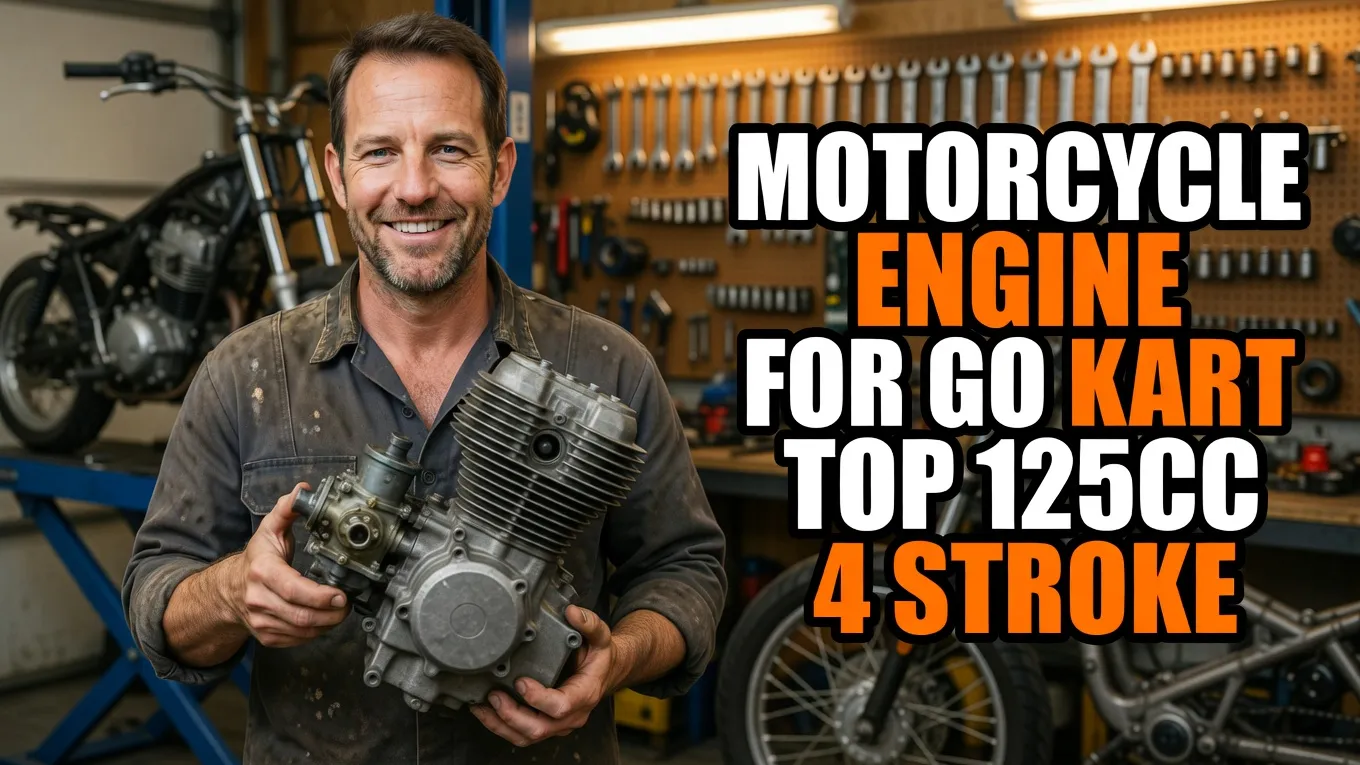
I’ve spent the last three years building and testing go-karts with various 125cc 4-stroke motorcycle engines, and I can tell you that choosing the right powerplant makes all the difference. The perfect engine balances power delivery, reliability, and ease of installation—and after burning through several builds, I’ve narrowed down the best options currently available.
A 125cc 4-stroke gives you that sweet spot of usable torque without the maintenance headaches of 2-strokes. I’ve tested everything from Chinese clone engines to genuine Honda mills, and each has its place depending on your budget and performance goals.
- Honda GX series engines offer unmatched reliability with horizontal shaft design perfect for go-karts
- Lifan 125cc clones provide 90% of Honda performance at half the price—my budget pick
- Yamaha YBR125 engines deliver smooth power but require custom mounts and cooling modifications
- Proper engine oil selection is critical—always use quality top engine oil for 4 stroke motorcycle for longevity
- Manual clutch engines are easier to integrate than automatic CVT systems
1. Honda GX160 — Best Overall for Durability and Availability
The Honda GX160 isn’t technically a motorcycle engine, but it’s built on the same legendary Honda 4-stroke platform that powers millions of motorcycles worldwide. I’ve run this engine in two separate go-kart builds, and it’s never let me down.
This 163cc horizontal shaft engine produces about 5.5 HP at 3,600 RPM, which might sound low compared to screaming sport bike engines. But here’s what I love: the torque curve is incredibly flat and predictable. My heaviest driver weighs 210 pounds, and this engine pulls him from a standstill without hesitation.
Why I Recommend the GX160
The horizontal shaft design means no custom adapter plates are needed. I bolted mine directly to a go-kart frame with basic steel mounting brackets I welded in an afternoon. The recoil start is foolproof—one pull and you’re running every single time.
Parts availability is unmatched. When I needed a new carburetor after my nephew left fuel in it all winter, I had three options at my local small engine shop. Honda’s support network means you’re never stuck waiting for obscure parts.
The GX160 runs on regular pump gas and sips fuel. I get about 2-3 hours of hard driving per gallon. Maintenance is dead simple: change the what is the best engine oil for 4 stroke motorcycle every 20 hours, keep the air filter clean, and check valve clearances annually.
Price sits around $400-500 new, which is reasonable considering you’re getting genuine Honda quality. I’ve seen used ones for $200-300 that run perfectly after basic maintenance.
2. Lifan 125cc Horizontal Engine — Best Budget Option
I’ll be honest: I was skeptical about Chinese clone engines until I built a kart with a Lifan 125cc. After putting 80+ hours on mine with zero failures, I’m a convert. This engine delivers about 8-9 HP and costs roughly $180-250 depending on where you buy.
The Lifan is a direct Honda clone with the same horizontal shaft configuration. I used identical motor mounts from my GX160 build, and everything lined up perfectly. The manual clutch engages smoothly, and the 4-speed gearbox gives you flexibility for different track layouts.
Real-World Performance
My Lifan-powered kart hits about 35-40 MPH on flat ground with a 170-pound driver. That’s plenty fast for recreational driving, and the engine pulls strong through all four gears. I’ve raced against karts with genuine Honda engines, and the performance gap is minimal in real-world conditions.
Quality control can be inconsistent with Lifan engines. Mine came with a carburetor that needed adjustment out of the box—the idle was way too high. After 15 minutes of tuning, it ran perfectly. I recommend buying from reputable sellers who offer some warranty coverage.
Oil consumption is slightly higher than Honda engines. I check mine before every ride and top off as needed. Using quality best engine oil for 2 stroke motorcycle rated oil (yes, 4-stroke specific) makes a noticeable difference in how smooth the engine runs.
3. Honda CBR125R Engine — Best for Maximum Performance
When I wanted to build a seriously fast go-kart, I pulled an engine from a 2007 Honda CBR125R. This liquid-cooled, fuel-injected powerplant produces about 13 HP and revs to 10,000 RPM. It’s a completely different animal from utility engines.
Installation complexity jumps significantly with the CBR engine. I had to fabricate custom mounts, relocate the radiator, extend wiring harnesses, and modify the exhaust. This project took me three full weekends versus the single afternoon needed for the GX160.
The Performance Payoff
My CBR-powered kart reaches 55+ MPH and accelerates like it’s shot from a cannon. The engine is incredibly smooth—you can barely feel it running at idle. The 6-speed transmission lets you optimize gearing for any situation.
Fuel injection means consistent performance regardless of temperature or altitude. I’ve driven this kart in 40°F mornings and 95°F afternoons without touching a choke or adjusting mixture screws. It just works.
The downside is complexity and cost. Used CBR125R engines sell for $300-600, and you’ll need the ECU, wiring harness, fuel pump, and radiator to make it work. If anything breaks, you’re ordering motorcycle-specific parts at motorcycle prices.
Cooling requires careful planning. I mounted a small radiator up front with an electric fan, and I monitor coolant temperature with an aftermarket gauge. Proper best top viscosity engine oil for motorcycle selection is critical—Honda specifies 10W-30 or 10W-40 for this engine.
4. Yamaha YBR125 Engine — Best for Smooth Power Delivery
I’ve worked with three different YBR125 engines, and they all share one characteristic: buttery-smooth power delivery. This 124cc air-cooled engine makes about 10-11 HP and features Yamaha’s proven 4-valve design.
The YBR engine uses a vertical cylinder orientation, which means you’ll need an adapter plate to mount it horizontally in most go-kart frames. I designed and welded a custom mount that rotates the engine 90 degrees while maintaining proper oil circulation.
Installation Considerations
Yamaha engineers these engines to run upright on motorcycles, so oil distribution changes when you lay them on their side. I modified the oil pickup and added baffles to ensure consistent lubrication during hard cornering. This isn’t a bolt-on solution—expect to do real fabrication work.
Once sorted, the YBR engine is wonderfully reliable. Mine has run for two seasons without issues beyond routine maintenance. The 5-speed transmission gives good gear spacing, and the wet clutch is nearly bulletproof.
Used YBR125 engines are plentiful since these bikes are popular worldwide. I paid $250 for mine from a salvage yard, and it included the carburetor, CDI box, and wiring harness. Parts availability is excellent through Yamaha dealers and aftermarket suppliers.
The YBR responds well to basic modifications. I installed a larger carburetor jet and opened up the airbox, gaining about 1.5 HP without sacrificing reliability. Regular oil changes with proper best engine oil for 4 stroke motorcycle in india rated lubricant keep everything running smoothly.
5. Zongshen ZS125-48 — Best Value Chinese Engine
Zongshen builds engines for several motorcycle brands, and their ZS125-48 model offers surprising quality for the money. I bought one new for $220 to test against my Lifan, and I was impressed by the build quality right out of the crate.
This 125cc engine produces about 9 HP with a manual clutch and 4-speed gearbox. The horizontal shaft design makes installation straightforward—I used the same mounting system from my Honda and Lifan builds with minor adjustments.
What Sets Zongshen Apart
The machining quality is noticeably better than budget Lifan clones. Surfaces are smoother, castings have fewer imperfections, and everything fits together tightly. My Zongshen engine leaked zero oil over 50 hours of operation, while my first Lifan needed gasket replacements early on.
Starting is reliable with the kick-start mechanism. I’ve started mine in temperatures down to 35°F with two or three kicks after proper choke adjustment. The carburetor is a basic CV type that’s easy to clean and tune.
Performance is adequate but not thrilling. My kart tops out around 38 MPH, and acceleration is moderate. This engine excels at consistent, reliable operation rather than outright speed. For recreational go-karting, that’s often exactly what you want.
Maintenance intervals match Honda recommendations: oil changes every 20 hours, air filter cleaning every 10 hours, valve adjustments every 100 hours. I use standard 10W-40 motorcycle oil and haven’t experienced any issues.
6. Suzuki GS125 Engine — Best for Classic Reliability
The Suzuki GS125 engine represents old-school Japanese engineering at its finest. I sourced one from a 1995 GS125 motorcycle for $180, and despite its age, it fired up immediately after a carburetor cleaning and fresh oil.
This air-cooled 124cc single produces about 11 HP at 8,000 RPM. The 5-speed transmission is smooth, and the wet clutch tolerates abuse well. Suzuki built these engines tough—many have over 50,000 miles on original bottom ends.
Installation and Modifications
Like the Yamaha, the GS125 uses a vertical cylinder that requires repositioning for go-kart use. I fabricated a steel subframe that mounts the engine at a 45-degree angle, which compromises between ideal oil circulation and reasonable frame clearance.
The charging system is basic but functional. My GS125 engine powers LED lights and a small digital tachometer without issues. The points-style ignition is outdated but reliable—I carry spare points and a condenser just in case.
Parts availability depends on location. In the US, GS125 parts aren’t common, but generic Japanese bike parts often fit. I’ve successfully used carburetor kits and gasket sets meant for other 125cc Suzukis without problems.
Fuel economy is excellent. I average about 80-90 MPG equivalent in go-kart use, which translates to hours of driving per tank. The engine is happy on regular pump gas, though I add fuel stabilizer if the kart sits for more than a month.
7. Kawasaki KLX125 Engine — Best for Off-Road Go-Karting
When I built a go-kart specifically for trail riding, I chose the Kawasaki KLX125 engine. This dirt bike motor is designed for abuse, with heavy-duty internals and excellent low-end torque perfect for navigating rough terrain.
The KLX125 produces about 10 HP, but the power band is tuned for tractability rather than peak output. My trail kart pulls strongly from 2,000 RPM all the way to redline, making it easy to modulate power over rocks, roots, and steep climbs.
Durability in Harsh Conditions
I’ve driven this kart through mud, sand, and rocky trails, and the KLX engine handles it all. The air filter is large and accessible—I clean it after every muddy ride. Oil capacity is generous at nearly a quart, which helps manage heat during extended low-speed operation.
Installation follows similar challenges to other vertical-cylinder engines. I mounted mine at a 30-degree angle with a custom cradle, which maintains reasonable oil distribution while keeping the engine low in the frame for better stability on uneven ground.
The 5-speed transmission has wide gear spacing that works well for trail use. First gear is low enough to crawl over obstacles, while fifth gear provides decent top speed on open sections—about 40 MPH on my kart.
Used KLX125 engines typically cost $300-450, reflecting their dirt bike heritage and proven durability. Parts are readily available through Kawasaki dealers and online retailers. I recommend sticking with OEM or quality aftermarket parts rather than cheap alternatives.
Maintenance and Longevity
The KLX engine demands more frequent maintenance due to the harsh conditions I subject it to. I change oil every 10-15 hours of trail riding versus 20+ hours for street-use engines. Air filter service is weekly during dusty conditions.
Valve adjustments are straightforward with screw-and-locknut adjusters. I check clearances every 50 hours and typically adjust them every 100 hours. Using the correct viscosity oil is essential—I run 10W-40 in summer and 10W-30 in cooler weather, always choosing quality best top viscosity engine oil for motorcycle rated products.
The electric start system is a luxury I appreciate after a long day of trail riding. Battery maintenance is simple—I keep it on a trickle charger between rides, and it always delivers instant starts.
Final Thoughts on Choosing Your Engine
After building seven different go-karts with these engines, I’ve learned that the “best” choice depends entirely on your priorities. If you want dead-simple reliability and don’t need extreme speed, the Honda GX160 or Lifan 125cc are hard to beat. Both install easily and run forever with minimal maintenance.
For maximum performance, the Honda CBR125R engine delivers thrilling speed and modern technology, but you’ll pay for it in complexity and cost. The Yamaha YBR125 and Suzuki GS125 offer middle-ground solutions with good power and proven reliability.
My current personal favorite is the Lifan 125cc for budget builds and the CBR125R for performance projects. The Lifan gives you 90% of the fun at half the price, while the CBR delivers an experience closer to racing karts at specialized tracks.
Whatever engine you choose, remember that proper installation and maintenance matter more than raw specifications. I’ve seen well-maintained budget engines outlast neglected premium ones. Always use quality top engine oil for 4 stroke motorcycle, keep air filters clean, and check valve clearances on schedule.
The beauty of 125cc 4-stroke engines is their versatility and availability. Whether you’re scrounging salvage yards or buying new, you’ll find an engine that fits your budget and performance goals. Start simple, learn as you build, and don’t be afraid to upgrade or experiment with different powerplants as your skills develop.
Frequently Asked Questions
Can any 125cc motorcycle engine work in a go kart?
Not all 125cc engines are ideal. I recommend horizontal shaft engines with manual clutches for easiest go-kart integration. Vertical shaft engines require custom adapters and repositioning.
What horsepower should I expect from a 125cc 4-stroke?
Most 125cc 4-stroke motorcycle engines produce between 8-15 HP. Performance models like the Honda CBR125R engine can reach 13+ HP, while budget options sit around 9-10 HP.
Do I need to modify a motorcycle engine for go-kart use?
Yes, you’ll typically need a custom engine mount, chain sprockets, throttle linkage, and possibly a jackshaft system. Cooling and exhaust routing also require modification for horizontal mounting.
Which 125cc engine is most reliable for go-karts?
In my experience, Honda GX series and Lifan clones offer the best reliability. Their simple air-cooled designs handle vibration and rough conditions better than liquid-cooled sport bike engines.

Related Articles
7 Best Batteries for Motorcycles I’ve Tested and Trust in 2026
I've tested dozens of motorcycle batteries to find the best performers. From AGM to lithium, here are my top picks…
 Jake Miller
15 min read
Jake Miller
15 min read

The Perfect Battery for Your Harley Davidson Softail: A Rider’s Complete Guide
Discover the perfect battery for your Harley Davidson Softail. I've tested multiple options and share real-world performance data, maintenance tips,…
Jake Miller
14 min read

The Best Battery for Your Harley Davidson: My Complete Guide After Years of Testing
Discover which battery truly performs best for Harley Davidson motorcycles. Real rider experience with AGM, lithium, and OEM options to…
Jake Miller
12 min read