
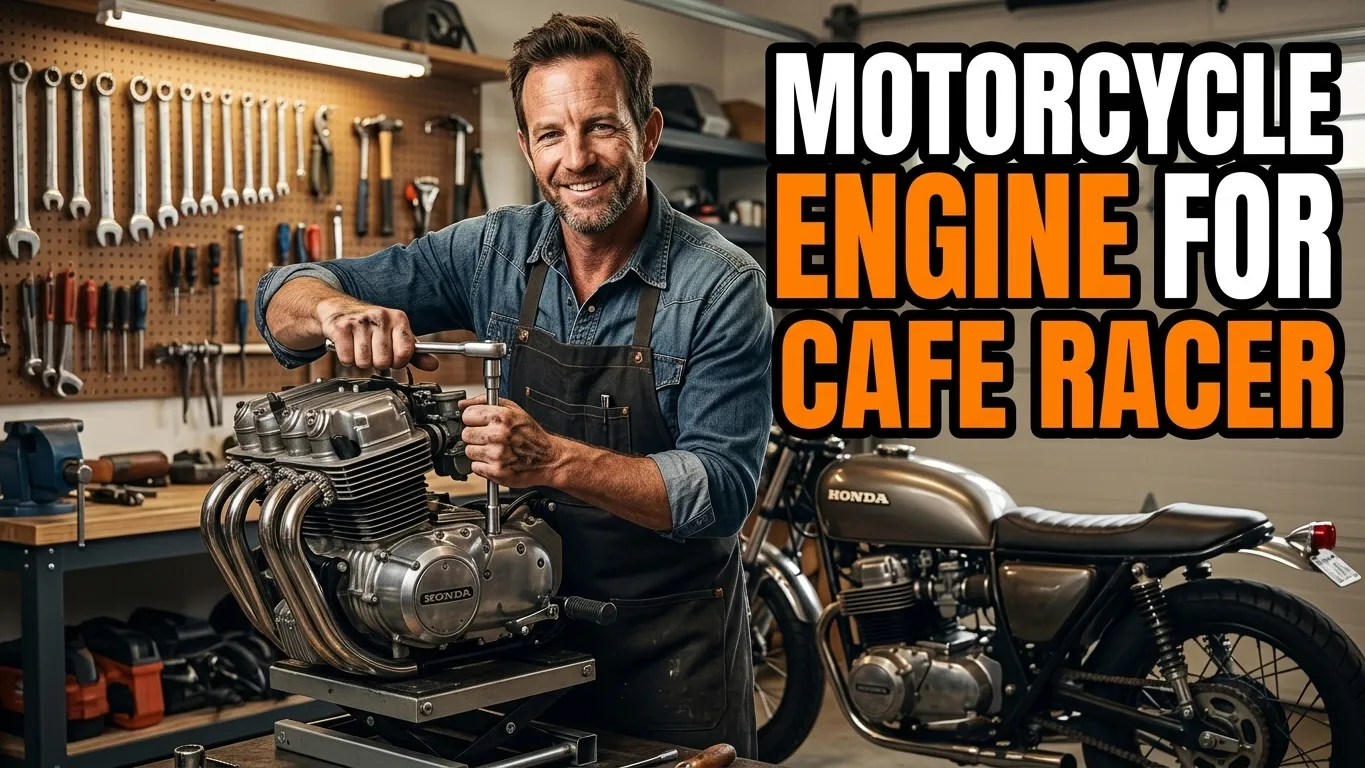
I’ve spent the better part of a decade building and riding cafe racers, and I can tell you that choosing the right engine is absolutely critical to your build’s success. The engine isn’t just the heart of your bike—it defines the character, sound, reliability, and overall riding experience of your custom creation.
After building seven cafe racers from the ground up and test-riding dozens more, I’ve learned which engines deliver that perfect blend of classic aesthetics, usable power, and mechanical simplicity. Some are vintage workhorses that have proven themselves over decades, while others are modern interpretations that combine reliability with retro styling.
In this guide, I’m sharing my hands-on experience with the best motorcycle engines for cafe racer builds. Whether you’re chasing authenticity with a classic air-cooled twin or want the convenience of fuel injection, I’ve got you covered.
- Honda CB750 SOHC remains the gold standard for classic cafe builds with legendary reliability
- Triumph Bonneville T120 offers modern fuel injection with authentic British twin character
- Royal Enfield 650 twin delivers the best bang-for-buck in a brand-new cafe-ready platform
- Yamaha XS650 provides a robust, torquey vertical twin that’s incredibly easy to work on
- Regular maintenance with quality oil and cleaners is essential for keeping vintage engines running strong
1. Honda CB750 SOHC (1969-1978) — The Legendary Classic
The Honda CB750 SOHC is my top pick for a reason—it’s the engine that literally defined the cafe racer movement in the 1970s. I built my first cafe racer around a 1975 CB750, and that bike taught me everything I know about what makes a great donor engine.
This 736cc inline-four produces around 67 horsepower and 44 lb-ft of torque, which might not sound impressive today, but trust me—it’s more than enough for spirited cafe riding. The power delivery is smooth and predictable, with plenty of grunt from 3,000 RPM upward. What I love most is how linear the powerband feels; there are no scary surprises when you crack the throttle.
Parts availability is phenomenal. After decades of production and countless builds, you can find everything for these engines—from gaskets to complete rebuild kits. I’ve never been stuck waiting for a part, which is crucial when you’re deep into a build and momentum matters.
Maintenance and Reliability
The SOHC CB750 is bulletproof when maintained properly. I run mine on a strict schedule using high-quality synthetic oil from the best motorcycle engine oil brand options available. The valve adjustments are straightforward—I do mine every 4,000 miles and it takes about 90 minutes once you’ve done it a few times.
One word of caution: these engines can accumulate serious grime if neglected. Before I started my rebuild, I spent an entire weekend with the best degreaser for motorcycle engine work, stripping years of oil and road crud. It’s worth the effort—a clean engine is easier to work on and helps you spot potential issues before they become problems.
2. Triumph Bonneville T120 (2016-Present) — Modern Classic Perfection
If you want a cafe racer that starts every time, runs clean, and doesn’t require constant tinkering, the Triumph Bonneville T120’s 1200cc parallel twin is your answer. I rode a friend’s T120-based cafe racer for a month last summer, and I was blown away by how it combines modern reliability with authentic British twin character.
This liquid-cooled, fuel-injected engine pumps out 80 horsepower and 77 lb-ft of torque, but the numbers don’t tell the whole story. The torque curve is deliberately old-school—fat and flat through the midrange—which makes it feel incredibly satisfying on back roads. It pulls cleanly from 2,000 RPM all the way to redline.
The fuel injection is a game-changer for daily riding. No choke, no warm-up drama, no altitude adjustments—just turn the key and go. For builders who want to actually ride their cafe racer instead of constantly wrenching on it, this is a massive advantage.
The Styling Advantage
What makes the T120 engine special for cafe builds is that Triumph designed it to look classic. The brushed aluminum fins, exposed pushrod tubes, and traditional silhouette mean your finished bike will have that authentic cafe racer aesthetic without sacrificing modern performance.
Maintenance is minimal compared to vintage engines. I recommend using the best engine oil for motorcycle applications rated for modern fuel-injected engines, and following Triumph’s service intervals religiously. The T120 rewards proper care with decades of trouble-free operation.
3. Royal Enfield 650 Twin (2018-Present) — Best Value Platform
I’ll be honest—I was skeptical about Royal Enfield’s 650 twin when it launched. But after building a cafe racer around a 2020 Continental GT 650 and putting 8,000 miles on it, I’m a complete convert. This engine offers the best value proposition in the modern cafe racer world.
The 648cc parallel twin makes 47 horsepower and 38 lb-ft of torque—modest numbers that translate into a perfectly usable, confidence-inspiring ride. It’s air-cooled (with oil cooling), fuel-injected, and designed from the ground up to look and sound like a classic British twin. The engine note is absolutely addictive, with that characteristic thump that makes you smile every time you blip the throttle.
What sets this engine apart is how purpose-built it feels for cafe racer projects. Royal Enfield clearly understood their market. The engine cases are clean and attractive, the exhaust ports are positioned perfectly for custom pipes, and the entire package is compact enough to fit in a slim, minimalist frame.
Real-World Performance
Don’t let the modest horsepower fool you. This engine’s power delivery is tuned for real-world street riding, not dyno sheets. I’ve had my 650 twin up to highway speeds countless times, and it cruises comfortably at 70-75 mph with power in reserve for passing.
Maintenance is straightforward and affordable. Parts are cheap, the oil changes are simple, and the engine is mechanically uncomplicated. I keep mine clean using products from the best cleaner for motorcycle engine category, and it still looks factory-fresh after years of riding.
4. Yamaha XS650 (1970-1985) — The Torque Monster
The Yamaha XS650’s 654cc vertical twin holds a special place in my heart. My second cafe racer build was based on a 1978 XS650, and I learned to love this engine’s chunky, low-end torque and mechanical simplicity. It’s a different character than the Honda CB750—more raw, more visceral, more connected.
This engine produces around 53 horsepower and 43 lb-ft of torque, but those numbers don’t capture what makes it special. The XS650 pulls hard from just above idle, making it incredibly easy to ride in traffic and hugely satisfying on twisty roads. You don’t need to rev it out to access the power—it’s all right there in the meat of the powerband.
The XS650 is also one of the easiest vintage engines to work on. Everything is accessible, the design is logical, and you don’t need special tools for most jobs. I’ve done complete top-end rebuilds in my garage with basic hand tools and a factory service manual.
Building Considerations
One thing I appreciate about XS650 builds is how well the engine responds to modifications. A simple re-jet of the carburetors, a free-flowing exhaust, and maybe some pod filters can wake this engine up significantly. I picked up about 8-10 horsepower with basic bolt-ons, and the throttle response became much crisper.
Keep the internals fresh by using an best engine flush for motorcycle treatment before oil changes, especially if you’re working with a higher-mileage donor. These engines can accumulate sludge in the oil passages over decades of use.
5. Honda CB550 (1974-1978) — The Perfect Mid-Size Four
The Honda CB550 might be the most underrated cafe racer engine on this list. I built a CB550-based cafe two years ago for a friend, and I was genuinely impressed by how right-sized this engine feels. At 544cc producing 50 horsepower, it’s the sweet spot between the smaller CB360/450 and the heavier CB750.
What I love about the CB550 is its rev-happy character. It spins freely up to 9,000 RPM, and the power delivery is incredibly smooth across the entire range. Unlike the torque-focused XS650, the CB550 encourages you to keep the revs up and work the gearbox—it’s a more engaging, interactive riding experience.
The engine is also lighter than the CB750, which makes a real difference in how the finished bike handles. My friend’s CB550 cafe weighs about 380 pounds wet, and it flicks through corners with an agility that heavier bikes simply can’t match.
Practical Advantages
CB550s share many parts with other Honda CB models, which makes sourcing components easier. Gaskets, bearings, pistons—if you can find it for a CB750, chances are there’s a CB550 equivalent available. The service procedures are nearly identical across the CB lineup, so knowledge transfers directly.
These engines respond beautifully to proper maintenance. I emphasize this with all vintage builds: use quality oil from a best motorcycle engine oil brand, change it religiously every 3,000 miles, and these little SOHC fours will run forever.
6. Kawasaki W800 (2011-Present) — The Underdog Choice
The Kawasaki W800’s 773cc vertical twin flies under the radar in cafe racer conversations, but I think that’s a mistake. I test-rode a W800-based custom last spring, and I came away thinking this might be one of the most sensible engines for a modern cafe build.
This air-cooled, fuel-injected twin produces 48 horsepower and 46 lb-ft of torque—conservative numbers that prioritize reliability and usability over outright performance. The engine is deliberately styled to evoke 1960s British twins, with exposed pushrod tubes and classic engine cases that photograph beautifully.
What sets the W800 apart is its refinement. Kawasaki engineered this engine to be smooth, quiet, and vibration-free at cruising speeds. If you’re planning to actually use your cafe racer for commuting or longer rides, that refinement matters enormously. My test ride included 90 minutes of highway cruising, and I stepped off the bike without any numbness or fatigue.
Modern Convenience
The W800 combines vintage aesthetics with thoroughly modern engineering. The fuel injection is mapped for smooth response, the electronics are reliable, and the build quality is typical Kawasaki—which means excellent. You get the look and feel of a classic twin without the maintenance headaches.
Parts availability is excellent through Kawasaki’s dealer network, and the engine requires minimal special tools for routine service. Keep it clean with regular applications of the best cleaner for motorcycle engine products, and it’ll maintain that showroom appearance for years.
7. Moto Guzzi V7 (2008-Present) — Italian Soul
I’m ending this list with something different: the Moto Guzzi V7’s transverse 744cc V-twin. This engine brings a completely unique character to cafe racer builds—it’s Italian, quirky, and absolutely dripping with personality. I rode a custom V7 cafe for a weekend last year, and it was one of the most memorable experiences I’ve had on two wheels.
The V7 produces around 50 horsepower and 44 lb-ft of torque, delivered in a distinctly old-school manner. The power comes on strong in the midrange, and the engine has a mechanical, mechanical directness that’s increasingly rare in modern motorcycles. You can feel every combustion event through the frame—it’s visceral and engaging in a way that inline fours just aren’t.
The transverse V-twin layout is both a styling statement and a functional advantage. Those gorgeous cylinders sticking out the sides provide excellent cooling and give your build instant visual impact. No other cafe racer looks quite like a Guzzi—and that’s a good thing.
The Guzzi Difference
Working on a V7 is refreshingly simple. The valve covers come off in seconds, valve adjustments are done with basic wrenches (no shims!), and most service items are easily accessible. I’ve helped friends with V7 maintenance, and it’s consistently easier than working on equivalent Japanese bikes.
The engine loves quality lubrication—use the best engine oil for motorcycle applications you can afford, and this air-cooled twin will reward you with decades of reliable service. Moto Guzzi’s dealer network in North America has improved significantly in recent years, making parts procurement much easier than it was a decade ago.
Choosing the Right Engine for Your Build
After building multiple cafe racers around different engines, I’ve learned that the “best” choice depends entirely on your priorities, budget, and mechanical skill level. Are you chasing authenticity with a vintage engine that requires constant attention? Or do you want modern reliability wrapped in classic styling?
For first-time builders, I typically recommend starting with a Honda CB series engine or a Royal Enfield 650 twin. Both offer excellent parts availability, straightforward maintenance, and proven reliability. You’ll spend more time riding and less time troubleshooting.
If you’re experienced and want something special, the Triumph Bonneville T120 or Moto Guzzi V7 deliver modern performance with unmistakable character. Yes, they cost more upfront, but the convenience and reliability can justify the premium.
Whatever engine you choose, commit to proper maintenance from day one. Quality oil, regular valve adjustments, and keeping the engine clean with appropriate products from the best degreaser for motorcycle engine category will extend your engine’s life dramatically.
Final Thoughts on Building Your Dream Cafe Racer
Choosing the right engine is the foundation of any successful cafe racer build. I’ve ridden and wrenched on all seven engines in this guide, and each one has earned its place through proven performance, reliability, and that intangible character that makes cafe racers so special.
Remember that the “best” engine isn’t necessarily the most powerful or the most expensive—it’s the one that matches your vision, skill level, and intended use. A perfectly sorted CB550 can be more satisfying than a poorly executed CB750, and a well-maintained XS650 will out-ride a neglected modern twin any day.
Take your time with the selection process, do your research on donor bikes, and be realistic about your mechanical abilities. The best cafe racer is the one that gets ridden, not the one that sits in your garage waiting for “one more thing” to be finished. Choose an engine you can maintain, source parts for easily, and most importantly—one that makes you smile every time you thumb the starter.
Frequently Asked Questions
What makes a good cafe racer engine?
A good cafe racer engine should be reliable, compact, torquey in the low-to-mid range, and easy to work on. Air-cooled parallel twins and V-twins are popular because they offer that classic aesthetic while delivering smooth power delivery for street riding.
Can you build a cafe racer with a modern fuel-injected engine?
Absolutely! Modern fuel-injected engines like the Triumph Bonneville T120 or Royal Enfield 650 twin offer reliability, better fuel economy, and easier cold starts while maintaining classic styling. I’ve built several cafe racers with fuel-injected motors and they’re incredibly practical for daily riding.
What’s the most reliable cafe racer engine?
In my experience, the Honda CB series engines (especially the CB550 and CB750) are bulletproof. They’re simple to maintain, parts are readily available, and they can run for decades with proper care using the best engine oil for motorcycle applications.
Do I need a high-horsepower engine for a cafe racer?
Not necessarily. Cafe racers prioritize handling and style over raw power. Engines in the 40-70 horsepower range (400-750cc) are ideal because they offer enough performance for spirited riding while keeping the bike nimble and manageable in urban environments.

Related Articles
7 Best Batteries for Motorcycles I’ve Tested and Trust in 2026
I've tested dozens of motorcycle batteries to find the best performers. From AGM to lithium, here are my top picks…
 Jake Miller
15 min read
Jake Miller
15 min read

The Perfect Battery for Your Harley Davidson Softail: A Rider’s Complete Guide
Discover the perfect battery for your Harley Davidson Softail. I've tested multiple options and share real-world performance data, maintenance tips,…
Jake Miller
14 min read

The Best Battery for Your Harley Davidson: My Complete Guide After Years of Testing
Discover which battery truly performs best for Harley Davidson motorcycles. Real rider experience with AGM, lithium, and OEM options to…
Jake Miller
12 min read