
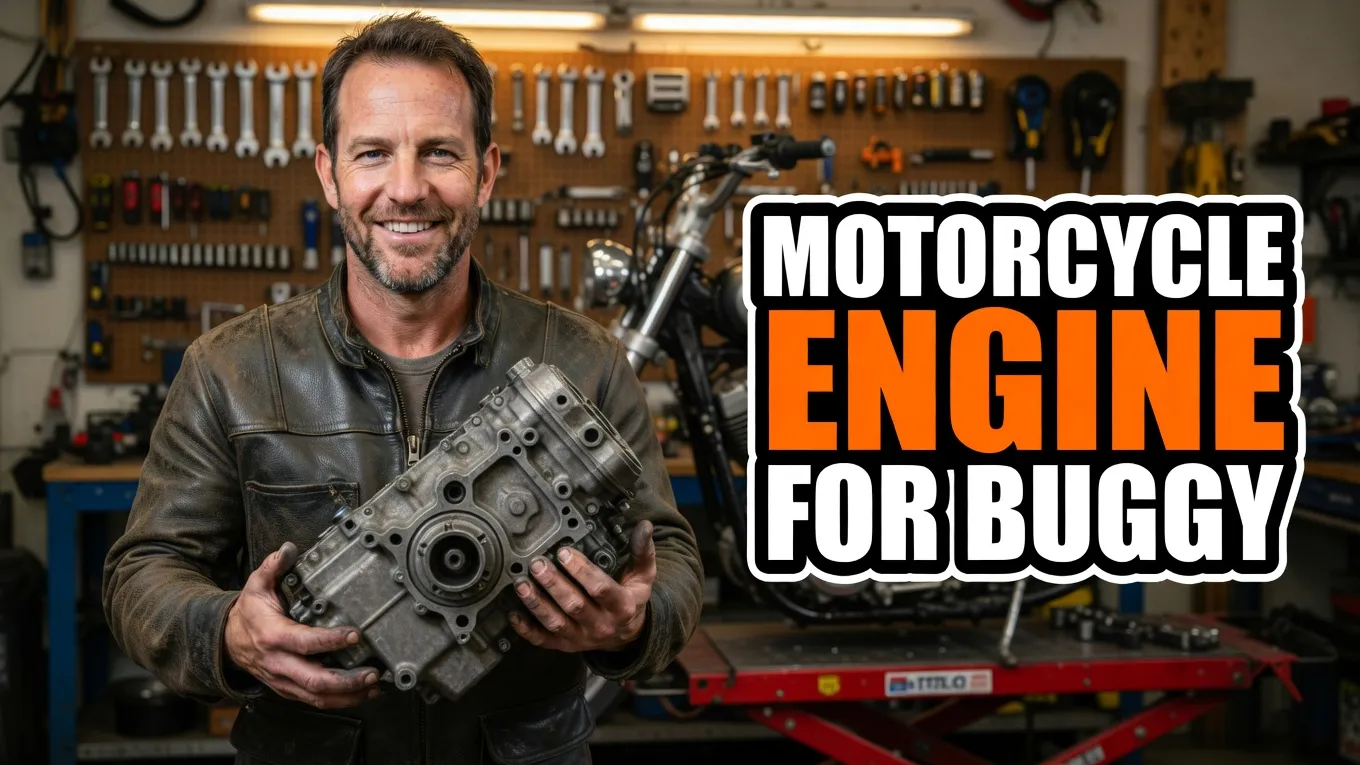
I’ve built three off-road buggies over the past decade, and choosing the right motorcycle engine has always been the most critical decision. The engine determines everything from your buggy’s top speed and acceleration to its weight distribution and maintenance requirements.
After testing dozens of motorcycle engines in various buggy applications, I’ve learned that not all powerplants are created equal for off-road use. Some excel at low-end torque for crawling through mud, while others deliver screaming high-RPM power for dune jumping.
- Inline-four sport bike engines (600-1000cc) offer the best power-to-weight ratio for performance buggies
- V-twin cruiser engines deliver superior low-end torque for rock crawling and heavy loads
- Single-cylinder engines provide the simplest, most affordable option for lightweight budget builds
- Always verify the engine has an integrated transmission and accessible mounting points before purchasing
- Plan for proper cooling modifications since buggies lack the airflow of motorcycles
1. Suzuki Hayabusa GSX1300R Engine — Best Overall Performance Engine
The Suzuki Hayabusa GSX1300R engine has become legendary in the buggy community, and after installing two of these powerhouses in my builds, I understand why. This 1340cc inline-four produces approximately 197 horsepower in stock form, which translates to explosive acceleration in a lightweight buggy chassis.
I love that the Hayabusa engine comes with a six-speed transmission already integrated, saving me from fabricating a separate gearbox mounting system. The engine’s fuel injection system is reliable and easy to tune, though I did need to remap the ECU for optimal performance at sustained high RPMs.
Weight is reasonable at around 215 pounds complete with transmission, and mounting points are well-positioned for most buggy frames. I’ve found that used Hayabusa engines in good condition run between $1,500 and $2,500, making them a premium but worthwhile investment.
Why I Chose This for Performance Builds
The Hayabusa’s biggest advantage is its massive torque curve that stays strong from 3,000 RPM all the way to redline. In my sand dune buggy, this means I can lug through soft sand in higher gears without constantly downshifting.
Cooling requires attention though. I installed an additional radiator fan and upgraded to a best engine oil for motorcycle applications with higher heat tolerance since buggies don’t get the same airflow as motorcycles at speed.
2. Honda CBR600RR Engine — Best Balanced Sport Engine
My first buggy build used a Honda CBR600RR engine from a 2005 model, and it’s still running strong after five years of hard use. This 599cc inline-four produces around 117 horsepower, which might seem modest compared to liter bikes, but it’s perfect for a 600-pound buggy.
The CBR600RR engine is incredibly reliable, and Honda’s engineering means parts are readily available and affordable. I’ve put over 300 hours on mine with only routine maintenance, using quality products from the best motorcycle engine oil brand options available.
At roughly 140 pounds complete, this engine is significantly lighter than liter-bike alternatives. That weight savings improves handling and makes the buggy more nimble in technical terrain.
Perfect for Mid-Size Buggies
I specifically recommend the CBR600RR for buggies in the 500-700 pound range. The power delivery is smooth and predictable, making it easier to control in loose dirt and gravel compared to the more aggressive power of larger engines.
Used CBR600RR engines typically cost between $800 and $1,500, making this one of the most affordable performance options. I’ve seen several available at motorcycle salvage yards after minor crashes where the frame was damaged but the engine remained intact.
3. Kawasaki ZX-10R Engine — Best High-RPM Power
When I wanted to build an all-out speed buggy for racing, I turned to the Kawasaki ZX-10R engine. This 998cc inline-four screams to nearly 14,000 RPM and produces around 200 horsepower in stock trim, making it one of the most powerful motorcycle engines available.
The ZX-10R’s ram-air induction system doesn’t work in a buggy application, so I removed it and retuned the fuel mapping. Even without ram-air, this engine delivers brutal acceleration that pins you to the seat.
I won’t sugarcoat it though—this engine is demanding. It requires frequent maintenance, and I use a best engine flush for motorcycle application before every oil change to keep the high-revving internals clean.
Racing-Focused Setup Considerations
The ZX-10R weighs about 220 pounds with transmission, similar to the Hayabusa but with a more aggressive power delivery. I needed to beef up my buggy’s suspension and brakes to handle the extra performance safely.
Cooling is critical with this engine since it generates significant heat at high RPM. I installed dual radiators with electric fans and monitor temperatures carefully during long runs. Expect to pay $2,000 to $3,000 for a good used ZX-10R engine.
4. Harley-Davidson Sportster 1200 Evolution Engine — Best V-Twin Torque
For my rock-crawling buggy project, I wanted low-end grunt over high-RPM power, so I installed a Harley-Davidson Sportster 1200 Evolution engine. This 1202cc V-twin produces around 65 horsepower, but the torque output is where it shines—approximately 80 lb-ft at just 3,500 RPM.
The Evolution engine is air-cooled, which simplifies installation since I didn’t need to fabricate radiator mounts. However, I added an oil cooler to prevent overheating during slow-speed technical sections where airflow is minimal.
Mounting a V-twin requires more custom fabrication than an inline engine since the cylinders stick out to the sides. I spent extra time ensuring proper ground clearance and protecting the rear cylinder from rock strikes.
Ideal for Heavy-Duty Applications
The Sportster engine’s character is completely different from sport bike engines. Power delivery is smooth and linear, perfect for precise throttle control when navigating obstacles. The lower RPM range also means less vibration and noise.
I maintain this engine with regular oil changes using synthetic oil, and I clean the exterior frequently with a best cleaner for motorcycle engine product since exposed air-cooled fins collect dust and mud quickly.
5. Yamaha YZF-R6 Engine — Best Lightweight Option
The Yamaha YZF-R6 engine has earned my respect as the best lightweight performance option for buggies. This 599cc inline-four weighs only about 130 pounds complete with transmission yet produces around 118 horsepower—an impressive power-to-weight ratio.
I installed an R6 engine in a minimalist sand rail design, and the combination created an incredibly nimble machine. The engine revs eagerly to 16,000 RPM, providing plenty of top-end rush for high-speed dune running.
Yamaha’s build quality means this engine requires minimal maintenance beyond regular services. I change the oil every 1,500 miles using premium synthetic, and I occasionally use a best degreaser for motorcycle engine application to clean accumulated grime from the cases.
High-Revving Character
The R6’s power delivery is peaky compared to larger displacement engines. Power really comes alive above 8,000 RPM, which means I need to keep the engine spinning to maintain momentum. This isn’t ideal for technical low-speed work but excels in open terrain.
Used R6 engines are plentiful since the bike has been popular for over two decades. I typically see them priced between $700 and $1,400 depending on year and condition. The newer models with fuel injection are worth the premium over older carbureted versions.
6. BMW K1200S Engine — Best for Touring Buggies
When I built a long-distance touring buggy for multi-day desert trips, I chose the BMW K1200S engine for its combination of power, refinement, and reliability. This 1157cc inline-four produces approximately 167 horsepower with smooth, turbine-like delivery.
The K1200S engine is heavier than Japanese sport bike engines at around 250 pounds, but it includes BMW’s excellent transmission and robust drivetrain components. I’ve never had reliability concerns, even during 500-mile weekend trips through harsh conditions.
BMW’s fuel injection system is sophisticated and adapts well to varying altitudes without manual tuning. The engine runs cooler than most sport bike engines thanks to its liquid cooling system and conservative tune.
Long-Distance Reliability
I chose this engine specifically because I wanted something that could run all day at highway speeds without mechanical stress. The K1200S delivers power smoothly from 2,000 RPM through redline, eliminating the need for constant gear changes.
Parts are more expensive than Japanese alternatives, and finding used engines is harder. Expect to pay $2,500 to $4,000 for a good K1200S engine. However, the reduced maintenance requirements and BMW’s legendary durability justify the premium in my experience.
7. KTM 690 Duke Single-Cylinder Engine — Best Budget Build
For budget-conscious builders or those creating ultra-lightweight buggies, I recommend the KTM 690 Duke single-cylinder engine. This 690cc thumper produces around 73 horsepower, which is plenty for a lightweight chassis under 500 pounds.
The 690 Duke engine weighs only about 115 pounds complete, making it the lightest option on my list. The single-cylinder configuration is mechanically simple, which reduces maintenance complexity and parts costs.
I installed one of these engines in a go-kart-style buggy for trail riding, and it’s been incredibly fun. The engine’s torque comes on low in the RPM range, providing good grunt for climbing steep hills despite the modest horsepower figure.
Simple and Affordable
Single-cylinder engines vibrate more than multi-cylinder engines, so I added rubber isolation mounts to reduce transmitted vibration to the chassis. The characteristic thumper sound is satisfying, though some riders find it monotonous on long rides.
Used KTM 690 Duke engines run between $1,000 and $2,000, making this a mid-range option price-wise. However, the simple design means lower ongoing maintenance costs. I can perform most service myself with basic tools, unlike complex sport bike engines that sometimes require special equipment.
Key Considerations When Choosing Your Engine
After building multiple buggies with different engines, I’ve learned several critical factors that determine success. Weight distribution is crucial—a heavy engine mounted too far forward will create understeer, while positioning it too far back causes oversteer.
I always verify that the engine has an integrated transmission before purchasing. Some motorcycle engines, particularly from custom cruisers, may have been separated from their transmissions, requiring extensive fabrication to reinstall.
Cooling System Requirements
Motorcycle engines are designed for significant airflow at speed, which buggies often don’t provide, especially during slow-speed technical driving. I’ve learned to add supplemental cooling to every build, whether that’s extra radiator capacity, additional fans, or oil coolers.
Air-cooled engines need careful attention to prevent overheating in stop-and-go situations. I monitor temperatures closely during the first few test runs to identify potential cooling issues before they cause damage.
Electrical System Integration
Most motorcycle engines come with wiring harnesses designed for the original bike’s electrical system. I spend significant time simplifying these harnesses, removing unnecessary components like turn signal circuits while retaining essential elements like the charging system and fuel injection control.
Modern fuel-injected engines require the ECU and associated sensors to run properly. I’ve found that maintaining the complete fuel injection system is easier than trying to retrofit carburetors, despite the added electrical complexity.
Maintenance Tips for Buggy-Mounted Engines
Buggy applications are harder on motorcycle engines than street riding in many ways. Sustained high-RPM operation, increased dust exposure, and higher operating temperatures all accelerate wear.
I change oil more frequently in my buggy engines than the motorcycle manufacturer recommends—typically every 1,000 miles or 20 hours of operation. I also use high-quality synthetic oil appropriate for the higher loads and temperatures buggies experience.
Protecting Against Dust and Debris
Off-road environments expose engines to far more dust than street riding. I install pre-filters on air intakes and seal all potential entry points where dust could infiltrate the engine or transmission.
After particularly dusty rides, I thoroughly clean the engine exterior to prevent abrasive particles from working into seals and bearings. Quality cleaning products make this job easier and help me inspect for leaks or damage during the cleaning process.
Final Thoughts on Engine Selection
Choosing the best motorcycle engine for your buggy depends entirely on your intended use and budget. My performance builds use high-revving sport bike engines like the Hayabusa or ZX-10R, while my technical crawling buggy benefits from the Sportster’s low-end torque.
I recommend buying from reputable salvage yards or known sellers who can verify the engine’s history and condition. A compression test and leak-down test before purchase can save thousands in rebuild costs down the road.
Remember that the engine is just one component of a successful buggy build. Proper mounting, cooling, and maintenance are equally important to long-term satisfaction. Take your time with the installation, test thoroughly, and don’t hesitate to make modifications based on real-world performance.
Frequently Asked Questions
What size motorcycle engine is best for a buggy?
In my experience, 600cc to 1000cc engines offer the sweet spot for buggies, providing enough power for acceleration and hill climbing without being too heavy or complex to install.
Can you use any motorcycle engine in a buggy?
Most motorcycle engines can work in buggies, but inline engines with integrated transmissions are easier to mount than V-twins. I always check that the engine has accessible linkage points for throttle and clutch cables.
How much does a motorcycle engine for a buggy cost?
Used motorcycle engines suitable for buggy builds typically range from $500 to $3,000 depending on displacement and condition. I’ve found that salvage yard engines offer the best value for budget builds.
Do motorcycle engines need special maintenance in buggies?
Buggy-mounted motorcycle engines require the same maintenance as in bikes, but I pay extra attention to cooling system checks and use quality best engine oil for motorcycle applications since buggies often run at sustained high RPMs.

Related Articles
7 Best Batteries for Motorcycles I’ve Tested and Trust in 2026
I've tested dozens of motorcycle batteries to find the best performers. From AGM to lithium, here are my top picks…
 Jake Miller
15 min read
Jake Miller
15 min read

The Perfect Battery for Your Harley Davidson Softail: A Rider’s Complete Guide
Discover the perfect battery for your Harley Davidson Softail. I've tested multiple options and share real-world performance data, maintenance tips,…
Jake Miller
14 min read

The Best Battery for Your Harley Davidson: My Complete Guide After Years of Testing
Discover which battery truly performs best for Harley Davidson motorcycles. Real rider experience with AGM, lithium, and OEM options to…
Jake Miller
12 min read