
Exhaust Wrap vs. Heat Shield: Which Is Better for Your Motorcycle?
 Jake Miller
8 min read
Jake Miller
8 min read
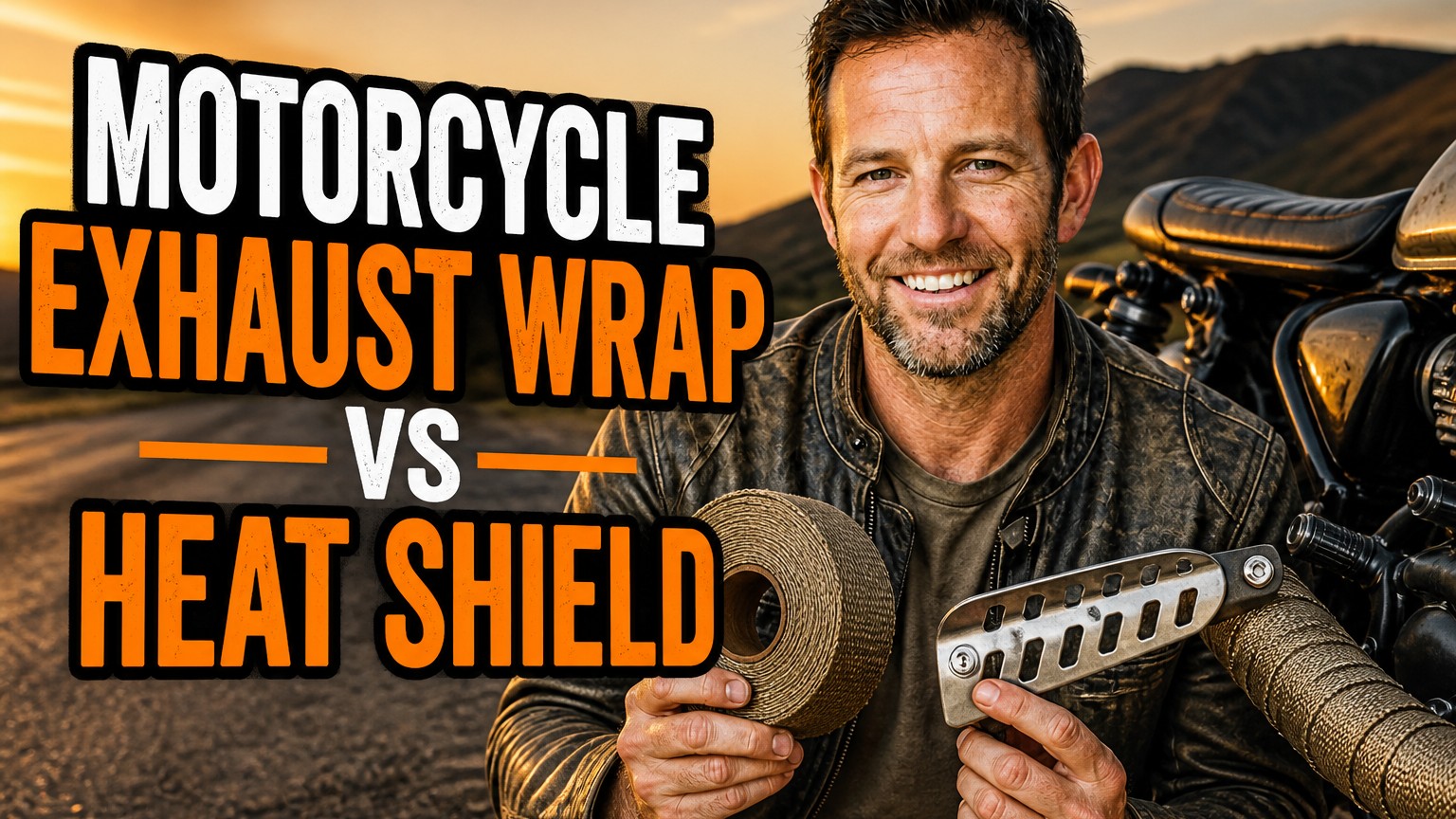
I’ve burned my calf on a hot exhaust exactly once. That was enough to send me down a rabbit hole of wraps, shields, coatings, and paint. After years of trying different setups on my own bikes, I have strong opinions on which approach works best.
The debate between exhaust wrap and heat shields comes up constantly in riding forums. Both promise cooler temperatures, but they work in very different ways. Here’s what I’ve learned, what I’d do again, and what I’d never do twice.
- Exhaust wrap traps heat inside the pipe; heat shields block radiant heat from reaching you or your bike.
- Wrap can cause rust and cracking if installed poorly or used on mild steel.
- Heat shields are safer, cleaner looking, and lower maintenance for most street riders.
- Ceramic coatings and high-temp paint are worth considering as middle-ground options.
How Exhaust Wrap and Heat Shields Actually Work
These two products solve heat in opposite ways. Understanding that difference makes the choice a lot easier.
Exhaust Wrap: Keeping Heat Inside the Pipe
Exhaust wrap, sometimes called header wrap, is a woven strip of fiberglass, basalt, or similar material. You wind it tightly around the pipe. It acts as insulation, so less heat radiates outward.
The side effect is that heat stays in the exhaust gases. That’s why racers like it: hotter gases flow faster, which can help scavenging. On a street bike, though, I care more about my legs and my paint than a tiny bump in flow.
Heat Shields: Deflecting Heat Away
A heat shield is a rigid or semi-rigid barrier mounted a short distance from the pipe. It’s usually stainless steel or aluminum, and often has an air gap behind it. It doesn’t insulate the pipe itself.
Instead, it blocks radiant heat and prevents accidental contact. The pipe still runs at its normal temperature, which is easier on the metal. That’s a big reason I lean toward shields.
Exhaust Wrap Pros and Cons From My Garage
I wrapped the headers on an old standard I built years ago. It looked tough and, for a while, felt great. Here’s the honest rundown.
What I Liked About Wrap
- Big drop in surface heat: The pipes were noticeably cooler to the touch after a ride.
- Cheap upfront: A roll and some stainless ties cost very little.
- Raw, race-inspired look: On a café racer or scrambler, it fits the vibe.
- Helps under-seat or under-fairing temps: Cooler engine bay air can be a real benefit.
What I Didn’t Like About Wrap
Within one wet season, I noticed discoloration and a musty smell. Wrap soaks up water, road grime, and oil. That moisture sits against the pipe and accelerates corrosion.
When I finally unwrapped the pipes, there was surface rust and pitting I couldn’t undo. On thin-wall or mild steel headers, that can mean early failure. Stainless handles it better, but I still wouldn’t call it risk-free.
Wrap also frays, gets greasy, and looks shabby fast. Re-wrapping is a tedious job, and itchy fibers are no fun without gloves and a mask.
Common Wrap Mistakes I See
- Wrapping over rusty or dirty pipes
- Skipping the overlap, leaving gaps that trap moisture unevenly
- Not soaking and tightening the wrap properly before the first heat cycle
- Using it on cheap, thin pipes that were never meant to run that hot
Heat Shields: Where They Shine
After the wrap experience, I switched to shields on my next build. The difference in peace of mind was immediate. I could still see the pipe, check it for damage, and not worry about trapped moisture.
Benefits I’ve Noticed
A good shield prevents burns from leg or saddlebag contact. It also protects nearby plastic, wiring, and luggage from radiant heat. Many OEM bikes use them for exactly this reason.
Shields also look clean. Chrome, black, or brushed finishes can match your build. You can remove them in minutes to clean or inspect the pipe.
Downsides to Know About
Shields add some weight and can rattle if clamps loosen. They also don’t lower the pipe’s actual temperature, so the bike’s overall heat soak stays mostly the same.
Cheap universal shields may not fit well. I’ve had to bend brackets and add rubber spacers to stop vibration. That’s a small price for a durable fix.
Head-to-Head: Wrap vs. Shield
Heat Reduction
Wrap wins on total heat reduction from the pipe surface. Shields win on practical protection, because they stand between you and the heat. For a daily rider, protection matters more than raw numbers.
Durability and Maintenance
Shields win again. They don’t absorb water, they’re easy to clean, and they last for years. Wrap often needs replacing in a season or two, depending on weather and riding style.
Appearance
This one’s personal. Fresh wrap looks aggressive on custom builds, but it ages poorly. Shields give a polished, factory-like finish that stays tidy longer.
Cost
Wrap is cheaper initially. But if it ruins a set of pipes, it becomes the more expensive choice. Shields cost more upfront but rarely need replacing.
Effect on Exhaust Longevity
This is the deciding factor for me. Shields leave the pipe alone. Wrap changes the pipe’s operating environment, and not always for the better. If you care about keeping your exhaust for the long haul, shields are the safer bet.
A Third Option: Coatings and Paint
Many riders forget there’s a middle path. Ceramic heat coating bonds to the metal, resists corrosion, and trims radiant heat a bit. It doesn’t hold moisture like wrap does.
If you’re researching options, my guide to the best heatcoating for motorcycle exhaust pipes covers what I’d trust. Coatings won’t make a pipe cool to the touch, but they improve durability and looks.
When Paint Is Enough
If your goal is cosmetic, say refreshing faded black pipes, paint is the easy route. I’ve had good results with high-temp formulas when I prepped the metal carefully.
Check out my picks for the best heat resistant paint for motorcycle exhaust and the best high temp paint for motorcycle exhaust if you want to go that way. If you’re after a specific finish, the best paint for motorcycle exhaust pipes roundup can help narrow it down.
Paint Prep Tips I Swear By
- Degrease thoroughly with brake cleaner or acetone
- Scuff lightly for adhesion
- Apply thin coats and follow the cure instructions exactly
- Heat-cycle the pipe gradually before a long ride
Which One Should You Choose?
Your riding style and bike type should drive the decision. Here’s how I’d break it down.
Choose a Heat Shield If…
- You commute or ride in all weather
- Your leg, passenger, or saddlebags sit near the pipe
- You want a clean, low-maintenance setup
- You want to preserve your exhaust finish
Choose Exhaust Wrap If…
- You have a track or show bike that stays dry
- You run stainless headers and accept the upkeep
- Under-seat or under-fairing temperatures are a real problem
- You like the raw look and don’t mind re-wrapping
Consider a Coating If…
- You want modest heat reduction with better durability
- You want a cleaner look than wrap offers
- You want a more permanent solution
Special Note for Cruiser and Harley Riders
Cruisers often have big pipes sitting right by the rider’s leg, and passenger comfort matters. I’d skip wrap on chrome pipes entirely. It hides the finish and invites rust.
If you’re upgrading a V-twin, a quality shield or a well-designed aftermarket system is better. If you ride in California, check out the best harley motorcycle exhaust for california riders to stay compliant while improving heat management.
Installation Tips for Either Option
Installing Wrap Correctly
If you do decide on wrap, do it carefully. Soak it in water first so it shrinks tight as it dries. Overlap each turn by about a quarter inch and secure the ends with stainless ties.
Start from the cylinder head and work outward. Don’t wrap over rust, and avoid it on thin or older pipes. Inspect the pipes every few months by peeling back a small section if you can.
Installing a Shield Correctly
Choose a shield made for your bike if possible. Maintain a small air gap and use rubber isolators or high-temp washers to cut rattles. Check the clamps after the first few rides, as vibration loosens them.
Make sure the shield doesn’t interfere with the suspension, kickstand, or bodywork. A poor fit creates more problems than it solves.
My Final Verdict
After trying both, I’d pick a heat shield for nearly every street bike. It protects me, protects my gear, and doesn’t threaten my exhaust. It’s the choice I’d recommend to a friend without hesitation.
Wrap still has a place on dry-weather race or show bikes, especially with stainless pipes. But I’d treat it as a specialty tool, not a default upgrade. If your goal is cosmetic and durable, coatings and quality paint are better compromises.
Whatever you choose, take time to prep and install it properly. A little patience now saves you from burns, rust, and replacing pipes later. Ride safe, and keep those legs un-toasted.
Frequently Asked Questions
Is exhaust wrap bad for motorcycle exhaust pipes?
It can be if installed wrong or used on thin or mild steel pipes. Wrap holds moisture and heat against the metal, which can cause rust, cracking, or premature failure. Stainless and titanium pipes tolerate it better, but a heat shield is generally the safer choice.
Does a heat shield reduce heat as much as exhaust wrap?
No. Wrap keeps heat inside the pipe and can cut surface temperatures dramatically. A heat shield deflects radiant heat and keeps your leg or bags from touching hot metal, but the pipe itself stays hot.
Can I use both an exhaust wrap and a heat shield?
You can, but it’s rarely necessary. Using both on the same section can trap extra heat. Most riders pick the one that fits the problem: a shield for contact burns, wrap for performance or under-fairing heat.
Is ceramic coating better than exhaust wrap?
For many street riders, yes. Ceramic coating bonds to the metal, doesn’t hold moisture, and looks clean. It reduces radiant heat less dramatically than a thick wrap, but it’s far lower maintenance.

Related Articles
7 Best Batteries for Motorcycles I’ve Tested and Trust in 2026
I've tested dozens of motorcycle batteries to find the best performers. From AGM to lithium, here are my top picks…
Jake Miller
15 min read

The Perfect Battery for Your Harley Davidson Softail: A Rider’s Complete Guide
Discover the perfect battery for your Harley Davidson Softail. I've tested multiple options and share real-world performance data, maintenance tips,…
Jake Miller
14 min read

The Best Battery for Your Harley Davidson: My Complete Guide After Years of Testing
Discover which battery truly performs best for Harley Davidson motorcycles. Real rider experience with AGM, lithium, and OEM options to…
Jake Miller
12 min read