
6 Best Heat Resistant Paints for Motorcycle Exhausts That Actually Last
 Jake Miller
10 min read
Jake Miller
10 min read
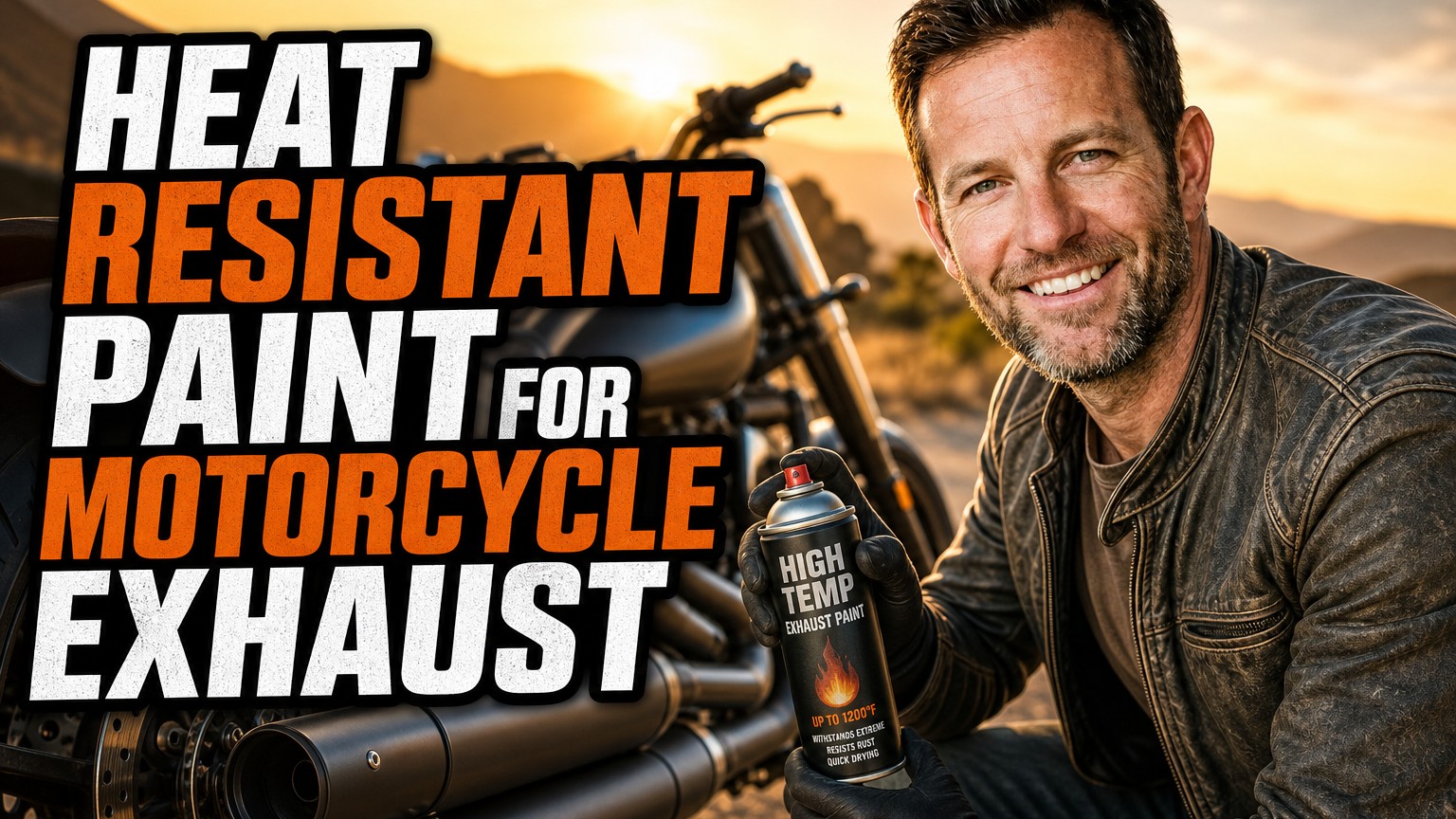
I’ve been wrenching on my own bikes for years, and a tired, rusty exhaust is one of the fastest ways to make a good motorcycle look neglected. I’ve repainted pipes on everything from a rattly old standard to a café-style build. I’ve also made my share of mistakes, including paint that blistered, flaked, or turned chalky after one hot ride.
The paint you choose matters, but so does how you prep and cure it. In this guide I’ll share the six high-temp paints I trust or have tested, what each one is good at, and how to get a finish that survives heat cycles, rain, and road grime.
- My top pick for headers and hot pipes is VHT Flameproof, rated up to 2000°F.
- Rust-Oleum High Heat Ultra and Krylon High Heat Max are the best affordable, easy-to-find options.
- Prep and curing matter as much as the paint: degrease, sand, spray thin coats, then heat cycle.
- Dupli-Color Ceramic Engine Enamel suits engine cases and cooler parts, not headers.
How I Judge Exhaust Paint Before I Buy
Before the list, here’s what I look at. Not every can labeled “high heat” can handle a motorcycle header. Many stop at 500°F, and an exhaust port on a hard-working engine can go far beyond that.
Temperature Rating
This is the first thing I check. Headers and exhaust ports get the hottest, so I want a rating of 1200°F at minimum. Mufflers and rear sections run cooler, so there I have more flexibility.
Adhesion and Flexibility
Exhausts expand and contract constantly. A paint that goes on hard and brittle will crack. I look for silicone-ceramic formulas that tolerate repeated heat cycles.
Ease of Application and Cure
I’m usually painting in a home garage, not a professional booth. Cans with good spray patterns, clear cure instructions, and forgiving dry times get extra points from me.
1. VHT Flameproof High Temperature Coating (SP102 Flat Black) — Best Overall
When someone asks me for the single best heat resistant paint for a motorcycle exhaust, I point them to the VHT Flameproof coating. It’s rated to 2000°F, which is more than any street bike header will realistically see. That headroom gives me real confidence on air-cooled V-twins and hot-running singles.
The VHT Flameproof formula is a ceramic-based coating that lays down smooth and flat. It comes in several finishes, but I keep going back to the flat black. It looks factory-correct on a scrambler or cruiser and hides small imperfections well.
What I Like
- 2000°F rating protects headers, collectors and downpipes
- Resists gasoline, oil and brake fluid once fully cured
- Good coverage, so a can goes a long way on a typical set of pipes
- Usually costs around $12 to $18 per can
What to Watch Out For
It needs a proper cure. I follow the can’s heat-cycle instructions, which step the temperature up in stages. Don’t skip that, because uncured VHT can scratch with a fingernail.
2. Rust-Oleum High Heat Ultra Spray Paint — Best Easy-to-Find Option
The Rust-Oleum High Heat Ultra can is the one I grab when I need paint today and don’t want to order online. It’s rated up to 1200°F, and you can find it at most hardware stores for roughly $9 to $14.
On my own mid-pipes and muffler cans, the Rust-Oleum High Heat Ultra finish stayed tight for well over a year. It dries fast, and the spray nozzle gives a pretty even fan even if you aren’t a spray-can pro.
Best Use Cases
I like it for full exhaust systems on standard, cruiser and adventure bikes where header temps stay reasonable. It comes in flat black, satin black, and several metallic and color options, which is handy if you want something other than black.
Limitations
On a highly tuned engine, I’d step up to VHT for the headers. Also, thin coats are essential. When I rushed this paint with one heavy pass, it ran and then wrinkled during curing.
3. Krylon High Heat Max — Best for Quick Touch-Ups
The Krylon High Heat Max spray is another 1200°F paint that I keep on my shelf. It sprays a nice wide pattern, and the nozzle is comfortable for long passes down a pipe. A can typically costs about $8 to $13.
I use Krylon High Heat Max for fixing stone chips and scuffs on exhaust shields and heat guards. It blends well with existing satin or flat black finishes if you scuff the area first.
Why It Earns a Spot
- Dries to the touch quickly, so I can recoat in short windows
- Rated to 1200°F for most street exhaust needs
- Widely available and budget friendly
Where It Falls Short
In my experience, it’s a little less resistant to fuel splashes than VHT. If you overfill the tank and slop gas on the pipes, wipe it up quickly.
4. POR-15 High Heat Paint — Best for Rust-Prone Pipes
If your bike lives in a damp climate or sees winter salt, the POR-15 High Heat Paint deserves a look. It’s a ceramic-fortified coating rated around 1200°F, and it’s known for sticking hard to properly cleaned metal.
I used POR-15 High Heat on a set of steel pipes that already had surface rust issues. After wire brushing and metal prep, the finish held up much better than the cheap enamel I’d used the year before.
Prep Is Everything
POR-15 products are famous for needing clean, prepped metal. I degrease thoroughly and avoid touching the surface with bare hands. Follow the instructions closely, because it’s less forgiving of shortcuts.
Cost and Format
It usually costs more than hardware store cans, typically around $20 to $30 for a small can or aerosol. For a bike I plan to keep, I think it’s worth it.
5. Rust-Oleum Stove & Grill Paint — Best Budget Pick for Mufflers
This one is a bit of a sleeper. Rust-Oleum Stove & Grill paint is designed for wood stoves and barbecues, and it’s rated up to 1200°F. It typically costs $8 to $12.
I’ve used Rust-Oleum Stove & Grill on mufflers and heat shields where I wanted a quick, cheap refresh. It’s a hard-wearing flat black that suits mufflers and pipes on bikes that aren’t ridden hard.
My Honest Take
It isn’t my first choice for headers on a high-performance engine. For mufflers, tailpipes, and exhaust brackets, though, it’s a very practical budget option.
6. Dupli-Color Ceramic Engine Enamel — Best for Engine Cases and Cooler Parts
I include Dupli-Color Ceramic Engine Enamel with a clear warning. It’s rated for about 500°F, so it is not for headers. It is great for engine cases, covers, brackets, and anything around the exhaust that doesn’t get glowing hot.
The ceramic formula gives a tough, glossy finish that resists oil and fuel. I used Dupli-Color Ceramic Engine Enamel on a set of side covers next to my exhaust, and they’ve held their color nicely. It comes in a range of colors, including red, blue and cast aluminum, for about $10 to $14.
How I Use It
I pair it with a 1200°F paint on the pipes. That way the entire engine bay gets a matching look, with each paint working inside its safe temperature range.
How I Prep and Paint a Motorcycle Exhaust
The best can of paint in the world won’t save a poor prep job. This is the process I follow every time, and it has saved me from a lot of peeling.
Step 1: Remove and Clean the Exhaust
Whenever possible, I take the exhaust off the bike. Then I degrease it with brake cleaner or a quality degreaser, since oils and fingerprints will ruin adhesion.
Step 2: Sand and Remove Rust
I scuff the surface with 220 to 400 grit sandpaper or a Scotch-Brite pad. For rust, I use a wire wheel or brush until I reach clean metal. Smooth, dull, clean metal is what the paint wants.
Step 3: Mask and Plug
I plug pipe openings and tape off anything that shouldn’t be painted. I also hang the pipes on a wire so I can spray all the way around.
Step 4: Spray Thin Coats
I apply two or three light coats rather than one heavy one. I follow the can’s recoat window, usually within minutes, or wait the longer interval if it specifies one.
Step 5: Cure Properly
After the paint air dries, I follow the heat-cycle instructions on the can. Often that means stepping through temperatures in a home oven for smaller parts, or running the engine through short heat cycles once the pipes are reinstalled.
A Quick Safety Note
Always paint in a ventilated area and wear a respirator and gloves. Fumes from curing paint can be strong, so don’t cure parts in an oven you use for food.
Heat Management Beyond Paint
Fresh exhaust paint is only part of the picture. A hot engine puts stress on everything nearby, and that includes your oil. If you’re cooking pipes and engine parts through long rides, the oil in your bike is working hard too.
Whenever I do exhaust work, I also check my oil. If you’re not sure what to run, I’ve found it helpful to compare guides on the best motor oil for 4 stroke motorcycle and the top engine oil for 4 stroke motorcycle.
For riders in hot climates, the guide to the best engine oil for 4 stroke motorcycle in india is worth a read. And if you’re still asking what is the best engine oil for 4 stroke motorcycle models like yours, or just want a general overview of the best engine oil for motorcycle options, those pages will help you choose.
Common Mistakes I’ve Made (So You Don’t Have To)
Painting Over Oily Metal
This is the number one cause of peeling. If the surface isn’t squeaky clean, the paint has nothing to grip.
Spraying Too Heavy
Thick coats trap solvents and wrinkle when heated. Patience wins: several thin coats look better and last longer.
Skipping the Cure
I once bolted freshly painted pipes on, fired up the bike, and watched the paint bubble. Learn from me and cure in stages as the can directs.
Using the Wrong Temperature Rating
A 500°F paint on a header will discolor and burn off fast. Match the rating to the part, and when in doubt, go higher.
Which Paint Should You Buy?
Here’s how I’d choose, based on my own experience:
- Headers and hard-working engines: VHT Flameproof
- All-round, easy to find: Rust-Oleum High Heat Ultra
- Quick touch-ups: Krylon High Heat Max
- Rust-prone steel pipes: POR-15 High Heat Paint
- Budget mufflers: Rust-Oleum Stove & Grill
- Engine cases and cooler parts: Dupli-Color Ceramic Engine Enamel
Final Thoughts
A fresh coat of the right paint can transform a bike, and it’s one of the most affordable upgrades you can do in a weekend. For most riders, I’d start with VHT Flameproof on the hottest parts and a Rust-Oleum or Krylon product on the cooler sections.
Take your time with prep, spray thin, and cure properly. Do that, and your exhaust will look sharp for seasons, not weeks.
Frequently Asked Questions
What temperature rating do I need for motorcycle exhaust paint?
For header pipes and downpipes close to the cylinder head, choose paint rated for at least 1200°F, and ideally 2000°F on high-performance engines. Mid-pipes and mufflers run cooler, so 800°F to 1200°F paint is usually fine.
Do I need to cure heat resistant exhaust paint?
Yes. Most high-temp paints need to air dry and then be heat cycled in stages, either in an oven or with the engine running, to fully harden. Skipping this step is a common reason paint peels or stays soft.
Can I paint a motorcycle exhaust without removing it?
You can, but removing the exhaust gives a far better result. Off the bike, you can sand, degrease and spray evenly without overspray on your engine, frame and wiring. If you paint it on the bike, mask everything carefully.
How long does heat resistant exhaust paint last?
With proper prep and curing, a good silicone-ceramic paint can look good for one to three years of regular riding. Bikes that see rain, road salt or frequent short trips may need touch-ups sooner.

Related Articles
7 Best Batteries for Motorcycles I’ve Tested and Trust in 2026
I've tested dozens of motorcycle batteries to find the best performers. From AGM to lithium, here are my top picks…
Jake Miller
15 min read

The Perfect Battery for Your Harley Davidson Softail: A Rider’s Complete Guide
Discover the perfect battery for your Harley Davidson Softail. I've tested multiple options and share real-world performance data, maintenance tips,…
Jake Miller
14 min read

The Best Battery for Your Harley Davidson: My Complete Guide After Years of Testing
Discover which battery truly performs best for Harley Davidson motorcycles. Real rider experience with AGM, lithium, and OEM options to…
Jake Miller
12 min read