
8 Best Motorcycles for a World Tour: Bikes I’d Actually Ride Around the Globe
 Jake Miller
10 min read
Jake Miller
10 min read
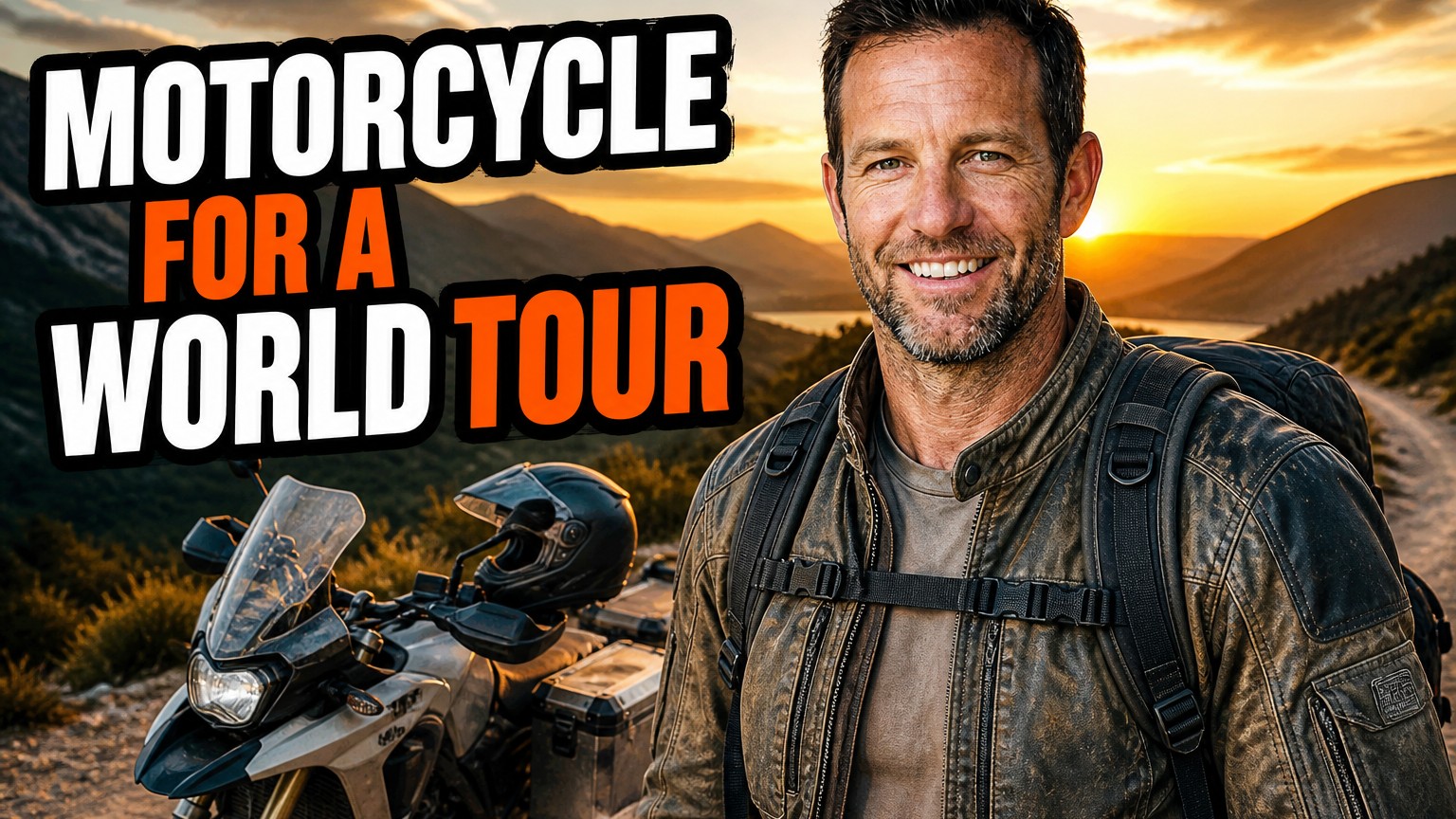
I’ve spent years dreaming about, planning and riding long-distance routes, and I can tell you the question I get asked most is simple: which bike should I take? There’s no single right answer, but there are definitely wrong ones. The wrong bike turns a trip of a lifetime into a long list of breakdowns and sore wrists.
In this list I’m sharing eight motorcycles I’d genuinely trust to cross continents. Some are light and cheap to fix. Others are big, comfortable and packed with tech. I’ve leaned on my own riding experience, owner feedback from the road and the real specs of each model.
- My top all-round pick is the Yamaha Ténéré 700: light, tough and easy to repair worldwide.
- If comfort and tech matter most, the BMW R 1300 GS and Honda Africa Twin Adventure Sports lead the pack.
- On a tight budget, the Royal Enfield Himalayan 450 and Kawasaki KLR650 are proven and affordable.
- Reliability, parts availability and weight matter far more than horsepower.
What I Look for Before Choosing a Long-Haul Bike
Before I get into the list, here’s the checklist I use. Every bike below earned its spot by scoring well in these areas. If you’re comparing other models, use the same filters.
Reliability and Simplicity
When you’re 800 km from the nearest dealer, simple beats clever. I prefer proven engines, minimal electronics and parts I can source or improvise. Fancy tech is great until a sensor fails in the middle of nowhere.
Weight and Handling
Every extra kilo hurts when you drop the bike in sand or mud, and you will drop it. I aim for a bike I can pick up alone with a full load. Lighter bikes make you braver, and that means better trips.
Range, Comfort and Serviceability
A 300+ km fuel range, a seat you can sit on for eight hours and easy access to the air filter, chain and oil drain all matter. I’ll also keep coming back to maintenance, since oil quality can make or break an engine over 50,000 km.
1. Yamaha Ténéré 700 — Best Overall for a World Tour
If I had to pick one bike and ride away tomorrow, it would be the Yamaha Ténéré 700. It uses the 689 cc CP2 parallel-twin, which makes around 72 hp. It’s smooth, torquey and famously unburstable.
The Ténéré 700 weighs roughly 205 kg fully fueled and has a 16-litre tank. The long-travel suspension and 21/18-inch wheels let it handle rough tracks with confidence. Pricing is typically around $10,500 to $11,500 in most markets.
Why I Love It
The Ténéré 700 is refreshingly basic. It has switchable ABS, a rally-style tower and no overcomplicated electronics. I’ve seen these bikes in remote corners of Mongolia, Africa and South America.
What to Watch
The stock seat is hard and the fuel range is modest, so I’d add a comfort seat and a bigger tank or extra fuel bladder. The stock suspension is also a little soft for heavy loads, so budget for an upgrade.
2. BMW R 1300 GS — Best Premium Pick for Comfort and Tech
The BMW R 1300 GS is the benchmark for big adventure bikes. Its 1,300 cc boxer twin produces about 145 hp and 149 Nm of torque. It’s a monster on tarmac, yet it still feels agile for its size.
It weighs around 237 kg ready to ride and has a 19-litre tank. Expect to pay about $19,000 to $22,000 depending on options. The optional electronic suspension adjusts automatically and is a joy on long days.
Why I Love It
The R 1300 GS eats motorway miles for breakfast. The wind protection, cruise control and rider aids make a tough route feel civilized. BMW’s global dealer network is also a real advantage across Europe, Asia and the Americas.
What to Watch
It’s pricey, heavy and electronics-rich. If something fails in a remote area, you may not be able to fix it yourself. I’d recommend it if most of your route is paved or well-traveled.
3. Honda Africa Twin Adventure Sports — Best for Long-Range Touring
The Honda Africa Twin CRF1100L Adventure Sports is my go-to recommendation for riders who want big-bike comfort without the BMW complexity. Its 1,084 cc parallel twin makes around 100 hp and has a friendly, linear power delivery.
The huge 24.8-litre tank gives outstanding range, often over 400 km. You can choose a manual gearbox or Honda’s excellent DCT automatic. Prices generally sit between $16,000 and $19,000.
Why I Love It
It feels bulletproof and the ergonomics are superb for taller riders. The DCT option is surprisingly good off-road too, since you can focus on the terrain rather than the clutch.
What to Watch
It’s tall and heavy, at over 240 kg fueled. Shorter riders may struggle, and a drop on a steep trail can mean a very long afternoon.
4. Royal Enfield Himalayan 450 — Best Budget-Friendly Adventure Bike
The Royal Enfield Himalayan 450 surprised me. The new 452 cc liquid-cooled engine makes about 40 hp and 40 Nm. That’s more than enough for a loaded long-distance trip at relaxed speeds.
It weighs about 196 kg ready to ride and has a 17-litre tank. The price is roughly $6,000 in the US and about ₹2.9 lakh in India. For the money, it’s a lot of bike with a proper 21/17-inch wheel setup.
Why I Love It
The Himalayan is cheap to buy, cheap to fix and genuinely capable on gravel. If you’re touring in Asia, parts and know-how are everywhere. I’d also read up on the best engine oil for 4 stroke motorcycle in india if you’re riding through the subcontinent, since fuel quality and heat vary widely.
What to Watch
It’s a newer platform, so long-term durability data is still building. Highway cruising is best kept to around 100 to 110 km/h, and the stock luggage options are limited.
5. Suzuki V-Strom 800DE — Best Mid-Size All-Rounder
The Suzuki V-Strom 800DE is the sensible, sorted choice. It uses a 776 cc parallel twin with about 83 hp and a crossover-plane crank that gives a lovely feel. It’s an easy bike to live with.
It has a 21-inch front wheel, 220 mm of suspension travel and a 20-litre tank. Weight is about 230 kg wet. Prices usually start around $11,000 to $12,000.
Why I Love It
It strikes a rare balance between road comfort and dirt ability. Suzuki’s reputation for dependable engines gives me confidence for a multi-year trip. Servicing is straightforward, and the bike isn’t intimidating for newer adventure riders.
What to Watch
It’s no featherweight, and it lacks the raw off-road edge of the Ténéré 700. For serious trails, I’d swap the tires and upgrade the skid plate.
6. Kawasaki KLR650 — Best Old-School Workhorse
The Kawasaki KLR650 has been crossing continents for decades, and the updated version is better than ever. The 652 cc single-cylinder engine now has fuel injection, and ABS is available. Power is modest at around 40 hp, but it’s relaxed and torquey.
It has a huge 23-litre tank (about 6.1 gallons) and costs roughly $7,000 to $7,500. It weighs a fair bit, at about 200 kg wet, but it’s incredibly tough and simple to work on.
Why I Love It
It’s a mechanic’s dream with a massive aftermarket and decades of owner knowledge. Oil changes are quick and the engine tolerates abuse. I always tell riders to choose a quality lubricant, and my guide to the best engine oil for motorcycle models like this one is a helpful starting point.
What to Watch
It’s not fast, and vibration at highway speeds can be tiring. Suspension is basic and I’d budget for an upgrade if you plan a heavy load.
7. Triumph Tiger 900 Rally Pro — Best Mid-Weight for Rough Terrain
The Triumph Tiger 900 Rally Pro is the one I’d pick for riders who want power, style and real off-road ability. Its 888 cc triple makes about 106 hp and has a wonderful, characterful growl. It’s thrilling on twisty roads.
It has a 20-litre tank, long-travel Showa suspension and a 21-inch front wheel. Pricing usually runs $15,000 to $16,500. The Rally Pro also adds a rally-style riding mode and a comfortable, adjustable seat.
Why I Love It
It’s one of the most fun bikes here. The triple engine is smooth, and the suspension is genuinely capable off the beaten path. It looks great too, which never hurts after months on the road.
What to Watch
Triumph’s dealer network is thinner than BMW’s or Honda’s in some regions. It’s also a fairly tall and complex machine, so I’d research parts availability along your route.
8. KTM 890 Adventure R — Best for Serious Off-Road Riders
The KTM 890 Adventure R is for riders who plan to spend a lot of time off the pavement. Its 889 cc parallel twin makes about 105 hp and 100 Nm. The chassis is light and sharp for a bike this size.
It has fully adjustable WP XPLOR suspension, a 21/18-inch wheel setup and a 20-litre tank. Expect a price between $13,000 and $14,500. Its low-slung fuel tank keeps the center of gravity low, which helps in tricky terrain.
Why I Love It
The 890 Adventure R is seriously capable when the road disappears. The suspension handles rocks and ruts beautifully. It’s the closest thing here to a proper rally bike for the street.
What to Watch
The seat is tall and the ride is firm on long tarmac stretches. KTM service intervals are also shorter than Japanese rivals, so I’d plan maintenance carefully.
Keeping Your Engine Healthy Over Thousands of Miles
No matter which bike you pick, oil is the cheapest insurance you can buy. On a world tour you’ll face heat, dust, cold and variable fuel quality. I always carry a spare filter and enough oil for at least one full change.
If you want to dig deeper, I’ve found these guides useful. Read up on the best motor oil for 4 stroke motorcycle engines and compare the top engine oil for 4 stroke motorcycle options for your climate.
You can also check what is the best engine oil for 4 stroke motorcycle riders recommend for high-mileage use. Always match the viscosity and JASO rating in your manual.
How I’d Choose Between These Bikes
Here’s my simple decision guide. It’s based on my own experience and the kind of trips I’ve seen riders enjoy most.
- Want the safest all-round choice? Go for the Yamaha Ténéré 700.
- Want maximum comfort and tech? Pick the BMW R 1300 GS or Honda Africa Twin Adventure Sports.
- On a tight budget? Choose the Royal Enfield Himalayan 450 or Kawasaki KLR650.
- Mostly mixed roads? The Suzuki V-Strom 800DE is a superb fit.
- Love performance and trails? Look at the Triumph Tiger 900 Rally Pro or KTM 890 Adventure R.
Final Thoughts From My Own Saddle
The truth is that the best bike is the one you’ll actually ride. I’ve seen people finish epic journeys on 250 cc singles and others give up on expensive flagships. Confidence, preparation and a bike that fits you matter more than a spec sheet.
If you’re still undecided, sit on as many of these as you can and try a test ride. Then spend your remaining budget on good tires, luggage, suspension and spares. Your future self, somewhere on a dusty road at sunset, will thank you.
Frequently Asked Questions
What is the best motorcycle for a world tour overall?
For most riders I recommend the Yamaha Ténéré 700 for its balance of reliability, light weight and off-road ability. If you want more comfort and have a bigger budget, the BMW R 1300 GS and Honda Africa Twin Adventure Sports are excellent.
Is a bigger engine better for a round-the-world trip?
Not necessarily. Engines between 450 cc and 900 cc are usually easier to pick up, cheaper to fix and better on fuel, which matters more than raw power on remote roads. Big bikes are comfortable on pavement but harder to handle on sand, mud and rocky tracks.
How much should I budget for a world tour motorcycle?
Expect roughly $6,000 to $20,000 for the bike, depending on the model. Add around $2,000 to $4,000 for luggage, crash protection, suspension upgrades, tools and spares before you leave.
How often should I change the oil on a long trip?
Most adventure bikes need an oil change every 6,000 to 10,000 km, but check your owner’s manual. On dusty or hot routes, I change it earlier and carry a spare filter. Always use oil that meets your bike’s JASO and API specification.

Related Articles
7 Best Batteries for Motorcycles I’ve Tested and Trust in 2026
I've tested dozens of motorcycle batteries to find the best performers. From AGM to lithium, here are my top picks…
Jake Miller
15 min read

The Perfect Battery for Your Harley Davidson Softail: A Rider’s Complete Guide
Discover the perfect battery for your Harley Davidson Softail. I've tested multiple options and share real-world performance data, maintenance tips,…
Jake Miller
14 min read

The Best Battery for Your Harley Davidson: My Complete Guide After Years of Testing
Discover which battery truly performs best for Harley Davidson motorcycles. Real rider experience with AGM, lithium, and OEM options to…
Jake Miller
12 min read