
8 Best City Motorcycles for Beginners: Easy, Nimble Rides I’d Actually Recommend
 Jake Miller
8 min read
Jake Miller
8 min read
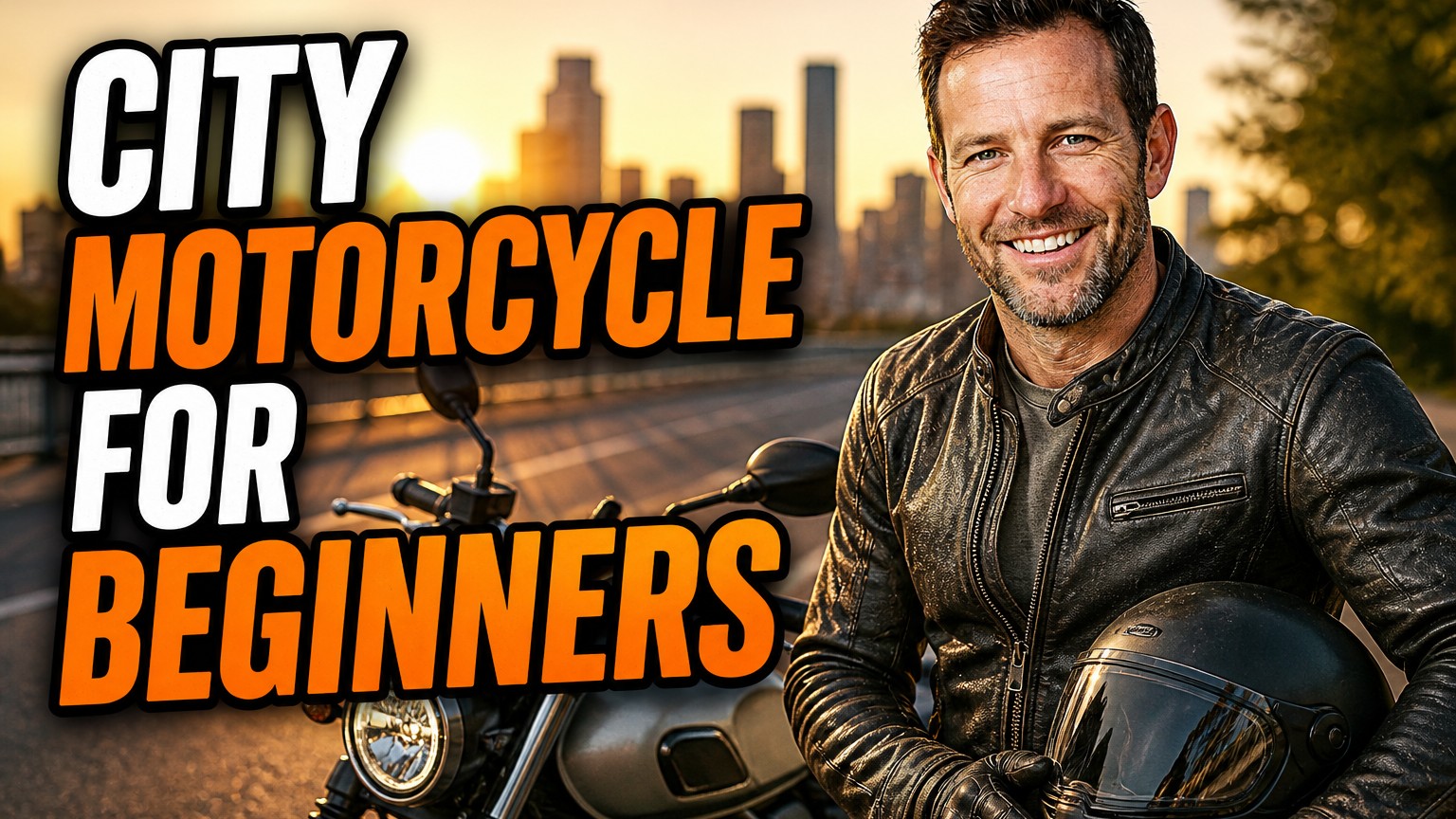
I still remember my first week of city riding. Stop-and-go traffic, potholes, surprise door openings, and a clutch hand that was cramping by lunchtime. The right bike made all the difference, and the wrong one would have made me quit.
Over the years I’ve ridden, borrowed, and helped friends buy a lot of starter bikes. In this guide I’m sharing the eight I think work best in urban environments. I focus on weight, seat height, power delivery, and real-world costs.
Whether you’re commuting to work or just running errands, there’s a great option here for you. Let’s get into it.
- My top all-around city pick is the Honda Rebel 300: low, light, and forgiving.
- For budget and fun, the Yamaha MT-03 and Kawasaki Z400 stand out.
- Prioritize low weight, a low seat, ABS, and smooth throttle over raw power.
- Most of these bikes cost between roughly $4,500 and $7,500 new.
What I Look for in a Beginner City Motorcycle
City riding is a different animal from open-road touring. You spend most of your time at low speeds, in tight gaps, and on imperfect pavement. That changes what matters in a bike.
Weight and Seat Height
A light bike is easier to push, park, and recover if you wobble. I look for curb weight under about 400 pounds and a seat height under 31 inches. Being able to flat-foot at a stoplight is a huge confidence booster.
Predictable Power
You don’t need big horsepower. You need a smooth throttle and linear power. Most of my picks fall in the 300cc to 400cc range, with one or two smaller and one larger.
Safety and Running Costs
ABS is a must in my book. I also weigh insurance cost, fuel economy, and maintenance, because a commuter bike should be cheap to live with.
1. Honda Rebel 300 — Best Overall City Bike for Beginners
If a friend asked me for one bike and no explanation, I’d say the Honda Rebel 300. It has a seat height of just 27.2 inches and weighs around 366 pounds with a full tank. That’s remarkably approachable.
The 286cc single-cylinder engine makes about 27 horsepower. It’s smooth, quiet, and never feels intimidating. The Rebel 300 pulls cleanly from a stop and cruises at 60 mph without fuss.
Why I Love It in Traffic
The upright riding position gives you a great view over cars. The clutch is light, and the steering is easy at parking-lot speeds. ABS is available as an option, and I’d absolutely get it.
Pricing generally starts around $4,700 to $5,200. Fuel economy is excellent, often in the 70+ mpg range. If you’re comparing displacement classes, you may also like my breakdown of the best 300cc motorcycle for beginners.
2. Yamaha MT-03 — Best for Sporty Urban Fun
The Yamaha MT-03 is the bike I recommend when a new rider says, “I want something that looks aggressive but won’t bite.” It uses a 321cc parallel twin making roughly 42 horsepower.
Weight is about 369 pounds, and seat height is 30.7 inches. That’s a bit taller than the Rebel, but the slim chassis makes it easy to manage.
What Stands Out
The upright naked-bike ergonomics are comfortable for long commutes. The wide handlebar gives great leverage for slow-speed maneuvers. I also like its LED lighting and standard ABS.
The MT-03 usually sells for around $5,000 to $5,600. It’s one of the best values in the class, and I think it’s more engaging than most competitors.
3. Kawasaki Z400 — Best Naked Bike with Room to Grow
The Kawasaki Z400 shares its engine with the Ninja 400: a 399cc parallel twin with around 45 horsepower. Power is more than adequate, yet it remains docile at low rpm.
It weighs roughly 366 pounds and has a 30.9-inch seat. I find it incredibly easy to filter through traffic on, thanks to its narrow build and light controls.
Who It Suits
This is a great pick if you think you’ll want more performance within a year. You won’t outgrow it quickly. Prices typically run $5,300 to $5,800, and ABS is standard.
If you’re deciding between engine sizes, my guide to the best 400cc motorcycle for beginners goes deeper.
4. Kawasaki Ninja 400 — Best Beginner Sportbike for the City
Sportbike lovers, this one’s for you. The Kawasaki Ninja 400 has the same 399cc engine as the Z400, but with full fairings and a more aggressive stance. It’s also one of the most proven beginner sportbikes ever built.
The bike weighs about 374 pounds, and the seat height is 30.9 inches. Its slip-and-assist clutch makes stop-and-go traffic far less tiring on your left hand.
The Trade-Off
The riding position leans forward more than the naked bikes do. In heavy traffic, I feel it in my wrists after an hour. For short commutes it’s a delight; for long stop-and-go slogs, I’d lean toward the Z400 instead.
Expect to pay roughly $5,500 to $6,200 new. It also holds resale value well.
5. Suzuki SV650 — Best Step-Up Option with Friendly Manners
Some beginners are bigger riders or have prior experience on scooters or dirt bikes. For them, the Suzuki SV650 can be a fantastic first street bike. Its 645cc V-twin produces about 75 horsepower, but delivers it very smoothly.
Seat height is only 30.9 inches, and weight is around 427 pounds. It’s heavier than the others on this list, yet balanced and confidence-inspiring once you’re moving.
Why It Works in Town
The V-twin has strong low-end torque, so you rarely need to rev it. Traction control and ABS come standard on the current model. Pricing sits around $7,600 to $8,000.
If you’re curious about this size class, check out my take on the best 650cc motorcycle for beginners.
6. Royal Enfield Meteor 350 — Best Relaxed Cruiser for Daily Commutes
The Royal Enfield Meteor 350 is the calmest bike on this list, and I mean that as a compliment. Its 349cc air-oil-cooled single makes about 20 horsepower with plenty of low-end pulse.
It weighs around 421 pounds, yet the low center of gravity hides it well. The seat height is about 30.1 inches, and the footpegs are forward and comfortable.
My Experience
I found it incredibly relaxing in 30 to 45 mph traffic. It isn’t fast, and it doesn’t pretend to be. Dual-channel ABS is standard, and pricing starts around $4,500 to $4,800.
Note that highway passing takes planning. For a purely urban rider, though, I think it’s wonderful.
7. Honda CB300R — Best Premium Lightweight Naked
The Honda CB300R feels like a small, refined European roadster. A 286cc single makes about 31 horsepower, and the bike weighs roughly 351 pounds. That makes it one of the lightest on this list.
Seat height is 31.5 inches, so shorter riders should sit on one first. Once you’re underway, though, it’s remarkably agile and easy to flick through gaps.
Standout Features
It has a full-LED lighting package, a digital display, and standard ABS. The build quality is superb. Prices run around $4,900 to $5,400.
I like it for riders who value fit and finish. For those wanting an even smaller engine, my guide to the best 250cc motorcycle for beginners covers more choices.
8. Kawasaki Ninja 500 — Best Modern All-Rounder for Growth
The newer Kawasaki Ninja 500 has a 451cc parallel twin making around 45 horsepower. It’s a bit torquier than the Ninja 400, which helps with urban acceleration.
Weight is about 388 pounds, and seat height is roughly 30.9 inches. It adds a modern TFT-style display on some trims, plus a more refined ride.
Is It Too Much?
Not at all. Power is smooth and linear, and the slipper clutch tames downshifts. Expect a price around $5,999 to $6,500.
If you’re thinking even bigger, I also cover the best 600cc motorcycle for beginners, though most new riders don’t need that much power in town.
How I’d Choose Between These Bikes
It comes down to your priorities. Here’s my quick cheat sheet.
If You Want Maximum Confidence
Pick the Honda Rebel 300. Its low seat and light weight are hard to beat for a first-timer.
If You Want Style and Fun
The Yamaha MT-03 and Kawasaki Z400 deliver personality without being scary. I’d also give the CB300R a look.
If You Want Low Stress
The Royal Enfield Meteor 350 is a calm, easygoing companion. It’s ideal if you value comfort over speed.
Gear and Habits That Matter More Than the Bike
No bike will save you if you skip proper gear. I never ride without a quality helmet, armored jacket, gloves, and over-the-ankle boots. Budget at least $500 to $800 for gear on top of the bike price.
Take a rider safety course, too. It was the single best investment I made, and many insurance companies even offer discounts for completing one.
City Riding Tips from My Own Mistakes
- Assume you’re invisible. I ride as if every driver will pull out in front of me.
- Watch the road surface. Painted lines, manhole covers, and wet leaves get slippery.
- Leave space. A big following distance gives you time to react.
- Practice slow-speed control. Parking-lot drills pay off enormously.
Final Thoughts
The best first bike is the one that makes you want to ride every day. All eight of these have earned my respect for being approachable, reliable, and fun in an urban setting.
If I had to choose just one, I’d go with the Honda Rebel 300 for its sheer ease. But sit on a few, ask questions, and trust how each one feels. Ride safe, and enjoy the journey.
Frequently Asked Questions
What makes a motorcycle good for city riding as a beginner?
Look for a low seat height, light curb weight (under 400 lbs is ideal), a smooth and forgiving throttle, good low-speed manageability, and ABS brakes. A small to mid-size engine of roughly 250cc to 400cc is plenty for city traffic.
Is a 300cc motorcycle enough for city commuting?
Yes. A 300cc bike like the Kawasaki Ninja 400 or Honda Rebel 300 has enough power to keep up with traffic and even handle short highway stints, while staying easy to control for new riders.
Should a beginner buy a new or used motorcycle for the city?
Either can work. A used bike saves money and is less painful if you drop it, but a new bike gives you a warranty and modern features such as ABS. Always have a used bike inspected before buying.
Do I need ABS on my first city motorcycle?
It is strongly recommended. ABS helps prevent wheel lockup during panic stops on wet or uneven city pavement, which is where many beginners get into trouble.

Related Articles
7 Best Batteries for Motorcycles I’ve Tested and Trust in 2026
I've tested dozens of motorcycle batteries to find the best performers. From AGM to lithium, here are my top picks…
Jake Miller
15 min read

The Perfect Battery for Your Harley Davidson Softail: A Rider’s Complete Guide
Discover the perfect battery for your Harley Davidson Softail. I've tested multiple options and share real-world performance data, maintenance tips,…
Jake Miller
14 min read

The Best Battery for Your Harley Davidson: My Complete Guide After Years of Testing
Discover which battery truly performs best for Harley Davidson motorcycles. Real rider experience with AGM, lithium, and OEM options to…
Jake Miller
12 min read