
7 Best Motorcycles for Winter Riding: Cold-Weather Bikes I Actually Trust
 Jake Miller
9 min read
Jake Miller
9 min read
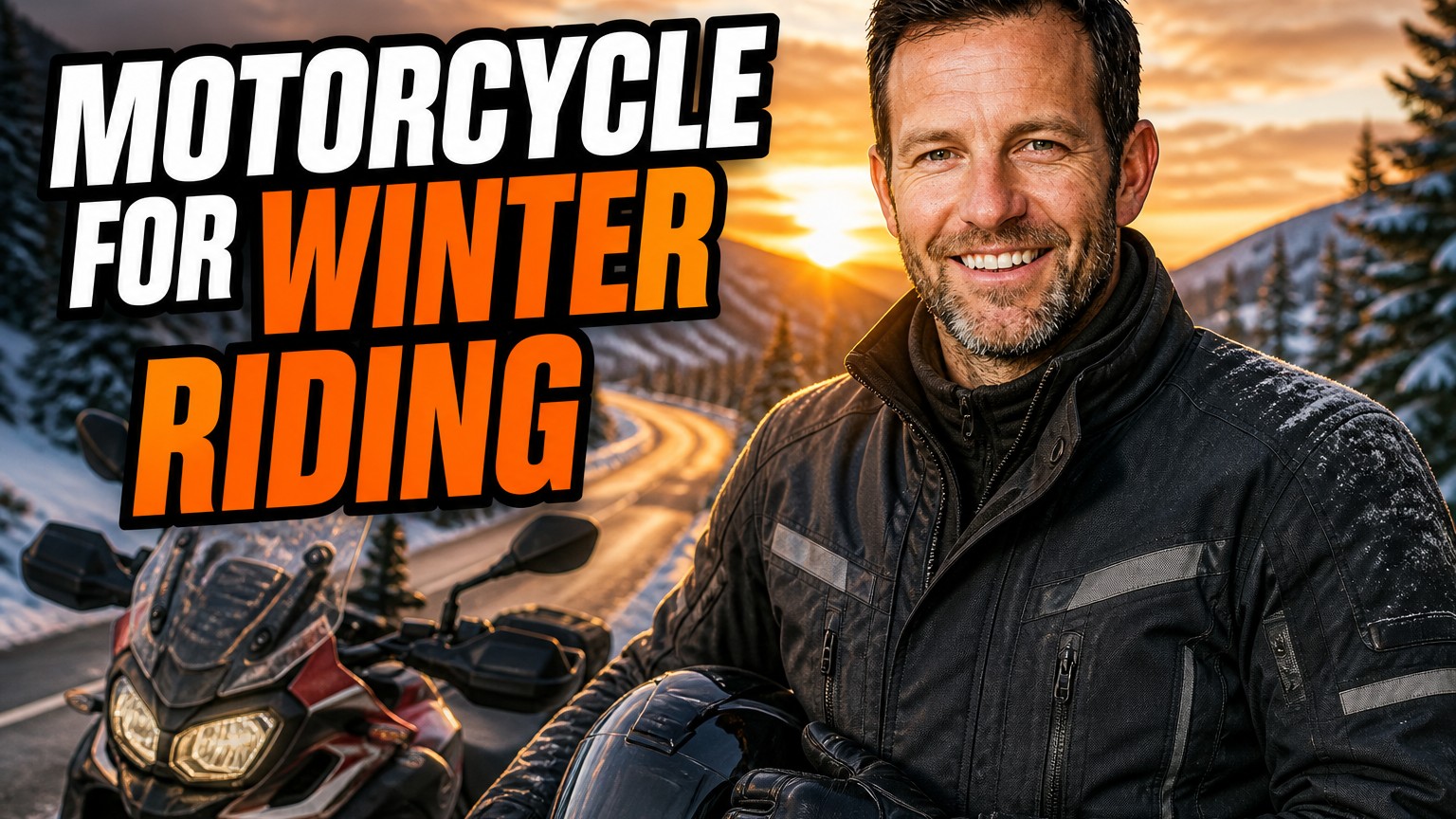
I’ll be honest: the first time I rode through a real winter, I was underprepared and on the wrong bike. My fingers went numb within ten minutes, my visor fogged solid, and a patch of black ice reminded me how thin the margin for error is.
Since then I’ve spent many cold seasons commuting, touring and just goofing around on frozen back roads. I’ve learned that the right motorcycle makes the difference between a miserable slog and a genuinely fun ride.
Below are the seven bikes I’d pick for riding in the cold. Each has features I’ve come to value: rider protection, electronics that help on slippery surfaces, and the ability to carry or accept winter-friendly accessories.
- My overall pick is the BMW R 1300 GS. Its protection, electronics and heated-gear compatibility are hard to beat.
- For true snow and ice, the Ural Gear-Up with its sidecar and two-wheel drive is in a league of its own.
- On a budget, the Suzuki V-Strom 650 XT and Honda NC750X DCT offer excellent winter value.
- Heated grips, winter tires and proper fluids matter as much as the bike itself.
What I Look For in a Cold-Weather Motorcycle
Before the list, let me explain how I judge a winter bike. A machine that’s brilliant in July can be awful in January, so my criteria are a little different from a summer shootout.
Weight, Seat Height and Stability
Slippery surfaces punish top-heavy, hard-to-manage bikes. I prefer a low center of gravity and a seat height I can flat-foot, or nearly flat-foot, when the ground turns treacherous.
Wind Protection and Electronics
A good windscreen, hand guards and fairing coverage can make an enormous difference to how cold you feel. I also want switchable traction control and ABS, because those aids can save you on a patch of ice.
Heated Gear Compatibility
Heated grips, a heated seat, or at least a strong charging system for a heated jacket liner are non-negotiable for me. Without them, even the best bike gets uncomfortable fast.
1. BMW R 1300 GS — Best Overall Winter Motorcycle
If I could only own one bike for year-round riding, the BMW R 1300 GS would be a serious contender. I’ve ridden the GS lineage in sub-freezing temperatures, and the R 1300 GS carries that heritage forward with a lot more polish.
Its 1,300cc boxer twin makes roughly 145 hp, with plenty of torque low down. That torque is a gift on slick roads because you rarely need to rev hard to move.
Why It Works in the Cold
The cylinder heads stick out in the airstream, but the big adjustable windscreen and wide hand guards keep a lot of cold air off my torso and hands. BMW offers heated grips and a heated seat through its comfort options, and I’d tick both boxes.
The optional electronically adjustable suspension and the riding modes (including an Enduro mode that relaxes traction intervention) help in snowy, rutted conditions. Expect prices to start around $20,000 and climb with options.
If you also ride with a passenger, I’ve put together thoughts on the best adventure motorcycle for 2up riding, and the GS is right at the top of that conversation too.
2. Honda Africa Twin Adventure Sports ES DCT — Best for Hands-Off Cold-Weather Comfort
The Honda Africa Twin Adventure Sports ES is the bike I recommend to riders who hate fumbling with a clutch lever while wearing thick winter gloves. With the optional dual-clutch transmission (DCT), there’s simply no clutch to worry about.
That matters more than you’d think. Stiff, numb fingers and an unpredictable friction zone on ice are a bad combination, and the DCT takes that out of the equation.
Specs That Matter
The 1,084cc parallel twin delivers around 100 hp with a smooth, tractable character. The Adventure Sports version adds a larger 6.4-gallon tank, a taller windscreen and electronically adjustable Showa suspension.
It also has cornering-aware ABS, adjustable traction control and a G switch that lets me dial in the DCT’s behavior on loose surfaces. Pricing generally lands somewhere between $17,000 and $19,000, depending on the year.
The downside is height. The seat is tall, so shorter riders should sit on one before committing.
3. Ural Gear-Up — Best for Snow and Ice
I’ll say it plainly: if you regularly ride on snow-packed roads, nothing on two wheels beats a sidecar rig with a driven third wheel. The Ural Gear-Up is my pick for that job.
The Gear-Up uses a 749cc air-cooled boxer twin with a part-time two-wheel-drive system you can engage on the fly. It even has a reverse gear, which feels bizarre on a motorcycle until you’re backing out of a snowy driveway.
What Riding It Is Like
It’s a very different experience. You steer more than lean, and with three wheels, you don’t fall over when the road gets slick. I’ve driven one through unplowed side roads that would have stopped most bikes cold.
The trade-offs are modest power of around 40 hp, a top cruising speed in the 60s mph, and a price that usually sits in the high-teens to low $20,000s. It’s slow, but it’s wonderfully capable and endlessly charming in the cold.
4. Yamaha Ténéré 700 — Best Lightweight Winter Adventure Bike
Heavy bikes can be terrifying when you drop them on ice. That’s why I love the Yamaha Ténéré 700: it’s relatively light, narrow and incredibly easy to manage.
The 689cc CP2 parallel twin makes about 72 hp and has a flexible, forgiving power delivery. In my experience, that gentle throttle response is ideal when traction is questionable.
Making It Winter-Ready
Out of the box, the Ténéré 700 is fairly spartan, with a modest windscreen and no heated grips. But the aftermarket support is huge, and I’d add heated grips, a taller screen and handguards right away.
With a price around $10,000 to $11,000, it’s far cheaper than many rivals, and you can spend the savings on proper winter gear. Its long-travel suspension also swallows frost heaves and potholes that appear after a hard freeze.
5. Triumph Tiger 900 Rally Pro — Best Mid-Size Adventure Bike for Cold Comfort
The Triumph Tiger 900 Rally Pro sits in a sweet spot for me. It’s more manageable than the big 1,200-1,300cc machines but offers many of the same comforts.
Its 888cc triple produces about 106 hp, with a distinctive, torquey character that I find particularly pleasant on cold mornings. The Rally Pro also comes with a generous electronics suite, including multiple riding modes, cornering ABS and traction control.
Winter-Friendly Features
Triumph equips the Pro-level Tigers with features like heated grips and a heated rider seat (check the specification for the model year you’re considering). The large 5.3-gallon tank and the adjustable screen make it a very capable cold-weather tourer.
Expect to pay in the $16,000 to $17,000 range. It’s a bike I’d happily ride on a frosty 300-mile day.
6. Honda NC750X DCT — Best Budget-Friendly Winter Commuter
Not every winter rider wants an adventure bike. For daily commuting, the Honda NC750X DCT is one of the most sensible choices I know.
The 745cc parallel twin produces about 58 hp, which sounds modest, but the torque is strong and the fuel economy is excellent. Its low center of gravity makes the bike feel lighter than it is, and that’s a confidence booster on cold, greasy pavement.
Practical Perks
The DCT option removes clutch work, and the front “trunk” is big enough to swallow a full-face helmet or a bag of winter gear. Pricing is usually around $8,000 to $9,000, making it a seriously affordable all-rounder.
It’s also a decent two-up machine. If that’s your use case, you may like my roundup of the best 300cc motorcycle for 2 up riding for smaller alternatives.
7. Suzuki V-Strom 650 XT — Best Value for Year-Round Riding
The Suzuki V-Strom 650 XT has been a quiet legend for years, and I think it’s still one of the smartest buys for riders who want a winter-capable bike without a big bill.
The 645cc V-twin makes roughly 70 hp and is famously durable. I’ve seen examples with enormous mileage still running happily through brutal winters.
Why I Recommend It
The XT trim adds spoked wheels, hand guards and an adjustable windscreen, all of which help in the cold. It has a three-mode traction control system and ABS, and the 5.3-gallon tank offers solid range.
Pricing is generally around $9,500 to $10,000. Like the Ténéré, I’d add heated grips and a good set of winter tires, and I’d consider it a complete cold-weather package.
Winter Prep: Getting the Most from Any Bike
Even the best bike needs a bit of help when the mercury drops. Here’s what I always do before the first cold ride of the season.
Fluids and Fuel
Cold thickens oil, which makes starting harder and increases wear. I use a quality synthetic and recommend reading up on the best motorcycle oil for winter to see what suits your engine.
Viscosity matters just as much, so check my guide to the best weight motorcycle oil for winter before your next oil change. And if your bike will sit for weeks at a time, a best winter fuel stabilizer for motorcycle keeps the tank from going stale.
Tires and Traction
Tires are the single biggest safety variable in winter. I run dual-sport rubber with a softer compound and check pressures often, since cold air can drop your pressure noticeably overnight.
For packed snow and ice, studded tires are the only truly safe option. Without them, I keep my speeds low and my inputs smooth.
Rider Gear
Layering is key. I wear a moisture-wicking base layer, a heated liner, a windproof outer shell and insulated waterproof gloves.
A breath deflector or a Pinlock-style visor insert keeps fogging under control. Staying warm is a safety issue, because cold riders react slower and make worse decisions.
Post-Ride Care
Road salt is brutal on metal and electrical connectors. I rinse the bike with cool water after salty rides, dry it off, and apply a protectant like ACF-50 to exposed metal parts.
Final Thoughts: Which Winter Bike Should You Choose?
My overall recommendation is the BMW R 1300 GS if your budget allows. If you ride in genuinely deep snow, the Ural Gear-Up is in a class by itself.
On a tighter budget, the Suzuki V-Strom 650 XT, Yamaha Ténéré 700 and Honda NC750X DCT all deliver great winter value. Whichever you choose, invest in heated gear, winter-appropriate tires and good fluids, and you’ll find winter riding is far more rewarding than most people assume.
Stay warm, ride smooth, and respect the ice. I’ll see you out there.
Frequently Asked Questions
What type of motorcycle is best for winter riding?
In my experience, adventure and dual-sport bikes are the best winter choice. They offer upright ergonomics, good wind protection, long-travel suspension for rough roads, and room for accessories like heated grips. A sidecar rig such as the Ural Gear-Up adds a third wheel for real snow and ice traction.
Do I need special tires to ride a motorcycle in winter?
Yes, I strongly recommend it. Look for dual-sport or winter-rated rubber with a silica-rich compound that stays pliable in the cold. For packed snow and ice, studded tires are the only truly safe option. Always check pressure often, because cold air drops tire pressure quickly.
What oil should I use in my motorcycle during winter?
Choose a fully synthetic oil with a lower cold-start viscosity, such as 5W-40 or 10W-40, and always follow your owner’s manual. Thinner cold-flow oil reaches engine parts faster on frosty mornings and reduces wear.
Should I store my bike for winter or ride it?
Either works if you prepare properly. If you store it, use a fuel stabilizer, a battery tender and a dry, covered space. If you ride, add heated gear, winter tires, and rinse off road salt after every trip.

Related Articles
7 Best Batteries for Motorcycles I’ve Tested and Trust in 2026
I've tested dozens of motorcycle batteries to find the best performers. From AGM to lithium, here are my top picks…
Jake Miller
15 min read

The Perfect Battery for Your Harley Davidson Softail: A Rider’s Complete Guide
Discover the perfect battery for your Harley Davidson Softail. I've tested multiple options and share real-world performance data, maintenance tips,…
Jake Miller
14 min read

The Best Battery for Your Harley Davidson: My Complete Guide After Years of Testing
Discover which battery truly performs best for Harley Davidson motorcycles. Real rider experience with AGM, lithium, and OEM options to…
Jake Miller
12 min read