
Motorcycle Overheating in Traffic: Why It Happens and How I Keep My Engine Cool
 Jake Miller
11 min read
Jake Miller
11 min read
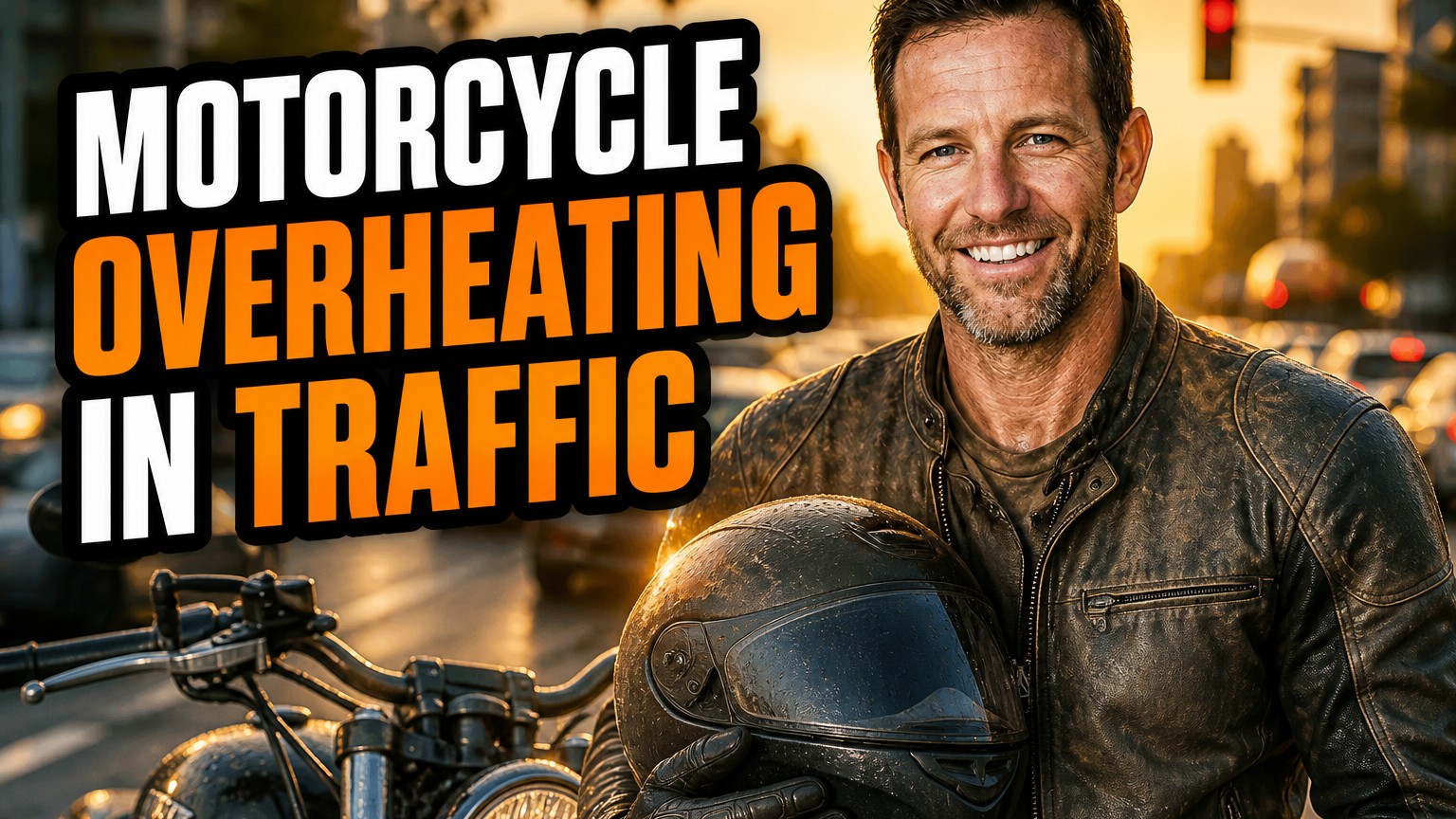
There is a special kind of misery in sitting at a red light on a hot afternoon with your thighs roasting and your temperature gauge creeping upward. I’ve been there more times than I’d like to admit. The engine fan screams, the heat rolls off the tank, and you start wondering whether you’ll make it home.
Motorcycle overheating in traffic is one of the most common complaints I hear from fellow riders, and it’s also one of the most preventable. In this guide I’ll share what I’ve learned from years of commuting, a few costly mistakes, and the habits that keep my bike running cool even in stop-and-go gridlock.
- Slow traffic cuts airflow, so heat builds quickly, especially on air-cooled and poorly maintained bikes.
- The usual culprits are low coolant, a weak fan, old or wrong oil, a dirty radiator, and a lean-running engine.
- If your bike overheats, stop, switch off, and let it cool before you touch anything.
- Regular maintenance and the right oil are the cheapest insurance against heat damage.
Why Slow Traffic Is So Hard on a Motorcycle Engine
When I’m cruising at 60 mph, the engine gets a constant blast of cool air. That airflow does a huge amount of work, carrying heat away from the cylinder fins, the radiator, and the exhaust. Once I’m crawling at 5 mph, most of that free cooling disappears.
At the same time, the engine is still producing plenty of heat. Idling and clutch-slipping in traffic keep combustion going, but nothing is pushing air through the system. It’s a bit like running on a treadmill in a closed room.
Air-Cooled vs. Liquid-Cooled Bikes
I’ve ridden both, and they behave differently. Air-cooled engines rely almost entirely on airflow over the fins, so they feel the pain of traffic first. You’ll notice the engine ticking and the heat radiating onto your legs.
Liquid-cooled engines are far more forgiving, but they aren’t immune. They depend on coolant level, a working thermostat, a clean radiator, and a fan that actually switches on. If any link in that chain weakens, the bike overheats just the same.
The Role of Ambient Temperature
Summer asphalt can push surrounding air above 40°C (104°F). That leaves a much smaller gap between the air temperature and the engine temperature, so the cooling system struggles to shed heat.
On those days, I treat my bike like an athlete in a heatwave. It needs extra care, and I give it a little extra respect.
Warning Signs I Never Ignore
Engines rarely fail without warning. Learning to read the early signals has saved me from at least one seized engine. Here’s what I watch for.
Early Signals
- Temperature gauge climbing past its usual midpoint, or a warning light flashing.
- Radiator fan running constantly and still not bringing the temperature down.
- Heat soaking into my legs, seat, or hands far more than usual.
- A rough or hesitant idle, often with the engine feeling “sluggish.”
Serious Red Flags
If I smell burning oil, hear pinging or knocking, or see steam or coolant leaking, I stop immediately. These signs mean the engine is already in distress. Riding on is a gamble with a very expensive prize.
Other red flags include a sudden loss of power and a sweet, syrupy smell, which is usually coolant boiling off. Don’t push it for “just a few more blocks.” I’ve learned that lesson the hard way.
The Most Common Causes I’ve Found
Most overheating problems come down to a handful of causes. I check these in order, starting with the cheapest and easiest.
1. Low or Degraded Coolant
This is the number one cause on liquid-cooled bikes. Coolant leaks slowly, evaporates, and loses its protective properties over time. Old coolant also boils at a lower temperature, which makes things worse.
I check the reservoir level once a month with the engine cold. If I’m topping it up regularly, I look for leaks around the hoses, water pump, and radiator cap.
2. A Failing Radiator Fan or Fan Switch
The fan is your lifeline in traffic. If it doesn’t kick in, the engine temperature climbs fast. A simple test is to let the bike idle until it warms up and see whether the fan comes on.
If the temperature rises well past normal and the fan stays silent, suspect a bad fan, a blown fuse, a faulty relay, or a dead temperature sensor. These are often cheap fixes if you catch them early.
3. A Clogged or Dirty Radiator
Mud, bugs, leaves, and bent fins reduce how much air can pass through the radiator. I’ve pulled off enough road debris to fill a small bag. A gentle rinse with a garden hose, spraying from the back toward the front, makes a real difference.
Avoid a pressure washer on the fins, since it flattens them easily. Be gentle and patient.
4. Old, Wrong, or Overfilled Engine Oil
Oil does more than lubricate. It also carries heat away from the hottest parts of the engine. When oil is old, thin, or the wrong grade, it breaks down and loses that ability.
Choosing the right product matters, and I’ve spent a lot of time researching it. If you’re comparing options, this breakdown of the best motor oil for 4 stroke motorcycle is a good starting point. It helps you match viscosity and specification to your engine.
5. Problems After Servicing
I once noticed my bike running hotter right after a service, and I was confused until I checked the oil level. Overfilling, underfilling, or using the wrong grade can all raise temperatures noticeably.
If this sounds familiar, read up on bike engine overheating after oil change causes solutions. It covers the most common mistakes and how to fix them.
6. Lean Fuel Mixture or Ignition Issues
A lean-running engine burns hotter. This can come from a clogged jet, an air leak, a dirty injector, or an aftermarket exhaust and air filter without a proper tune.
If your bike has been modified and now runs hot in traffic, get it dyno-tuned. I skipped this once, and I paid for it in both comfort and reliability.
7. Dragging Brakes or a Slipping Clutch
Less obvious causes can add heat too. A sticking brake caliper makes the engine work harder. A worn clutch slips and generates extra heat, especially in constant stop-and-go riding.
What I Do When My Bike Starts Overheating
Panic is the enemy here. Over time I’ve built a simple routine that keeps me calm and protects the engine.
Step-by-Step Roadside Response
- Find a safe, shaded spot as soon as the temperature rises abnormally.
- Switch the engine off. Idling in place only keeps adding heat without airflow.
- Wait at least 15 to 30 minutes before touching anything near the radiator.
- Check the coolant reservoir level, and top up only when the engine is fully cold.
- Inspect for leaks, loose hoses, or a stuck fan.
- Ride gently afterward, avoiding long idles and hard acceleration.
A Critical Safety Warning
Never open a hot radiator cap. The coolant is under pressure and can spray out at scalding temperatures. I’ve seen a rider end up with a serious burn from this mistake, so please wait.
What About Revving the Engine?
Some riders swear that revving the engine helps the fan or water pump work harder. In my experience, it mostly adds more heat. I prefer to shut down and let the bike rest.
Riding Techniques That Reduce Heat in Congestion
Maintenance is half the story. The other half is how I ride when the road turns into a parking lot.
Use Smart Filtering Where It’s Legal
Where lane filtering is allowed, I use it carefully. Keeping the bike moving, even slowly, helps airflow. It also gets me out of the worst of the exhaust heat from cars.
Avoid Sitting With the Clutch Pulled In
Holding the clutch for long periods at lights wears the clutch and adds friction heat. At longer stops, I put the bike in neutral. At very long stops, I switch the engine off completely.
Choose Your Route and Timing
When I can, I shift my commute away from peak hours. Even leaving 30 minutes earlier can mean far less crawling. I also choose routes with more flow, even if they’re slightly longer.
Dress for the Heat
This doesn’t cool the engine, but it keeps me thinking clearly. A ventilated jacket, a light base layer, and plenty of water make a big difference. A tired, overheated rider makes poor decisions, and that’s a safety issue too.
Oil Choice: A Small Decision With a Big Cooling Impact
I used to treat oil as an afterthought. I’d grab whatever was cheapest and move on. Now I take it much more seriously, especially for a bike that lives in heavy traffic.
Good oil resists thermal breakdown, maintains its viscosity, and protects the engine when things get hot. For a broader look at your options, check out this guide to the top engine oil for 4 stroke motorcycle. It makes comparing grades much easier.
Match Oil to Your Climate
Climate plays a big role. If you ride in a hot, congested region, you’ll want to be careful about viscosity and specification. Riders in warm countries often have different needs than those in cooler ones.
If you’re in South Asia, for example, the article on the best engine oil for 4 stroke motorcycle in india addresses heat and dense city traffic directly.
Always Check Your Manual First
Whatever I read online, I always return to the owner’s manual. It lists the correct viscosity and JASO or API specification for my engine. If you’re still unsure, this explainer on what is the best engine oil for 4 stroke motorcycle can help narrow it down.
My Preventive Maintenance Checklist
I’d much rather spend a little time on maintenance than a lot of money on repairs. This is the routine I follow, and it has kept my bikes reliable for years.
Monthly Checks
- Inspect the coolant level and color when the engine is cold.
- Check the engine oil level on a level surface.
- Look over the radiator fins for debris or damage.
- Watch the fan operation during a warm-up idle.
Seasonal and Yearly Tasks
- Replace engine oil and filter on schedule, or sooner if I ride mostly in traffic.
- Flush and replace coolant every two to four years.
- Inspect hoses, clamps, and the radiator cap for wear.
- Check the air filter and have the fuel mixture looked at if I notice hot running.
Severe Use Means Shorter Intervals
Heavy city traffic counts as “severe service” in most manuals. I shorten my oil change intervals accordingly. It’s a small cost, and it pays off in engine life.
Upgrades That Can Help (and Ones I’d Skip)
If your bike still runs warm after everything is in order, a few upgrades may help. I’m cautious about these, because not every product lives up to its marketing.
Upgrades Worth Considering
- A higher-quality coolant with a better boiling point.
- A larger or more efficient radiator on certain models.
- Heat shields to protect your legs and nearby components.
- An auxiliary fan or upgraded fan switch on bikes with known cooling weaknesses.
Things I’d Avoid
I’m skeptical of “miracle” additives that promise to drop temperatures dramatically. Many are just marketing. I’d also avoid removing the thermostat, because it often makes the engine run less efficiently and can cause other problems.
When to Take It to a Mechanic
I’m happy to do basic checks myself, but some problems need a professional. If the bike keeps overheating after you’ve checked coolant, oil, and the fan, it’s time for expert help.
Warning signs of deeper trouble include milky oil, white exhaust smoke, constant coolant loss with no visible leak, or repeated overheating. These can point to a blown head gasket or a failing water pump. Catching them early is far cheaper than rebuilding an engine.
Final Thoughts From My Saddle
Overheating in slow traffic isn’t a mystery, and it isn’t something you simply have to accept. In my experience, it almost always traces back to coolant, airflow, oil, or a neglected component that could have been fixed cheaply.
Stay on top of the basics, respect the heat, and ride smart when the road gets crowded. Your engine will reward you with years of dependable service, and your summer commutes will be a lot more comfortable. Ride safe, and keep it cool out there.
Frequently Asked Questions
Is it normal for a motorcycle to run hot in traffic?
Some temperature rise is normal in slow traffic because airflow drops. But the temperature should stabilize. If the gauge keeps climbing, the fan cuts in constantly, or you smell hot oil, something is wrong and you should pull over and let the engine cool.
Should I turn off my motorcycle if it overheats in traffic?
If you are stuck and stationary, yes. Switching the engine off stops the heat from building. Do not leave it idling for long on a hot day, and let the bike cool for at least 15 to 30 minutes before checking coolant levels.
Can the wrong engine oil cause overheating?
Yes. Oil that is too thin, too old, or the wrong grade for your engine breaks down faster under heat and gives poor lubrication. Overfilling or underfilling after a change can also raise temperatures.
How often should I change coolant on a liquid-cooled motorcycle?
Most manufacturers recommend every two to four years, regardless of mileage. Check your owner’s manual, and inspect the level and color of the coolant at least once a month.

Related Articles
7 Best Batteries for Motorcycles I’ve Tested and Trust in 2026
I've tested dozens of motorcycle batteries to find the best performers. From AGM to lithium, here are my top picks…
Jake Miller
15 min read

The Perfect Battery for Your Harley Davidson Softail: A Rider’s Complete Guide
Discover the perfect battery for your Harley Davidson Softail. I've tested multiple options and share real-world performance data, maintenance tips,…
Jake Miller
14 min read

The Best Battery for Your Harley Davidson: My Complete Guide After Years of Testing
Discover which battery truly performs best for Harley Davidson motorcycles. Real rider experience with AGM, lithium, and OEM options to…
Jake Miller
12 min read