
8 Best Motorcycle Race Oils to Protect Your Track Bike’s Engine
 Jake Miller
10 min read
Jake Miller
10 min read
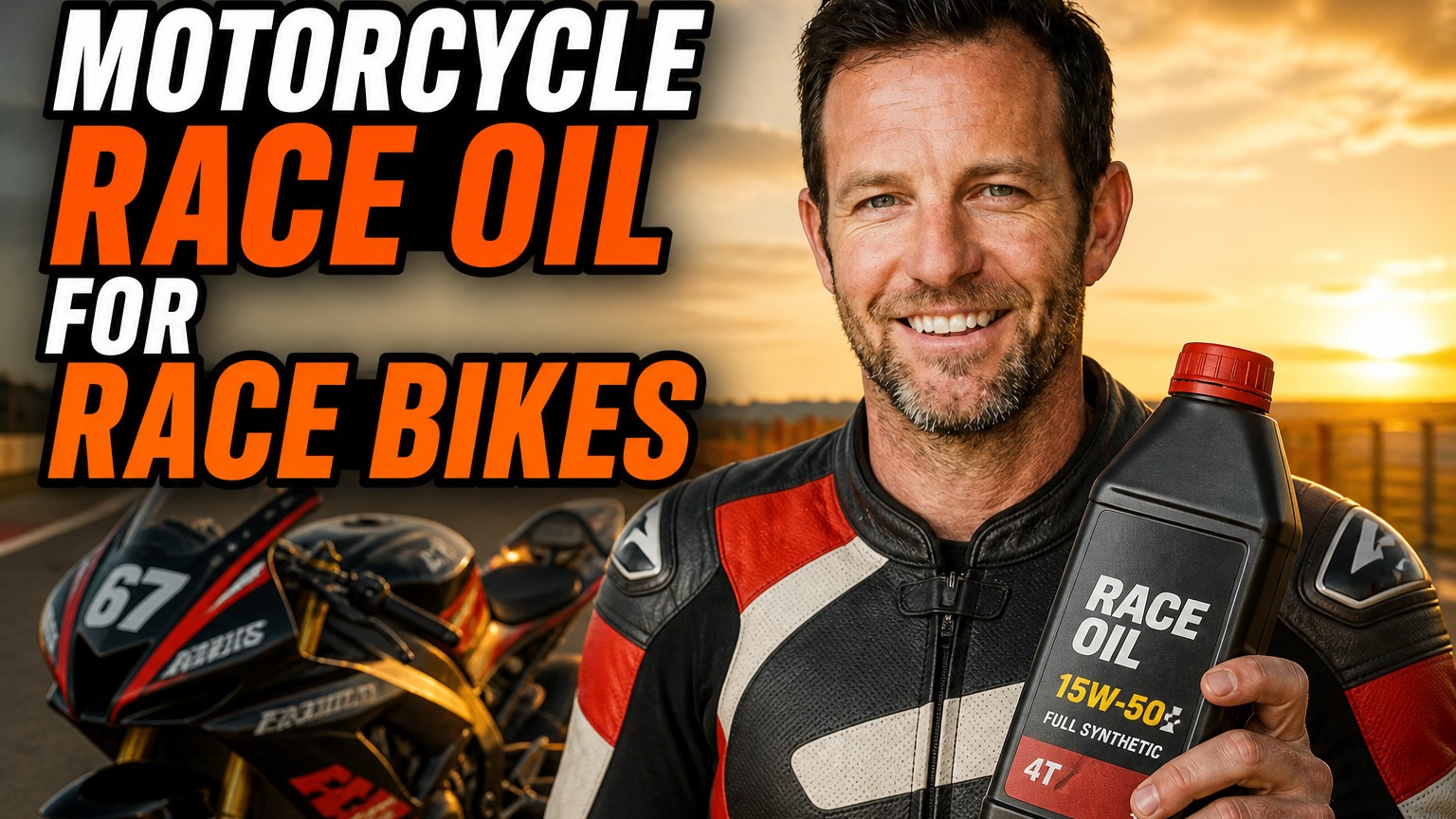
I’ve spent more weekends than I can count in a paddock, elbow-deep in a drain pan, arguing with friends about which oil really belongs in a race bike. I’ve run a bunch of them across track days, club races, and a few too-hot summer sessions where my temp gauge made me nervous.
Here’s what I’ve learned: race bike engines live a brutal life. High rpm, sustained heat, and hard shifts punish oil far more than any commute ever will. So I put together my honest list of the oils I trust, with the reasons I’d pour each one into my own bike.
- My overall favorite is Motul 300V Factory Line 10W-40, with Castrol Power1 Racing and Silkolene Pro 4 XP close behind.
- Choose a fully synthetic, ester-based oil with a JASO MA2 rating so your wet clutch keeps gripping.
- Stick with the viscosity in your manual unless your bike runs very hot or is heavily tuned.
- Change race oil far more often than street oil. I do it every 2 to 3 track days at most.
What I Look For in a Race Oil
Before the list, let me explain how I judge these oils. I’m not impressed by flashy labels. I care about what’s happening inside the engine when the bike is at 12,000 rpm and the coolant is creeping up.
Synthetic Ester Base Stocks
Esters are polar molecules, which means they cling to hot metal surfaces. That gives you a stronger oil film when things get hot and stressful. It’s the main reason I lean toward ester-based oils for track work.
JASO MA2 Compatibility
Most sportbikes share oil between the engine, gearbox, and wet clutch. An oil with the wrong friction properties can make the clutch slip when you need it most. I only use oils rated JASO MA or MA2 in my bikes.
Shear Stability and Heat Resistance
Gearbox gears chew up oil molecules over time. A good race oil resists that shearing and keeps its viscosity through a full session. That consistency is what keeps your engine safe in lap fifteen, not just lap two.
If you want broader background before choosing, I’ve also found it helpful to read through guides on the best motor oil for 4 stroke motorcycle engines in general. The principles carry over, even if racing pushes the requirements higher.
1. Motul 300V Factory Line 10W-40 — Best Overall Race Oil
If someone asked me to pick one oil and walk away, it would be the Motul 300V Factory Line. It’s a 100% synthetic ester-based oil built with Motul’s Ester Core technology. It’s also one of the most widely used oils in actual paddocks.
What I notice first is how smooth the gearbox feels. Shifts at high rpm feel crisp, and the clutch engagement stays consistent from the first lap to the last. The Factory Line is JASO MA2 approved, so clutch slip hasn’t been an issue for me.
It’s not cheap. Expect to pay somewhere around $15 to $20 per liter, depending on viscosity and retailer. But when I weigh that against what’s riding on the engine, I consider it cheap insurance.
Who it’s for: riders who want a proven, track-focused oil without overthinking it. It comes in several grades, including 5W-30, 10W-40, and 15W-50, so you can match your manual.
2. Castrol POWER1 Racing 4T 10W-50 — Best for Hot, Hard Riding
The Castrol POWER1 Racing 4T 10W-50 is the oil I reach for when the weather is scorching. It’s a fully synthetic oil designed for high-performance four-strokes, and the 50-weight hot viscosity gives it a nice safety cushion.
I ran it through a few summer track days on a bike that tends to run warm. Oil temps stayed predictable, and I didn’t see any drop in clutch feel. The POWER1 Racing is JASO MA2 rated, which keeps it friendly to wet clutches.
Pricing usually lands around $13 to $18 per liter, which makes it one of the better values on this list. It’s also easy to find, which matters when you’re at a track and realize you forgot to pack a spare bottle.
One caution: check that your manual allows a 10W-50 grade. Some modern bikes are tuned tightly around thinner oils.
3. Liqui Moly Motorbike 4T Synth 10W-60 Street Race — Best for Extreme Heat
When I need maximum film strength, I look at the Liqui Moly Street Race 10W-60. It’s a fully synthetic oil with a very high hot viscosity rating, aimed at heavily stressed engines. It’s also JASO MA2 rated.
This one suits modified bikes, turbo or supercharged builds, or machines that regularly see long, hot sessions. I tried it in a bike that likes to run hot in summer, and the stability impressed me.
A 10W-60 isn’t right for every engine. In cool weather or on stock engines, it can feel a bit heavy. I’d only use it when heat is the real enemy and the manufacturer doesn’t forbid it.
Prices typically fall around $18 to $25 per liter. That’s a premium, but you’re paying for a specialized oil.
4. Bel-Ray EXS Full Synthetic Ester 4T 10W-50 — Best for Pure Performance Feel
The Bel-Ray EXS Full Synthetic Ester 4T has been a favorite in the racing world for years. As the name says, it’s built on an ester base, and it’s designed for high-rpm engines that need strong protection and a crisp feel.
On my bike, the EXS gave a smooth, direct feel through the drivetrain. Gear changes were clean, and the clutch behaved. It carries a JASO MA2 rating, so it plays nicely with wet clutches.
I usually see it priced around $15 to $22 per liter. It’s available in several viscosities, including 10W-40 and 10W-50, so you can match your engine’s needs.
I’d recommend it for club racers who want a premium oil with real motorsport heritage.
5. Red Line 10W-40 Motorcycle Oil — Best Boutique Synthetic
The Red Line 10W-40 Motorcycle Oil has a loyal following among serious track riders. It’s a synthetic, ester-based formula built to resist breakdown and keep strong protection when temperatures climb.
What I like is how well it handles high-load, high-rpm abuse. Red Line has long been known for its attention to additive packages, and it shows in how steady the oil feels late in a session. It’s safe for wet clutches, which is non-negotiable for me.
Expect to pay around $14 to $20 per quart-sized bottle, which is a bit more per volume than some competitors. Still, I don’t mind spending more on an oil with such a strong reputation.
Best for: riders who like to buy from enthusiast-focused brands and want a dependable, no-nonsense track oil.
6. Silkolene Pro 4 10W-40 XP — Best Ester Oil for Track Days
The Silkolene Pro 4 10W-40 XP is a fully synthetic ester oil that I’d happily put in any track-day sportbike. It’s designed for modern high-performance engines, and it’s a longtime favorite in European racing paddocks.
I found the Pro 4 XP gave a refined, quiet feel to the engine, and the clutch stayed consistent through repeated hard launches. Like the others here, it’s JASO MA2 approved.
Pricing usually sits at roughly $15 to $22 per liter. It’s not always stocked in every shop, so I tend to buy a few bottles ahead of the season.
If you ride a high-revving inline-four or a superbike-class twin, this is an excellent option to consider.
7. Motul 7100 10W-40 — Best Value Ester Synthetic
Not every rider needs a full factory-level oil. The Motul 7100 10W-40 is the one I recommend to friends who want ester technology without the top-shelf price. It’s a 100% synthetic ester oil designed for sport and performance bikes.
I’ve used the 7100 on bikes that do a mix of road riding and occasional track days. It does a great job of keeping the engine happy and the clutch consistent. It’s JASO MA2 rated too.
You’ll typically pay around $13 to $18 per liter. For riders on a budget who still want ester protection, I think it’s the sweet spot.
If you want to dig into more options for everyday riding, my notes on the top engine oil for 4 stroke motorcycle engines cover that in more detail.
8. Shell Advance Ultra 4 10W-40 — Best Easy-to-Find Option
The Shell Advance Ultra 4 10W-40 is the most accessible oil on my list. It’s a fully synthetic oil made using Shell’s PurePlus technology, and it’s JASO MA2 rated for motorcycles with wet clutches.
It isn’t a pure ester racing oil, so I wouldn’t call it my first choice for a dedicated race bike. But for a lightly modified bike used for occasional track days, it’s a solid and sensible pick. It’s also easy to find almost anywhere.
Prices commonly run about $10 to $15 per liter. That makes it a smart option for riders who change oil frequently and want a good synthetic without overspending.
Readers outside the US might also like my take on the best engine oil for 4 stroke motorcycle in india, where availability differs.
How I Choose the Right Viscosity
Picking the right grade matters as much as picking the right brand. My rule is simple: start with what your owner’s manual says. The engineers designed the oil passages and tolerances around that spec.
When I Go Thicker
If my bike runs hot all the time, or I’m riding in extreme summer heat, I’ll consider stepping up to a 10W-50 or 10W-60. This gives me a thicker film at operating temperature.
When I Stay Thin
On modern, tightly built engines, a thicker oil can add drag and reduce oil flow to tight clearances. In that case, I stick with the recommended grade, such as 10W-40 or even 5W-40.
For a full overview of choosing grades across riding styles, my breakdown of what is the best engine oil for 4 stroke motorcycle setups is a helpful companion read.
My Oil Change Habits for Race Bikes
Even the best oil doesn’t last forever under racing conditions. Fuel dilution, heat cycles, and metal particles all take their toll. I never stretch race oil as far as I would on the street.
My Typical Schedule
- Track days: Fresh oil every 2 to 3 days at most.
- Race weekends: New oil before each weekend, and sometimes mid-weekend in hot conditions.
- Filter: Replace it with every oil change. It’s cheap protection.
Little Habits That Help
I always check the oil level when the bike is warm and level. I also cut open the old filter now and then to look for metal flakes. It’s an easy way to catch problems early.
I also write the date and mileage on the filter with a marker. It keeps me honest when a busy season blurs everything together.
Common Mistakes I See in the Paddock
Using Car Racing Oil
Car oils often contain friction modifiers that can make a wet clutch slip. Unless the bottle explicitly says it’s for motorcycles, I leave it on the shelf.
Mixing Random Oils
Topping off with whatever’s around might seem harmless. But mixing different formulas can dilute the additive package. I try to stick with one brand and grade.
Overfilling
More isn’t better. Too much oil can create foaming and drag, and it can push oil into the airbox on some bikes. I always fill to the manufacturer’s mark.
If you want a general reference before you buy, my overview of the best engine oil for motorcycle options can help you compare street and track choices.
My Final Word on Race Oils
If I had to choose one oil today, I’d go with the Motul 300V Factory Line 10W-40. It’s proven, it’s consistent, and it’s what I trust most when the stakes are high.
For riders in hot climates, the Castrol POWER1 Racing 10W-50 and Liqui Moly Street Race 10W-60 deserve a close look. And if you’re watching your budget, the Motul 7100 and Shell Advance Ultra 4 are smart picks.
Whatever you choose, buy fresh oil, change it often, and always check your manual first. Your engine works hard for you every lap, and good oil is the cheapest way to say thanks. Ride fast, stay safe, and I’ll see you in the paddock.
Frequently Asked Questions
How often should I change oil in a race bike?
In my experience, every 2 to 3 track days is a sensible limit for a street-based race bike, and after every race weekend if you’re running hard in the heat. Always follow your manufacturer’s guidance as a baseline, then shorten it for track use.
Can I use car racing oil in my motorcycle?
I wouldn’t, unless the oil is explicitly rated for motorcycles. Many car oils contain friction modifiers that can make a wet clutch slip. Look for a JASO MA or MA2 rating on the bottle.
Is a thicker oil like 10W-60 better for racing?
Not automatically. Thicker oil can protect better in extreme heat, but it can also add drag and reduce power in cooler conditions. Always start with the viscosity your manual specifies and only go thicker if your bike runs very hot or is heavily modified.
Is full synthetic ester oil worth the extra money?
For a bike that sees sustained high rpm and heat, yes. Ester-based synthetics tend to hold their film strength better under stress, which gives you a bigger safety margin. The extra cost per change is small compared to an engine rebuild.

Related Articles
7 Best Batteries for Motorcycles I’ve Tested and Trust in 2026
I've tested dozens of motorcycle batteries to find the best performers. From AGM to lithium, here are my top picks…
Jake Miller
15 min read

The Perfect Battery for Your Harley Davidson Softail: A Rider’s Complete Guide
Discover the perfect battery for your Harley Davidson Softail. I've tested multiple options and share real-world performance data, maintenance tips,…
Jake Miller
14 min read

The Best Battery for Your Harley Davidson: My Complete Guide After Years of Testing
Discover which battery truly performs best for Harley Davidson motorcycles. Real rider experience with AGM, lithium, and OEM options to…
Jake Miller
12 min read