
8 Best Motul Oils for Motorcycles: My Real-World Picks for Every Rider
 Jake Miller
8 min read
Jake Miller
8 min read
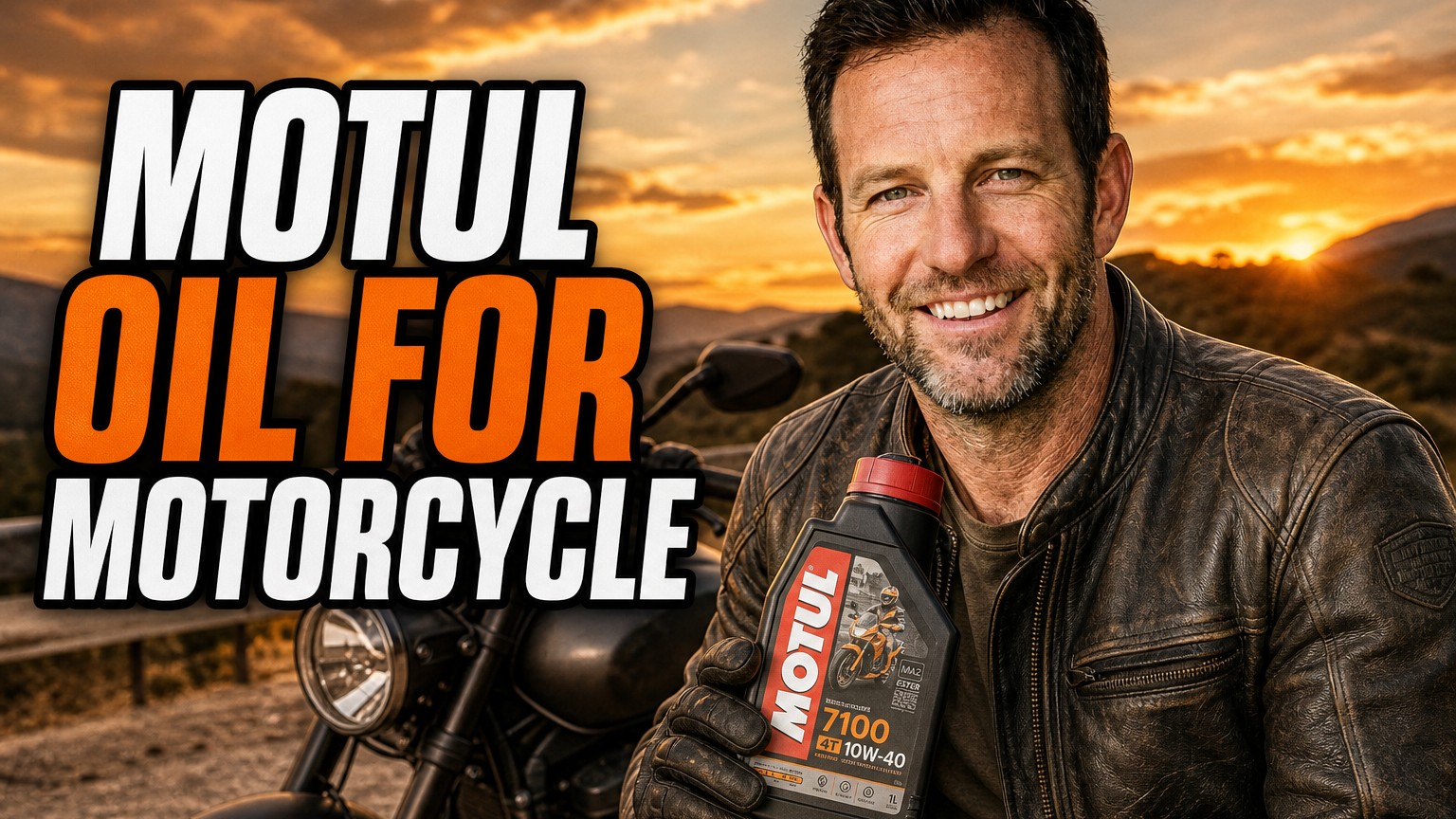
I’ve been riding for years, and I’ve changed more oil in my garage than I care to count. Over that time, Motul has been one of the brands I keep coming back to, from commuters to weekend canyon runs and the occasional dirt day.
The Motul range can be confusing, though. There are numbers, ester this, technosynthese that, and a lot of marketing. So here are the eight Motul oils I’d actually consider, what each one is good at, and who I think should buy it.
- My top all-round pick is Motul 7100 4T 10W-40, a fully synthetic ester oil that suits most street bikes.
- Motul 5100 is my value pick, and Motul 3000 is the budget-friendly mineral option.
- Motul 300V is for track days and high-revving engines, not for the average commute.
- Always match viscosity and JASO rating to your owner’s manual, and never put scooter oil in a wet-clutch bike.
How I Chose These Motul Oils
I didn’t just copy the spec sheets. I looked at how each oil behaves in real use: shifting feel, clutch bite, heat resistance and how the engine sounds after a few thousand kilometers.
My Criteria
I focused on base oil type, JASO certification, viscosity range and price per liter. I also considered what type of rider each oil suits, because the best oil for a race bike is rarely the best for a daily commuter.
If you want a broader look beyond one brand, I’ve also written about the best engine oil for motorcycle across several manufacturers.
1. Motul 7100 4T 10W-40 — Best Overall Motul Oil
If someone asks me to name one Motul oil and nothing else, it’s Motul 7100 4T 10W-40. It’s a 100% synthetic oil built on ester technology, and it’s JASO MA2 approved, so it plays nicely with wet clutches.
Esters are polar molecules that cling to metal surfaces. In practice, I notice smoother shifting and a more consistent clutch feel, especially once the engine is hot.
Why I Like It
The Motul 7100 holds its viscosity well in traffic and on long highway runs. I’ve used it in a mid-weight naked bike and a sport-tourer, and both seemed happier with it than with generic semi-synthetics.
Expect to pay roughly $14 to $20 per liter, depending on where you buy. It’s not the cheapest, but I think it’s the best balance of price and protection in the range.
Who Should Buy It
Anyone with a modern 4-stroke street bike who wants real synthetic protection. It also comes in 5W-40, 10W-30, 10W-50, 10W-60 and 20W-50 variants, so you can match your manual’s recommendation.
2. Motul 300V Factory Line Road Racing 5W-40 — Best for Track Days
The Motul 300V Factory Line Road Racing 5W-40 is the oil I reach for when I’m pushing hard. It uses Motul’s Ester Core technology with a blend of synthetic esters and is designed for high-revving engines under serious load.
On track, the engine felt crisper, and the oil temperature seemed steadier. That’s hard to measure scientifically in my garage, but the gearbox did feel more precise.
The Trade-Offs
It’s pricey, often $25 to $35 per liter. And it’s made for racing, so I’d follow shorter change intervals if I used it on the track.
For commuting, I think it’s overkill. But if you do regular track days or ride a high-performance sportbike hard, this is the Motul I’d pick.
3. Motul 5100 4T 10W-40 — Best Value Semi-Synthetic
The Motul 5100 4T 10W-40 is a technosynthese blend that includes ester technology. It’s the oil I recommend to friends who want better-than-basic protection without paying full-synthetic prices.
It’s JASO MA2 rated, so wet clutches are fine. I used it in an older bike with a few miles on it, and it ran quietly with no clutch slip.
Real-World Impressions
Pricing is usually around $11 to $16 per liter, a few dollars below the 7100. If you change oil often and ride mostly in moderate conditions, the 5100 is a smart place to save.
When readers ask me what to run on a budget, I point them to it, much like I do in my guide to the best motor oil for 4 stroke motorcycle options.
4. Motul 3000 4T 20W-50 — Best Budget Mineral Oil
Not every bike needs a space-age lubricant. The Motul 3000 4T 20W-50 is a mineral-based oil that suits older, air-cooled engines and riders who change oil frequently.
I ran it in a vintage-style air-cooled single, and it handled heat well. The thicker 20W-50 grade is a good fit for hot climates and engines with looser tolerances.
When It Makes Sense
It’s usually the cheapest Motul on the shelf, often around $8 to $12 per liter. I’d use it on a lightly stressed commuter or classic where the manufacturer allows mineral oil.
If I were riding a modern high-output engine, though, I’d step up to the 5100 or 7100.
5. Motul 5000 4T 10W-40 — Best for Daily Commuters
The Motul 5000 4T 10W-40 is a mid-range technosynthese oil designed for everyday motorcycles. It sits between the 3000 and 5100 in my mind.
I found it great for stop-and-go commuting. Clutch feel stayed consistent, and the engine didn’t seem to mind long idle periods in traffic.
Availability Tip
Product lineups vary by region, so this one may be easier to find in some markets than others. If you ride in Asia, my notes on the best engine oil for 4 stroke motorcycle in india show which grades tend to be easiest to find.
6. Motul 300V Off Road 5W-40 — Best for Dirt and Adventure Riding
Off-road riding is brutal on oil. Dust, heat, clutch abuse and constant revving all take their toll, and that’s where the Motul 300V Off Road 5W-40 comes in.
It uses Motul’s Double Ester technology and is designed for competition-level four-stroke dirt bikes. I tried it in a trail bike with a hard-used clutch, and engagement felt more consistent in technical sections.
Is It Worth It?
At roughly $22 to $30 per liter, it’s an investment. I’d use it for serious enduro, motocross or hard adventure riding, and change it often.
For casual trail riding, the 7100 is more than enough, and I’d save the money.
7. Motul Scooter Power LE 5W-40 — Best for Scooters
Scooters are a different story. The Motul Scooter Power LE 5W-40 is a fully synthetic oil designed for 4-stroke scooters with automatic transmissions.
It’s rated JASO MB, which means it’s formulated for dry centrifugal clutches. Don’t pour it into a manual-clutch motorcycle, because it can cause clutch slip.
Why It Works
On a maxi scooter I tested, it kept the engine smooth and quiet, even in hot city riding. Price is generally around $12 to $18 per liter.
If you have a twist-and-go scooter, this is the Motul I’d choose.
8. Motul 800 2T Factory Line Off Road — Best for 2-Stroke Dirt Bikes
Two-strokes need their own kind of oil, and the Motul 800 2T Factory Line Off Road is a favorite among dirt riders. It’s an ester-based, fully synthetic 2-stroke oil that works for premix and injection systems.
I used it in a 250cc two-stroke, and I noticed cleaner exhaust, less smoke and a crisp throttle response. Expect around $18 to $28 per liter.
Mixing Advice
Follow the ratio your bike’s manufacturer recommends, and measure carefully. Don’t guess, because a lean or overly rich mix can cause problems.
How to Choose the Right Motul Oil for Your Bike
Choosing is easier once you know what to look for. Here’s the quick process I follow every time.
Check Your Owner’s Manual First
Your manufacturer specifies viscosity, such as 10W-40 or 10W-50, and often a JASO rating. Start there, because that’s the baseline your engine was designed around.
Then decide how much protection you want on top. My post on the top engine oil for 4 stroke motorcycle goes deeper on viscosity grades.
Match the JASO Rating
JASO MA and MA2 oils are for wet-clutch motorcycles. JASO MB is for scooters. Mixing them up is one of the most common mistakes I see.
Consider How You Ride
Casual weekend riders can happily use the 5100 or 3000. Commuters and tourers will benefit from the 7100. Track riders and racers should look at the 300V line.
And if you’re still comparing, my breakdown of what is the best engine oil for 4 stroke motorcycle can help you narrow it down.
Common Mistakes I See Riders Make
Ignoring Change Intervals
Even the best synthetic oil doesn’t last forever. Heat, fuel dilution and short trips all shorten its life, so I don’t stretch intervals just because the oil is expensive.
Mixing Brands and Types
Topping off with a different oil in an emergency is fine. But for regular use, I stick to one type so the additive package works as intended.
Overspending on the Wrong Oil
I once put racing oil in a commuter, thinking more expensive meant better. The bike ran fine, but I’d paid for features I never used. Match the oil to the job.
Final Thoughts
If I had to choose one, I’d go with Motul 7100 4T 10W-40 for most riders. It’s the best mix of performance, protection and price that I’ve found in the Motul lineup.
Take the 5100 if you want to save a little, the 300V if you ride hard on track, and the dedicated scooter or 2-stroke oils for those specific machines. Whatever you choose, stick to your manual’s specs, change your oil regularly, and enjoy the ride.
Frequently Asked Questions
Which Motul oil is best for everyday street riding?
For most riders I recommend Motul 7100 4T 10W-40. It is a fully synthetic ester oil that is JASO MA2 approved, so it is safe for wet clutches, and it handles heat and long service intervals well. If you want to spend less, Motul 5100 is a very good alternative.
Can I use Motul scooter oil in a manual-clutch motorcycle?
No, I would not. Scooter oils like Motul Scooter Power LE 5W-40 are JASO MB rated, meaning they are made for twist-and-go scooters. Most manual-clutch motorcycles with a wet clutch need a JASO MA or MA2 oil, such as Motul 7100 or 5100.
How often should I change Motul motorcycle oil?
Follow your owner’s manual first. As a general guide, I change mineral and semi-synthetic oils like Motul 3000 or 5100 more often, while fully synthetic oils like Motul 7100 can often go longer. Hard riding, track days, heat and stop-and-go traffic all justify shorter intervals.
Is expensive Motul 300V worth it for a street bike?
It depends on how you ride. Motul 300V is built for racing and high-revving engines, and it is excellent for track days. For normal commuting or touring, Motul 7100 gives most of the real-world benefit for less money.

Related Articles
7 Best Batteries for Motorcycles I’ve Tested and Trust in 2026
I've tested dozens of motorcycle batteries to find the best performers. From AGM to lithium, here are my top picks…
Jake Miller
15 min read

The Perfect Battery for Your Harley Davidson Softail: A Rider’s Complete Guide
Discover the perfect battery for your Harley Davidson Softail. I've tested multiple options and share real-world performance data, maintenance tips,…
Jake Miller
14 min read

The Best Battery for Your Harley Davidson: My Complete Guide After Years of Testing
Discover which battery truly performs best for Harley Davidson motorcycles. Real rider experience with AGM, lithium, and OEM options to…
Jake Miller
12 min read