
8 Best Engine Oils for Honda Motorcycles: My Real-World Picks for Every Rider
 Jake Miller
9 min read
Jake Miller
9 min read
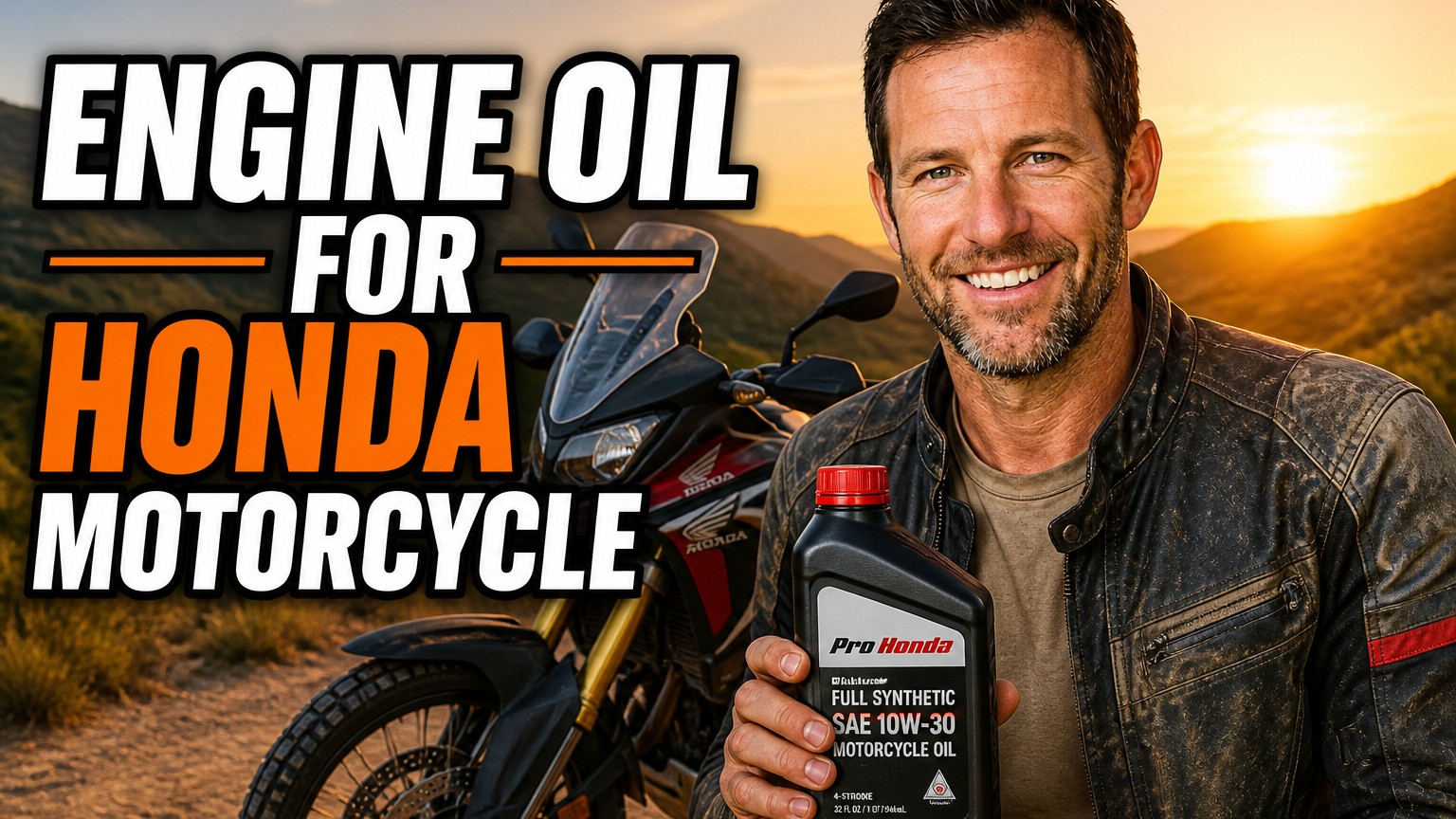
I’ve been wrenching on and riding Hondas for years, from a beat-up CB commuter to a weekend CRF and a Rebel that sees far too many city miles. If there’s one maintenance topic riders argue about more than tires, it’s oil.
The good news is that Honda engines are famously forgiving. The better news is that the right oil can make them smoother, quieter and longer-lived. Below are the eight oils I actually trust, with the reasons I’d put each one in a Honda.
- Choose a motorcycle-specific oil with a JASO MA or MA2 rating, because most Hondas use a wet clutch.
- Match the viscosity (usually 10W-30 or 10W-40) to your owner’s manual and climate.
- Pro Honda GN4 is the safe OEM choice, and Motul 7100 is my favorite premium synthetic.
- Castrol Power1 4T and Valvoline 4-Stroke are my go-to budget options.
How I Choose Oil for a Honda Motorcycle
Before the list, here’s the short checklist I run through every time. It will help you judge any oil on a shelf, including ones I haven’t mentioned.
JASO MA or MA2 Is Non-Negotiable
Most Honda motorcycles use one oil supply for the engine, transmission and wet clutch. That means the oil has to let the clutch plates grip properly. JASO MA/MA2 certification tells you the oil has passed that friction test.
I skip anything on the shelf labeled “Energy Conserving” because it usually carries friction modifiers. I once saw a friend’s clutch slip within a few hundred miles after he poured in a cheap car oil. It’s not worth the risk.
Viscosity: Follow the Manual First
Your owner’s manual is the final word. A lot of Hondas ask for 10W-30, while others do well on 10W-40, especially in hot climates or with a bit of mileage on the clock.
I treat the manual as the baseline and only move one grade within the approved range if my conditions call for it. If you want a broader overview, my guide to the best engine oil for motorcycle engines covers viscosity in more depth.
Mineral, Semi-Synthetic or Full Synthetic?
Mineral oils are cheap and fine for older, relaxed engines. Semi-synthetics offer a nice middle ground. Full synthetics resist heat and shear better, which matters for high-revving bikes like the CBR series.
If you’re still comparing options, it’s worth reading about which engine oil is best for motorcycle riding styles. Now, on to my picks.
1. Pro Honda GN4 10W-30 — Best OEM Choice
If you want zero second-guessing, Pro Honda GN4 10W-30 is where I start. It’s Honda’s own 4-stroke motorcycle oil, formulated for the clutch and gearbox design of Honda engines. It’s also the oil my local Honda dealer pours in during service.
Why I Like It
GN4 is a conventional, mineral-based oil, so it isn’t flashy. What it does is shift cleanly, keep the clutch predictable, and meet Honda’s own specs. For a daily commuter like a CB300F or a Rebel 500, it’s all you need.
It typically costs around $9 to $12 per quart. That’s a fair price for oil that’s engineered by the people who built your engine.
Who It’s For
Riders who want warranty peace of mind and simple maintenance. If your bike is still under warranty, GN4 is the easiest paper trail you can have.
2. Motul 7100 10W-40 4T — Best Full Synthetic
When I want the best protection and the nicest feel, I reach for Motul 7100 10W-40. It’s a 100% ester-based synthetic that meets JASO MA2 and API SN. I’ve run it in a CBR650R, and the gearbox felt noticeably smoother on cold mornings.
Standout Features
Ester technology helps the oil cling to hot metal surfaces, which is useful under hard riding or in stop-and-go heat. The 7100 also resists shearing well, so it holds its viscosity deep into the change interval.
Expect to pay roughly $14 to $18 per liter. It’s not cheap, but I consider it inexpensive insurance for a high-revving engine.
A Quick Note on Grades
Motul also offers 7100 in 10W-30. If your manual specifies 10W-30, buy that grade rather than defaulting to 10W-40.
3. Castrol Power1 4T 10W-40 — Best Budget Pick
I keep a bottle of Castrol Power1 4T 10W-40 in my garage because it’s easy to find and kind to my wallet. It’s a semi-synthetic blend that carries a JASO MA2 rating, so it’s safe for wet clutches.
Real-World Performance
I used Power1 in a high-mileage CB Hornet that spent most of its time in city traffic. Shifts stayed crisp, and the engine felt a bit quieter than it did on plain mineral oil.
It usually runs about $10 to $14 per liter. For a commuter, that’s hard to beat.
The Trade-Off
It isn’t a full synthetic, so I shorten the change interval slightly if I’m riding hard or in hot weather. That small habit keeps this oil punching above its price.
4. Shell Advance Ultra 4T 10W-40 — Best for Hot Climates and Long Rides
On long summer tours, I like Shell Advance Ultra 4T 10W-40. It’s a fully synthetic oil made with Shell’s PurePlus technology, and it’s rated JASO MA2.
Why It Works on Hondas
Air-cooled and hard-working liquid-cooled Honda engines both see high oil temperatures on the highway. Ultra 4T holds film strength well, and I’ve noticed consistent clutch feel from the first hour to the last.
Pricing is typically $13 to $16 per liter. That puts it just under Motul, with similar protection for most riders.
5. Liqui Moly Motorbike 4T Synth 10W-40 Street Race — Best for Sporty Hondas
If you ride a CBR, a Hornet or an CB650R with some enthusiasm, Liqui Moly Motorbike 4T Synth 10W-40 Street Race is worth a look. It’s a full synthetic with a JASO MA2 rating, designed for high-revving engines.
What I Noticed
Engine noise dropped a touch, and the gearbox felt slick through quick shifts. The oil also seemed to hold up well when I pushed the bike on a hot track day.
Expect around $15 to $20 per liter. I think it’s best for riders who regularly use the upper half of the rev range.
6. Mobil 1 Racing 4T 10W-40 — Best for Track Days and Spirited Riding
For aggressive riding, Mobil 1 Racing 4T 10W-40 is one of my favorites. This full synthetic is built specifically for motorcycles and is JASO MA2 certified, so it plays nicely with wet clutches.
Why It Stands Out
Mobil 1 designed this oil to resist shear in high-load gearboxes, which is a big deal when you’re dropping gears hard into corners. I’ve used it in a CBR600RR, and it held steady over a full season of weekend rides.
It generally costs $13 to $16 per quart. I’d skip it on a lazy commuter, but for a sportbike it earns its keep.
7. AMSOIL Synthetic Motorcycle Oil 10W-40 — Best for Extended Intervals
I’m cautious about stretching oil changes, but if you want to push intervals a bit, AMSOIL Synthetic Motorcycle Oil 10W-40 is the one I’d consider. It’s a full synthetic with JASO MA2 approval and a strong additive package.
Where It Shines
Its main strength is durability. The oil shears slowly and resists breakdown from heat, which is helpful for high-mileage tourers like a Gold Wing or a long-distance Africa Twin.
It usually sells for $14 to $17 per quart. Even so, I still follow Honda’s recommended change interval unless I’m sending the oil out for analysis.
8. Valvoline 4-Stroke Motorcycle Oil 10W-40 — Best Value for Older Hondas
For an older Honda, like a Nighthawk, a CB500 or a Shadow, Valvoline 4-Stroke Motorcycle Oil 10W-40 is a solid, honest choice. It’s a conventional formula designed for motorcycle engines and wet clutches, and it’s very affordable at roughly $8 to $11 per quart.
My Take
I used it in a 20-year-old CB with plenty of miles, and it kept things running smoothly without any clutch drama. It’s not exotic, but it’s dependable.
For older engines that don’t need the latest technology, this oil is hard to fault. Just keep an eye on the change interval.
What About Two-Stroke Hondas?
Everything above is for 4-stroke engines. If you ride an older CR or an off-road 2-stroke, the oil is completely different and gets mixed with fuel or injected separately.
I covered that in detail in my guide to the best engine oil for 2 stroke motorcycle models. Don’t confuse the two types, because the wrong oil can wreck an engine fast.
Choosing Between Brands
Honestly, there’s no single winner. A good brand matters less than the right spec, the right viscosity and regular changes. Still, if you want to compare more labels, take a look at this breakdown of the best motorcycle engine oil brand options.
For deeper reading on 4-stroke engines specifically, here’s my pick of the top engine oil for 4 stroke motorcycle riders. Most Hondas fall into that category.
My Quick Recommendations
- Commuter under warranty: Pro Honda GN4 10W-30.
- Premium protection: Motul 7100 10W-40.
- Tight budget: Castrol Power1 4T or Valvoline 4-Stroke.
- Sportbike or track days: Mobil 1 Racing 4T or Liqui Moly Street Race.
- Long-distance touring: Shell Advance Ultra 4T or AMSOIL.
Oil Change Tips I Swear By
Warm the Engine First
I run the bike for a couple of minutes before draining. Warm oil flows out faster and takes more suspended grime with it.
Replace the Filter and Crush Washer
A fresh oil filter is cheap, and a new crush washer prevents leaks. I never skip either, even when I’m in a hurry.
Check the Level Properly
Hold the bike upright and check the sight glass or dipstick as your manual instructs. Overfilling can cause as many problems as running low.
Final Thoughts
The best choice for your Honda comes down to a few things: JASO MA/MA2, the right viscosity, and how you ride. Any oil on this list will treat your engine well when used correctly.
If I had to pick just one for most riders, I’d go with Motul 7100 for performance or Pro Honda GN4 for simplicity. Whatever you choose, change it on time and ride happy.
Frequently Asked Questions
What viscosity oil should I use in my Honda motorcycle?
Always start with your owner’s manual. Many Honda models call for 10W-30 or 10W-40, depending on the engine and climate. Use the grade Honda lists for your model and riding temperatures.
Do I need JASO MA or MA2 oil in a Honda motorcycle?
Yes, in nearly every case. Most Hondas share oil between the engine, gearbox and wet clutch, so you want an oil rated JASO MA or MA2 to prevent clutch slip.
Can I use car engine oil in my Honda motorcycle?
I’d avoid it. Many car oils contain friction modifiers that can make a wet clutch slip. Car oils also lack the shear stability that a motorcycle gearbox needs.
How often should I change the oil on my Honda motorcycle?
Follow the interval in your manual. It is often around 4,000 to 8,000 km depending on the model. I change sooner if I ride hard, in heavy traffic, or in very hot weather.

Related Articles

7 Best Batteries for Motorcycles I’ve Tested and Trust in 2026
I've tested dozens of motorcycle batteries to find the best performers. From AGM to lithium, here are my top picks…
Jake Miller
15 min read

7 Best Motorcycle Batteries for Honda Magna (V30, V45, V65)
I've tested the best motorcycle batteries for Honda Magna models. From AGM to lithium options, find the perfect power source…
Jake Miller
14 min read

7 Best Battery Brands for Motorcycles That Actually Start Every Time
I've tested dozens of motorcycle batteries over the years. These 7 brands deliver reliable starts, long life, and real value—from…
Jake Miller
15 min read