
Best Engine Oil for Motorcycle Racing: My Track-Tested Picks and Buying Guide
 Jake Miller
9 min read
Jake Miller
9 min read
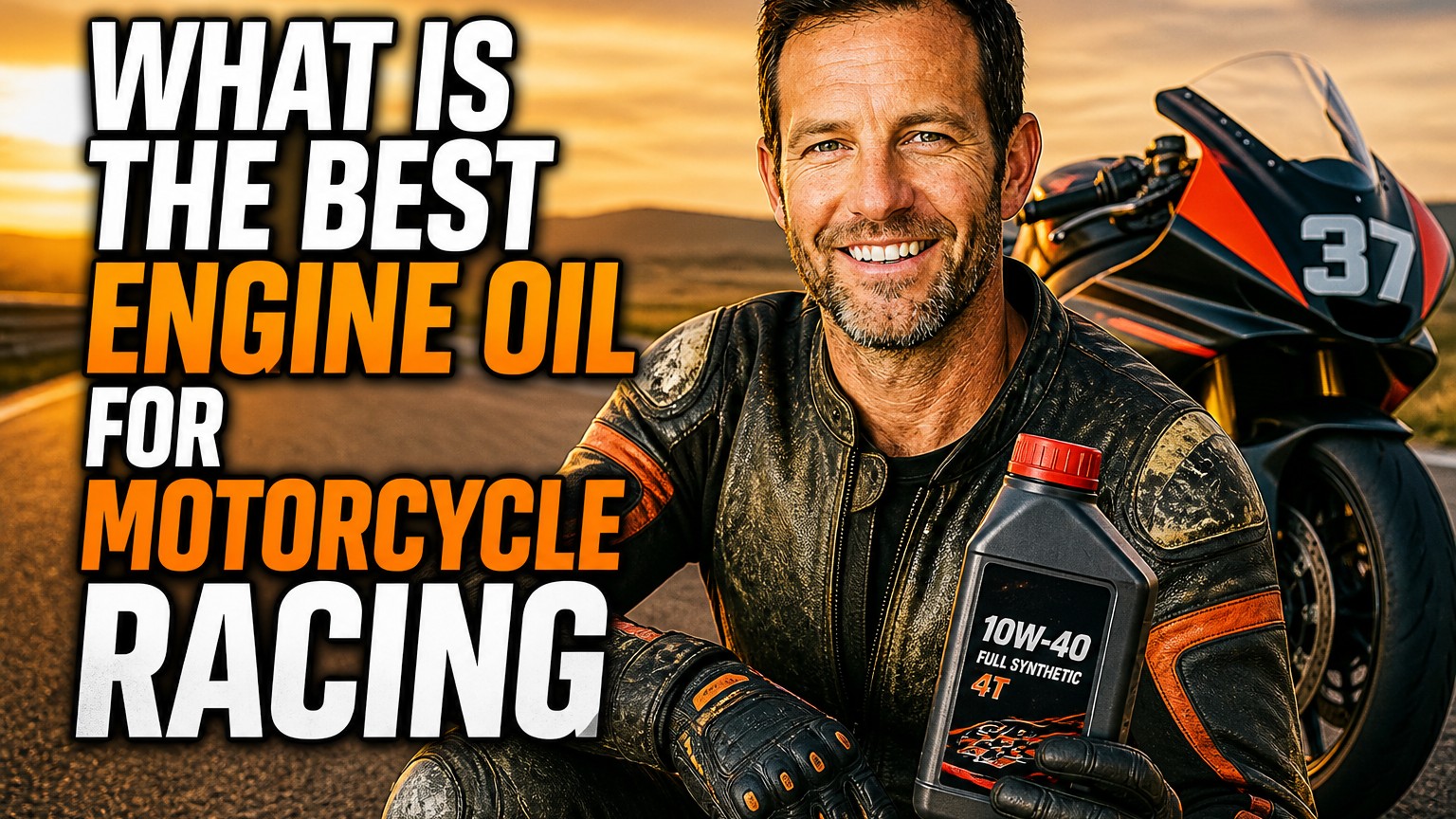
I still remember the first time I cooked an engine on track. It was a hot July afternoon, I was running whatever oil was cheapest at the parts counter, and about halfway through the third session my bike started to feel gritty and tired. That mistake cost me a weekend and a lot of money.
Since then I’ve become a bit obsessed with oil. I’ve tried different brands, viscosities, and change intervals across track days, club races, and plenty of long practice sessions. In this guide I’ll share what I’ve learned, so you can pick the right oil with confidence.
There’s no single magic bottle for every bike. But there are clear rules that make the decision a lot easier.
- Choose a full synthetic or ester-based oil with a JASO MA2 rating if your engine shares oil with a wet clutch.
- Stick close to your manufacturer’s viscosity (usually 10W-40 or 10W-50) and adjust only for extreme heat or a tuned engine.
- My go-to picks are Motul 300V, Castrol Power1 Racing, and Shell Advance Ultra, depending on the bike and budget.
- Change oil often. Fresh oil is the cheapest insurance you can buy on track.
Why Racing Puts Such Unusual Demands on Your Oil
A street bike spends most of its life cruising at modest rpm. A race bike spends its life near the limiter, with high heat, high loads, and almost no mercy. Oil has to survive all of that.
On a motorcycle, the oil does more jobs than it does in a car. It lubricates the engine, cools hot parts, and protects the gearbox. On most bikes it also lets the clutch grab properly.
Heat is the real enemy
When I’m pushing hard in the summer, oil temperatures can climb well past what a commuter bike ever sees. As oil gets hot, it thins out. If it thins too much, the protective film between metal parts breaks down.
That’s where wear happens. Good racing oil holds its film strength even when temperatures are brutal.
Shear and the gearbox
Motorcycle oil also gets chewed up by the transmission gears. This is called shear, and it permanently reduces viscosity over time. Cheap oils can lose a surprising amount of thickness in just a few hours of hard riding.
This is one reason I never run budget oil on track. A robust synthetic simply stays “in grade” longer.
Understanding Viscosity Without the Headache
Viscosity is how thick an oil is. The numbers on the bottle, like 10W-40, tell you how it behaves cold and hot.
What the numbers actually mean
The first number, followed by the “W” for winter, shows how the oil flows when cold. The second number shows how thick it stays at operating temperature. A 10W-40 flows like a 10-weight when cold and protects like a 40-weight when hot.
Lower first numbers help with cold starts. Higher second numbers help with protection under heat.
Which grade I run most often
For most four-stroke sportbikes, I stick with 10W-40 or 10W-50. The 10W-40 is my default for moderate weather. In very hot conditions, or on a bike that runs hard and hot, I’ll step up to a 10W-50.
Some modern engines are built with tight tolerances and call for thinner oils like 0W-40 or even 5W-30. If your manual says that, respect it. Going thicker can reduce oil flow and cost you power.
A quick rule of thumb
Start with the manufacturer’s recommended grade. Only move up one step if you’re racing in extreme heat or running a high-output engine. Never jump two grades without a very good reason.
The JASO Rating: Don’t Skip This Step
Here’s the part many new racers miss. Most motorcycles use a wet clutch that sits in the same oil as the engine. Car oils often contain friction modifiers that make the clutch slip.
That’s why the JASO rating matters so much. Look for JASO MA or MA2 on the bottle.
MA versus MA2
JASO MA2 is the stricter standard, with higher friction performance. In my experience, MA2 oils give a more positive, consistent clutch feel. That matters when you’re dumping the clutch on a start or slipping it hard into corners.
If your bike has a dry clutch, the rule is less critical. Check your manual to be sure.
Why I avoid car oil on track
I know the temptation. Some car racing oils are excellent and cheaper per quart. But if your clutch starts to slip mid-race, you’ll regret it fast.
I keep it simple and use motorcycle-specific oil. If you want a broader rundown of options, I’ve covered the best engine oil for motorcycle use across different riding styles.
Synthetic, Semi-Synthetic, or Ester: What I Recommend
For racing, this is the easiest decision of all. Go full synthetic.
Why synthetic wins on track
Synthetic oils are engineered at a molecular level, so they resist breakdown and hold viscosity better. They also flow well at startup and handle extreme heat. Conventional oil simply can’t keep up with that.
The price difference is small compared with the cost of an engine rebuild. I consider it a no-brainer.
The ester advantage
Many top racing oils are ester-based or ester-enhanced. Esters are naturally slippery and cling to metal surfaces, which helps protect the engine during hard starts and heavy loads.
In my experience, ester-based oils also give a smooth, crisp feel in the gearbox. Shifts seem a little cleaner, though I’d be lying if I said I could measure it on a stopwatch.
My Top Picks for Racing Oil
Choosing a brand is where opinions fly. Here are the oils I’ve trusted or seriously considered, along with what I like about each one.
Motul 300V: my premium pick
Motul 300V is a full ester-based oil designed for competition. I reach for it when I want maximum protection on a high-revving engine. It’s pricey, but I’ve always felt the engine ran smooth and strong with it.
It’s available in several grades, including 5W-40 and 15W-50, so you can match it to your bike and climate.
Castrol Power1 Racing: my balanced choice
Castrol Power1 Racing is a strong, widely available option that’s friendly to the wallet. It meets JASO MA2 and works well in many sportbikes. When I’m riding lots of track days and going through oil quickly, this is often my pick.
Shell Advance Ultra: reliable and easy to find
Shell Advance Ultra is a fully synthetic oil that I’ve found consistent and dependable. It’s easy to buy almost anywhere, which is handy when you’re at a track and realize you forgot to pack oil.
Other brands worth a look
Red Line, Amsoil, Bel-Ray, Liqui Moly, and Mobil 1 Racing 4T all have loyal followings. I’ve seen racers swear by each one. If you want to compare labels more broadly, check out my guide to the best motorcycle engine oil brand options.
And if you’re still stuck, my breakdown of which engine oil is best for motorcycle riders can help narrow things down.
What About Two-Strokes?
If you race a two-stroke, everything changes. The oil is either mixed with fuel or injected, and it burns along with it. That means you need an oil built for clean combustion, low smoke, and strong film strength.
Four-stroke oil absolutely doesn’t belong in that system. I wrote a separate guide on what is the best 2 cycle oil for a motorcycle engine if that’s your world.
The mixing ratio matters too. Always follow the manufacturer’s recommendation for your oil and engine.
Drag Racing Is a Different Game
Drag racing is short, violent, and brutal on engines. You aren’t worried about long heat soak like you would be in a 20-minute track session. You care about protection during huge loads and sudden full-throttle launches.
Many drag racers use thicker, high-film-strength oils and change them very frequently. For specifics, take a look at my notes on the best motorcycle oil for drag racing.
How Often Should You Change Racing Oil?
This is where I’m stricter than many riders. On a race bike, oil is cheap and engines are not.
My personal schedule
For track days, I change oil every two or three days of riding, or sooner if the weather was extreme. For actual racing, I change it before every race weekend. Some people even change it between days.
It may feel wasteful. But I’ve never regretted changing oil too soon, and I’ve definitely regretted waiting too long.
Don’t forget the filter
I swap the oil filter at every oil change on a race bike. A fresh filter traps metal particles and debris, which matters when the engine is working hard.
I also cut open my old filters from time to time. Finding metal flakes is an early warning that something is wrong.
Common Oil Mistakes I See at the Track
I’ve made a few of these myself, so no judgment. But they’re worth avoiding.
Overfilling or underfilling
Too little oil starves the engine. Too much can cause foaming, power loss, and leaks. Always check the level with the bike upright and at the temperature your manual specifies.
Mixing different oils
Topping off with a different brand in a pinch usually won’t wreck anything. But I avoid mixing as a habit, since I can’t be sure how the additive packages will interact.
Chasing “extra horsepower” claims
Some oils claim to add noticeable power. In my experience, any gains are small and hard to feel. Protection, consistency, and clutch feel matter far more.
Ignoring the manual
Your bike’s manufacturer tested the engine with specific oil specs. Use that as your baseline. Racing can justify tweaks, but it shouldn’t make you ignore the fundamentals.
My Simple Checklist for Choosing Race Oil
When I’m standing in front of a wall of bottles, I run through these questions. They’ve saved me from plenty of bad purchases.
- Is it motorcycle-specific? Look for JASO MA or MA2 if you have a wet clutch.
- Is it full synthetic or ester-based? For racing, I won’t compromise on this.
- Does the viscosity match my bike and climate? Start with the manual.
- Can I afford to change it often? Frequent changes beat one expensive oil left in too long.
Final Thoughts From My Garage
After years of trying different oils, my conclusion is simple. The best racing oil is a high-quality, full synthetic, JASO MA2-rated oil in the right viscosity, changed often.
If I had to pick one for a typical sportbike, I’d lean toward Motul 300V when budget allows and Castrol Power1 Racing when I’m watching costs. Both have treated me well.
Don’t overthink the marketing, and don’t skimp on maintenance. Your engine works hard for you every lap, so give it the oil it deserves, and you’ll spend more time riding and less time wrenching.
Frequently Asked Questions
Can I use car racing oil in my racing motorcycle?
Usually not. Many car oils contain friction modifiers that can make a wet clutch slip. Always choose an oil that carries a JASO MA or MA2 rating if your engine shares oil with the clutch.
What viscosity is best for motorcycle racing?
Most modern four-stroke race bikes run 10W-40 or 10W-50, but the right answer depends on your manufacturer’s spec, track temperatures, and engine tolerances. Start with the manual and adjust only with good reason.
How often should I change oil on a race bike?
Many racers change oil every race weekend or every 300 to 500 miles of hard track use. Fresh oil is cheap compared with a rebuilt engine.
Is full synthetic oil worth it for racing?
Yes. Full synthetic and ester-based oils resist shear and heat breakdown far better than conventional oils, which matters when your engine is living near redline.

Related Articles
7 Best Batteries for Motorcycles I’ve Tested and Trust in 2026
I've tested dozens of motorcycle batteries to find the best performers. From AGM to lithium, here are my top picks…
Jake Miller
15 min read

The Perfect Battery for Your Harley Davidson Softail: A Rider’s Complete Guide
Discover the perfect battery for your Harley Davidson Softail. I've tested multiple options and share real-world performance data, maintenance tips,…
Jake Miller
14 min read

The Best Battery for Your Harley Davidson: My Complete Guide After Years of Testing
Discover which battery truly performs best for Harley Davidson motorcycles. Real rider experience with AGM, lithium, and OEM options to…
Jake Miller
12 min read