
7 Best Oils for Your BMW Airhead Boxer (Tested Picks for R50 to R100 Bikes)
 Jake Miller
9 min read
Jake Miller
9 min read
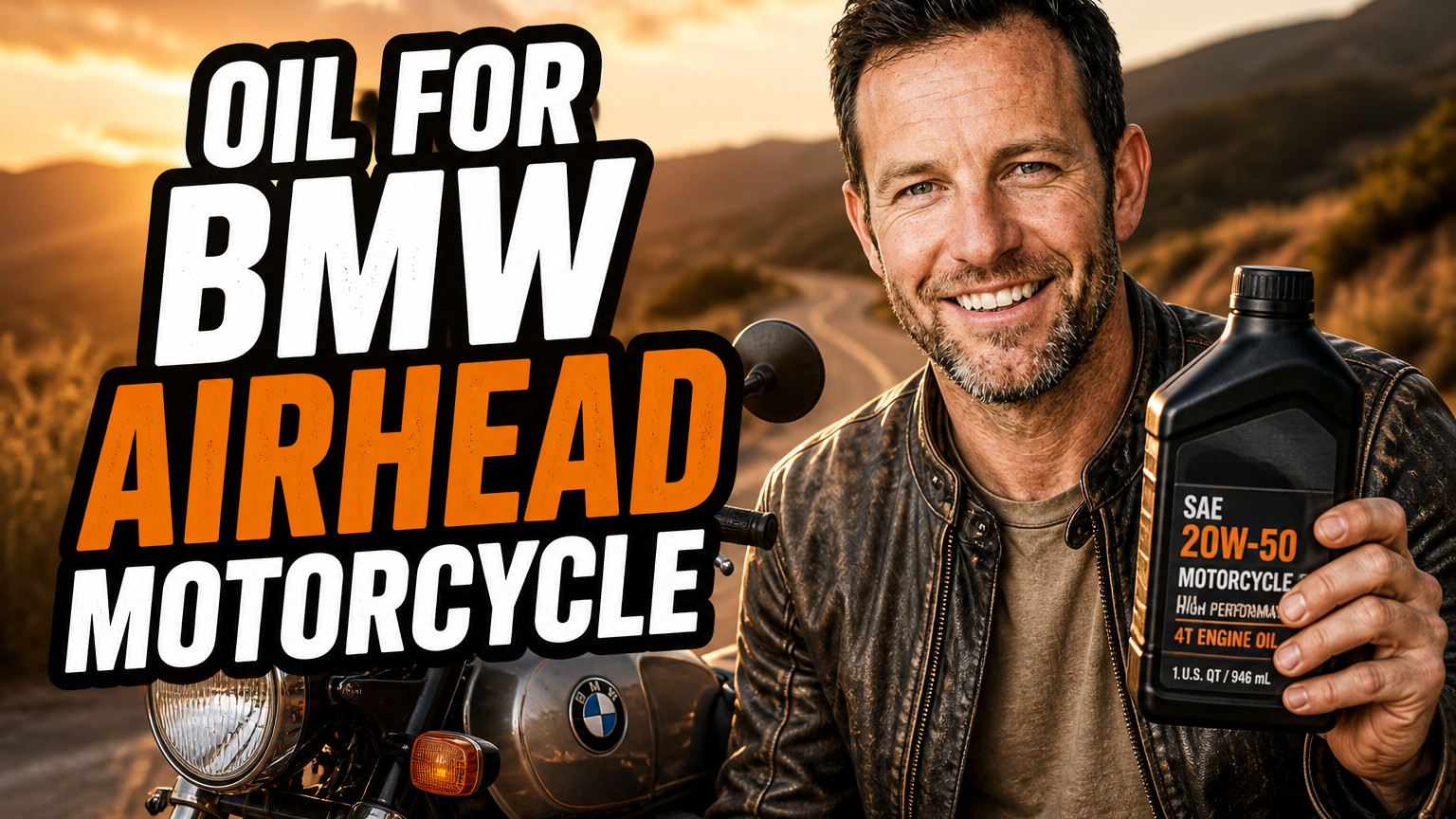
I’ve been turning wrenches on my old BMW boxer twin for years, and the question I get asked most at rallies is simple: what oil should go in an airhead? Ask five owners and you’ll get six answers, usually delivered with the confidence of a seasoned preacher.
The truth is that these engines are forgiving, but they’re also old-school. Flat-tappet cams, plain bearings, air cooling and decades of weeping seals mean the wrong oil can quietly shorten engine life. The right one keeps your /5, /6, /7 or Monolever bike running for another 100,000 miles.
Below are the seven oils I’ve used, researched, or seen trusted by long-time airhead owners. I’ll tell you what I like, what I don’t, and where each one fits.
- Airheads have flat-tappet cams, so I always choose oil with 1,200 to 1,400 ppm of zinc (ZDDP).
- My top overall pick is Valvoline VR1 Racing 20W-50. Shell Rotella T4 15W-40 is the best value.
- Use 20W-50 in warm weather and 15W-40 in cooler climates, and change it every 3,000 to 4,000 miles.
- Engine, transmission and final drive each use separate oil, so don’t mix them up.
What I Look for in an Airhead Engine Oil
Before the list, here’s the checklist I use. It’s short, and it will save you from the marketing fluff on the shelf.
Zinc and Phosphorus (ZDDP) Content
This is the big one. Modern car oils have had their ZDDP cut to protect catalytic converters, and that’s bad news for a flat-tappet engine. I look for roughly 1,200 to 1,400 ppm of zinc in anything I pour into my boxer.
Viscosity That Matches Your Climate
Airheads run hot, especially in traffic. For summer riding I stick with 20W-50. When mornings are cold, a 15W-40 flows faster at startup and still holds up once things warm through.
Dry Clutch Means No JASO Worries
Here’s a perk of the airhead layout: the single-plate clutch is dry. You don’t have to worry about friction modifiers causing slip the way you would on a wet-clutch Japanese bike. That opens up some diesel and racing oils that other riders must avoid.
1. Valvoline VR1 Racing 20W-50 — Best Overall for Airheads
If you made me pick one bottle, it would be Valvoline VR1 Racing 20W-50. It’s a conventional (mineral-based) racing oil loaded with zinc and phosphorus, which is exactly what a flat-tappet boxer wants.
I like that the VR1 Racing 20W-50 stays stable under heat. On a long summer ride with my cylinders cooking out in the breeze, oil pressure at hot idle stays healthy. It typically runs about $9 to $12 per quart.
Why I Trust It
- High ZDDP, roughly in the 1,300 ppm range
- Great shear stability for a mineral-based oil
- Widely available at auto parts stores
The Catch
Because it’s a racing formula, it isn’t designed for 10,000-mile intervals. I change VR1 Racing every 3,000 miles or so, and honestly, that’s what I’d do with any airhead oil anyway.
2. Shell Rotella T4 15W-40 — Best Budget Pick
Diesel truck oil on a BMW? Absolutely. Shell Rotella T4 Triple Protection 15W-40 has been an airhead favorite for years, and my buddy with an R80 RT has run it for well over 60,000 miles.
It’s a conventional oil with strong detergents and a ZDDP level that suits older engines. A gallon jug often costs under $25, which makes it the cheapest sensible option on this list.
Where It Shines
Rotella T4 handles heat and soot very well. Thanks to the dry clutch, its friction characteristics don’t matter on an airhead. It’s also nicely thick at operating temperature without being sluggish on a cool morning.
Where It Falls Short
In very hot climates I’d prefer a straight 50-weight at the top end. For most riders in temperate areas, though, the Rotella T4 15W-40 is a no-brainer.
3. Brad Penn Penn Grade 1 20W-50 — Best Premium Conventional
When I want an oil that feels like it was made for classic engines, I reach for Brad Penn Penn Grade 1 20W-50. It’s made from Pennsylvania crude, and the company blends it with a hefty dose of zinc and phosphorus.
The Brad Penn 20W-50 runs about $10 to $13 per quart. It’s the oil I use before long trips and when the bike is going into a hard riding season.
Why Airhead Owners Like It
- Roughly 1,400 ppm zinc for cam and follower protection
- Good detergency without being harsh on old gaskets
- Made in the USA with a loyal classic-engine following
It’s pricier than Rotella, and you may have to order it online or find a local dealer. For me that’s a fair trade for the peace of mind.
4. Mobil 1 V-Twin 20W-50 — Best Full Synthetic
I know, I know: some old-timers say synthetic and airheads don’t mix. In my experience that’s mostly a myth, provided the engine is healthy. Mobil 1 V-Twin 20W-50 is a full synthetic designed for air-cooled, high-heat engines, and that describes a boxer well.
It resists thermal breakdown better than any conventional oil I’ve tried. If you ride in hot weather, tour with luggage, or sit in stop-and-go traffic, the Mobil 1 V-Twin 20W-50 is worth the $13 to $16 per quart.
A Word of Caution
If your airhead already weeps from the pushrod tubes or rear main seal, a switch to synthetic may expose existing leaks. Fix the seals first, then enjoy the heat protection.
5. Castrol GTX Classic 20W-50 — Best Easy-to-Find Option
Sometimes you’re on a trip, a dealer is two states away, and you need oil today. Castrol GTX Classic 20W-50 is marketed for older engines and is sold at lots of big-box and auto parts stores for about $7 to $9 per quart.
I’ve topped off with it on the road, and I’ve known riders who run it as their regular oil with 3,000-mile changes. It isn’t as sophisticated as the racing blends, but it’s a sensible, honest oil.
My Take
I’d rate it as a very good backup. For daily use, I’d step up to VR1 or Brad Penn if I wanted maximum cam protection.
6. Motul 3000 4T 20W-50 — Best Motorcycle-Specific Mineral Oil
If you like oils developed specifically for motorcycles, Motul 3000 4T 20W-50 is a solid pick. It’s a mineral-based oil with a European pedigree, and it suits the classic BMW feel.
It costs about $11 to $14 per quart. I like how smoothly my transmission-shared bikes shift with it in other builds, although on an airhead, the engine and gearbox are separate, so that benefit is less relevant.
Good to Know
Motul 3000 is perfectly fine, though it doesn’t match the extra zinc of the racing-grade oils. I’d use it if I wanted a motorcycle-specific bottle and planned on frequent changes.
If you’re curious about how different brands stack up across bikes, I’ve found this guide to the best engine oil for motorcycle a helpful sanity check.
7. AMSOIL Synthetic V-Twin 20W-50 — Best for Long-Distance Touring
When I plan a multi-day tour, I think about heat, load and distance. AMSOIL Synthetic V-Twin Motorcycle Oil 20W-50 is a premium synthetic made for air-cooled engines, and it holds viscosity impressively.
It’s the most expensive oil on this list, at about $15 to $18 per quart. You get strong film strength, excellent wear protection and great high-temperature stability.
Who Should Buy It
- Riders doing long summer tours
- Owners of well-sealed, freshly rebuilt engines
- Anyone who wants a synthetic with serious additive backing
I still keep my change interval conservative. Even with AMSOIL, I’d rather spend a few dollars than gamble with a 50-year-old design.
Don’t Forget the Other Fluids
An airhead has three separate oil reservoirs, and I see people mix them up all the time. The engine takes engine oil, while the transmission and final drive each take gear oil.
Transmission and Final Drive
For the gearbox and rear drive, I use a quality 80W-90 hypoid gear oil, following the manual for each. Never pour engine oil where gear oil belongs, or the other way around.
Change Intervals I Follow
- Engine oil and filter: every 3,000 to 4,000 miles or once a year
- Gearbox oil: about every 12,000 miles
- Final drive: at least every other engine oil change or once a year
How I Choose Between These Oils
For a Daily Rider on a Budget
I’d go with Rotella T4 15W-40 and change it often. The cost savings add up fast, and the protection is excellent.
For Weekend Riders and Show Bikes
Valvoline VR1 Racing or Brad Penn Penn Grade 1 is my go-to. Both give you the zinc your cams crave, and they work well when the bike sits between rides.
For Hot Climates and Touring
A synthetic like Mobil 1 V-Twin or AMSOIL V-Twin is my choice. They handle heat better, which matters on a bike with no liquid cooling.
If you ride beyond airheads, my notes on the best motor oil for 4 stroke motorcycle and the top engine oil for 4 stroke motorcycle cover wet-clutch bikes, where the rules change.
Common Mistakes I See Airhead Owners Make
Using Modern Car Oil
Standard API SN or SP passenger-car oils have lowered zinc levels. That’s a quiet killer for flat-tappet cams, so avoid the shelf’s generic 10W-30 and 5W-30 bottles.
Overfilling the Crankcase
Airheads hold roughly two quarts, depending on the model and whether you change the filter. Check the dipstick or sight glass on level ground, because overfilling can cause foaming and leaks.
Stretching Oil Changes
Just because a synthetic claims longer life doesn’t mean your boxer wants it. I’d rather change early than regret it later.
For readers outside the US, this rundown of the best engine oil for 4 stroke motorcycle in india might help with local availability. And if you’re still deciding in general, what is the best engine oil for 4 stroke motorcycle is another handy reference.
My Final Thoughts
After all these miles, my own routine is simple. I run Valvoline VR1 Racing 20W-50 through the riding season, and I keep a jug of Rotella T4 in the garage for easy top-offs and cooler months.
Whatever you choose, remember the basics: high zinc, the right viscosity, and frequent changes. Do those three things, and your airhead will keep thumping down the road for decades.
Got a favorite I didn’t mention? I’m always happy to hear what’s working in other people’s boxers.
Frequently Asked Questions
What viscosity oil should I use in a BMW airhead?
For most riding conditions I run 20W-50 in warm weather and 15W-40 when temperatures sit below roughly 50°F. Always check your owner’s manual for your specific model and climate.
Do BMW airheads need high-ZDDP oil?
Yes, I recommend it. Airheads use flat-tappet camshafts, and zinc and phosphorus (ZDDP) protect those cam lobes and followers from wear. Look for oils with roughly 1,200 to 1,400 ppm of zinc.
Can I use synthetic oil in an old airhead?
Yes, you can. A quality synthetic such as Mobil 1 V-Twin 20W-50 or AMSOIL V-Twin 20W-50 works well in a healthy engine. Just make sure it has enough ZDDP and keep an eye on any seal weeping.
How often should I change the oil in my BMW airhead?
I change mine every 3,000 to 4,000 miles or once a year, whichever comes first. Airheads have no oil cooler on many models and run hot, so fresh oil is cheap insurance.

Related Articles
7 Best Batteries for Motorcycles I’ve Tested and Trust in 2026
I've tested dozens of motorcycle batteries to find the best performers. From AGM to lithium, here are my top picks…
Jake Miller
15 min read

The Perfect Battery for Your Harley Davidson Softail: A Rider’s Complete Guide
Discover the perfect battery for your Harley Davidson Softail. I've tested multiple options and share real-world performance data, maintenance tips,…
Jake Miller
14 min read

The Best Battery for Your Harley Davidson: My Complete Guide After Years of Testing
Discover which battery truly performs best for Harley Davidson motorcycles. Real rider experience with AGM, lithium, and OEM options to…
Jake Miller
12 min read