
7 Best Petroleum-Based Motorcycle Oils I Trust for Smooth, Reliable Riding
 Jake Miller
9 min read
Jake Miller
9 min read
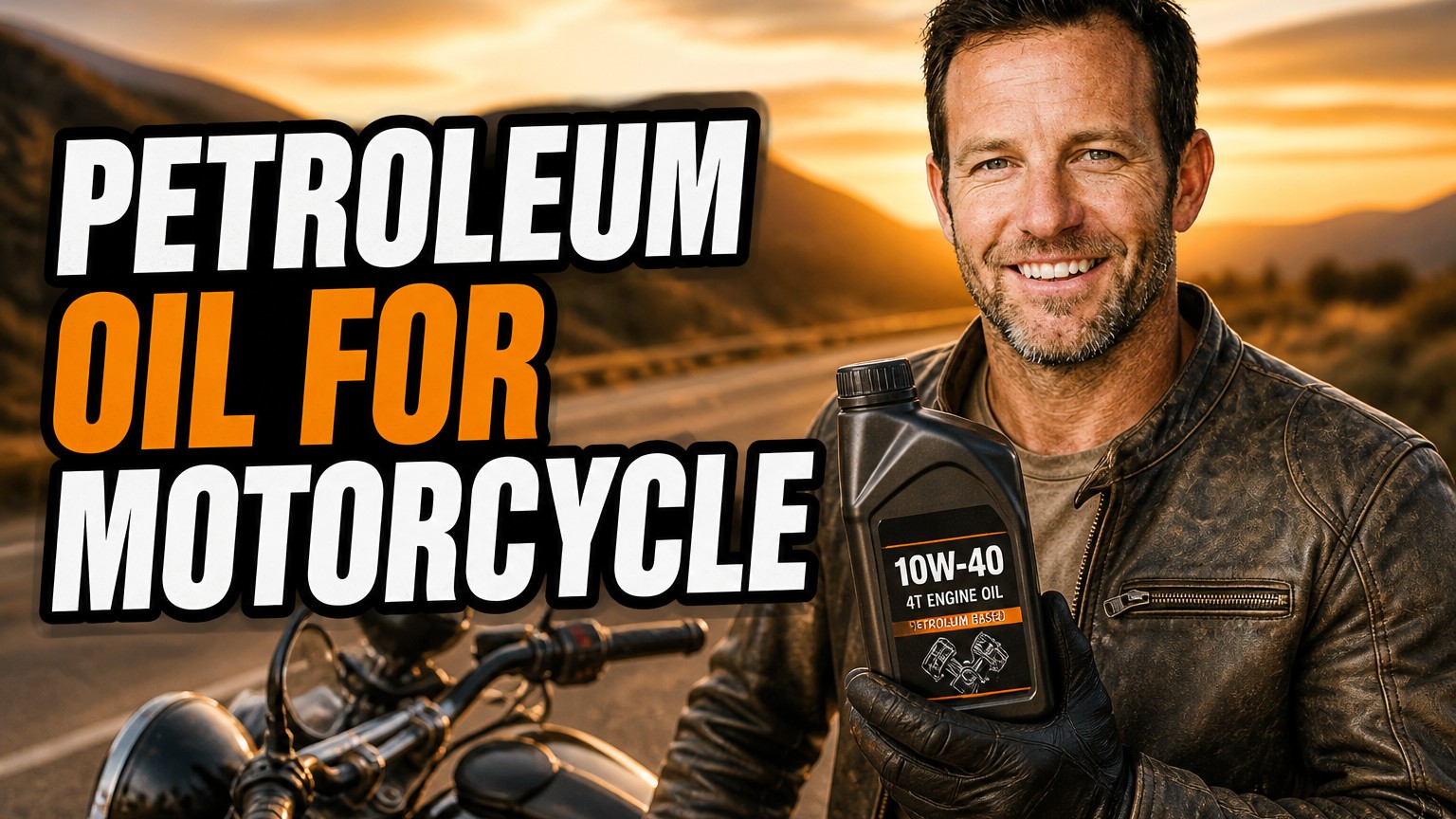
I’ve been riding and wrenching on my own bikes for years. The oil question comes up in every garage conversation I have. Everyone has an opinion, and half the internet insists you must run full synthetic or you’re wrecking your engine.
That’s simply not true. A good petroleum-based oil (also called mineral or conventional oil) is still a smart, affordable choice for plenty of motorcycles. I’ve run several of the oils below in my own bikes, and others I’ve tried through friends’ garages and long rides.
Below are the seven mineral oils I’d happily pour into my own crankcase. I’ll tell you what each one does well and where it falls short.
- Mineral oil is still a great, budget-friendly choice for air-cooled, carbureted, commuter, and classic bikes.
- Always look for a JASO MA or MA2 rating so your wet clutch doesn’t slip.
- My top overall pick is Honda GN4, and Motul 3000 4T is my favorite for spirited riding.
- Match the viscosity to your owner’s manual and climate, and change the oil on schedule.
Why I Still Reach for Petroleum Oil
Mineral oil is refined directly from crude oil. It lacks the molecular uniformity of a full synthetic, but it lubricates well and costs less. For a daily commuter or a vintage thumper, that’s often all you need.
I like mineral oil on bikes with short change intervals. If you change your oil often anyway, paying extra for synthetic longevity you’ll never use doesn’t make much sense to me.
Who Should Choose Mineral Oil?
In my experience, mineral oil suits these riders best:
- Commuters on 100cc to 250cc air-cooled bikes
- Owners of classic or vintage motorcycles with older seals and gaskets
- Riders who change oil frequently and want to keep costs low
- Anyone whose manufacturer specifically recommends conventional oil during break-in
If you want a wider comparison across oil types, my guide to the best engine oil for motorcycle covers synthetics and blends too.
1. Honda GN4 10W-30 — Best Overall Mineral Oil
When I want zero drama, I go with Honda GN4. It’s a mineral-based 4-stroke oil developed by the company that builds some of the most reliable engines on the planet. I trust it for that reason alone.
What I Like
Honda GN4 meets JASO MA standards, so it plays nicely with wet clutches. It’s smooth in my Honda commuter, and gear shifts stay positive and quiet. It comes in common grades like 10W-30 and 20W-50, so you can match it to your bike.
It’s widely available at Honda dealers and reasonably priced, usually a modest amount per liter. I’ve never had it foam or thin out in stop-and-go traffic.
What Could Be Better
It isn’t the most exciting oil on the shelf. If you ride hard or spend long stretches at redline, I’d look at the Motul below. But for daily riding, GN4 is my default recommendation.
2. Motul 3000 4T 20W-50 — Best for Spirited Riding
The Motul 3000 4T is a French mineral oil that punches above its price. I’ve used it in an air-cooled twin during hot summer rides. It held up better than I expected.
Real-World Performance
Motul 3000 4T is made with a mineral base but includes a strong additive package. It’s JASO MA2 rated, which means very consistent clutch feel. In my experience, gear changes stay crisp even late in the oil’s life.
The 20W-50 grade is great for hotter climates and for older, air-cooled engines with looser tolerances. It also comes in 10W-40 for modern bikes, so check what your manual calls for.
Downsides
It costs a bit more than the basic commuter oils. Still, I think the extra money buys real peace of mind on longer rides.
3. Shell Advance 4T AX5 15W-40 — Best for Everyday Commuters
If you’re sitting in traffic every morning, the Shell Advance 4T AX5 is a strong contender. It’s a mineral-based oil designed specifically for 4-stroke commuter motorcycles and scooters.
Why It Works for Me
I like that Shell Advance AX5 is built to handle heat and constant clutch use. It’s rated JASO MA2, and its formula resists breakdown in stop-start riding. My bike felt a little quieter at idle after I switched.
It’s easy to find in many countries and priced low. Riders in Asia in particular will find it everywhere. If that’s you, my rundown of the best engine oil for 4 stroke motorcycle in india is worth a read.
Downsides
The 15W-40 grade isn’t right for every bike, so double-check your viscosity requirement first. Some modern, high-revving engines call for thinner oil.
4. Castrol Classic XL 20W-50 — Best for Vintage and Classic Bikes
When I helped a buddy restore an old British single, we ended up with Castrol Classic XL 20W-50. It’s a straight mineral oil made with older engines in mind, and the brand has decades of heritage here.
Why Classics Love It
Older engines often have looser tolerances, different metallurgy, and seals that don’t like modern thin oils. The thicker 20W-50 viscosity of the Classic XL helps maintain oil pressure and keeps things quieter at operating temperature.
It also feels right in the garage. There’s something satisfying about running a vintage-style oil in a vintage-style machine.
Things to Know
It’s aimed at older engines, so I wouldn’t put it in a modern wet-clutch sportbike. Check your clutch type and your manual first.
5. Valvoline 4-Stroke Motorcycle Oil 20W-50 — Best Value in the US
I picked up a jug of Valvoline 4-Stroke Motorcycle Oil at a regular auto parts store on a road trip when my bike was a quart low. It’s been a staple in my saddlebag kit ever since.
What Stands Out
This is a conventional oil made for motorcycle engines and their shared engine, gearbox, and clutch setup. It’s formulated to resist shearing and to keep the clutch from slipping. Valvoline has a long history in motorsport, and that shows in the formulation.
The 20W-50 is a classic choice for big air-cooled cruisers and V-twins. I find it keeps engine noise down on hot days.
Downsides
It’s a straightforward oil without fancy extras. For a budget-friendly top-up or regular change, though, I’m happy with it.
6. Liqui Moly Motorbike 4T 20W-50 Basic Street — Best German Budget Pick
The Liqui Moly Motorbike 4T Basic Street is a mineral oil from a brand known for tidy engineering. I’ve recommended it to friends with older Japanese and European bikes.
What It Does Well
It’s a solid mineral formulation designed for motorcycle engines with a shared oil circuit. It offers good wear protection and stable viscosity in normal use. I’ve found it quiet and consistent at both cold start and operating temperature.
It’s typically priced between a basic commuter oil and a premium brand, so it’s a nice middle ground. If you want more options in this class, my breakdown of the best motor oil for 4 stroke motorcycle adds a few more.
Downsides
Availability depends on where you live. I sometimes have to order it online rather than pick it up locally.
7. Yamalube 4 Mineral Oil 20W-40 — Best for Yamaha Owners
I’ve ridden a few Yamahas over the years. When the manual says mineral oil, I like using Yamalube 4 because it’s made for the brand’s engines.
Why I Trust It
Yamalube 4 is made for engines that share oil between the crankcase, transmission, and wet clutch. It balances friction for smooth clutch engagement without slippage. Gear changes feel light and predictable in my experience.
The 20W-40 grade suits warm climates and many air-cooled commuters. It’s a good everyday option if you want an oil that matches your bike’s design intent. For another angle on picking the right grade, see this guide to the top engine oil for 4 stroke motorcycle.
Downsides
It isn’t always the cheapest, and it’s mostly sold through dealers and specialty shops. If you ride a non-Yamaha bike, one of the others on my list may be easier to find.
How I Choose the Right Mineral Oil
With seven good options, you still need to pick one. This is the checklist I run through every time.
Check the JASO Rating
If your motorcycle has a wet clutch, you want JASO MA or MA2 on the label. JASO MB oils are designed for scooters with dry clutches and can cause slipping in a wet-clutch bike. This single detail prevents a lot of problems.
Match the Viscosity
Your owner’s manual is the final authority. As a rough guide:
- 10W-30 / 10W-40: Modern bikes in mild or cool climates
- 20W-40: Commuters in warm weather
- 20W-50: Air-cooled engines, classics, and hot climates
A Quick Climate Tip
In very cold regions, the first number (the “W” rating) matters most for cold starts. In very hot regions, the second number protects the engine once it’s fully warm.
Don’t Skip Changes
Mineral oil breaks down faster than synthetic, so stick to your schedule. I change mine roughly every 2,000 to 3,000 miles. That’s cheap insurance for a healthy engine.
If you’re still wondering about the basics, I also wrote about what is the best engine oil for 4 stroke motorcycle across different riding styles.
Common Mistakes I See Riders Make
Using Car Oil by Accident
Many modern car oils are labeled “energy conserving” and contain friction modifiers. These can cause clutch slip on wet-clutch bikes. I always stick to motorcycle-specific oil.
Mixing Random Oils
Topping off in an emergency is fine. But I try not to make a habit of mixing brands and viscosities. At the next change, drain everything and start fresh.
Ignoring the Oil Level
Check your oil level regularly on a level surface, and follow your manual’s procedure. I check mine every couple of weeks and before every long trip.
My Final Thoughts
You don’t need to spend a fortune to protect your engine. Any of these seven petroleum oils can serve you well when matched to the right bike and changed on time.
If I had to pick just one, I’d go with Honda GN4 for its dependable, drama-free performance. For harder riding I’d choose Motul 3000 4T, and for a classic I’d reach for Castrol Classic XL. Whatever you pick, check your manual, look for that JASO rating, and enjoy the ride.
Frequently Asked Questions
Is petroleum (mineral) oil good for motorcycles?
Yes. A quality mineral oil with a JASO MA or MA2 rating works very well in most air-cooled, carbureted, and older bikes when you change it on schedule. High-performance or heavily stressed engines may benefit from semi-synthetic or full synthetic.
Can I use car engine oil in my motorcycle?
I don’t recommend it. Many car oils contain friction modifiers that can make a wet clutch slip. Choose a motorcycle-specific oil with a JASO MA or MA2 rating.
How often should I change mineral motorcycle oil?
Most riders change it every 2,000 to 3,000 miles (3,000 to 5,000 km), or once a year. Always follow your owner’s manual, and change it sooner if you ride in heavy traffic, dust, or extreme heat.
Which viscosity is best for a petroleum motorcycle oil?
It depends on your engine and climate. 10W-30 or 10W-40 suits many modern bikes, while 20W-40 and 20W-50 are popular for air-cooled engines in hot weather. Your manual has the final say.

Related Articles
7 Best Batteries for Motorcycles I’ve Tested and Trust in 2026
I've tested dozens of motorcycle batteries to find the best performers. From AGM to lithium, here are my top picks…
Jake Miller
15 min read

The Perfect Battery for Your Harley Davidson Softail: A Rider’s Complete Guide
Discover the perfect battery for your Harley Davidson Softail. I've tested multiple options and share real-world performance data, maintenance tips,…
Jake Miller
14 min read

The Best Battery for Your Harley Davidson: My Complete Guide After Years of Testing
Discover which battery truly performs best for Harley Davidson motorcycles. Real rider experience with AGM, lithium, and OEM options to…
Jake Miller
12 min read