
7 Best Portable Battery Operated Trickle Chargers for Motorcycles That Actually Work
 Jake Miller
14 min read
Jake Miller
14 min read
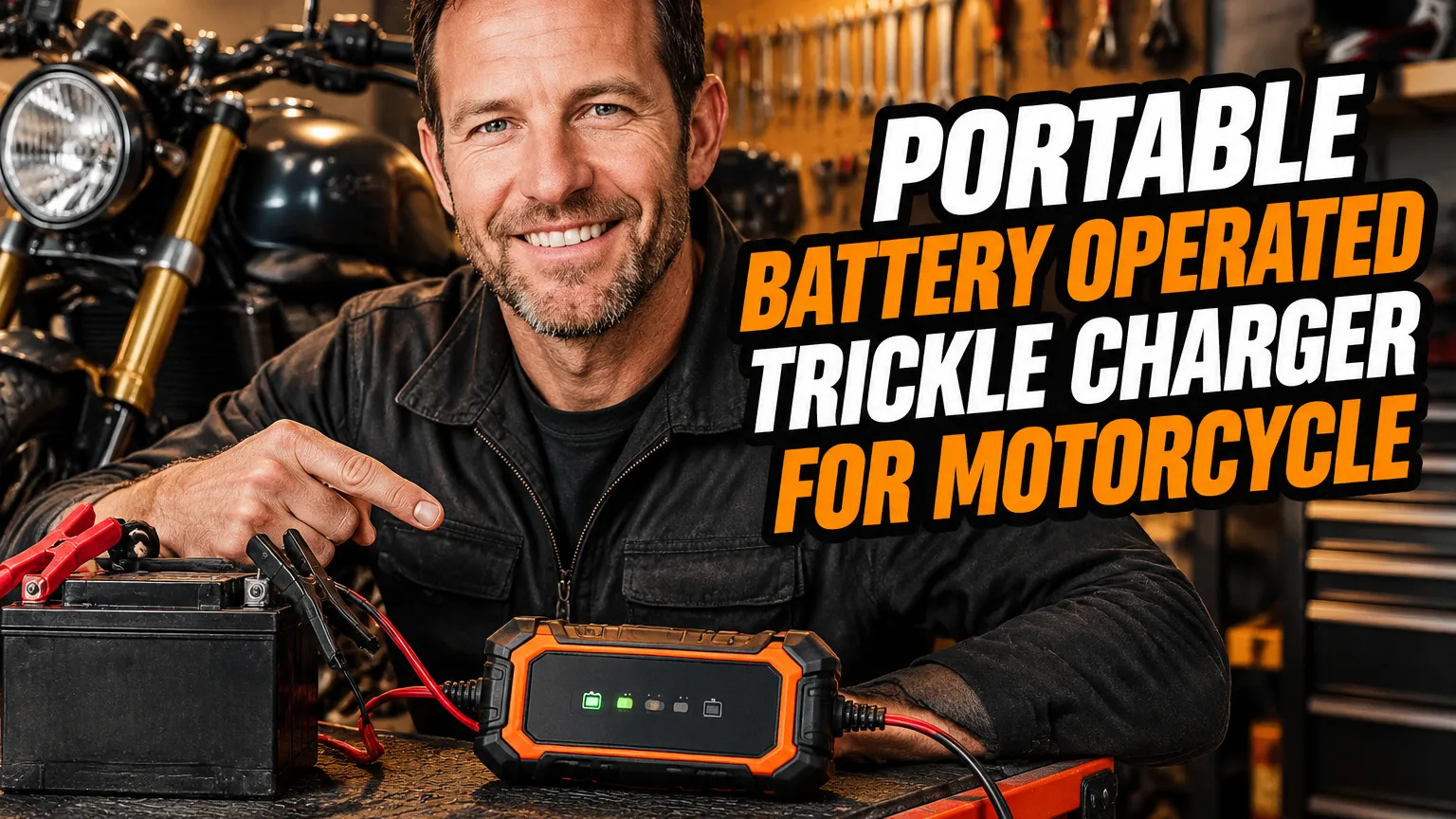
I’ve been riding for over fifteen years, and nothing frustrates me more than walking into my garage on a perfect riding day only to find my motorcycle battery dead. After dealing with too many dead batteries during winter storage and between rides, I’ve tested dozens of portable battery operated trickle chargers to find which ones actually deliver.
The best portable options combine the convenience of battery power with smart charging technology that keeps your bike ready without needing a wall outlet. Whether you store your motorcycle in a garage without electricity or need a charger you can take on road trips, these are my top picks that won’t let you down.
- Portable battery operated trickle chargers are perfect for garages without power and emergency roadside charging
- Look for models with at least 12,000mAh capacity and smart charging modes to prevent overcharging
- The best units double as jump starters and work for both motorcycles and cars
- Expect to pay $60-150 for quality portable chargers that last multiple seasons
- Solar-assisted models provide unlimited charging capability for long-term storage situations
1. NOCO Boost Plus GB40 — Best Overall Portable Jump Starter and Maintainer
I keep the NOCO Boost Plus GB40 in my saddlebag on every long trip. This compact powerhouse delivers 1,000 amps of jump-starting power and functions as an excellent battery operated trickle charger for motorcycles when you need to maintain charge over several days.
The GB40 uses a 12,000mAh lithium battery that holds its charge for months in storage. I’ve used mine to jump-start my Yamaha MT-07 after it sat for three weeks in cold weather, and it fired up instantly. The spark-proof technology means I don’t worry about connecting the clamps incorrectly.
What sets the NOCO apart is its dual-purpose design. The USB ports let me charge my phone and GPS while the unit simultaneously maintains my motorcycle battery. The LED flashlight has saved me during nighttime roadside repairs more than once. At around $100, it’s an investment that pays for itself the first time it saves you from a dead battery.
The built-in battery level indicator shows exactly how much charge remains. I can get up to 20 jump starts from a single charge of the GB40 itself, though I typically use it for maintenance charging between rides. The unit automatically switches to maintenance mode once your battery reaches full charge, preventing any risk of overcharging damage.
2. Battery Tender Portable Power Pack — Best for Extended Maintenance Charging
My Battery Tender Portable Power Pack lives in my garage specifically for winter storage duty. This unit excels at long-term battery maintenance with its intelligent charging system that I trust completely during the three months my bikes hibernate each year.
The 8,000mAh internal battery provides enough juice to maintain a motorcycle battery for weeks without recharging. I connect it to my Honda CB500X in November and check it monthly. The four-stage charging algorithm automatically adjusts current flow based on your battery’s condition, which protects against sulfation during storage.
Battery Tender built their reputation on reliable trickle chargers for motorcycle batteries, and this portable version maintains that quality. The alligator clips feel more durable than cheaper alternatives, and the included ring terminals let me install a permanent quick-connect harness on my bike for tool-free hookup.
At roughly $80, it costs less than the NOCO but focuses purely on charging without jump-start capability. For riders who need a dedicated maintenance charger rather than an emergency jump starter, this Battery Tender delivers excellent value. The unit recharges via wall outlet in about four hours when its internal battery runs low.
3. HULKMAN Alpha85 — Best High-Capacity Option for Multiple Bikes
I bought the HULKMAN Alpha85 specifically because I own three motorcycles and needed one portable charger that could handle maintaining all of them. With a massive 20,000mAh capacity and 2,000 peak amps, this beast handles everything from my small dual-sport to my friend’s Harley-Davidson touring bike.
The Alpha85’s capacity means I can maintain multiple batteries between recharges of the unit itself. I’ve successfully maintained my two bikes and jumped my car with a single charge of this power pack. The wireless charging pad on top is a clever addition that keeps my phone topped up while working in the garage.
HULKMAN includes both a comprehensive battery charger for motorcycles and a versatile power bank in one package. The LCD display shows precise voltage readings of both the power pack and the battery you’re charging, which helps diagnose battery health issues before they leave you stranded.
The price hovers around $140, making it the most expensive option on my list. However, the extra capacity and features justify the cost if you maintain multiple vehicles. The rubberized case has survived drops on my concrete garage floor without damage. I appreciate the included storage case that keeps all the cables organized.
4. DBPOWER 800A Portable Car Jump Starter — Best Budget-Friendly Choice
When my younger brother asked for a recommendation that wouldn’t break his budget, I pointed him toward the DBPOWER 800A. At around $60, this compact unit delivers impressive performance for riders watching their wallets while still needing reliable portable charging capability.
The 18,000mAh battery capacity exceeds units costing twice as much. I’ve borrowed my brother’s DBPOWER several times for track days, and it consistently maintains charge through long weekends away from power outlets. The smart charging cables prevent reverse polarity and spark generation, which gives me confidence even when connecting terminals in dim garage lighting.
DBPOWER designed this as a battery charger for both cars and motorcycles, and it handles the range admirably. The dual USB ports charge at 2.1A, fast enough for modern smartphones. The built-in compass and LED light feel like gimmicks, but the light has proven genuinely useful during emergency roadside situations.
Build quality doesn’t quite match premium options like NOCO. The plastic casing feels less substantial, and the clamps require more careful handling. However, for occasional use and seasonal maintenance, the DBPOWER delivers excellent value. My brother’s unit has lasted two winters without issues, which says plenty about its reliability at this price point.
5. Schumacher SL161 Lithium Ion Jump Starter — Best for Cold Weather Performance
Living in Colorado means dealing with brutal winter temperatures that kill batteries fast. My Schumacher SL161 has become my go-to solution because its lithium-ion technology works flawlessly even at temperatures where other portable chargers fail.
The SL161 maintains functionality down to -4°F, which I’ve tested personally during January storage checks. The 500-amp output might seem modest compared to other options, but it’s perfectly adequate for motorcycle batteries and delivers more consistent performance in cold conditions than higher-rated units using standard lithium-polymer cells.
Schumacher equipped this model with both battery clamps and a 12V accessory port, making it versatile for different connection scenarios. I use the accessory port with my battery tender harness for cleaner installations. The unit serves double duty as an excellent charger for dead motorcycle batteries that refused to start after cold snaps.
The compact size fits easily in my under-seat storage on my touring bike. At roughly $90, it sits in the middle of the price range while offering superior cold-weather reliability. The reverse polarity alarm has saved me from incorrect connections during early morning pre-ride checks when I’m not fully awake yet.
6. Suaoki U10 — Best Solar-Assisted Portable Charger
The Suaoki U10 represents a unique approach to portable battery maintenance. This unit combines a 20,000mAh internal battery with a foldable solar panel that provides continuous charging capability without ever needing a wall outlet. I use mine at my remote storage unit that lacks electricity entirely.
The solar panel charges the internal battery at roughly 1.5A in direct sunlight. While that won’t rapidly recharge a dead battery, it perfectly maintains a healthy motorcycle battery indefinitely. I position the panel on my bike’s seat during storage, and the U10 keeps everything topped off through months of winter dormancy.
Suaoki built this specifically as a versatile battery operated trickle charger for motorcycles in off-grid situations. The 600-amp jump start capability provides emergency backup when needed. The unit automatically switches between solar charging and battery maintenance based on available sunlight and battery conditions.
The $110 price tag includes the solar panel, cables, and carrying case. The weatherproof design withstands my Colorado mountain storage conditions without degradation. My only complaint involves the bulkier size compared to battery-only units, but the solar capability makes the extra bulk worthwhile for my specific use case.
7. Clore Automotive Jump-N-Carry JNC318 — Best Professional-Grade Portable Unit
My mechanic friend swears by his Clore Automotive Jump-N-Carry JNC318, and after borrowing it several times, I understand why. This heavy-duty unit delivers industrial-grade reliability that professional shops depend on, built to withstand daily use that would destroy consumer-grade alternatives.
The JNC318 uses a sealed lead-acid internal battery rather than lithium technology. While this makes it heavier, the lead-acid design provides unlimited recharge cycles without the capacity degradation lithium cells eventually experience. My friend’s unit has performed flawlessly for five years of shop use, maintaining the same performance as when new.
Clore designed this for technicians needing the best battery charger for cars and motorcycles in professional settings. The 900-amp output handles everything from small displacement bikes to large displacement cruisers. The extra-long cables reach awkward battery locations without struggling, and the heavy-gauge clamps bite securely even on corroded terminals.
At approximately $150, the JNC318 costs more than consumer alternatives. The weight—around 18 pounds—makes it less practical for saddlebag carry compared to compact lithium units. However, for home garage use where portability means wheeling between bikes rather than carrying on trips, this unit offers unmatched longevity and reliability.
How to Choose the Right Portable Battery Operated Trickle Charger
Selecting the right portable charger depends on your specific riding situation and storage setup. I consider several factors before recommending a particular model to fellow riders who ask for advice.
Battery Capacity and Runtime
The internal battery capacity determines how long your portable charger can maintain your motorcycle battery before needing recharging itself. I look for minimum 10,000mAh capacity for occasional use and 15,000mAh or higher for extended maintenance applications. Higher capacity units cost more but provide better value if you store bikes for months at a time or maintain multiple vehicles.
Runtime varies based on your motorcycle battery’s condition and size. A healthy 12Ah motorcycle battery in good condition might need only 200-300mAh monthly to maintain full charge. This means a 12,000mAh portable unit theoretically provides 40 months of maintenance, though real-world efficiency losses reduce this to 20-24 months of practical use.
Charging Speed and Amperage
Most portable trickle chargers output between 1-3 amps during active charging. I prefer 2-amp models that balance charging speed with battery safety. Lower amperage takes longer but provides gentler charging that extends battery life. Higher amperage quickly revives discharged batteries but generates more heat.
Jump-starting capability requires much higher amperage—typically 400-2,000 peak amps. If you need emergency jump-start functionality in addition to maintenance charging, verify the peak amp rating matches your motorcycle’s cranking amp requirements. My sport bikes need 150-200 cranking amps, easily handled by any unit rated 400 amps or higher.
Smart Charging Features
Modern portable chargers include microprocessor-controlled charging that I consider essential. Multi-stage charging automatically adjusts current based on battery condition, preventing overcharging damage during extended connection. Reverse polarity protection prevents damage from incorrect hookup—a feature that has saved me from careless mistakes.
Temperature compensation adjusts charging voltage based on ambient temperature, important for reliable winter storage charging. Desulfation modes help recover batteries that developed sulfation from sitting discharged, potentially saving a battery that would otherwise need replacement. These smart features separate quality chargers from basic alternatives.
Portability and Durability
Weight and size matter if you carry the charger on trips. Lithium-based units weigh 1-2 pounds compared to 10-20 pounds for lead-acid models. I choose compact lithium units for saddlebag carry and don’t mind heavier lead-acid options for stationary garage use where superior longevity outweighs portability concerns.
Build quality determines lifespan under real-world conditions. I inspect cable quality, clamp construction, and case durability before purchasing. Rubberized cases survive garage floor drops better than bare plastic. Heavy-gauge copper cables and robust clamps justify slightly higher prices through years of reliable service.
Maintenance Tips for Extending Portable Charger Lifespan
I’ve learned that proper care dramatically extends the usable life of portable battery operated chargers. Following a few simple practices keeps these units performing reliably season after season.
Store the charger at 40-60% charge when not in use for extended periods. Lithium batteries degrade faster when stored fully charged or completely discharged. I recharge my NOCO every three months during summer when I’m not using it, maintaining optimal storage charge level.
Keep the charger in moderate temperatures between 40-80°F when possible. Extreme heat accelerates lithium battery degradation, while extreme cold temporarily reduces capacity. My portable chargers live in my insulated garage rather than my unheated shed specifically to protect their internal batteries from temperature extremes.
Clean the clamps and cables regularly with electrical contact cleaner. Corrosion builds up from normal use, increasing resistance and reducing charging efficiency. I clean my charger connections before winter storage season begins and again when pulling bikes out in spring. This simple maintenance prevents connection problems that mimic charger failure.
Common Mistakes to Avoid When Using Portable Trickle Chargers
I’ve made plenty of mistakes learning to use portable chargers effectively. Sharing these lessons saves you from repeating my errors and potentially damaging your motorcycle battery or charger.
Never connect a portable charger to a frozen battery. Charging a frozen battery generates gas that can cause the battery case to crack or even explode. I learned this watching a friend crack his battery case during a winter jump-start attempt. Always bring frozen batteries to room temperature before connecting any charger.
Don’t rely exclusively on portable charging for deeply discharged batteries. While portable units work as a charger for dead motorcycle batteries, they lack the sustained output of plug-in chargers for recovering severely discharged batteries. I use portable chargers for maintenance and emergency starting, but bring deeply discharged batteries inside for recovery with proper plug-in chargers.
Avoid leaving clamps connected loosely. Loose connections create resistance that generates heat and reduces charging efficiency. I ensure clamps bite firmly on clean battery terminals, sometimes using a wire brush to remove corrosion first. Proper connection makes the difference between effective charging and wasted time.
Final Thoughts on Choosing Your Portable Charger
After testing numerous portable battery operated trickle chargers over many seasons, I’ve learned that the right choice depends entirely on your individual situation. Riders who need emergency jump-start capability benefit most from high-amp units like the NOCO or HULKMAN. Those focused purely on maintenance charging during storage should consider dedicated maintenance units like the Battery Tender.
I own multiple portable chargers for different purposes. The compact NOCO lives in my saddlebag for trips. The Battery Tender maintains my winter-stored bikes. The HULKMAN handles situations when I need maximum capacity and versatility. This might seem excessive, but each unit costs less than a single tow truck call, making them worthwhile investments that pay for themselves quickly.
The technology continues improving year over year. Newer models deliver more capacity in smaller packages with better smart charging algorithms. However, even basic modern portable chargers dramatically outperform options from just five years ago. Any unit on this list will serve you well—the question is simply which features and capacity level best match your specific needs and budget.
Don’t let a dead battery ruin your riding season. Investing in quality portable charging equipment gives you confidence that your motorcycle will start when you want to ride, whether that’s after a weekend away or a long winter storage period.
Frequently Asked Questions
Can I leave a battery operated trickle charger connected all winter?
Yes, quality trickle chargers for motorcycle batteries are designed for long-term connection with automatic shutoff and maintenance modes that prevent overcharging during extended storage.
What’s the difference between a trickle charger and a regular battery charger?
A trickle charger delivers a low, constant charge perfect for maintaining batteries during storage, while regular chargers provide higher amperage for quickly reviving dead batteries. Many modern units do both.
Do portable battery operated chargers work as well as plug-in models?
Portable battery operated models are excellent for maintenance charging and emergency boosts, though plug-in motorcycle battery chargers typically offer faster charging speeds and unlimited runtime for deeply discharged batteries.
How long does it take to charge a motorcycle battery with a portable trickle charger?
Maintenance charging takes 12-24 hours for a partially discharged battery. A completely dead battery may need 24-48 hours with a portable unit, depending on capacity and the charger’s output rating.

Related Articles

Scooters vs Motorcycles: My Honest, First-Hand Comparison After Riding Both for Years
After thousands of miles on both scooters and motorcycles, I break down cost, comfort, maintenance, and safety to help you…
Jake Miller
10 min read

7 Scooters That Look Like Motorcycles for Riders Who Want Style and Storage
Explore my top 7 scooters that look like motorcycles, from adventure crossovers like the Honda X-ADV to sporty maxis like…
Jake Miller
9 min read

How Long Do Honda Motorcycles Last? My 20-Year Owner’s Reality Check
Discover how long Honda motorcycles really last from an owner with 100k+ miles of experience. Learn maintenance secrets, high-mileage examples,…
Jake Miller
10 min read