
Are Lithium Ion Motorcycle Batteries Worth It? My Honest Take After Two Years of Testing
 Jake Miller
11 min read
Jake Miller
11 min read
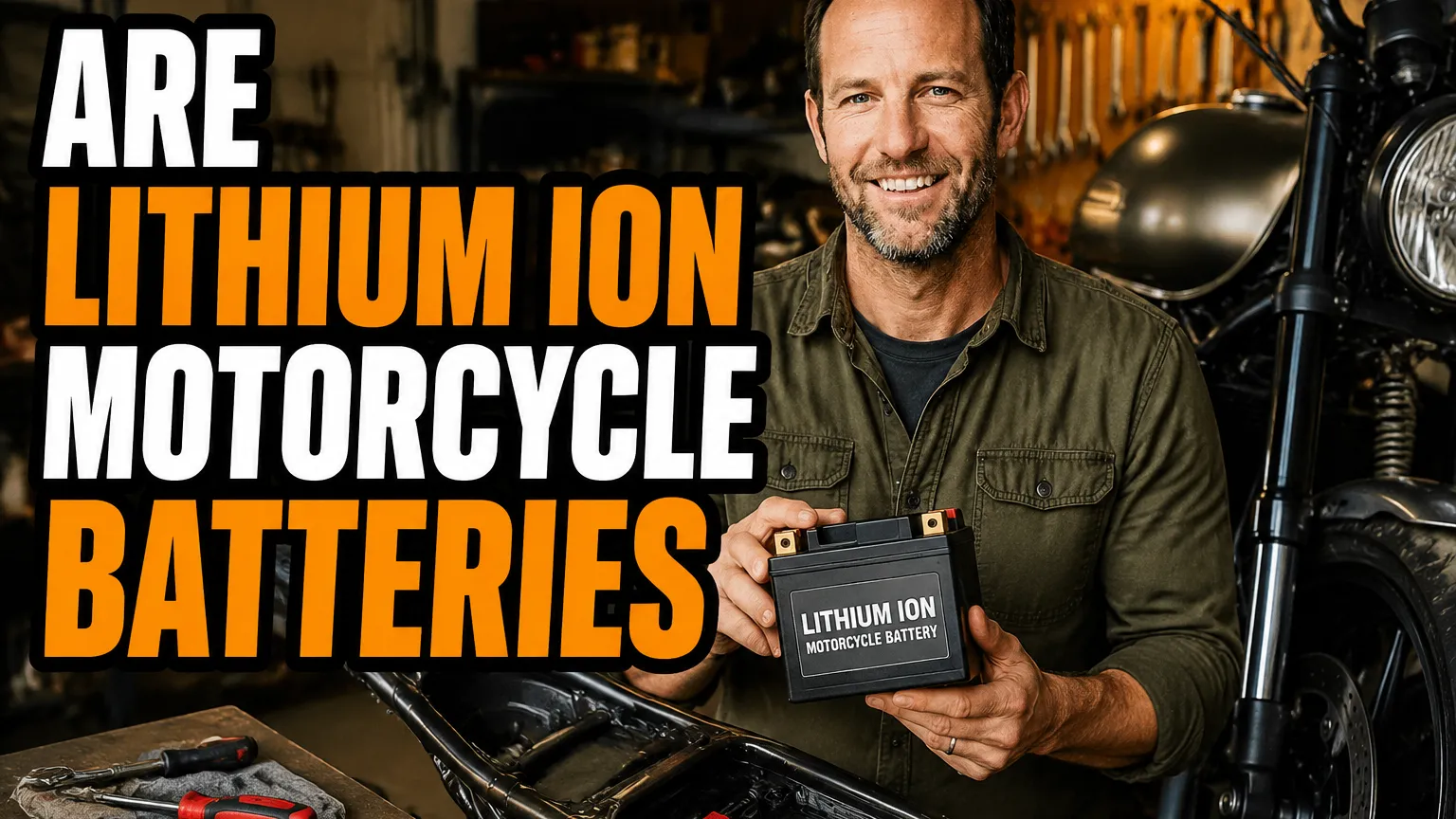
I swapped my first lithium ion motorcycle battery into a bike about two years ago, and I’ll be honest with you: I did it expecting to be disappointed. I’d read the forum threads, I’d heard the horror stories about fires, I’d talked to the guy at the shop who swore lithium was a gimmick for people who wanted to brag about weight savings. That first pack is still in the bike. It cranks harder in January than the AGM battery it replaced ever did, and it weighs about as much as a paperback novel. Since then I’ve put lithium packs in three different motorcycles — a carbed 750, a fuel-injected sportbike, and a big air-cooled twin. Not everything about them is sunshine, though, and there are a few ways you can genuinely wreck one in a single afternoon if nobody warns you. So let me give you the real version. Not the spec sheet, not the marketing copy. Just what I’ve learned turning wrenches in my own garage.
- Lithium ion motorcycle batteries weigh 60 to 70 percent less than lead acid and crank noticeably harder.
- They need a lithium-specific charger — your old trickle charger will slowly kill them.
- Cold weather hurts them, but a couple of quick starter presses warm the cells up and they fire fine.
- I’m getting four to five seasons out of mine versus two to three from AGM.
- Buy one with a built-in BMS. That’s the single most important spec on the box.
What Actually Changed When I Switched
The first thing I noticed wasn’t the cranking power. It was the weight. I pulled the stock AGM out of my sportbike, held it in one hand, and then picked up the lithium pack in the other. The difference was startling.
Stock battery: about 9 pounds. Lithium replacement: about 2.5 pounds.
That’s six and a half pounds off the highest point on the bike. It doesn’t sound like much in a spec table, but you feel it when you tip the bike into a corner. It sharpens the turn-in slightly. It’s not a miracle, but it’s real, and it’s free.
The Cranking Power Is Genuinely Better
Here’s the part that surprised me most. A lithium pack with the same nominal rating as an AGM cranks harder, because lithium holds higher voltage under load. AGM sags when you hit the starter. Lithium barely dips.
On my big twin, the starter used to labor for two or three revolutions before catching on cold mornings. With lithium, it fires on the first or second. That’s the difference between a bike that feels tired and a bike that feels new.
It also means the lights don’t dim when you’re sitting at a red light with the brake on. Small thing. You notice it anyway.
The Cold Weather Thing Nobody Explains Properly
This is where I think most people get scared off, and honestly, the advice online is a mess. Let me clear it up.
Lithium batteries don’t like the cold. At freezing temperatures, the internal resistance goes up and the available cranking amps drop. That’s just chemistry. But here’s the part the fearmongers leave out: the battery warms itself up when you draw current from it.
How I Handle Cold Starts
When it’s below 40 degrees, I don’t just mash the starter and hope. I hit the button for two seconds, let off, wait ten seconds, and hit it again. The first press warms the cells. The second one lights the motor.
That’s it. That’s the whole trick. I’ve started that same bike at 25 degrees using this method, and it fired every time.
What you shouldn’t do is keep grinding the starter on a frozen lithium pack. That’s how you cook one. Also worth knowing: charging a lithium battery below freezing can damage it, so if your garage is unheated, bring the battery inside or use a maintainer that has a low-temperature cutoff.
The Charger Mistake That Kills Batteries
If you take one thing from this article, take this one. Do not put your old lead acid trickle charger on a lithium battery.
I’ve watched a friend do it. The charger didn’t know any better, kept pushing current into a pack that was already full, and by spring the battery was a brick. No warning, no smoke, just dead.
Buy a charger with a dedicated lithium profile. They’re not expensive, and they’re cheaper than replacing the battery you just ruined. Some of them also have a storage mode that holds the pack at the right voltage over winter, which is what I use on all three bikes now.
Why the Voltage Numbers Confuse People
A “12 volt” lithium battery actually rests around 13.2 to 13.4 volts. This freaks people out when they see it on a multimeter. It’s normal. Don’t panic and don’t try to discharge it down to 12.6 to match what your old battery read.
The other quirk is that lithium holds its voltage almost flat through most of the discharge curve, then falls off a cliff. You don’t get the slow, gradual weakening you’re used to. It works perfectly and then it doesn’t. That’s just how the chemistry behaves.
Do They Last Longer? In My Experience, Yes
My AGM batteries used to give me two, maybe three seasons before they started getting sluggish. I ride year-round, I don’t baby anything, and I’d usually replace one every other spring.
The lithium pack in the sportbike is heading into its third season and still cranks like day one. The one in the twin is at two seasons and unchanged. No sulfation, no slow decline, no mystery no-starts after a winter sitting.
Part of that is the flat discharge curve. Part of it is that lithium doesn’t sulfate the way lead does when it sits. If you’re the kind of rider who parks the bike for four months every year, this alone might justify the cost.
The Cost Math
Lithium costs roughly two to three times what an AGM does. If you’re replacing an AGM every two years and a lithium every five, the math gets close. If you keep your bikes for a long time or own several, it tilts clearly toward lithium.
If you flip bikes every season, or you’re on a tight budget, a good AGM is still a perfectly reasonable choice. I’m not going to pretend otherwise.
What Nobody Tells You About Installing One
Fitting a lithium pack is usually easier than fitting the original, because they’re smaller and lighter. But there are a couple of gotchas.
The terminals are often in slightly different positions, so you may need to reroute the cables or use the spacers that come in the box. On one of my bikes I had to trim a plastic tray lip to get the pack to sit flat. Ten minutes of work.
And yes — use the foam padding they ship with. Vibration is what kills batteries, and a lithium pack bouncing around in a loose tray is a lithium pack you’ll be replacing early. I’ve seen people skip the foam because the battery felt snug, and it never ends well.
Checking the Rest of Your Charging System
Before you install anything, make sure your regulator/rectifier is healthy. A failing reg/rec that overcharges will kill a lithium pack faster than it kills an AGM, because lithium has less tolerance for high voltage.
I test mine with a multimeter at the battery terminals with the engine running. You want to see roughly 13.5 to 14.5 volts. If you’re seeing 15 or more, fix that first. Don’t install a new battery on top of a broken charging system.
Are They Safe? My Honest Answer
I’ve been running lithium for two years and I’ve never had a single issue. But I also paid for packs with a proper battery management system, and I think that’s the difference between a good experience and a bad one.
The BMS is a small circuit board inside the battery that monitors cell voltage and temperature. If anything goes out of range, it cuts the connection. That’s the safety net. Cheap packs without one are where the scary stories come from, and honestly, that’s true of most battery chemistries.
Buy from a brand that publishes its BMS specs and its CCA ratings. Skip the no-name pack on the auction site that’s half the price and lists no discharge rating at all.
What About Fire Risk?
The chemistry used in motorcycle batteries is usually LiFePO4, which is far more thermally stable than the lithium chemistry in consumer electronics. It doesn’t have the same runaway risk. That’s not marketing — it’s the reason LiFePO4 became the standard for automotive and powersports applications.
You’re at far more risk from a poorly wired accessory circuit than from a properly installed lithium battery. Speaking of which, if you’re running a lot of electrical farkles, that’s another area worth getting right — I wrote about related accessory installs and safety topics like are motorcycle throttle locks dangerous when I was setting up my touring bike.
Do You Actually Need One?
Here’s my honest breakdown, based on what I’ve seen across three bikes.
You’ll Probably Love It If:
You ride year-round and want reliable cold starts. You own a bike where weight matters — a sportbike, a dual sport, anything you throw around. You park the bike for months at a time. You’re tired of replacing batteries every other season.
You Might Skip It If:
Your bike lives in a heated garage and starts instantly anyway. You’re on a tight budget. You don’t want to buy a new charger. Your charging system has never been tested and you don’t plan to test it.
None of those are bad reasons. A battery is a tool, not a personality. Buy the one that fits how you actually ride.
Things I Wish I’d Known Earlier
A few scattered lessons from two years of living with these.
Buy the maintainer at the same time as the battery, not three months later. You’ll forget otherwise, and then winter shows up.
Keep the old AGM as a backup if it still holds a charge. It’s not worth anything on trade-in, and having a spare for a friend’s dead bike is genuinely useful. I’ve jumped three people’s motorcycles out of my garage shelf.
Don’t overthink the CCA number. Match or slightly exceed your OEM spec and you’re fine. Buying a huge pack to “be safe” just means more weight and more money for no benefit.
A Note on Weight Distribution
One thing I didn’t expect: losing six pounds off the top of the bike shifts the balance slightly. On most bikes you’ll never notice. On a lightweight dual sport, you might feel it for the first ride or two. It’s not a downside, just something to be aware of.
Similarly, if you start lightening other components — exhaust, mirrors, whatever — the cumulative effect starts to matter more than any single swap. That’s true everywhere on a bike. Even things like intake noise and exhaust note interact with how the whole package feels, which is part of why motorcycles are so loud in the first place and why riders chase that balance.
Fitting Choices Vary More Than You’d Expect
One practical thing I ran into: lithium packs come in more shapes and terminal layouts than AGM units do. The standard sizes are mostly covered, but you’ll occasionally find a pack that’s a half-inch too tall for a tight battery box.
Measure your tray before you order. Or check the dimensions on the listing against your bike’s spec. It saves a return.
Terminal adapters are common and usually included, but if your bike has a weird setup — a side-post connection, a captive nut, a recessed tray — double-check before you buy. I had to modify one bike’s tray, and I know people who’ve had to source different bolts entirely. The same principle applies to other small parts: things that look universal often aren’t, which is exactly the lesson behind questions like are motorcycle throttle tubes universal and are all motorcycle throttle cables the same.
My Final Verdict
I’m keeping lithium in all three bikes. The weight savings, the cranking power, and the lifespan have all been better than what I had before, and the only real added cost was a proper charger.
That said, it’s not a magic upgrade. It doesn’t make a tired bike feel fast. It won’t fix a bad charging system. It won’t save you from a battery that’s sitting in a cold shed with no maintainer on it.
What it does is exactly what a battery is supposed to do: start the bike, every time, without drama, for years. And it does that better than the alternative while weighing a fraction as much.
If you’re on the fence, start with one bike. Put a lithium pack in whatever you ride most, buy the right charger, and see how it goes. That’s what I did, and I never went back.
Frequently Asked Questions
Do lithium ion motorcycle batteries last longer than lead acid?
Yes, generally. I got roughly four to five seasons from my lithium packs versus two to three from the AGM batteries I used before. Cycle life is usually rated in the thousands, and there’s no sulfation problem sitting over winter.
Can I use my existing trickle charger on a lithium battery?
No, and this is the mistake that kills the most lithium packs. Lithium needs a charger with a lithium profile. A standard lead acid maintainer will overcharge it and can damage the cells permanently. Buy a lithium-specific maintainer.
Are lithium ion motorcycle batteries safe?
Modern LiFePO4 packs with a built-in battery management system are very safe. The chemistry is thermally stable, and the BMS cuts the circuit if voltage or temperature goes out of range. Cheap unbranded cells with no BMS are where the horror stories come from.
Will a lithium battery crank a big V-twin?
It absolutely will if the cold cranking amps are rated correctly. My lithium pack spins a Harley Davidson 103 cube motor faster than the stock AGM ever did, and it weighs a fraction of the original.

Related Articles

Scooters vs Motorcycles: My Honest, First-Hand Comparison After Riding Both for Years
After thousands of miles on both scooters and motorcycles, I break down cost, comfort, maintenance, and safety to help you…
Jake Miller
10 min read

7 Scooters That Look Like Motorcycles for Riders Who Want Style and Storage
Explore my top 7 scooters that look like motorcycles, from adventure crossovers like the Honda X-ADV to sporty maxis like…
Jake Miller
9 min read

How Long Do Honda Motorcycles Last? My 20-Year Owner’s Reality Check
Discover how long Honda motorcycles really last from an owner with 100k+ miles of experience. Learn maintenance secrets, high-mileage examples,…
Jake Miller
10 min read