
Why Is My Motorcycle Battery Draining Fast? A Rider’s Guide to Finding the Hidden Parasite
 Jake Miller
10 min read
Jake Miller
10 min read
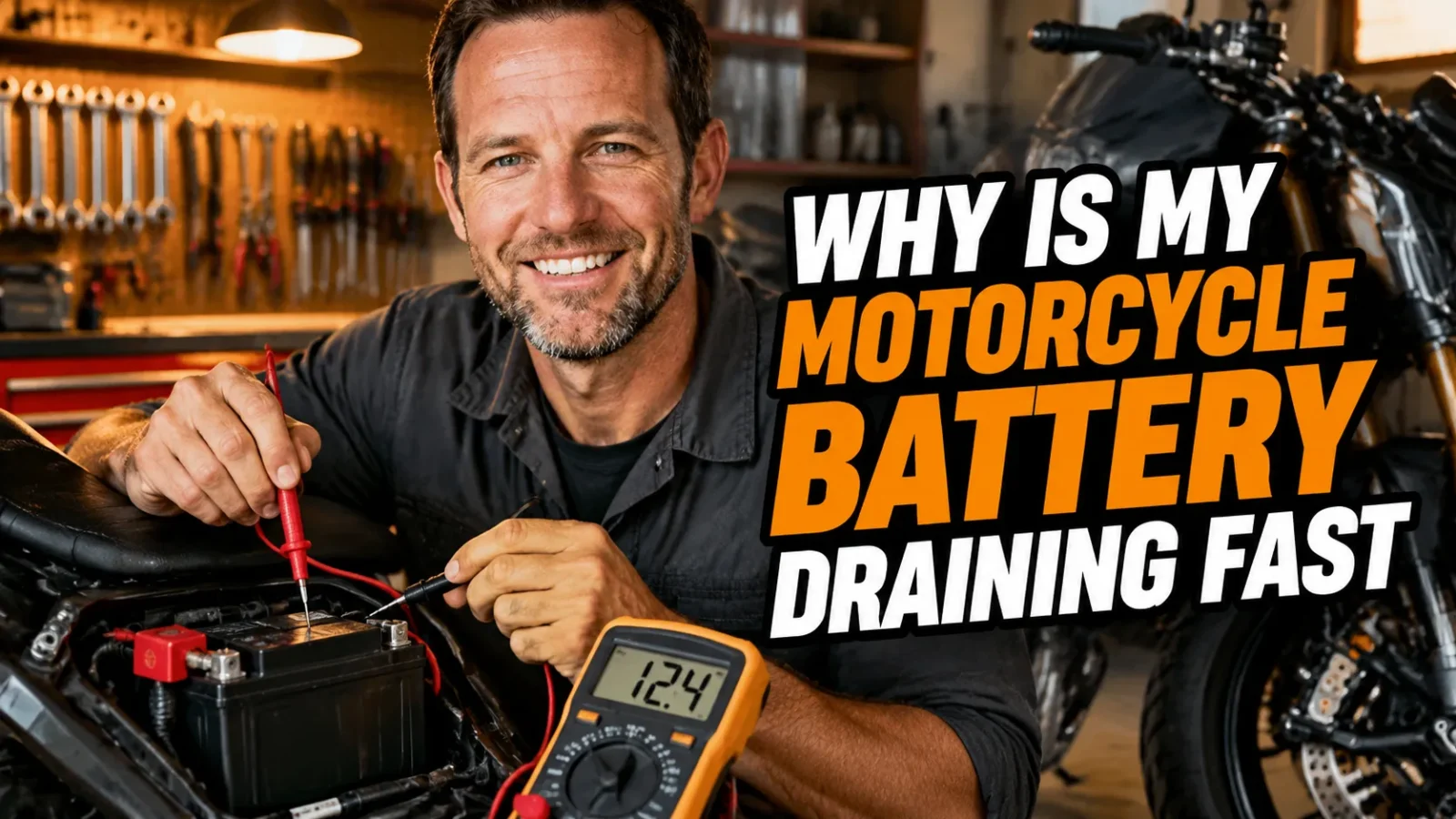
Few things ruin a riding morning quite like pressing the starter button and hearing that sad, slow click-click-click. I’ve been there more times than I’d like to admit — standing in my garage, helmet in hand, staring at a bike that suddenly decided it doesn’t want to move.
For years I blamed the battery itself. I’d swap in a new one, ride happily for a month, then watch it die all over again. Eventually I got curious enough to stop guessing and start measuring.
That’s what this article is. It’s the checklist I wish someone had handed me a decade ago, written from the perspective of a rider who has burned through way too many batteries figuring this out the hard way.
- The most common cause is a parasitic draw — something pulling current while the key is off, like an alarm, USB port, or a leaky rectifier.
- A battery that won’t hold charge for a week is usually either aged out or being overcharged and cooked by a failing regulator.
- Testing takes 20 minutes with a multimeter: check resting voltage, then check current draw with everything off.
- Charging habits matter more than brand loyalty — a maintainer on a parked bike saves you more batteries than any upgrade.
- If you’ve already replaced the battery twice in a year, the problem is never the battery.
The Moment I Stopped Blaming the Battery
I remember the third replacement in eighteen months. I stood there holding a battery that was barely six weeks old, and I finally asked myself the right question: why is my motorcycle battery draining fast, when the thing is brand new?
That question changed everything. A new battery shouldn’t die. If it does, something else is eating it alive.
So I bought a cheap multimeter for twenty bucks and started poking around. What I found was a mess of small issues — a USB charger wired straight to the battery, an aging alarm module, and a regulator that was quietly boiling my battery every time I rode. None of them alone would have killed it. Together, they were a slow execution.
Why This Problem Is So Common on Bikes
Motorcycles are terrible environments for batteries. Think about it: tiny battery, minimal reserve capacity, extreme heat from the engine, vibration, and long stretches of sitting still.
Compare that to a car. A car battery is three or four times bigger and typically gets used daily. A motorcycle battery might be 10 amp-hours and sit untouched for two weeks while you commute in something else.
Small capacity plus long idle time equals fast drain. It’s not a design flaw — it’s just physics. But it means you have far less margin for error than a car owner does.
The Real Causes, Ranked by How Often I See Them
1. Parasitic Draw Is the Number One Villain
A parasitic draw is any current that flows when the ignition is off. On older bikes, that number should be near zero. On modern bikes with clocks and immobilizers, you might see 20 to 30 milliamps legitimately.
Anything above 50 milliamps on a bike without an alarm is a red flag. Something is feeding on your battery.
In my experience, the usual suspects are aftermarket accessories. That USB port you wired directly to the terminals? It’s drawing power constantly. The alarm with the blinking LED? Same story. Heated grips with a relay that never fully opens? You get the idea.
If your battery goes flat while the bike sits, you’re dealing with motorcycle draining battery while off symptoms, and this is exactly the path I’d walk first.
How I Test for It
Fully charge the battery. Then let the bike sit with the key off for 30 minutes so all modules go to sleep.
Disconnect the negative cable and put your multimeter in series between the cable and the terminal. Set it to DC amps. Read the number.
If it’s over 50 milliamps, start pulling fuses one at a time. When the reading drops, you’ve found your circuit.
2. A Regulator Rectifier That’s Quietly Failing
This one fooled me for months. My bike started fine, ran fine, and charged fine. Then it would sit for three days and be dead.
The culprit was a rectifier with a leaking diode. It was letting current trickle back to ground even with the key off. Worse, it was also overcharging slightly during rides, which cooked the electrolyte.
The combination is brutal. Overcharged batteries lose water and capacity, then the leak drains what’s left.
Quick Regulator Check
With the bike running at around 3,000 RPM, measure voltage across the battery terminals. You want somewhere in the 13.5 to 14.5 volt range.
Below 13 volts means it’s not charging. Above 15 volts means it’s cooking your battery. Either way, you’ve found your problem.
3. The Battery Itself Has Aged Out
Sometimes it really is just the battery. Lead-acid batteries have a lifespan of roughly three to five years. AGM batteries often last a bit longer. Lithium batteries can go six to eight years if treated well.
But here’s the thing I’ve learned: heat kills batteries faster than cold ever will. If you live somewhere with brutal summers and your battery sits near a hot engine, three years might be optimistic.
A battery that reads below 12.4 volts after a full charge and a rest period is on its way out. Below 12.0 volts and it’s basically done.
4. Charging Habits That Sabotage Everything
This is the one most riders refuse to accept, and honestly, I was one of them for years.
If you ride your bike once a month for twenty minutes, you are not charging your battery. You’re barely replacing what the starter motor drew.
Short rides are the enemy. A motorcycle charging system needs sustained RPM and time to bring a battery back to full. Twenty minutes of stop-and-go traffic won’t do it.
The fix is simple: put the bike on a maintainer whenever it’s parked for more than a week. A good best battery charger for a motorcycle will pay for itself in one saved battery.
What Actually Fixed It for Me
I went through a full diagnostic pass on my bike, and here’s what I changed.
First, I rewired every accessory through a switched relay so nothing draws power with the key off. Second, I replaced the rectifier. Third, I bought a proper maintainer and started using it religiously.
The result? That battery lasted nearly five years. Same bike, same climate, same riding habits — different outcome entirely.
Why I Stopped Chasing Cheap Batteries
Early on, I bought whatever was cheapest on the shelf. Every single one of those failed inside two years.
When I finally researched the best battery brand for motorcycle options properly, I realized the price gap between budget and quality is smaller than I assumed. Maybe thirty or forty dollars.
Spread over four extra years of life, that’s pennies per month. I’ll take that trade every time.
Matching the Battery to the Job
Not every battery suits every rider. If you’re doing long days in the saddle, you want deep-cycle resilience. If you’re running a lot of accessories, you want extra capacity.
I spent real time figuring out what is the best battery for a motorcycle for my own setup, and the answer surprised me. It wasn’t the most expensive option — it was the one that matched my charging system’s output and my actual riding pattern.
For touring riders specifically, the calculus shifts again. Long days, high heat, and constant accessory load mean you need something built for sustained abuse.
That’s a different conversation entirely, and if you’re planning big trips, it’s worth thinking about the best 6 battery for touring motorcycle class of options before you commit.
Building a Diagnostic Routine That Works
Here’s the exact sequence I run now whenever a battery starts acting up. It takes about half an hour and saves me from guessing.
Step One: Resting Voltage
Let the battery sit for at least an hour after charging. Measure. You want 12.6 volts or higher for a healthy lead-acid battery.
12.4 is about 75 percent charged. 12.0 is 50 percent. Below that, you’re into sulfation territory and permanent damage is likely.
Step Two: Cranking Voltage
Watch the voltage while you press the starter. It shouldn’t drop below about 10 volts. If it collapses to 8 or 9, the battery is weak or the starter is drawing too much.
Step Three: Charging Voltage
Run the engine at 3,000 RPM and measure again. You want 13.5 to 14.5 volts. That confirms the stator and rectifier are doing their job.
Step Four: Parasitic Draw
Key off, wait 30 minutes, then measure current between the negative cable and terminal. Under 50 milliamps is your target on a bike without an alarm.
Step Five: Physical Inspection
Look at the battery case. Bulging means it’s been overcharged. White crusty deposits on the terminals mean corrosion is adding resistance.
Also check the electrolyte level on serviceable batteries. Low water means overcharging, which points right back to the regulator.
The Mistakes I Made So You Don’t Have To
I’ve made basically every mistake in this space, so let me save you some time and money.
Mistake one: Replacing the battery without testing the charging system. I did this three times before learning my lesson. If the charging voltage is wrong, a new battery buys you weeks, not years.
Mistake two: Ignoring the rectifier because the bike ran fine. A failing regulator doesn’t always announce itself. It just quietly ruins batteries.
Mistake three: Assuming short rides charge the battery. They don’t. They drain it faster than you think.
Mistake four: Leaving accessories wired hot. Every aftermarket gadget should go through a switched circuit. No exceptions.
Mistake five: Skipping the maintainer in winter. This is the single cheapest thing you can do to extend battery life, and I ignored it for years.
When It’s Time to Just Replace the Thing
Sometimes the diagnosis points squarely at the battery, and no amount of diagnosis will bring it back. Here’s how I decide.
If it’s over four years old and struggling, I replace it. If it’s sulfated from sitting, I replace it. If it bulges, leaks, or won’t hold 12.4 volts after a full charge, I replace it.
What I don’t do anymore is replace it and hope. Every new battery goes in after I’ve confirmed the charging system is healthy and the parasitic draw is under control.
That single change in my process is what turned my battery situation from a recurring headache into a non-issue.
Final Thoughts From Someone Who’s Been There
A motorcycle battery draining fast is almost never a mystery. It’s a symptom of something else — a draw, a dying regulator, an aging cell, or simply the wrong charging habits.
The frustrating part is that the symptom shows up in the battery, so we blame the battery. I know I did, repeatedly.
But once you start measuring instead of guessing, the picture becomes clear fast. A twenty dollar multimeter and half an hour of your time will tell you more than any forum thread ever will.
Fix the root cause, keep the battery topped up with a maintainer, and buy quality when it’s time to replace. Do those three things and you’ll be one of those riders who casually mentions their battery is five years old — instead of the one standing in the garage with a dead bike and a helmet in hand.
Frequently Asked Questions
How long should a motorcycle battery hold a charge when the bike is parked?
A healthy battery on a modern bike with an alarm or clock should hold usable charge for 3 to 5 weeks. If it drops below 12.4 volts in under a week, you have a parasitic draw or a failing battery.
Can a bad regulator rectifier drain my battery overnight?
Absolutely. A failed rectifier diode can leak current back to ground even when the key is off. That is a classic overnight drain, and it often kills a new battery in a matter of weeks.
Does cold weather make a motorcycle battery drain faster?
Cold reduces cranking power and slows the chemical reaction inside the battery. The drain itself is not always faster, but the symptoms show up much sooner. Combine winter with a weak battery and you get no-start mornings.
What is the fastest way to test for a parasitic draw?
Charge the battery fully, let everything go to sleep for 30 minutes, then measure current between the negative terminal and the cable with a multimeter. Anything above 50 milliamps on a bike without an alarm is worth investigating.

Related Articles

Scooters vs Motorcycles: My Honest, First-Hand Comparison After Riding Both for Years
After thousands of miles on both scooters and motorcycles, I break down cost, comfort, maintenance, and safety to help you…
Jake Miller
10 min read

7 Scooters That Look Like Motorcycles for Riders Who Want Style and Storage
Explore my top 7 scooters that look like motorcycles, from adventure crossovers like the Honda X-ADV to sporty maxis like…
Jake Miller
9 min read

How Long Do Honda Motorcycles Last? My 20-Year Owner’s Reality Check
Discover how long Honda motorcycles really last from an owner with 100k+ miles of experience. Learn maintenance secrets, high-mileage examples,…
Jake Miller
10 min read