
Can a Carburetor Increase Power? What I Learned After Years of Tuning
 Jake Miller
10 min read
Jake Miller
10 min read
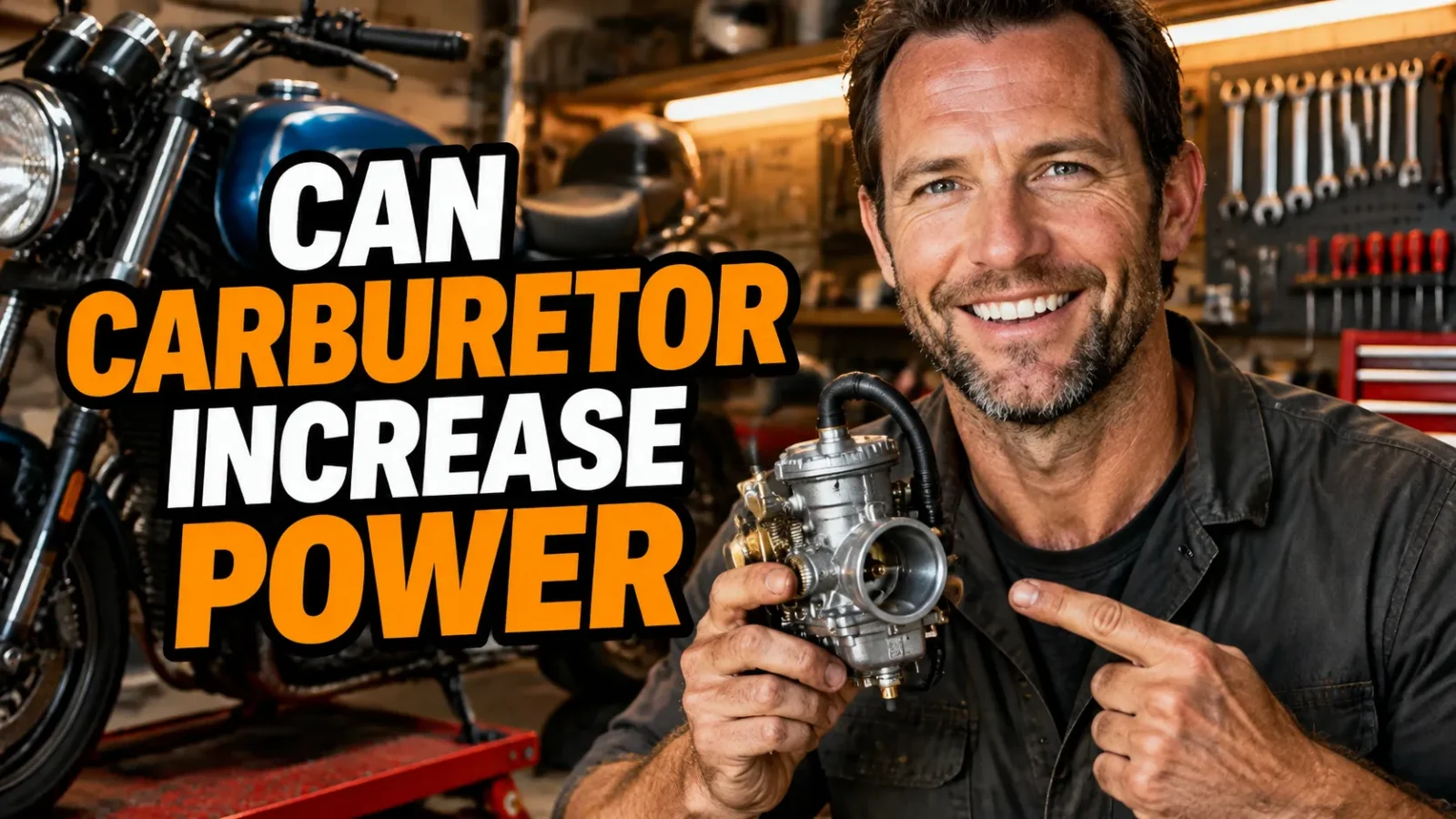
I still remember the afternoon I bolted a bigger carburetor onto my old air-cooled twin and kicked it over expecting a rocketship. What I got was a bike that bogged off idle, popped on decel, and honestly felt slower than stock. That afternoon taught me more about carburetion than any manual ever has.
Since then I have tuned slide carbs, CV carbs, four-barrels, and a couple of temperamental two-strokes that tested my patience in ways I did not enjoy. The question I still get asked most often is some version of the same thing: can a carburetor increase power?
The honest answer is yes, absolutely, but only under specific conditions. A carburetor is not a magic horsepower box. It is an air and fuel metering device, and its entire job is to deliver the right mixture at every throttle position and rpm.
Get that mixture closer to ideal than your current setup does, and you gain power. Get it further away, and you lose it. That is the whole game.
- A carburetor can increase power, but only when it is correctly sized and jetted for your engine.
- Most gains come from fixing a lean factory tune, not from bolting on the biggest carb you can find.
- Over-carbing is real. Too much airflow kills velocity, atomization, and low end torque.
- Carb vs EFI on peak power is basically a wash. A dialed in carb holds its own.
- Tune one variable at a time, read your plugs, and use a wideband if you can.
Why a Carburetor Is a Metering Device, Not a Power Part
Here is the mental shift that changed everything for me. A carburetor does not create airflow. Your engine’s displacement, cam, heads, and rpm ceiling decide how much air it can pump. The carb just sits upstream and tries to mix fuel into that air efficiently.
So if your engine can only inhale 600 CFM worth of air, feeding it a carb rated at 850 CFM does not add power. It slows the air down, which means the fuel does not atomize as well, which means you burn less of it, which means you make less power.
I learned that lesson the expensive way on a small block years ago. I swapped a 600 CFM vacuum secondary carb for a 750 and lost bottom end everywhere below 3,000 rpm. Peak number barely moved.
The Air-Fuel Ratio Is Where the Power Lives
For gasoline at wide open throttle, most engines make their best power somewhere between about 12.5:1 and 13.2:1 air-fuel ratio. Richer than that and you are just washing the cylinder walls. Leaner than that and you risk detonation and burnt pistons.
Here is the thing almost nobody tells you: most factory carburetors are jetted lean at wide open throttle for emissions and fuel economy reasons. That means there is often free horsepower sitting right there in the main jets.
On one of my own bikes, going up two main jet sizes and shimming the needle one position transformed the midrange. It pulled harder everywhere, and the plug reading went from chalky white to a healthy tan.
Velocity Beats Volume Almost Every Time
This is the part that took me years to internalize. Air velocity through the venturi is what pulls fuel into the airstream and breaks it into a fine mist. Small venturis mean high velocity and crisp response. Big venturis mean high peak flow but lazy response.
The rough sizing formula I use is CFM = (cubic inches x max rpm x volumetric efficiency) / 3456. For a mild street engine, that volumetric efficiency number is usually somewhere around 0.80 to 0.85. Plug your own numbers in and be honest about them.
The Three Real Ways a Carburetor Adds Power
After a lot of trial and error, I have found that carburetor power gains come from three specific places. None of them are about the carb being “performance branded.”
1. Correcting a Lean or Rich Mixture
This is the biggest one by far. If your engine is running lean at wide open throttle, richening the main circuit can unlock real power immediately. If it is running pig rich, leaning it out cleans up the burn and picks up power too.
I once helped a friend rejet a bike he swore was down on power. Three jet sizes later he was grinning ear to ear. The carb itself never changed. Only the calibration did.
2. Matching Airflow Capacity to the Engine
If you have added a cam, head work, or free-flowing exhaust, your stock carb may now be the bottleneck. In that case, a larger carb genuinely can increase power, because the engine needs more airflow than the old carb can supply.
The key word there is if. Without supporting mods, a bigger carb is usually just noise, both literally and figuratively.
3. Sharper Transient Fueling
Accelerator pumps, transition circuits, and power valves do not show up in peak dyno numbers, but they absolutely change how the engine feels. A well set up accelerator pump squirt can eliminate the flat spot that makes a bike feel gutless.
I have had bikes that made identical peak power on paper but felt completely different to ride, purely because of pump shot timing and duration.
My Own Seat-of-the-Pants Results
I am not a dyno owner. Most of my testing has been real world: same road, same gear, same day, back to back runs, plus a lot of plug chops and a wideband gauge I bought used and now refuse to give up.
On a mostly stock 500cc single, rejetting alone gave me a noticeably stronger pull from about 4,000 rpm to redline. Nothing dramatic, maybe a few horsepower, but it was free and it made the bike far more enjoyable.
On a heavily modified twin with ported heads and a free-flowing exhaust, the stock carbs were genuinely choking it. Bolt-on flat slides with proper jetting transformed that engine. That was a real, substantial gain.
And on a bone stock commuter, a bigger carb did nothing except make it harder to start. That was a lesson in humility.
When a Carburetor Will Not Add Power
When You Are Already at the Right Mixture
If your current carb is already delivering a near-ideal air-fuel ratio across the range, swapping it will not find hidden power. There is no secret horsepower hiding behind a properly jetted carburetor.
This is why I always baseline first. Verify your current mixture before spending money.
When the Rest of the Engine Is the Bottleneck
Stock cam, stock head ports, stock exhaust. If all of those are still in place, your carb is almost certainly not the limiting factor. Fixing the carb will not fix a breathing problem that lives somewhere else in the system.
I have watched people spend hundreds on carb swaps while running a restrictive factory exhaust. That is money set on fire.
When You Oversize It
An oversized carb is the most common mistake I see. Bigger venturi, lower velocity, worse atomization, soggy bottom end, and often a peak number that is no better than before.
If your engine bogs when you snap the throttle open, that is usually a velocity and pump shot problem, not a sign you need even more airflow.
Carburetor vs Fuel Injection: My Honest Take
People love to argue about this, and I think most of the arguing misses the point. For peak power, a properly tuned carburetor can absolutely match fuel injection on the same engine.
Where EFI wins is consistency. It compensates for altitude, temperature, and humidity automatically. A carb does not, which is why my jetting that was perfect at sea level felt mushy when I rode up into the mountains.
If you want the simplest possible path to a great running engine in all conditions, EFI is easier. If you enjoy the process and do not mind seasonal tuning, a carb is rewarding and completely capable.
Mistakes I Made So You Do Not Have To
I have made almost every carburetor mistake there is. Here are the ones that cost me the most time and money.
Changing too many things at once. I swapped jets, needle position, and the accelerator pump in a single afternoon. When it ran badly, I had no idea which change caused it. One variable at a time, always.
Ignoring the accelerator pump. I spent weeks chasing a hesitation that turned out to be a worn pump diaphragm, not jetting at all. Check the simple mechanical stuff first.
Trusting my butt dyno too much. Seat of the pants is unreliable. A wideband oxygen sensor and consistent test conditions gave me far better information than any “it feels faster” impression.
Never reading the plugs. Plug chops are old-school and still one of the best free diagnostic tools you have. Learn to read them properly.
Chasing peak numbers only. A carb that makes one more horsepower at 7,000 rpm but feels flat everywhere else is a downgrade in my book. Rideability matters more than a single data point.
How I Tune a Carb for Real Gains
This is the process I follow now, and it has served me well on everything from single cylinder thumpers to V8s.
First, I establish a baseline. I note the current jet sizes, needle position, mixture screw settings, and float height. I write it all down, because I will forget.
Second, I verify the mixture at wide open throttle using a plug chop or a wideband. I want to know if I am lean or rich before I touch anything.
Third, I change one thing. Usually main jets first, in small steps. Then needle position for the midrange. Then the pilot circuit and mixture screw for idle and off-idle.
Fourth, I retest under identical conditions. Same road, same gear, same ambient temperature if possible. Anything else and I am just guessing.
Finally, I address drivability. Accelerator pump timing, float level, and transition circuits. This is where a carb goes from “makes good power” to “feels factory.”
If I had to give one piece of advice, it would be this: buy a wideband gauge before you buy a bigger carburetor. Data will save you more money than any parts catalog ever will.
So, Can a Carburetor Increase Power?
Yes, it can. But the power does not come from the carburetor itself. It comes from better fueling, and a carburetor is simply the tool that lets you deliver it.
If your current carb is jetted lean, or if it is genuinely too small for the airflow your engine can move, then yes, you will find real power. I have felt it, measured it, and I keep coming back to carbureted bikes because of it.
If your carb is already well calibrated and matched to the combo, swapping it will mostly empty your wallet and fill your garage with spare parts. Been there, done that, have the box of unused jets to prove it.
Start with what you have. Verify the mixture. Adjust one thing at a time. In my experience, that approach finds more horsepower than any bolt-on ever will.
Frequently Asked Questions
Can a carburetor increase power on a stock engine?
Yes, but usually only a little. Most factory carbs are jetted lean for emissions, so correcting the jetting can free up real power, often in the 3 to 10 percent range on an otherwise stock engine.
Does a bigger carburetor always make more power?
No. Going too big drops the air velocity through the venturi, which hurts fuel atomization and kills low end torque. A carburetor only makes more power when it matches the airflow your engine actually needs.
How much power can carburetor tuning add?
It depends entirely on the combo. On a mildly modified engine with the wrong jets, I have seen 10 to 15 percent picked up from tuning alone. On a well set up engine, the gains are close to zero.
Is a carburetor better than fuel injection for making power?
For peak numbers, a well tuned carb can absolutely match fuel injection. EFI wins on consistency, cold starts, and altitude compensation, but a dialed in carb is far from a handicap.

Related Articles

Harley Fuel Pump Problems: What I’ve Learned Fixing My Own Bikes
From dead primes to hot-start stumbles, here's how I diagnose and fix Harley fuel pump problems, what repairs cost, and…
Jake Miller
8 min read

Does a Bigger Carburetor Really Mean More Power? What I Learned Losing (and Gaining) Horsepower
I've bolted on oversized carbs and lost horsepower. Here's the honest truth about carb sizing, airflow velocity, jetting, and when…
Jake Miller
9 min read

How to Clean a Dirt Bike Carburetor the Right Way: A Rider’s Step-by-Step Garage Guide
A rider's step-by-step guide to cleaning a dirt bike carburetor: tools, jet cleaning, float checks, and the mistakes that cost…
Jake Miller
11 min read