
9 Best LED Auxiliary Lights for Motorcycle Riders Who Want to Be Seen
 Jake Miller
10 min read
Jake Miller
10 min read
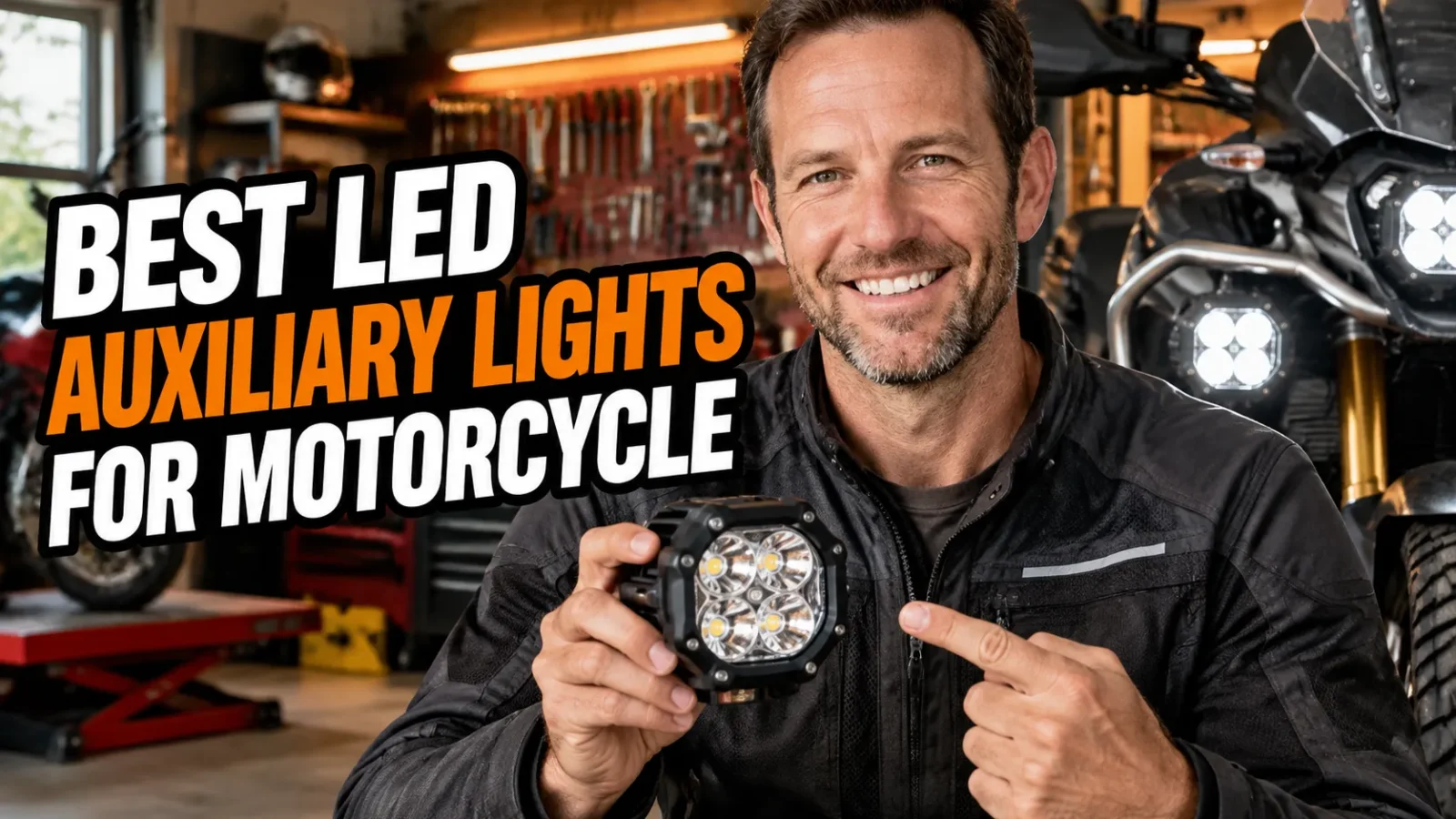
I’ve been adding auxiliary lighting to my bikes for the better part of a decade, and I’ve made almost every mistake you can make along the way. I’ve cooked wiring harnesses, blown fuses on cold mornings, and once mounted a pair of cheap pods so badly that they vibrated loose on a 200-mile ride. So when I say the best LED auxiliary lights for motorcycle use are worth spending real money on, I’m speaking from experience, not a spec sheet.
The thing most riders get wrong is thinking aux lights are only about seeing farther at night. In my opinion, the real win is being seen during the day. A single headlight beam disappears in traffic, but a good pair of auxiliary lights gives you a wide, distinctive triangle of light that drivers actually notice. That’s the difference between “I didn’t see you” and a normal commute home.
Before you buy anything, it’s worth understanding your bike’s electrical system. I always start by checking my charging output and battery health, because adding 60 watts of lighting to a bike with a weak stator is a recipe for a dead battery in a parking lot. If you’re not sure how much headroom you have, the what are the different types of motorcycle batteries ultimate guide is a genuinely useful starting point. It helped me figure out why my old Sportster kept dying after I bolted on a light bar.
- My overall pick is the Denali Electronics D4 for its dimming, bulletproof build, and flexible beam patterns.
- Baja Designs Squadron Sport and Rigid Industries D-Series are the night-riding champs for raw output.
- Budget buyers should look at the AUXITO and Nilight pods, but budget for a proper harness.
- Always verify your charging system before adding watts, and wire aux lights through a relay.
1. Denali Electronics D4 — My Overall Pick
If I had to keep only one set of aux lights on my garage shelf, it’d be the Denali D4. I’ve run these on a V-Strom and a KTM 790, and they’ve survived two crashes, a lot of rain, and one very dusty trip through Nevada.
The D4 is a 2.0 version of Denali’s classic pod, and the headline feature is DataDim technology. That means the lights automatically dim to 50% when you’re on low beam and go full brightness on high beam, assuming you pair them with Denali’s harness. It sounds gimmicky until you use it, and then you never want to go back.
Output is rated around 4200 lumens per pod, which is honestly more than most riders need. The beam is a hybrid spot/flood pattern, so it throws a long way and fills in the shoulder. Build quality is excellent: the housings are powder-coated aluminum and the lens is a genuine polycarbonate with a hard coat.
They aren’t cheap. Expect to pay somewhere in the $400 to $500 range for a pair, and you’ll want the harness and switch on top of that. But in my experience, these are the lights I stop worrying about, and that peace of mind is worth the premium.
2. Baja Designs Squadron Sport — Best for Serious Night Riding
The Baja Designs Squadron Sport is the light I reach for when I know I’m going to be riding dark two-lane roads with deer everywhere. This is the same family of lights that dominates desert racing, and you can feel that DNA the moment you switch them on.
Each pod puts out about 3150 lumens, and the optics are genuinely impressive. Baja Designs uses a colored lens system, so you can swap in amber or wide-cornering lenses depending on conditions. I run amber in fog and it transforms visibility.
The Squadron Sport is a bit more focused than the Denali D4, so it throws a longer beam. That’s great on open highway, slightly less ideal in tight woods. The housing is ruggedized and uses a copper-driver circuit board for heat management, which is a real deal on long rides.
Pricing sits around $300 to $400 for a pair. I’ll be honest: the mounting hardware is fiddly and I’d recommend buying their specific brackets rather than improvising. But once they’re on, they’re on for good.
If you’re already upgrading your front lighting, you might also want to pair these with a stronger main beam. I’ve written before about the best h7 led headlight bulb for motorcycle options, and matching your aux pattern to your headlight pattern makes a huge difference to how usable the whole setup feels.
3. Rigid Industries D-Series D2 — Best Build Quality
Rigid Industries has a reputation for overbuilding everything, and the D-Series D2 is a perfect example. I’ve had a set of these mounted low on a crash bar for three seasons, and they still look almost new.
The D2 puts out around 3000 lumens per pair (the D2 is an evolution of the original D-Series, with roughly double the output). The key selling point for me is the housing: it’s a cast aluminum body with a UV-resistant powder coat, and the lens is polycarbonate with a hard coating that resists scratching.
The beam pattern on the D2 is a driving pattern, meaning it’s a mix of spot and flood. I find it ideal for mixed riding. It’s punchy enough for highway but doesn’t leave a black hole in the near field.
One thing I appreciate: Rigid’s mounting system is genuinely solid. I’ve never had these vibrate loose, which is more than I can say for some cheaper pods. Expect to pay $350 to $450 for a pair, sometimes more with the full harness kit.
4. Cyclops Adventure Sports Aurora — Best for Adventure Bikes
If you ride an adventure bike and you want something that looks factory, the Cyclops Aurora is worth a hard look. I ran a set on a Tenere 700 and loved how clean they looked tucked under the beak.
The Aurora is available in a few sizes, but the standard pod is around 2400 lumens. That’s not the brightest on this list, but the beam shape is brilliant for adventure riding: wide, even, and with a sharp cutoff that keeps from blinding oncoming traffic.
Cyclops designs these specifically with ADV bikes in mind, so the brackets often bolt straight onto existing mounting points. That’s a big deal if you don’t want to fabricate anything.
Price is roughly $250 to $350 depending on the kit. I’d call this a smart buy for someone who values a clean install over maximum output.
5. Clearwater Lights Erica — Best Premium Option
Clearwater is the brand you buy when you want the absolute best and you’re willing to pay for it. The Erica is their flagship, and it’s a genuinely remarkable piece of kit.
The Erica produces around 6000 lumens per pair, with a beautifully designed reflector that spreads light evenly across a wide arc. What sets Clearwater apart, though, is the electronics. They offer a dimming module that ties into your bike’s CAN bus on many modern models, so the lights respond intelligently to high beam, horn, and even turn signals.
Build quality is boutique-level. Everything is machined, sealed, and finished to a standard you don’t often see in motorcycle lighting.
The catch is price: you’re looking at $500 to $700 for a pair, and that’s before the dimming module. This isn’t a budget pick. But if you want the best and you ride a lot at night, Clearwater is the endgame.
6. AUXITO LED Auxiliary Light Pods — Best Value
I’m normally skeptical of budget lighting, but AUXITO has earned a place in my garage. I picked up a set of their pods for a beater bike and expected to be disappointed. I wasn’t.
These pods typically run around 2000 lumens each, which is plenty for daytime conspicuity and decent around town at night. The housings are aluminum and the lenses have held up fine through rain and dust.
The wiring is where budget lights show their limits. The included harness is thin and the switch feels cheap. My advice: buy the lights, then upgrade to a proper relay harness from a brand like Denali. That still keeps you well under $100 total.
For a commuter bike you park outside, this is the sensible choice.
7. Nilight 4-Inch LED Pods — Cheapest Decent Option
Nilight is everywhere, and there’s a reason: they’re cheap and they mostly work. I’ve used their 4-inch pods on a project bike and got about two years of solid service out of them.
Output is modest, maybe 1200 to 1500 lumens per pod, so manage expectations. These are visibility lights, not night-riding lights. But for under $40 a pair, they’re hard to argue with.
I will say this plainly: if you buy Nilight, budget for replacement every couple of years. The seals eventually give out and moisture gets in. But as a low-risk entry point into auxiliary lighting, they’re fine.
8. Squadra by TWM — Best Sport-Touring Option
For sport-touring riders who want something subtle, Squadra (made by TWM in Italy) makes a range of compact LED spots that mount cleanly on fairings and forks.
I’ve seen these on a lot of European touring bikes, and the fit and finish is genuinely nice. Output varies by model, but most sit in the 2000 to 3000 lumen range. The beams are tuned for road use, with a controlled cutoff that keeps them legal in most markets.
Availability in the US is spotty, so you may need to order from overseas. But if you want something that doesn’t scream “aftermarket,” Squadra is a strong choice.
9. Morimoto 4Banger — Best for Style and Output
Morimoto’s 4Banger is a relative newcomer to motorcycle use, but it’s become a favorite of mine for builds where looks matter as much as light.
The 4Banger is a compact pod that puts out around 2000 to 3000 lumens depending on the variant, with a clean, modern housing that looks great on naked bikes and scramblers. Morimoto’s optics are excellent for the size.
I’ve mounted a set on a friend’s build and the install was straightforward. Pricing is in the $200 to $300 range for a pair.
A Few Things I’ve Learned the Hard Way
Wiring matters more than lumens. I can’t stress this enough. The single biggest upgrade I ever made to my lighting setup wasn’t a new set of lights, it was a proper relay harness with a dedicated switch. It ended years of flickering, fuses, and weird electrical gremlins.
If you’re running a lot of accessories, keep your battery in shape. A tired battery makes every other electrical upgrade feel pointless. I use a tender on any bike that sits more than a week, and understanding how does a battery tender work saved me from buying two batteries I didn’t need.
Finally, if you’re adding lights to a bike that already has a compromised electrical system, you might be creating problems elsewhere. On older Harleys in particular, I’ve seen people chase lighting issues that turned out to be a failing battery hiding in plain sight. Learning how to remove harley street 750 battery taught me how much access you get to the terminals once you pull the cover, and that made diagnosing my own electrical issues much faster.
My Final Take
If you want one answer: buy the Denali D4. It’s the best balance of output, build, and usability for most riders. If you ride mostly at night on dark roads, go Baja Designs Squadron Sport. If you’re on a tight budget, AUXITO pods plus a good harness will serve you well.
And if you’re still sorting out the rest of your lighting setup, my earlier roundup of the best spot lights for motorcycle rides and my notes on the best 1157 led bulb for motorcycle top choices for brightness are worth a read. Getting the whole lighting system dialed in together is what makes the biggest difference on the road.
Frequently Asked Questions
Are LED auxiliary lights legal on motorcycles?
It depends on your state or country. Most places allow auxiliary lights as long as they are aimed correctly and wired so they only run with low or high beam. Always check local regulations before installing.
How many lumens do I actually need for a motorcycle aux light?
For daytime conspicuity, 2000 to 4000 lumens per pair is plenty. For night riding on dark backroads, 6000 lumens and up makes a real difference, but you need to manage your charging system.
Will auxiliary lights drain my motorcycle battery?
Not if your charging system can handle the load. Do the math on your stator output first, and read up on motorcycle battery types so you understand what yours can take.
Do I need a separate wiring harness for aux lights?
Yes, in almost every case. A proper harness with a relay and fuse protects your bike’s factory wiring and lets you switch the lights independently. Most premium brands sell one.

Related Articles

Harley Davidson Headlight Problems: What I Learned Fixing Mine in the Dark
Chasing a dead, dim, or flickering Harley headlight? I walk through the real causes, my own diagnostic steps, and the…
Jake Miller
9 min read

Red Oil Light on Your Bike: How Many Seconds Do You Actually Have?
Is it too late when the oil light comes on? After nearly losing an engine to a 30-second delay, here's…
Jake Miller
10 min read

Best HID Kits for Motorcycles: How I Choose the Right One for Night Riding
Wondering which HID kit suits your bike? I break down wattage, color temperature, ballasts, legality, and wiring so you can…
Jake Miller
9 min read