
5 Best Tire Sealants for Motorcycles in the Philippines (My Real-World Picks)
 Jake Miller
11 min read
Jake Miller
11 min read
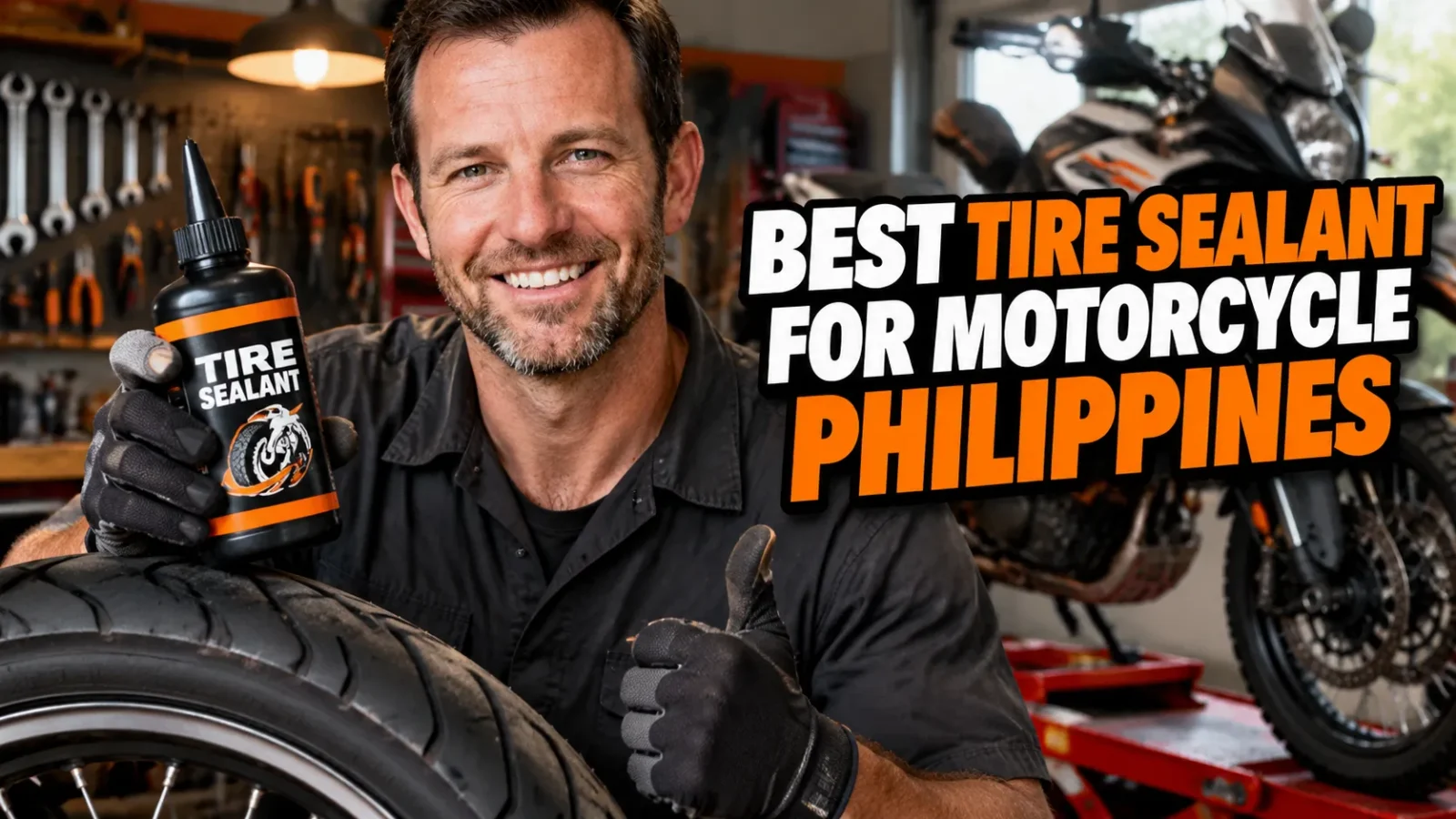
If you ride in the Philippines, you already know the feeling. You’re cruising along, the road looks fine, and then your rear tire goes soft after rolling over a stray nail or a piece of metal near a construction site. Flats happen here more than most of us would like.
I’ve dealt with punctures in the middle of EDSA traffic, on a rainy provincial road, and once an hour before a big group ride. Since then, a good sealant has become part of how I keep my bikes ready. Here are the five I trust and recommend, and how I use each one.
- For everyday prevention, I like Slime Tube & Tubeless Sealant and Ride-On Tire Sealant.
- For an emergency fix on the roadside, I carry Motul Tyre Repair or Liqui Moly Tire Repair Spray.
- Sealants handle small tread punctures only. They don’t repair sidewall damage or big cuts.
- A sealant works best alongside a plug kit, a good pump, and healthy tires.
How I Chose These Sealants
I’m not a lab tester. I’m a rider who puts on a lot of kilometers, in Manila heat, in sudden downpours, and on rough provincial roads. My picks come from my own use and from what I know about each product’s design and claims.
I looked at five things: how well it seals tread punctures, how easy it is to install, whether it’s meant for prevention or emergencies, how it affects ride feel, and how easy it is to find locally. Prices change often, so I give rough expectations and suggest you check current listings.
One Honest Warning First
No sealant makes a damaged tire safe. If your tire has a sidewall cut, a bulge, or exposed cords, replace it. I don’t treat sealant as an excuse to ride on tires that are past their limit.
Also check whether your bike has tubeless or tube-type tires before you buy. The product you pick depends on it, and I’ll flag that for each item below.
1. Slime Tube & Tubeless Sealant — Best Overall for Everyday Prevention
The Slime Tube & Tubeless Sealant is the one I recommend first to riders who want a simple, reliable option. It’s a liquid you pour or inject into the tire through the valve, and it stays inside, ready to seal punctures as they happen.
Slime’s formula is a non-toxic, water-based mixture with fibers that plug small holes as air tries to escape. In my experience, it handles typical nail and thorn punctures in the tread quite well.
Why I Like It
What I appreciate about Slime is that it works with both tubes and tubeless tires. That matters in the Philippines, where plenty of scooters and small-displacement bikes still run tube-type tires on spoked or mag wheels.
It’s also easy to clean up. Since it’s water-based, it washes off the rim and wheel without much fuss, which can’t be said of every sealant I’ve tried.
What to Watch For
Slime isn’t instant like an aerosol can. It needs the wheel to spin for the sealant to reach the hole, so after a puncture you need to ride a short distance. I also recommend topping up the sealant every few months, since it can dry out over time.
Look at the product label for the dose recommended for your tire size, because overfilling can hurt wheel balance. If you replace your tires often, a good best tire balancer for motorcycle guide is worth reading so your wheels stay smooth after a sealant top-up.
2. Ride-On Tire Sealant — Best for Sealing and Balancing in One
The Ride-On Tire Sealant (often sold as Ride-On Tire Balancer and Sealant) is the product I’d pick for riders who want two jobs done with one fill. It’s designed to seal punctures and also help balance the tire as you ride.
Ride-On is a liquid you install through the valve stem. Once the wheel spins, the product distributes itself around the inside of the tire, offsetting small weight differences and coating the inner liner.
Where It Shines
I find Ride-On best for riders who cover long distances. Commuters and touring riders get the most out of it, because the balancing effect can reduce vibration at highway speeds, and you only install it once per tire.
Ride-On also comes in dose sizes based on tire dimensions, so you aren’t guessing. That’s a small thing, but it makes installation less stressful if you’re doing it yourself at home.
The Trade-Offs
It’s more of a long-term solution than a roadside rescue. If you’re already flat, you’ll want something else on hand. Installation also takes a bit more care than a spray can, since you need a valve core tool and a way to re-inflate afterward.
Be sure to read the label for your tire type, and don’t combine different sealants in one tire. Mixing products can cause clumping, which defeats the purpose.
3. Motul Tyre Repair — Best Emergency Can for Tubeless Tires
The Motul Tyre Repair is my top pick for an emergency, which is a different job from prevention. It’s an aerosol that seals and re-inflates a punctured tubeless tire so you can get to a shop.
Motul is a brand most Filipino riders already know for oils and chain care, so finding genuine stock tends to be easier than with lesser-known names. I carry one in my top box on long rides.
How I Use It on the Road
The process is simple. I rotate the valve to the bottom of the wheel, attach the nozzle, and press the can. The product pushes sealant in and adds air, and then I ride slowly for a short distance so it spreads.
It’s a temporary fix. I keep my speed moderate and head straight to a shop, where the tire can be properly inspected. If you’d like a more permanent approach, my guide to the best tire repair kit for motorcycle covers plug kits that pair nicely with a can like this.
Limitations
An aerosol can only inflate so much, so a tire that’s completely off the rim or heavily damaged won’t be saved. Once you’ve used it, the sealant inside will also make a later repair messier for your tire shop, so tell them what you used.
4. Liqui Moly Tire Repair Spray — Best Backup Spray from a Trusted German Brand
The Liqui Moly Tire Repair Spray is another emergency can I’m comfortable recommending. Liqui Moly is a respected German maker of automotive and motorcycle care products, and it’s widely sold in the Philippines through auto and motorcycle shops.
Like the Motul can, it’s meant to seal small punctures in tubeless tires and give you enough pressure to reach help. I see it as a solid second choice, especially if one brand is out of stock where you shop.
Who Should Buy It
I’d suggest it for riders who prefer to stick with one brand across their maintenance products. If you already use Liqui Moly chain spray or engine additives, adding the tire spray keeps things simple.
Check the can size and the tire sizes it’s recommended for. Some sprays are made with cars in mind, and a small motorcycle tire needs far less product than a car tire, so read the instructions before you spray.
My Advice on Storage
Don’t leave any aerosol can baking in a seat compartment under the Philippine sun for months. Heat is hard on pressurized cans and on the sealant itself. I rotate mine out each year, and I keep it in a shaded bag when I can.
5. Holts Tyreweld — Best Budget-Friendly Emergency Option
The Holts Tyreweld is a long-established emergency puncture repair product from a British brand that has been around for decades. It’s a sealant-and-inflator in one can, designed to get you moving again after a puncture.
I include it because it’s a classic that many riders and drivers recognize. If you find it at a fair price, it’s a reasonable budget alternative to the bigger-name cans above.
Where It Fits
I see Tyreweld as a pure roadside rescue. It isn’t a preventive fill, and I wouldn’t expect it to balance your wheel or protect you for months. It’s there for the day something goes wrong.
Because sizes and formulas vary by market, check the label to confirm it’s suitable for motorcycle tires before you buy. Sellers sometimes list car-sized cans under motorcycle searches, and a car-sized can is more than a small tire needs.
Why Budget Doesn’t Mean Careless
Cheaper doesn’t have to mean riskier, as long as you buy from a trusted seller. Check the expiry or production date, because old cans can fail to spray or seal. This is where buying from official brand stores on Shopee or Lazada really pays off.
Prevention vs. Emergency: How I Choose Between Them
Here’s how I think about it. Slime and Ride-On are liquids you install ahead of time, so the tire is already protected when a nail finds it. Motul, Liqui Moly, and Holts are cans you use after you’re already flat.
I run a preventive sealant on bikes I ride daily and carry an emergency can on longer trips. That combination has saved me from walking my bike more than once.
Tubeless or Tube-Type?
This is the most common mistake I see. Aerosol repair cans are generally intended for tubeless tires. If your bike has tubes, a preventive liquid like Slime, which is rated for tubes as well, is the safer route. Always check the product label for your setup.
Think About the Whole Tire
Sealant can’t fix a worn-out tire. Tread depth, age, and compound all matter for grip, especially in the rainy season. If you’re due for new rubber, my write-up on the best motorcycle tire for wet roads is a good place to start.
For sport riders, tire choice matters just as much as sealant. If that’s you, take a look at my thoughts on the best micheline sport tire for motorcycle before your next purchase.
How I Install and Maintain Sealant
Installing a liquid sealant is easy once you’ve done it a couple of times. I’ll walk you through my usual routine so you can see what’s involved.
Step-by-Step
- Park the bike on a stand and let the tire cool down.
- Deflate the tire and remove the valve core with a valve core tool.
- Add the recommended dose for your tire size through the valve.
- Refit the valve core and inflate to the correct pressure.
- Ride for a few minutes to spread the sealant evenly.
I always check the pressure again after that first ride. Tires can settle, and sealant sometimes takes a little air with it as it coats the inside.
Ongoing Care
Check your tire pressure every week or two, especially in hot weather. Sealant can dry out, so I note the install date and plan a top-up according to the manufacturer’s guidance, usually every few months.
Whenever a tire is removed for a repair or replacement, I clean out the old sealant first. Doing so keeps things tidy and lets the shop inspect the tire’s inner liner properly.
Other Riding Situations Worth Considering
Not every rider in the Philippines sticks to paved roads. If you take your bike on dirt trails or hit the occasional off-road weekend, sealant has some extra limits to keep in mind.
Thorns and small sharp stones are the kinds of damage sealants handle best. Rocks that pinch a tube or rip a sidewall are another story. For rougher terrain, my guide to the best motorcycle tire for desert racing shows what tough, off-road rubber looks like.
My Final Thoughts
If I had to choose just one, I’d go with Slime Tube & Tubeless Sealant for everyday protection and add a can of Motul Tyre Repair to my bag for emergencies. That pairing covers most of the flats I run into.
Whatever you choose, buy from a trusted seller, check the dates, and match the product to your tire type. And please remember that a sealant is a helper, not a license to ignore a damaged tire. Ride safe out there.
Frequently Asked Questions
Can I use tire sealant in a tubeless motorcycle tire?
Yes. Tubeless tires are the best match for sealants, and most products on this list are designed for them. Sealants work best on tread punctures, not sidewall damage or large cuts.
Is tire sealant a permanent fix for a motorcycle puncture?
Sealants like Slime and Ride-On can last a long time on small tread punctures, but aerosol sealants like Motul Tyre Repair are emergency fixes. Have the tire inspected and properly repaired or replaced as soon as you can.
Will tire sealant affect my tire pressure monitoring or wheel balance?
A properly dosed sealant spreads evenly as the wheel spins. Ride-On is designed to balance the tire as well. Use the dose recommended for your tire size, and avoid overfilling.
Where can I buy tire sealant for my motorcycle in the Philippines?
I usually check motorcycle accessory shops, auto supply stores, and online marketplaces like Shopee and Lazada. Buy from official brand stores or trusted sellers to avoid fakes and expired stock.

Related Articles

8 Best Cruiser Motorcycle Tires for Street Riding: My Real-World Picks
I rank the 8 best cruiser motorcycle tires for street riding, from Michelin to Pirelli, with real notes on grip,…
Jake Miller
9 min read

8 Best Michelin Motorcycle Tires for Every Riding Style (Tested Picks)
Looking for the best Michelin motorcycle tires? I break down my 8 favorite models for sport, touring, adventure, cruiser, and…
Jake Miller
9 min read

Yamaha Tire Pressure Guide: The Right PSI for Safer, Smoother Rides
Learn the right tire pressure for your Yamaha, from sportbikes to cruisers and dirt bikes. Check, adjust and maintain PSI…
Jake Miller
9 min read