
How Often Should You Change Motorcycle Tires? A Rider’s Mileage, Age, and Wear Guide
 Jake Miller
9 min read
Jake Miller
9 min read
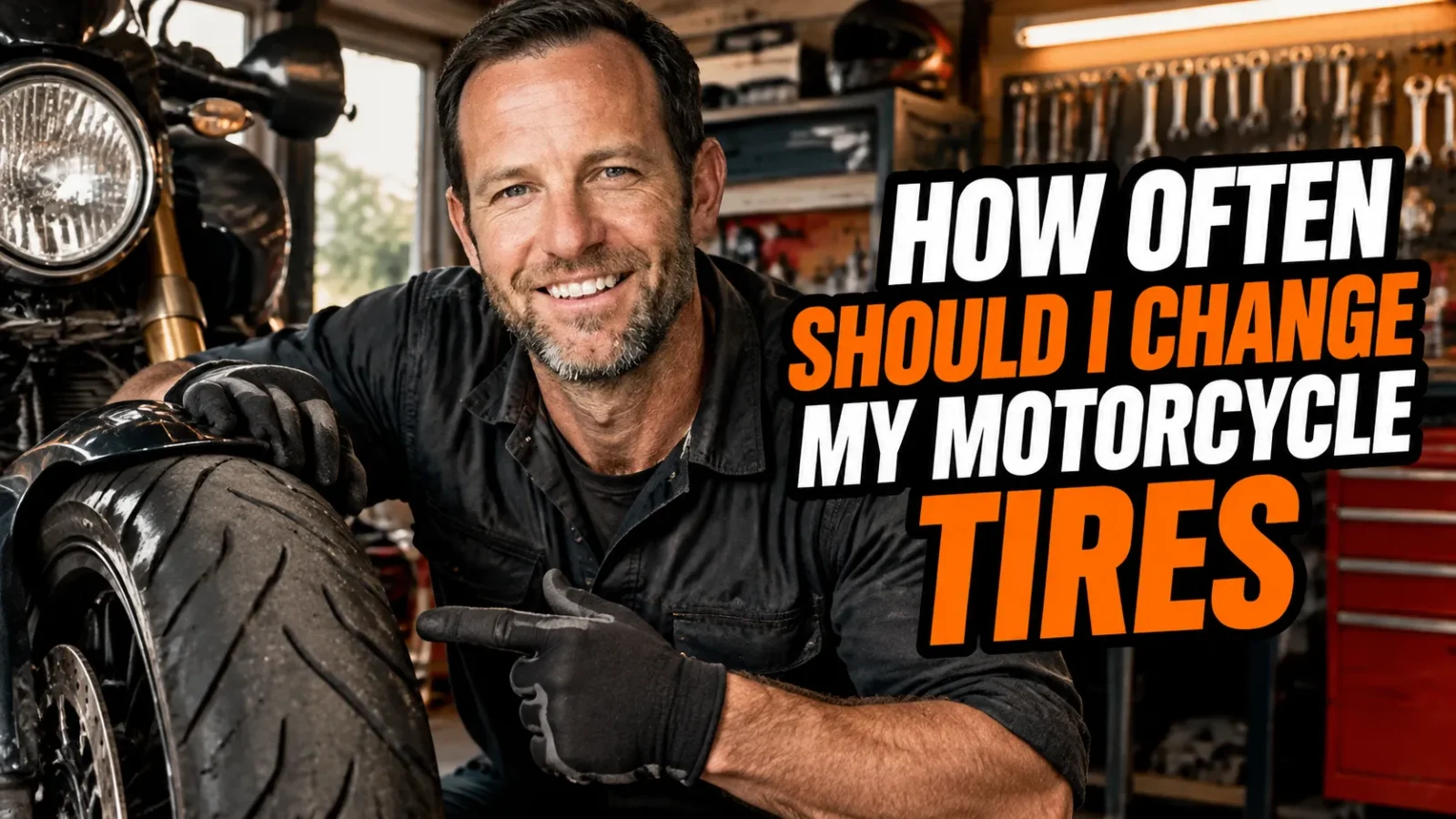
I’ll be honest: early in my riding life, I treated tires like an afterthought. The tread looked okay, the bike felt fine, and I figured I’d deal with it later. Then a rainy corner on a cold morning taught me exactly how much two small contact patches matter.
Since then, I’ve become a bit obsessive about rubber. Tires are the only thing connecting you to the road, and they’re the cheapest safety upgrade you’ll ever buy. In this guide, I’ll share how I decide when it’s time to replace mine, and how you can do the same with confidence.
- Most riders get roughly 2,000 to 15,000 miles per tire, depending on tire type, bike, and riding style.
- Age matters as much as mileage: I replace tires at about 5 to 6 years, no matter how good the tread looks.
- Check tread depth, cracks, flat spots, and the DOT date code regularly.
- Correct tire pressure and good habits can noticeably extend tire life.
The Short Answer: It Depends, But There Are Solid Ranges
There’s no single number that fits every rider. A big touring bike on highway miles treats its tires very differently than a sportbike that sees regular spirited riding. That said, I can give you ranges that match what I’ve seen in the real world.
Here’s a rough guide based on my own experience and conversations with other riders:
- Sport and hypersport tires: about 2,000 to 6,000 miles on the rear.
- Sport-touring tires: about 5,000 to 10,000 miles.
- Touring and cruiser tires: about 8,000 to 15,000 miles.
- Dual-sport and adventure tires: about 3,000 to 10,000 miles, depending heavily on the road-to-dirt ratio.
Treat these as ballparks, not promises. Your own riding will move you up or down within (or even outside) these ranges.
Why the Rear Tire Wears Out First
The rear tire handles acceleration, carries more weight on most bikes, and spends a lot of its life rolling on the center of its profile. That’s why my rear tire usually goes through one and a half to two sets for every front tire.
Don’t let that fool you into ignoring the front, though. A front tire can look fine on the tread and still be old, hard, and cracked. I check both every time.
Mileage Isn’t the Whole Story: Age Matters Too
This is the part many newer riders miss. Rubber compounds degrade over time through heat cycles, UV exposure, and oxygen. A tire that has only 1,500 miles on it but is seven years old isn’t a good tire anymore.
My personal rule is to replace tires at 5 to 6 years from the production date, even if there’s plenty of tread left. Many manufacturers suggest something similar, and most agree that ten years is the absolute outer limit regardless of condition.
How I Read the DOT Date Code
On the sidewall, you’ll find a string starting with “DOT.” The last four digits tell you when the tire was made. The first two are the week, and the last two are the year.
So 2422 means the 24th week of 2022. I check this when I buy new tires too, because a “new” tire that’s sat in a warehouse for three years has already used up part of its life.
Riders Who Are Most at Risk of Age-Related Problems
If you ride a few thousand miles a year or park your bike for the winter, age will likely retire your tires before wear does. I fall into this camp with my second bike, and I’ve learned to be strict about the date code.
Storage conditions matter as well. Tires kept in a hot garage or in direct sunlight tend to age faster than those stored somewhere cool and dark.
How to Check Tread Depth Like a Pro
Tread depth is the most obvious indicator, and it’s easy to check. Most motorcycle tires have tread wear indicators (small raised bars in the grooves). When the tread wears down level with them, the tire has reached its minimum legal depth in many regions.
I don’t wait for that point. Performance drops off well before the legal minimum, especially in the wet.
My Personal Replacement Thresholds
- Rear tire: I start shopping at around 2/32 of an inch (about 1.6 mm) and replace before it hits the wear bars.
- Front tire: I look at the same range, but I also inspect for uneven wear like cupping or scalloping.
A cheap tread depth gauge makes this simple. Keep one in your toolbox and take readings in several spots across the tire, not just the center.
Don’t Forget the Edges
Many riders wear out the center of the rear tire on long highway stretches, leaving the sides looking nearly new. A squared-off profile can make the bike feel reluctant to lean, which is one of the signs I look for.
If your bike suddenly feels like it falls into corners or resists turning in, check the tire profile before blaming the suspension.
Warning Signs That Say “Replace Me Now”
Beyond tread depth, your tires will often tell you when something is wrong. I look for these on every pre-ride walkaround:
- Cracks in the sidewall or between the tread blocks. These usually point to age or dry rot.
- Bulges, bubbles, or cuts. Any of these means the tire’s structure is compromised.
- Flat spots or squared-off profile. Common on commuter and highway bikes.
- Embedded objects. Nails and screws may be patched in a pinch, but I’d never trust a plugged tire for long-term riding.
- Vibration or odd handling. Sometimes a worn or damaged tire is the culprit, but wheel issues can feel similar.
If you see any of the first three, I’d stop riding and get the tire replaced. It isn’t worth gambling on.
When Handling Feels Off
Sometimes the tire isn’t the problem at all. A wobble, a rumble, or a vague feeling in the steering can come from worn bearings. If you’re curious about that side of maintenance, I’ve found it useful to read up on how often should you change wheel bearings on a motorcycle.
It’s also worth knowing how long do wheel bearings last on a motorcycle. Since you’re already pulling the wheel off at tire-change time, it’s the perfect moment to check them for roughness or play.
What Shortens (or Extends) Tire Life
Two riders on identical bikes can see very different tire mileage. Here’s what I’ve found makes the biggest difference.
Tire Pressure Is Your Best Friend
Under-inflated tires flex more, build heat, and wear unevenly. Over-inflated tires wear in the center and reduce grip. I check mine at least weekly with a reliable gauge, and always when the tires are cold.
If you’re not sure where to start, take a look at what psi should motorcycle tires be. Then cross-check with your owner’s manual or the sticker on your swingarm, since your specific bike’s recommendation is the one that counts.
Riding Style and Conditions
Hard acceleration, aggressive braking, and fast cornering all chew through rubber. I’ve noticed my rear tire lasts nearly twice as long when I ride smoothly on back roads compared to when I’m in a more spirited mood.
Road surface plays a role too. Hot, rough pavement wears tires faster than smooth, cool asphalt.
Load and Bike Type
Carrying a passenger and luggage adds stress to the rear tire. If you tour with a full load, expect the tire to wear faster than it would on solo commutes, and adjust pressure according to the manufacturer’s loaded recommendations.
Tire Compound Choice
Softer compounds grip better but wear faster. Harder compounds last longer but may feel less confident in cold or wet conditions. I choose based on how I actually ride, not how I wish I rode.
Does Wheel Type Change the Answer?
The wheel itself doesn’t change when a tire needs replacing, but it does affect the process. Spoked wheels, cast wheels, and tubeless or tubed setups each have their own quirks.
If you ride a classic or adventure bike, you might be curious about how many spokes on a motorcycle wheel. Spoked wheels often use tubes, and they need their own checks for tension and rim tape during tire changes.
Then there are the more unusual designs. If you’re intrigued by futuristic concepts, how does a hubless motorcycle wheel work is a fun read. The tire-replacement principles still apply, but the mounting process can be quite different.
Should You Replace Tires in Pairs?
This is one of the most common questions I hear. My answer: not always, but be thoughtful about it.
Because the rear wears faster, you’ll often replace it twice before the front needs changing. That’s normal. What matters is that the front still has good tread, no cracking, and a date code within a reasonable range.
When I Do Replace Both
I replace both tires together when they’re both near the end of their life, when they’re both old, or when I’m switching to a different tire model. Mixing very different tire designs can change handling in ways you might not expect.
If you’re unsure about compatibility, check with the tire manufacturer or a trusted shop.
Making Your Tires Last: My Simple Routine
I keep my routine simple, so I actually stick to it. Here’s what works for me:
- Check pressure weekly and before long trips.
- Do a quick visual inspection for cuts, cracks, and embedded objects before rides.
- Measure tread depth monthly once the tires are past the halfway point.
- Note the DOT date and put a reminder on my calendar for the 5-year mark.
- Store the bike properly with tires off the ground or on stands if it will sit for months.
It takes maybe five minutes, and it has caught more problems than I can count.
Cost vs. Safety: Why I Never Stretch Tires
I get it. A new set of tires can cost a few hundred dollars, and it’s tempting to squeeze out a few more miles. But I’ve done the math, and the extra life isn’t worth the lost grip.
When I think about what’s at stake, replacing tires a little early feels like the cheapest insurance policy I own. I’d rather throw away a bit of tread than gamble with traction on a wet corner.
Final Thoughts
So, how often should you change your tires? For most riders, the honest answer is somewhere between every 2,000 and 15,000 miles, or every 5 to 6 years, whichever comes first. Pay attention to tread, age, and condition, and you’ll rarely get caught off guard.
Make tire checks part of your routine, trust what you see and feel, and don’t hesitate to replace them when they’re due. Your future self (and your bike) will thank you. Ride safe out there.
Frequently Asked Questions
How many miles do motorcycle tires last?
It depends on the bike and riding style. Sport tires often last 2,000 to 6,000 miles, while touring and sport-touring tires can reach 8,000 to 15,000 miles. Rear tires wear faster than fronts.
Should I replace motorcycle tires based on age even if the tread looks good?
Yes. Rubber hardens over time, so many riders and manufacturers recommend replacing tires at 5 to 6 years from the production date, and never riding on tires older than 10 years.
Should I replace both motorcycle tires at the same time?
Not necessarily. The rear usually wears out first, so many riders replace it more often. Just make sure the front and rear tires are compatible and the front still has healthy tread and no age-related cracking.
How do I check my motorcycle tire’s age?
Look for the DOT code on the sidewall. The last four digits show the production week and year. For example, 2422 means the 24th week of 2022.

Related Articles

8 Best Cruiser Motorcycle Tires for Street Riding: My Real-World Picks
I rank the 8 best cruiser motorcycle tires for street riding, from Michelin to Pirelli, with real notes on grip,…
Jake Miller
9 min read

8 Best Michelin Motorcycle Tires for Every Riding Style (Tested Picks)
Looking for the best Michelin motorcycle tires? I break down my 8 favorite models for sport, touring, adventure, cruiser, and…
Jake Miller
9 min read

Yamaha Tire Pressure Guide: The Right PSI for Safer, Smoother Rides
Learn the right tire pressure for your Yamaha, from sportbikes to cruisers and dirt bikes. Check, adjust and maintain PSI…
Jake Miller
9 min read