
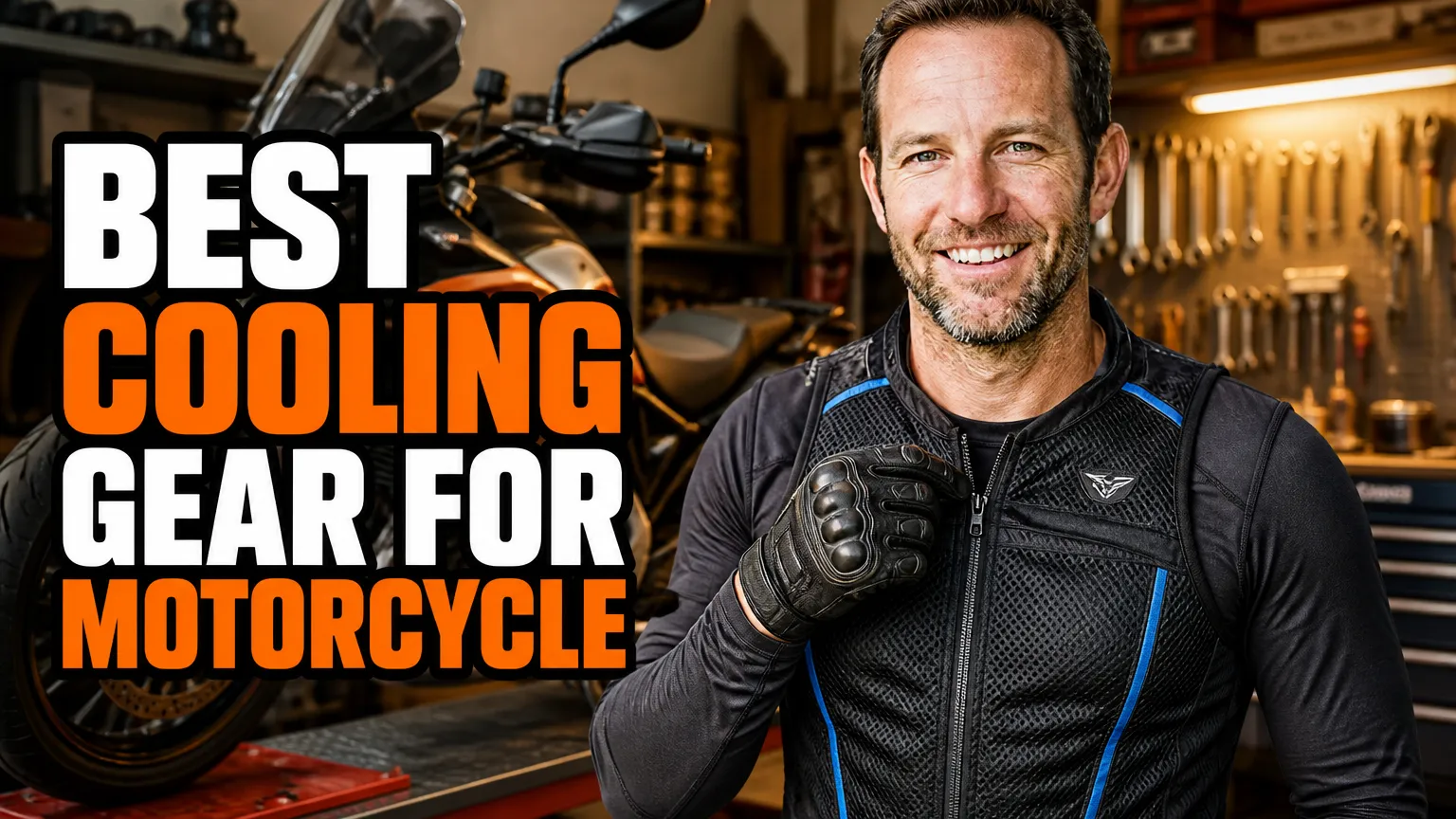
Hot-weather riding is a balancing act: I want enough airflow to stay comfortable, but I won’t trade away abrasion resistance or impact protection to get it. The best cooling gear for motorcycle use depends on the weather, the kind of jacket I wear, and whether I’m commuting, touring, or riding off-road.
My picks below cover evaporative vests, a circulating-water system, and ventilated jackets. I look at how each option works, where it makes sense, and what I’d check before buying. Cooling gear can make a ride more manageable, but it does not replace breaks, water, or a protective riding kit.
- I’d start with the REV’IT! Liquid Cooling Vest for a simple, motorcycle-focused evaporative layer.
- The Veskimo Personal Cooling System is my pick to consider when I want active, circulating-water cooling.
- For everyday comfort, I pair a properly protective mesh jacket with a cooling vest suited to my climate.
- In humid weather, I don’t expect evaporative gear to work as well, so I plan for shade, hydration, and breaks.
How I choose cooling gear for a ride
I first ask how the gear will work with the jacket I already own. Evaporative vests need airflow to carry away moisture, so an extremely insulated or waterproof outer layer can limit their benefit. A ventilated jacket gives that moisture a better chance to evaporate while still letting me wear armor.
I also think about the day’s conditions. Dry air can help evaporative products feel more effective, while humid air slows evaporation. When it’s hot and humid, I’m especially careful not to treat a cooling layer as permission to ride longer without stopping.
Finally, I keep protection separate from comfort. I check that a jacket fits over its armor, covers the areas it’s designed to protect, and suits the riding I plan to do. A cooling vest is an add-on, not a substitute for a motorcycle jacket or a reason to ride in a T-shirt.
1. REV’IT! Liquid Cooling Vest — My straightforward riding-layer pick
The REV’IT! Liquid Cooling Vest is the option I’d look at first when I want a purpose-made evaporative layer to wear under a motorcycle jacket. Its water-activated fabric is designed to hold moisture and cool through evaporation as air moves across it. That makes the jacket I wear over it an important part of the setup.
I like the basic simplicity: wet the vest as directed, let excess water drain, and wear it beneath suitable riding gear. There’s no battery or pump to charge, and it packs more easily than a powered system. I’d still pay attention to the fit, because a soaked layer that bunches under my jacket is uncomfortable rather than helpful.
What I’d check before buying
I’d compare the vest’s sizing with my actual jacket fit and confirm the care instructions from REV’IT!. Product pricing varies by retailer and season, but I’d expect a specialist cooling vest to cost more than a basic cooling towel. I see the value in the motorcycle-specific design if I’ll use it regularly on warm rides.
For me, the REV’IT! Liquid Cooling Vest makes most sense with a ventilated textile jacket and in conditions where evaporation can happen. If I’m riding in heavy humidity or wearing a mostly sealed waterproof shell, I’d lower my expectations and consider other ways to manage heat.
2. TechNiche HyperKewl Evaporative Cooling Vest — My flexible, simple option
The TechNiche HyperKewl Evaporative Cooling Vest is a well-known water-activated cooling layer. HyperKewl fabric absorbs water and releases it gradually as it dries, so I don’t need an electrical system or ice reservoir. I’d consider it for motorcycle use when I can wear it under a jacket that allows airflow.
TechNiche offers HyperKewl products in different styles, so I’d check the exact vest model, fit, and care guidance rather than assume every version has the same construction. I’d also check how much water it holds: a vest that feels reasonable when dry can feel heavier once activated.
Where I’d use it
I’d put the HyperKewl vest on my shortlist for commuting, day rides, or other activities where I can wet it before setting off. It’s a straightforward option for riders who don’t want to manage batteries and tubing. As with any evaporative layer, I’d expect performance to depend on airflow, temperature, and humidity.
My main fit check would be whether the vest lies flat beneath my jacket without restricting movement. I’d follow TechNiche’s instructions for wetting and drying it, and I wouldn’t leave it stored damp for long periods. I’d also keep my normal protective layers on top.
3. Ergodyne Chill-Its 6685 Evaporative Cooling Vest — My practical work-to-ride choice
The Ergodyne Chill-Its 6685 is an evaporative cooling vest designed for hot conditions. I’d consider it if I wanted a simple, reusable cooling layer that I could use off the bike as well as while riding. Its cooling effect relies on evaporation, so I’d want it beneath a jacket with enough ventilation to let moving air reach the damp fabric.
Because the Chill-Its 6685 is not a motorcycle protective garment, I’d be careful about how I layer it. I would wear it under a proper riding jacket with suitable armor rather than treating the vest as outerwear. I’d also check the current manufacturer details for fit, materials, and cleaning directions before choosing a size.
My fit and comfort notes
For me, the key question is whether the Chill-Its 6685 sits comfortably beneath my riding jacket when wet. I’d test that combination at home before a long ride, paying attention to bunching, pressure points, and how easily I can move my shoulders. If the vest makes my jacket too tight, I’d choose a different size or layer.
I’d compare its price with dedicated motorcycle cooling vests and think about how often I’d use it away from the bike. That broader use can make a work-oriented vest appealing. I’d still judge it as comfort gear, not as a replacement for motorcycle-rated protection.
4. Veskimo Personal Cooling System — My active-cooling option
The Veskimo Personal Cooling System takes a different approach from a soaked vest. It uses a pump to circulate chilled water through tubing in a wearable garment, drawing heat away from the body. I’d look into this system if I expected long periods in extreme heat and wanted something beyond passive evaporative cooling.
Active cooling also brings more parts to manage. I’d check the current Veskimo kit contents, garment compatibility, battery and power requirements, water capacity, and how the system is intended to be carried. I’d also confirm that the cooling garment fits comfortably beneath my riding jacket and does not interfere with armor or control movement.
Why I’d weigh the trade-offs
The big appeal for me is that the system does not depend on evaporation in the same way a wet vest does. The trade-off is extra setup: I have to deal with water, a pump, power, and a reservoir rather than simply wetting a layer before I ride. I’d consider that complexity worthwhile only if the conditions and ride length justified it.
I’d read the latest manufacturer instructions carefully, especially for routing hoses and securing the equipment. Anything that shifts, snags, or restricts movement is a poor fit on a motorcycle. I’d also factor the complete system’s cost into my decision, since it is a more involved purchase than a simple cooling vest.
5. KLIM Induction Pro Jacket — My premium airflow-first choice
Sometimes the most useful cooling upgrade is not a wet layer but a jacket designed to move air while still providing motorcycle-specific protection. The KLIM Induction Pro is a ventilated textile motorcycle jacket aimed at warm-weather riding. I’d consider it when I want a protective outer layer built around airflow rather than relying on a casual jacket or vest.
KLIM’s product details and included armor can vary by model year and market, so I’d check the current specifications before purchasing. I’d pay particular attention to the armor included, the garment’s abrasion-resistant materials, fit, and any provisions for a back protector. For me, the jacket has to fit correctly with its armor in place, not just feel airy in a store.
How I’d use it with a cooling vest
If I planned to add an evaporative vest, I’d first check how the Induction Pro fits with another layer underneath. A vest should not push the armor out of position or make the jacket restrict my shoulders. I’d also consider whether the jacket’s airflow is sufficient for the vest’s evaporation to work as intended.
This is a higher-investment approach than buying a basic cooling accessory, but it addresses a different part of the problem: airflow and protective outerwear. I’d choose it if I wanted a dedicated hot-weather riding jacket, then add a cooling layer only if my climate and riding needs called for one.
6. REV’IT! Eclipse 2 Jacket — My approachable mesh-jacket pick
The REV’IT! Eclipse 2 is a lightweight summer motorcycle jacket with mesh panels intended to promote airflow. I’d consider it for warm commutes and shorter rides when I want a simple textile jacket from a motorcycle gear brand. It can also provide the airflow an evaporative vest needs, assuming the vest and jacket fit comfortably together.
I’d verify the exact armor included with the version sold in my market, as well as the available pocket for a back protector. REV’IT! lists protective construction and armor options for the Eclipse 2, but I’d always check the product page for the current model and regional specifications. Fit matters as much as the headline feature: armor needs to stay in place when I’m in a riding position.
My everyday-use perspective
I’d choose the Eclipse 2 when I want a relatively straightforward mesh jacket, rather than a complex active-cooling setup. Its open construction may feel more comfortable in motion than a heavier jacket, though airflow can also mean less warmth when temperatures drop. I’d plan for changing conditions and bring a suitable layer if my ride runs into cooler weather.
For an evaporative vest, I’d try the complete combination before relying on it for a long trip. If the jacket fits snugly over the wet vest or the armor shifts, I’d adjust the layers or use the jacket on its own. My priority is keeping the jacket’s protective fit intact.
7. Dainese Air Frame 3 Tex Jacket — My versatile warm-weather layer
The Dainese Air Frame 3 Tex is a textile motorcycle jacket designed for warm-weather use, with mesh construction and a removable windproof liner. I like that combination for rides where the temperature may change: I can use the airflow-focused shell in heat and add the liner when the weather turns cooler. I’d check the current product listing for the exact version and included protection.
Dainese sells protective armor separately or includes it depending on the product and market, so I’d never assume the jacket arrives with every piece I want. I’d confirm shoulder and elbow armor details, check the fit with the armor installed, and look into a compatible back protector if needed. Those checks matter more to me than a jacket’s cooling claims alone.
When I’d pick it over a cooling vest
If I’m mainly uncomfortable because my jacket traps heat, I’d fix that issue first with a ventilated riding jacket. The Air Frame 3’s mesh construction can help air move through the outer layer, while the removable liner adds flexibility in cooler conditions. I’d consider a water-activated vest only if I still wanted extra cooling and the fit allowed it.
I’d also remember that mesh is not an invitation to skip protective clothing. I’d wear the jacket zipped and adjusted as intended, with the rest of my riding gear, and I’d choose a different setup for weather that calls for more coverage or water resistance.
8. Frogg Toggs Chilly Pad — My stop-and-cool accessory
The Frogg Toggs Chilly Pad is a reusable cooling towel, not a motorcycle jacket or a substitute for riding gear. I’d keep one in my luggage for breaks: wet it, wring it out as directed, and use it around my neck or on my shoulders while I’m off the bike. It’s a simple way to cool down at a rest stop without adding another layer beneath my jacket.
I wouldn’t ride with a loose towel around my neck. Fabric that flaps, catches, or distracts me is a safety problem, so I’d use the Chilly Pad while parked and stow it securely before setting off. I’d check the current care instructions and pack it in a sealed bag once it’s wet.
Why I keep a towel in the plan
Cooling gear does not have to be worn while I’m riding to be useful. A towel gives me a low-cost way to feel more comfortable during a planned stop, and I can use that pause to drink water, find shade, and assess how I’m feeling. I see it as a supporting accessory rather than the main solution for a hot ride.
That distinction matters: I’d rather stop and cool down than push through signs of heat illness. If I feel dizzy, confused, nauseated, unusually weak, or otherwise unwell, I’d stop riding and seek help rather than trying to solve the problem with a cooling towel.
How I match a cooling setup to the weather
For a dry, hot day, I’d start with a ventilated motorcycle jacket and consider an evaporative vest such as the REV’IT! Liquid Cooling Vest or TechNiche HyperKewl Evaporative Cooling Vest. I’d wet the layer according to its instructions, make sure it fits beneath my jacket, and check that the jacket’s airflow is not blocked by other layers.
For humid weather, I’d be more cautious about expecting a wet vest to deliver a dramatic change. I’d focus on a breathable jacket, sensible pacing, frequent breaks, and drinking fluids. If I routinely ride in severe heat, I’d investigate a more involved option like the Veskimo system and confirm its setup works for my motorcycle and riding gear.
For changing temperatures, I’d value a jacket such as the Dainese Air Frame 3 Tex, with its removable liner, or another ventilated jacket that suits my fit and protection needs. I’d carry a separate warm or rain layer when the forecast calls for it. No single jacket or vest is ideal for every climate and ride.
My final buying checklist
- Fit: I check the cooling layer beneath my actual jacket, with armor in place and my arms in riding position.
- Airflow: I make sure the outer layer allows enough air to reach an evaporative vest.
- Protection: I confirm the jacket’s materials, armor, fit, and coverage instead of assuming a cooling product provides protection.
- Weather: I temper my expectations in humid conditions and plan for changing temperatures.
- Care: I follow the maker’s instructions for soaking, drying, cleaning, storage, batteries, or water systems.
- Ride plan: I bring water, schedule breaks, and stop if I begin to feel unwell.
My best all-around starting point is a protective, ventilated motorcycle jacket that fits correctly. From there, I’d add a water-activated vest for conditions that suit evaporation, or consider active cooling if I have a clear need for the extra equipment. The right combination is the one that helps me stay comfortable without compromising protection or sound judgment.
Frequently Asked Questions
Does an evaporative cooling vest work under a motorcycle jacket?
Yes, I find an evaporative vest can help when air can move through your jacket. It is usually less effective in very humid weather.
How long should I soak a motorcycle cooling vest?
I follow the maker’s instructions and avoid oversoaking. Too much water can make a vest heavy or leave it damp against my riding layers.
Can I wear a cooling vest instead of protective motorcycle gear?
No. I treat cooling layers as comfort gear and still wear a properly fitted, protective jacket, pants, gloves, boots, and helmet.
What is the best cooling option for humid weather?
I prioritize a well-ventilated motorcycle jacket and steady hydration. Evaporative gear may cool less in humid air, while a circulating-water system can be an alternative.

Related Articles

5 Motorcycle Wrist Braces and Guards I’d Choose for Confident Riding
Compare five wrist braces and guards I’d consider for street and dirt riding, with fit, support, glove compatibility, and buying…
 Jake Miller
11 min read
Jake Miller
11 min read

7 Under Armour Base Layers I’d Choose for Comfortable Motorcycle Rides
Discover seven Under Armour base layers for hot and cold rides, plus my fit tips and safety advice for wearing…
Jake Miller
10 min read

8 Best Motorcycle Base Layers for Staying Warm on Cold Rides
Compare eight rider-ready thermal base layers, from merino to synthetic options, with fit, warmth, layering advice, and picks for cold-weather…
Jake Miller
11 min read