
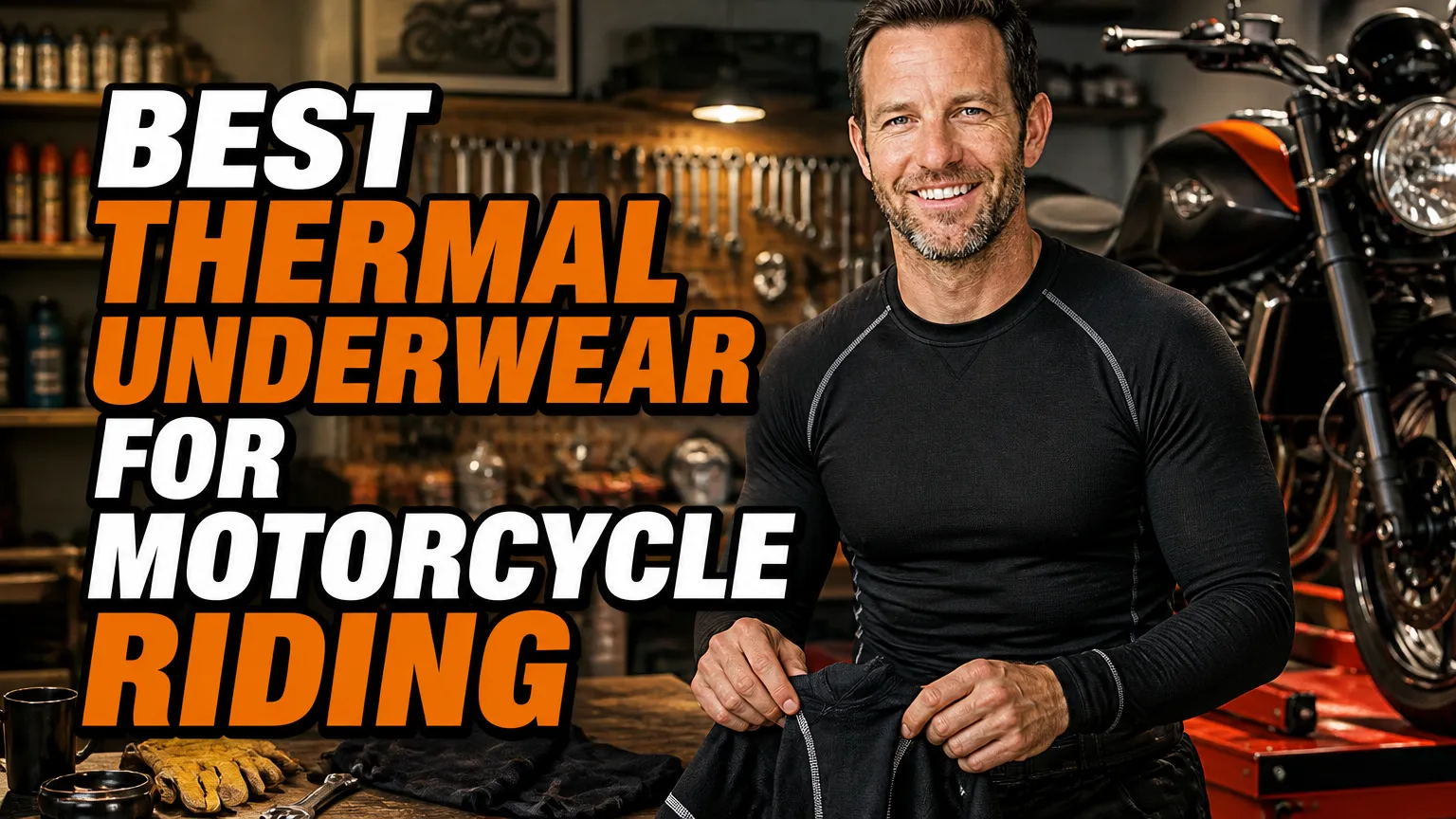
Cold air can make even a familiar route feel longer, especially when wind sneaks through a jacket or sweat cools against your skin. I’ve found that a good base layer makes a noticeable difference: it helps me manage moisture and stay comfortable without adding bulky fabric beneath my riding gear.
When I compare the best thermal underwear for motorcycle riding, I focus on fit, warmth, drying time, and how comfortably each layer works under a suit. Here are eight real options I’d consider, from motorcycle-specific gear to dependable outdoor base layers.
- I’d start with the KLIM Aggressor -1.0 for a motorcycle-specific layer.
- I prefer merino options such as the Smartwool Classic Thermal or Icebreaker 200 Oasis for comfort and odor control.
- Synthetic layers like Patagonia Capilene Thermal Weight work well when I expect to sweat and want quick drying.
- I choose a close, smooth fit and treat every base layer as insulation, not protective equipment.
How I choose a base layer for riding
I want a base layer that sits close to my skin without squeezing or restricting movement. If it bunches under my riding pants or creates thick seams beneath my jacket, I know I’ll notice it on a longer ride.
I also match the fabric to the conditions. Merino wool can feel comfortable across a range of temperatures and tends to resist odor, while synthetic fabrics often dry quickly and suit riders who sweat heavily. I consider the whole clothing system, too: a thermal layer works best under suitable riding gear, not as a substitute for it.
For more help planning what to wear, I’d pair this guide with my recommendations for best clothes for motorcycle riding. Riders building their first setup can also check my guide to the best motorcycle clothing for beginners.
1. KLIM Aggressor -1.0 — My motorcycle-specific pick
When I want a base layer designed with motorcycling in mind, I look at the KLIM Aggressor -1.0. KLIM sells it as a lightweight, moisture-managing layer with stretch, making it a practical choice beneath riding apparel when I want some added comfort without piling on a thick, bulky thermal.
I’d consider the KLIM Aggressor -1.0 for cool rides where a windproof outer layer is doing most of the work against the elements. Its close fit is useful under a riding suit, and KLIM’s motorcycle focus makes this a natural option for riders who prefer gear designed around time on the bike.
What I’d keep in mind
The “-1.0” is a lightweight option, so I wouldn’t expect it to provide the insulation of a heavyweight winter layer on its own. Pricing varies by retailer and garment, but I’d generally budget around $50–$100 for an individual top or bottom. I’d check the exact product listing for current fabric details, sizing, and availability before ordering.
2. Smartwool Classic Thermal Merino Base Layer — My merino comfort pick
The Smartwool Classic Thermal Merino Base Layer Crew and Bottom are my go-to style of choice when I want soft, straightforward merino layers. Smartwool offers these garments in 100% merino wool, with a heavyweight knit intended for cold conditions. I like that I can buy the top and bottom separately and choose the pieces that suit my layering plan.
For riding, I’d reach for the Smartwool Classic Thermal Merino Base Layer when I expect a chilly start or a long stretch in cool weather. Merino can help buffer changes in temperature and usually holds onto less odor than many synthetic garments, which I appreciate when a ride runs longer than planned.
Fit and care notes
I’d make sure the waist, cuffs, and seams lie smoothly beneath my riding gear. Merino is comfortable, but it needs gentler care than many synthetic layers, so I follow the wash instructions rather than treating it like a rugged outer garment. A crew top and bottom often cost roughly $90–$130 each, depending on the version and retailer.
3. Icebreaker 200 Oasis — My versatile merino option
The Icebreaker 200 Oasis Long Sleeve Crewe and Leggings give me another merino choice, this time in a midweight 200-gsm fabric. Icebreaker makes the Oasis line from merino wool, and the 200-weight pieces are designed as versatile base layers rather than extremely heavy winter underwear.
I like this weight for rides that begin cold but may warm up later in the day. The Icebreaker 200 Oasis is a useful option when I want a soft layer against my skin without the extra bulk of a heavier garment. Its simple cut also makes it easy to wear under textile pants or a one-piece suit.
Who I’d recommend it to
I’d consider the Icebreaker 200 Oasis if I want merino comfort for both riding and everyday outdoor use. It can be a more expensive choice than basic synthetics, with tops and leggings often landing around $90–$140 apiece. I’d check the current model’s care label and size guide, since a smooth fit matters under snug motorcycle clothing.
4. Patagonia Capilene Thermal Weight — My synthetic cold-weather pick
For a technical synthetic option, I’d look at the Patagonia Capilene Thermal Weight Crew and bottoms. These pieces use Polartec Power Grid fabric, a grid-patterned construction intended to balance warmth and breathability while helping moisture move away from the skin. Patagonia’s version is a warm base layer that still feels less cumbersome than a thick, traditional thermal set.
I’d choose the Patagonia Capilene Thermal Weight when I expect to work up a sweat, such as during stop-and-go commuting or when I’m moving around between rides. Synthetic fabric generally dries faster than wool, and the grid structure helps make this layer feel more breathable than a solid, dense fleece.
My fit and layering advice
I’d wear it directly against the skin and add a wind-blocking riding layer over it when conditions call for one. It isn’t motorcycle armor, and the soft fabric can snag if handled roughly, so I’d keep it protected under my gear. Prices vary, but I’d expect to see individual pieces around $100–$150.
5. Alpinestars Ride Tech Winter — My riding-focused cold-season set
The Alpinestars Ride Tech Winter Top and Bottom are made specifically for use beneath motorcycle gear. Alpinestars describes the range as a thermal undergarment system, with a body-mapped design and stretch construction intended to support comfort and movement while riding. I like the idea of choosing a coordinated set built around motorcycle use rather than adapting an everyday thermal shirt.
I’d put the Alpinestars Ride Tech Winter on my shortlist for regular cold-weather riding, especially when I want a dedicated top and bottom that can sit smoothly under a suit. Its stretch fit is useful when I’m changing riding positions, and the motorcycle-specific design makes it easy to pair with the rest of an Alpinestars layering setup.
What I’d check before buying
I’d confirm the exact version and its temperature rating with the retailer, since product details can differ between seasons and markets. The Ride Tech Winter is a base layer, not an insulating mid-layer or protective shell. I’d expect to pay roughly $60–$120 for an individual piece, with the final cost depending on the retailer and region.
6. Under Armour ColdGear Armour — My close-fitting synthetic pick
The Under Armour ColdGear Armour Mock and leggings are a familiar option if I want a snug synthetic layer. ColdGear Armour garments commonly use a dual-layer fabric construction, with a brushed interior for warmth and a smooth exterior. The compression-style fit is designed to sit close to the body, which can help reduce bunching under riding clothes.
I’d consider the Under Armour ColdGear Armour when I prefer a close fit and want a layer that’s easy to find at sporting-goods retailers. It can work well for a cool commute when worn under proper motorcycle gear, though I’d be careful not to size down so far that the fabric restricts movement or feels uncomfortable across my shoulders and knees.
Where it fits in my kit
ColdGear Armour is a general-purpose athletic base layer rather than motorcycle-specific equipment. I’d treat it as a practical, often more affordable option, with pieces commonly priced around $40–$80. Before buying, I’d check whether a particular garment is made for cold conditions and whether the cut works beneath my riding jacket and pants.
7. Helly Hansen LIFA Merino Midweight — My blend-fabric choice
The Helly Hansen LIFA Merino Midweight Crew and Pants combine a merino outer layer with Helly Hansen’s LIFA moisture-management technology next to the skin. I like the logic of this construction for riding: the inner layer is designed to move moisture, while merino adds warmth and a soft feel.
I’d look at the Helly Hansen LIFA Merino Midweight when I want something warmer than a lightweight synthetic but don’t necessarily need the thickest possible winter layer. The crew and pants work as a matched base-layer set beneath motorcycle clothing, and the blend can be appealing if I want some of merino’s comfort with a performance-oriented inner fabric.
My practical considerations
I’d check the garment’s care instructions and confirm that the fit stays smooth under protective pants. As with other wool-blend layers, I wouldn’t count on it to block wind or rain; my outer gear still needs to handle those jobs. Individual pieces often cost around $80–$120, although sales and regional pricing can change that.
8. REI Co-op Merino 250 Base Layer — My value-minded heavyweight pick
The REI Co-op Merino 250 Base Layer Crew and Bottom are worth considering when I want a heavyweight merino option from a well-known outdoor retailer. The 250-weight fabric is made from merino wool, giving me a warmer alternative to lighter 150- or 200-weight layers for genuinely cold conditions.
I’d choose the REI Co-op Merino 250 for slower, colder rides or as part of a layered setup when temperatures stay low. Its warmth can be a plus, but I’d pay attention to how it fits under my riding gear: a heavyweight layer that feels comfortable indoors may become too warm if I’m riding hard or moving between cold and heated environments.
How I’d use it
I’d wear the REI Co-op Merino 250 directly against my skin and put a protective motorcycle layer over it. It’s often priced below some premium outdoor merino brands, though prices vary by season and availability. I’d check REI’s current product listing for the latest specifications, sizing, and return terms.
How I match warmth to the ride
For a short commute in cool weather, I’d usually start with a lightweight or midweight layer, such as the KLIM Aggressor -1.0 or Icebreaker 200 Oasis, and let my jacket handle wind protection. For longer rides in steady cold, I’d consider warmer pieces like the Smartwool Classic Thermal Merino or REI Co-op Merino 250.
If I expect to sweat, I’d lean toward a synthetic option such as the Patagonia Capilene Thermal Weight or Under Armour ColdGear Armour. I also think about fit: a base layer should sit close enough to move moisture, but it shouldn’t pull tight at the knees, elbows, shoulders, or waist when I’m in a riding position.
What thermal underwear can and can’t do
Thermal underwear adds insulation and helps manage moisture; it does not protect me from road abrasion or impact. I always wear it underneath motorcycle clothing with suitable protective features. For a broader look at protective choices, I’d read about the best gear for motorcycle safety top protective clothing and accessories.
I also make room for personal fit and comfort. Riders looking for options tailored to women can browse my guide to best womens underwear for motorcycle riding. For all-day comfort and fewer clothing distractions on the road, I’d also compare recommendations for best underwear for long distance motorcycle riding.
My final choice depends on the conditions I ride in most often. I’d pick the KLIM Aggressor -1.0 for motorcycle-specific layering, a merino option for comfort across a range of outings, or a synthetic layer when faster drying is the priority. Whichever I choose, I’d test the fit under my full riding gear before relying on it for a long, cold day.
Frequently Asked Questions
Should I wear thermal underwear under motorcycle gear?
Yes. I use a close-fitting thermal base layer to manage sweat and add warmth beneath my riding gear, but I still rely on a protective outer layer.
Is merino wool or synthetic thermal underwear better for riding?
I choose merino for comfort across changing temperatures and odor control, and synthetic fabric when I expect heavy sweating or want quicker drying.
How tight should motorcycle thermal underwear fit?
I look for a close, smooth fit that sits against my skin without restricting movement or bunching under my riding suit.
Can thermal underwear replace motorcycle protective gear?
No. Thermal underwear provides insulation and moisture management, not abrasion resistance or impact protection. I wear it underneath certified protective gear.

Related Articles

5 Motorcycle Wrist Braces and Guards I’d Choose for Confident Riding
Compare five wrist braces and guards I’d consider for street and dirt riding, with fit, support, glove compatibility, and buying…
 Jake Miller
11 min read
Jake Miller
11 min read

7 Under Armour Base Layers I’d Choose for Comfortable Motorcycle Rides
Discover seven Under Armour base layers for hot and cold rides, plus my fit tips and safety advice for wearing…
Jake Miller
10 min read

8 Best Motorcycle Raincoats for Filipino Riders Facing Sudden Downpours
Compare eight dependable motorcycle raincoats for Philippine downpours, with fit, waterproofing, visibility, price guidance, and practical buying tips for daily…
Jake Miller
12 min read