
7 Under Armour Base Layers I’d Choose for Comfortable Motorcycle Rides
 Jake Miller
10 min read
Jake Miller
10 min read
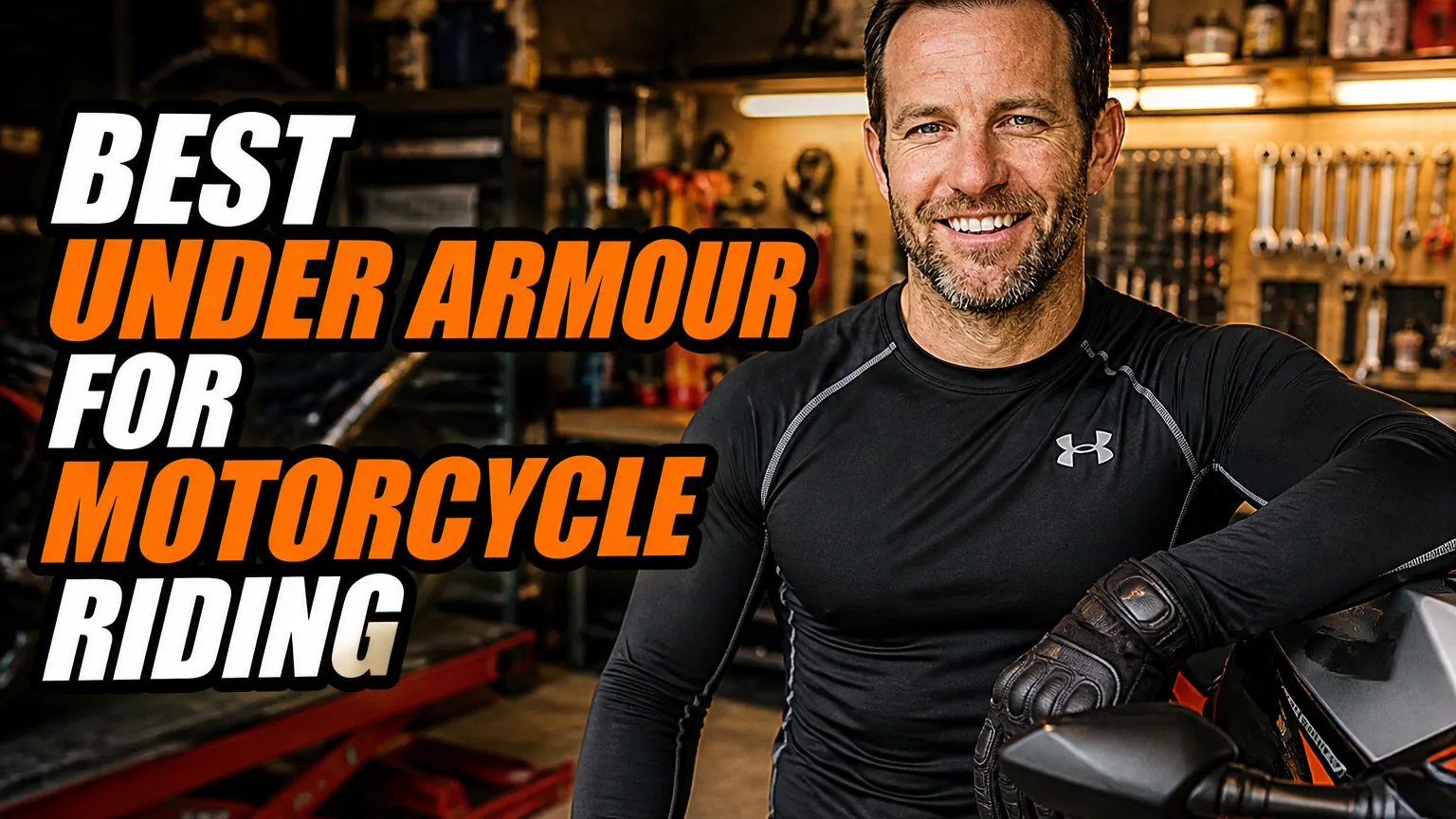
When I’m choosing Under Armour clothing for motorcycle rides, I’m looking for a comfortable base layer—not a substitute for motorcycle protection. A smooth, close-fitting shirt or pair of leggings can help manage sweat, reduce rubbing, and make it easier to put on my riding gear. The right choice depends on the weather, my outer layers, and how much warmth I need.
Below, I’ve rounded up seven specific Under Armour products I’d consider for riding. I focus on how each one can work as a layer beneath a motorcycle jacket or pants, what features stand out to me, and where I think it makes the most sense. Prices vary by retailer, color, and sale, so I treat the ranges as general U.S. estimates rather than fixed prices.
- I use Under Armour as a comfort-focused base layer, never as crash protection.
- HeatGear Armour suits warm rides, while ColdGear and Base 4.0 are better starting points for chilly conditions.
- I choose a smooth fit that layers without bunching and still lets my motorcycle gear fit properly.
- I wear motorcycle-specific protective clothing and armor over every base layer.
How I Choose an Under Armour Layer for Riding
I think about the layer closest to my skin as a comfort tool. A close-fitting, moisture-managing top can feel less clammy beneath a jacket, while a smooth pair of leggings may make it easier to get in and out of riding pants. For warm weather, I lean toward lightweight HeatGear; for cold weather, I look at ColdGear or the warmer Base 4.0 range.
Fit matters more than a flashy fabric claim. I want the material to sit smoothly without restricting movement, and I check that my jacket, pants, armor, and riding position still fit properly with it on. I also remember that Under Armour apparel is not designed to resist road abrasion or replace impact protection.
For a broader look at building a complete riding outfit, I’d also read this guide to best clothes for motorcycle riding. When I’m reviewing my overall safety setup, I use this overview of best gear for motorcycle safety top protective clothing and accessories as a useful companion.
1. Men’s UA HeatGear Armour Compression Short Sleeve Shirt — My Warm-Weather Staple
When I want a straightforward layer for a warm ride, I’d start with the Men’s UA HeatGear Armour Compression Short Sleeve Shirt. Its lightweight HeatGear fabric is designed to wick sweat and stretch with movement, and the compression cut sits close to the body. That close fit can feel comfortable under a jacket, where loose fabric is more likely to fold or bunch.
I’d choose this shirt for commuting, warm-day touring, or any ride where a long sleeve feels like too much. It usually sells in the approximate $25–$40 range, though discounts and color options can change the price. I’d still pair it with a ventilated motorcycle jacket rather than treating the shirt as a protective outer layer.
Why I like it as a base layer
For me, the main advantage is simplicity: short sleeves leave less fabric around my wrists and can feel less restrictive when I’m layering gloves and jacket cuffs. I’d make sure the shirt doesn’t ride up when I lean forward, and I’d check that the compression fit feels comfortable for the full length of my ride.
2. Men’s UA HeatGear Armour Compression Long Sleeve Shirt — My Extra-Coverage Pick
The Men’s UA HeatGear Armour Compression Long Sleeve Shirt gives me the same warm-weather base-layer idea with more arm coverage. I consider it when I want a lightweight layer beneath a textile jacket or when I prefer fabric between my skin and the jacket lining. The stretchy, sweat-wicking HeatGear construction is intended for active use, which makes it a practical option for riding days that include walking around off the bike, too.
I typically see this style around $30–$45, with pricing depending on the version and retailer. For me, the long sleeves are most useful when my jacket has mesh panels or a lining that feels uncomfortable against bare arms. They do not make the shirt abrasion-resistant, so I still rely on a motorcycle jacket with appropriate protective construction and armor.
My fit check
I’d try this shirt on with my actual riding jacket rather than judging the fit on its own. If the sleeves pull tight at my elbows or gather awkwardly beneath the jacket, I’d try another size or cut. A comfortable base layer should support movement, not make me feel squeezed when I reach for the bars.
3. Men’s UA Iso-Chill Armour Short Sleeve Compression Shirt — My Cooling-Feel Option
If a regular compression shirt feels too warm against my skin, I’d consider the Men’s UA Iso-Chill Armour Short Sleeve Compression Shirt. Under Armour’s Iso-Chill range is designed to create a cooler-feeling sensation, and this compression-style shirt is made to sit close to the body. I see it as a warm-weather comfort layer for riders who prefer short sleeves beneath ventilated gear.
Depending on the exact version and sale, I’d expect a typical price around $35–$50. I wouldn’t assume that a cooling fabric can overcome a hot, unventilated jacket or high temperatures; ventilation, hydration, and sensible breaks still matter. I’d choose this one when the feel of the fabric is appealing, not as a replacement for proper hot-weather riding equipment.
When I’d choose it
I’d reach for the Iso-Chill Armour shirt on warm commutes or shorter rides when I want a close-fitting layer that feels less heavy than a thicker top. Before buying, I’d check the specific product listing for its current fabric details and care instructions, since product versions can change. My priority would be a comfortable fit beneath my jacket, not a promise of staying cool in every condition.
4. Men’s UA HeatGear Armour Leggings — My Lightweight Lower-Body Layer
The Men’s UA HeatGear Armour Leggings are the lower-body equivalent I’d look at for warm-weather layering. Under riding pants, fitted leggings can help reduce direct contact between my skin and the inside of the pants, and the stretch fabric is designed to move with the wearer. I’d consider them especially when I’m wearing riding pants over shorts or when I want a more consistent layer from waist to ankle.
I usually see HeatGear Armour leggings listed around $35–$55, although seasonal promotions can bring the cost down. I’d check the waistband and ankle fit with my riding pants, because bunching at the knee or ankle can become irritating on a longer ride. These are athletic leggings, not motorcycle pants: they do not replace abrasion-resistant riding trousers, knee protection, or hip armor.
What I’d check before a ride
I’d sit on the bike and bend my knees before deciding the fit is right. That quick test helps me spot tightness behind the knee or fabric that pulls at the waist. If I’m buying riding clothes for the first time, I’d also consult a guide to best motorcycle clothing for beginners so I don’t mistake a comfortable base layer for a complete protective outfit.
5. Men’s UA ColdGear Armour Mock Neck — My Cool-Weather Top
When the temperature drops, I’d move from HeatGear to the Men’s UA ColdGear Armour Mock Neck. The ColdGear Armour range is designed with a dual-layer construction, typically featuring a brushed interior and a smooth exterior. I like the mock-neck format as a starting point for cooler rides because it adds coverage around my neck without requiring a bulky turtleneck beneath my jacket.
I’d expect a price of roughly $45–$70, depending on the version and retailer. I’d wear it under a properly fitted motorcycle jacket and add wind-resistant layers when conditions call for them. A warm base layer can help with comfort, but it cannot block wind as effectively as suitable outerwear or make an unprotected jacket safe.
How I’d layer it
I’d use the ColdGear Armour Mock Neck for brisk morning rides, cool commutes, and changing-weather days when a light summer shirt feels inadequate. I’d check the collar against my jacket and helmet, because extra fabric around the neck can feel annoying if it bunches or rubs. For genuinely cold conditions, I’d combine it with suitable riding gear and plan for changes in temperature during the trip.
For more cold-weather layering ideas, I’d browse best gear for riding motorcycle in cold weather stay warm and protected. If the ride is especially cold or windy, I’d also think about face coverage and compare options in this guide to the best winter face mask for motorcycle riding.
6. Men’s UA ColdGear Armour Leggings — My Cold-Weather Bottom Layer
The Men’s UA ColdGear Armour Leggings are the thermal counterpart to the HeatGear leggings. I’d wear them beneath motorcycle pants when cold conditions make a thin summer layer uncomfortable. Their ColdGear construction is intended to provide warmth while managing moisture, and the close fit can make them easier to layer than loose lounge pants.
For budgeting, I’d allow about $45–$70, with exact prices changing by collection and retailer. I’d try them on under my actual riding pants and check for any restriction while seated. If the combined layers make the pants tight or shift protective pads out of position, I’d change the sizing or layering plan rather than accepting a compromised fit.
My practical use case
I’d choose these leggings for cold commutes and longer rides where my legs would otherwise feel chilled. They can add a useful layer of warmth, but I wouldn’t expect them to function as windproof overtrousers. I’d keep my motorcycle pants as the protective outer layer and adjust my setup according to the forecast, ride duration, and the ventilation in those pants.
7. Men’s UA ColdGear Base 4.0 Crew — My Heaviest Base-Layer Choice
For particularly cold days, I’d consider the Men’s UA ColdGear Base 4.0 Crew. This is a heavier thermal option than a basic HeatGear shirt, and the Base 4.0 line is designed for cold-weather activity with a warmer, textured interior intended to hold heat while helping manage sweat. I see it as a base layer for colder conditions, rather than a shirt I’d wear under every motorcycle jacket all year.
Prices can vary considerably, but I’d budget roughly $80–$120 if I’m shopping for this heavier layer. I’d pay close attention to thickness and fit: extra warmth is only helpful if my jacket still closes comfortably and its armor stays correctly positioned. If it makes my protective gear too tight, I’d choose a thinner layer or reassess the outerwear size.
When I’d leave it in the drawer
I wouldn’t wear the Base 4.0 Crew on a mild day or beneath a jacket that already has a substantial thermal liner. Too many layers can make me overheat, restrict movement, or interfere with fit. I’d reserve it for genuinely cold conditions and pair it with motorcycle-specific wind protection and protective equipment.
My Final Take on Under Armour for Motorcycle Layering
If I’m riding in warm weather, I’d start with the HeatGear Armour short sleeve shirt or the Iso-Chill Armour shirt and then build around a ventilated protective jacket. For cool weather, I’d look at the ColdGear Armour Mock Neck and leggings. When the cold is more demanding, I’d consider the Base 4.0 Crew, while checking carefully that my outer gear still fits as intended.
My most important rule is simple: I use Under Armour for comfort beneath my riding clothes, not crash protection. I always want motorcycle-specific garments with suitable abrasion resistance and correctly positioned protective armor between me and the road. I also check the fit of the complete system while seated on my bike, because a great base layer is only a good choice if the protective gear over it still works properly.
Frequently Asked Questions
Can Under Armour clothing protect me in a motorcycle crash?
No. I use it as a comfort-focused base layer, not protective equipment. I wear a motorcycle jacket and pants with appropriate armor and abrasion-resistant construction over it.
Should I wear a tight or loose Under Armour layer beneath motorcycle gear?
I choose a close, smooth fit that does not bunch beneath my jacket or pants. I still make sure the outer gear fits correctly with the base layer underneath.
Which Under Armour layer do I prefer for hot-weather riding?
I usually start with a lightweight HeatGear Armour compression shirt, then add ventilated motorcycle gear. Iso-Chill is another option I consider when cooling comfort is a priority.
What should I wear beneath motorcycle gear in winter?
I layer ColdGear or ColdGear Base 4.0 beneath properly fitted riding gear, adjusting for the weather and ride length. A base layer alone cannot replace windproof outerwear or protective gear.

Related Articles

5 Motorcycle Wrist Braces and Guards I’d Choose for Confident Riding
Compare five wrist braces and guards I’d consider for street and dirt riding, with fit, support, glove compatibility, and buying…
Jake Miller
11 min read

8 Best Motorcycle Base Layers for Staying Warm on Cold Rides
Compare eight rider-ready thermal base layers, from merino to synthetic options, with fit, warmth, layering advice, and picks for cold-weather…
Jake Miller
11 min read

8 Best Motorcycle Raincoats for Filipino Riders Facing Sudden Downpours
Compare eight dependable motorcycle raincoats for Philippine downpours, with fit, waterproofing, visibility, price guidance, and practical buying tips for daily…
Jake Miller
12 min read