
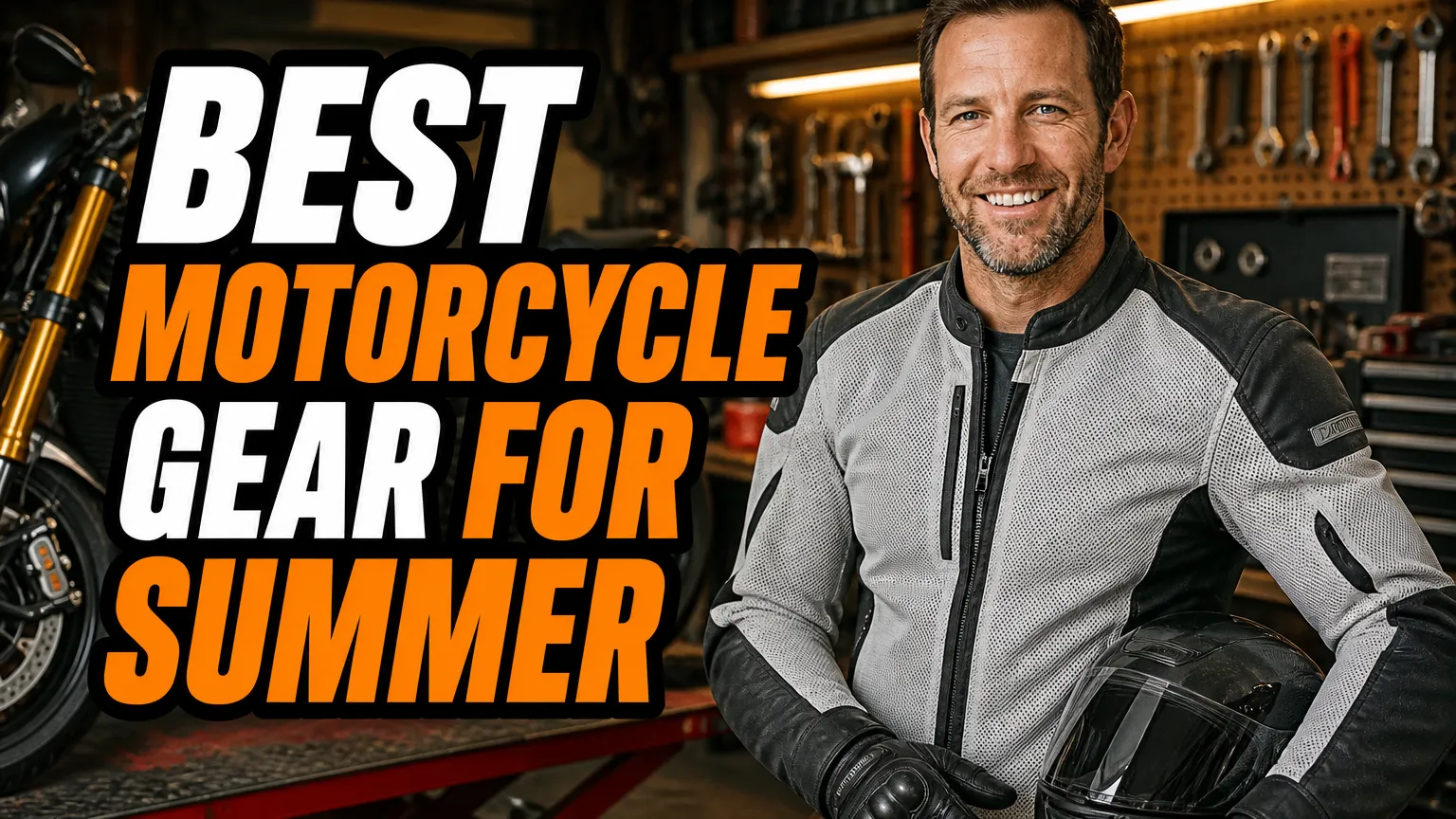
When the temperature climbs, I want airflow, but I don’t want to ride in a T-shirt and sneakers to get it. The best motorcycle gear for summer helps me manage heat while keeping essential coverage, armor, and abrasion resistance in the mix. I look for pieces that work together, fit securely in a riding position, and suit the kind of weather and roads I actually ride.
Below, I’ve gathered eight specific products I’d consider for a warm-weather kit. They cover the main pieces I rely on, plus a few useful extras. Prices can change by retailer and season, so I treat the ranges as a rough guide rather than a guaranteed quote.
- I prioritize certified, abrasion-resistant gear with a close fit, even when the weather is hot.
- I pair a ventilated jacket and pants with protective gloves and over-ankle boots.
- I use a moisture-wicking layer and consider a cooling vest for suitable conditions.
- I check fit, armor placement, and current product specifications before buying.
1. KLIM Induction Pro Jacket — My Premium Mesh Jacket Pick
When I want a jacket designed around airflow without giving up substantial protective features, I look at the KLIM Induction Pro Jacket. Its Karbonite Micromesh construction is intended to move air through the garment, and the jacket includes D3O LP1 armor at the shoulders and elbows. It has a pocket for a separate back protector, so I’d check the current package details and add compatible protection if it isn’t included.
The Induction Pro is a premium-priced choice, often around the $500 to $600 range depending on version and seller. I like the prospect of a purpose-built mesh jacket for sustained warm-weather riding, but I’d still check the garment’s certification label and fit before deciding. The jacket needs to sit securely over the armor rather than billowing or letting the pads shift when I’m on the bike.
What I’d check before I ride
I’d confirm which armor comes with the exact size and model I’m buying, then check whether the jacket’s back-protector pocket suits my preferred insert. I’d also try it on with the pants and gloves I use most often. For me, airflow is useful only if the sleeves, cuffs, and waist stay in place and the armor remains over the right areas.
2. REV’IT! Airwave 4 Trousers — My Ventilated Bottom Half
I don’t treat pants as an optional part of a summer riding outfit. The REV’IT! Airwave 4 trousers use mesh panels to help circulate air, while their abrasion-resistant textile construction and included SEESMART protectors provide more coverage than ordinary warm-weather clothing. The model is designed to pair with a riding jacket, which can help me make a more secure connection between the two pieces.
I generally see the Airwave 4 in the midrange, often around $200 to $300, though the exact price depends on the market. The included knee and hip protection is a key feature I’d verify for the specific version. I’d also check the garment’s certification and fit: trousers that twist, ride up, or leave a gap at the waist aren’t a good solution just because they feel breezy while standing in a shop.
My fit note
I try riding trousers in a bent-knee position, not just standing straight. The knees should cover the intended area when I’m on the bike, and the waist should work with my jacket so I’m not exposed when I lean forward. If I’m buying online, I read the size chart carefully and check the retailer’s return policy.
3. Alpinestars SMX-1 Air v2 Gloves — My Everyday Hot-Weather Gloves
My hands need protection even on a short summer ride, and the Alpinestars SMX-1 Air v2 is a recognizable option built with warm conditions in mind. It combines perforated and mesh materials with synthetic suede in high-wear areas, plus a hard polymer knuckle protector. The design offers more airflow than a fully insulated winter glove while retaining features made for motorcycle use.
The SMX-1 Air v2 often lands around $80 to $120, depending on color, size, and retailer. I’d check the product’s current certification information rather than assuming that every glove in a model family has identical ratings. I also pay close attention to wrist closure and finger length: a glove that comes off too easily or bunches at the controls is a poor fit for me.
How I judge glove fit
I close my hand around the grips and work the levers before buying. I want the fingertips to reach comfortably, the knuckle protection to sit in place, and the palm material to feel secure without restricting movement. I avoid choosing a glove solely because it has lots of perforation; coverage and fit matter just as much to my decision.
4. TCX Street 3 Air Shoes — My Casual-Looking Ventilated Footwear
For rides where I want a less bulky look than a touring boot, I’d consider TCX Street 3 Air shoes. They use a breathable Air Tech lining and combine a casual sneaker-like profile with motorcycle-specific features, including D3O ankle protection and a ZPLATE midsole designed to balance flexibility and transverse rigidity. The upper uses materials such as suede and mesh, so I wouldn’t expect the ventilation to come with waterproofing.
These shoes commonly sit around $150 to $200, although prices vary. I choose them for warm-weather urban riding and everyday versatility, not as a substitute for a tall, highly protective touring or track boot. Before I buy, I confirm the exact model’s protective certification and check that the laces or closures can be secured away from moving parts.
Where I’d use them
I’d wear the Street 3 Air for commuting, errands, or shorter rides in dry weather. For fast riding, rough roads, or trips where ankle coverage is a priority, I’d personally move up to a taller boot. I also check that the heel and toe feel stable and that the shoe stays snug when I walk and operate the controls.
5. Shoei GT-Air 3 — My Ventilated Full-Face Helmet Choice
I don’t compromise on a helmet to make hot weather easier. The Shoei GT-Air 3 is a full-face touring helmet with ECE 22.06 certification, a multi-position chin vent, and a QSV-2 internal sun shield. Its 3D Max-Dry interior system is designed to help manage moisture, and the helmet includes a removable, washable liner. I find features like a usable vent layout and a comfortable fit more meaningful than simply choosing the helmet with the most openings.
The GT-Air 3 is a premium helmet, often priced in the neighborhood of $700 or more, with costs varying by finish and seller. It’s a strong option to try if I want a full-face touring design, but helmet fit is highly personal. I’d get professionally fitted if possible, check the current safety labels, and make sure the helmet sits evenly without pressure points.
Ventilation still depends on fit
I open the vents and check whether air reaches my head while I’m sitting in my normal riding position. A helmet’s airflow can feel different at different speeds and on different bikes, so I don’t assume that a vent that looks large will work perfectly for me. I also make sure the visor closes and seals correctly before heading out.
6. Alpinestars Ride Tech Lite Short Sleeve Top — My Base-Layer Pick
A technical base layer can make hot rides more comfortable under protective clothing. The Alpinestars Ride Tech Lite Short Sleeve Top is designed as a lightweight, breathable layer for warm conditions, with stretch fabric that sits close to the body. I use a layer like this to help manage sweat and reduce the sticky feeling of pulling off a damp jacket after a ride.
I usually find this type of top in roughly the $50 to $80 range, depending on the version and retailer. It is not protective equipment by itself, and I never count it as a replacement for a jacket or armor. I choose a close but comfortable fit, then wear my protective gear over it as intended.
Why I like a simple base layer
I find it easier to wash and dry a lightweight base layer than to deal with a sweat-soaked jacket liner after every outing. I also avoid cotton for long, hot rides because it can hold onto moisture. A technical top won’t make extreme heat harmless, but it can make a properly equipped ride feel more manageable.
7. TechNiche HyperKewl Evaporative Cooling Vest — My Extra for Dry Heat
When I’m riding in very hot, dry conditions, I consider the TechNiche HyperKewl Evaporative Cooling Vest as an additional layer. It uses evaporative cooling: I soak the vest according to its instructions, let excess water drain, and wear it beneath my riding jacket. As the moisture evaporates, it can help create a cooling effect against my torso.
Prices vary by size and seller, but I often see cooling vests in the approximate $40 to $80 range. I treat the HyperKewl vest as a comfort accessory, not safety gear. I also don’t assume it works equally well in every climate: in humid conditions, evaporation may be less effective, and adding a wet layer can feel clammy.
My heat-safety reminder
I follow the product’s soaking and drying instructions, and I keep drinking water and taking breaks. If I feel dizzy, confused, unusually weak, or nauseated, I stop riding and get help rather than trying to push through. No vest makes it safe to ignore signs of heat illness.
8. Alpine MotoSafe Tour Earplugs — My Long-Ride Noise Control
Wind noise can wear me down on a summer ride, especially when I’m riding with a helmet vent open or spending hours at highway speed. Alpine MotoSafe Tour earplugs are reusable motorcycle earplugs with acoustic filters intended to reduce harmful wind and engine noise while allowing useful sounds to remain audible. The Tour version is commonly listed with 17 dB SNR attenuation, though I check the current packaging and regional specification before buying.
I usually find MotoSafe Tour earplugs around $20 to $35. They are a small, inexpensive part of my kit, but fit matters: I read the insertion instructions and make sure each plug seals properly. I never use them as a reason to ride without checking mirrors, paying attention to traffic, or keeping other safety habits in place.
Comfort makes a difference
I start with a short ride to see whether the earplugs stay comfortable under my helmet. If they create pressure or work loose, I adjust the fit or try another size rather than ignoring the problem. On longer rides, comfortable hearing protection can help me arrive less fatigued.
How I Put Together a Summer Riding Kit
I start with the protective basics: a properly fitted, certified helmet; a riding jacket and pants with suitable armor; gloves; and footwear that covers and protects my feet and ankles. Then I look for airflow through mesh panels, vents, or perforated materials without assuming that light fabric automatically offers enough abrasion resistance.
Next, I consider the route and weather. A short commute in dry heat calls for different choices than a long highway trip, a sudden rain shower, or humid stop-and-go traffic. I check the forecast, carry water, and make sure every piece fits together without leaving gaps when I sit in my normal riding position.
My final checks before buying
- I verify the garment’s current certification, armor, and included accessories.
- I check that protectors stay over the joints when I’m in a riding posture.
- I make sure zippers, cuffs, and closures secure the gear without restricting movement.
- I try pieces together when possible, especially jackets, pants, and gloves.
- I remember that staying hydrated and taking breaks are part of riding safely in heat.
For my own kit, I’d begin with a well-fitting ventilated jacket and pants, then add gloves and boots that still protect my hands and feet. A comfortable helmet, moisture-wicking layer, and carefully chosen cooling accessories can improve the experience, but none replaces good judgment. My main rule is simple: I want summer gear that helps me stay comfortable and keeps protective coverage in place.
Frequently Asked Questions
What should I wear for a motorcycle ride in hot weather?
I wear a properly certified helmet, abrasion-resistant jacket and pants, gloves, over-ankle boots, and a moisture-wicking base layer. Mesh gear helps airflow, but I never trade away protective coverage.
Is mesh motorcycle gear safe for summer riding?
I use mesh gear with a suitable safety rating and correctly fitted armor. Mesh can balance airflow and protection, but I check the garment’s certification and coverage rather than judging it by appearance alone.
How do I stay cool while riding in extreme heat?
I choose ventilated gear, drink water before and during breaks, and consider a cooling vest in dry conditions. I also stop if heat symptoms affect my focus.
Are summer motorcycle gloves and boots necessary?
Yes. I keep my hands and feet protected year-round, choosing ventilated gloves and boots that still offer secure closures, impact protection, and abrasion resistance.

Related Articles

5 Motorcycle Wrist Braces and Guards I’d Choose for Confident Riding
Compare five wrist braces and guards I’d consider for street and dirt riding, with fit, support, glove compatibility, and buying…
 Jake Miller
11 min read
Jake Miller
11 min read

7 Under Armour Base Layers I’d Choose for Comfortable Motorcycle Rides
Discover seven Under Armour base layers for hot and cold rides, plus my fit tips and safety advice for wearing…
Jake Miller
10 min read

8 Best Motorcycle Base Layers for Staying Warm on Cold Rides
Compare eight rider-ready thermal base layers, from merino to synthetic options, with fit, warmth, layering advice, and picks for cold-weather…
Jake Miller
11 min read