
7 Best Cold-Weather Motorcycle Face Masks for Warm, Comfortable Rides
 Jake Miller
11 min read
Jake Miller
11 min read
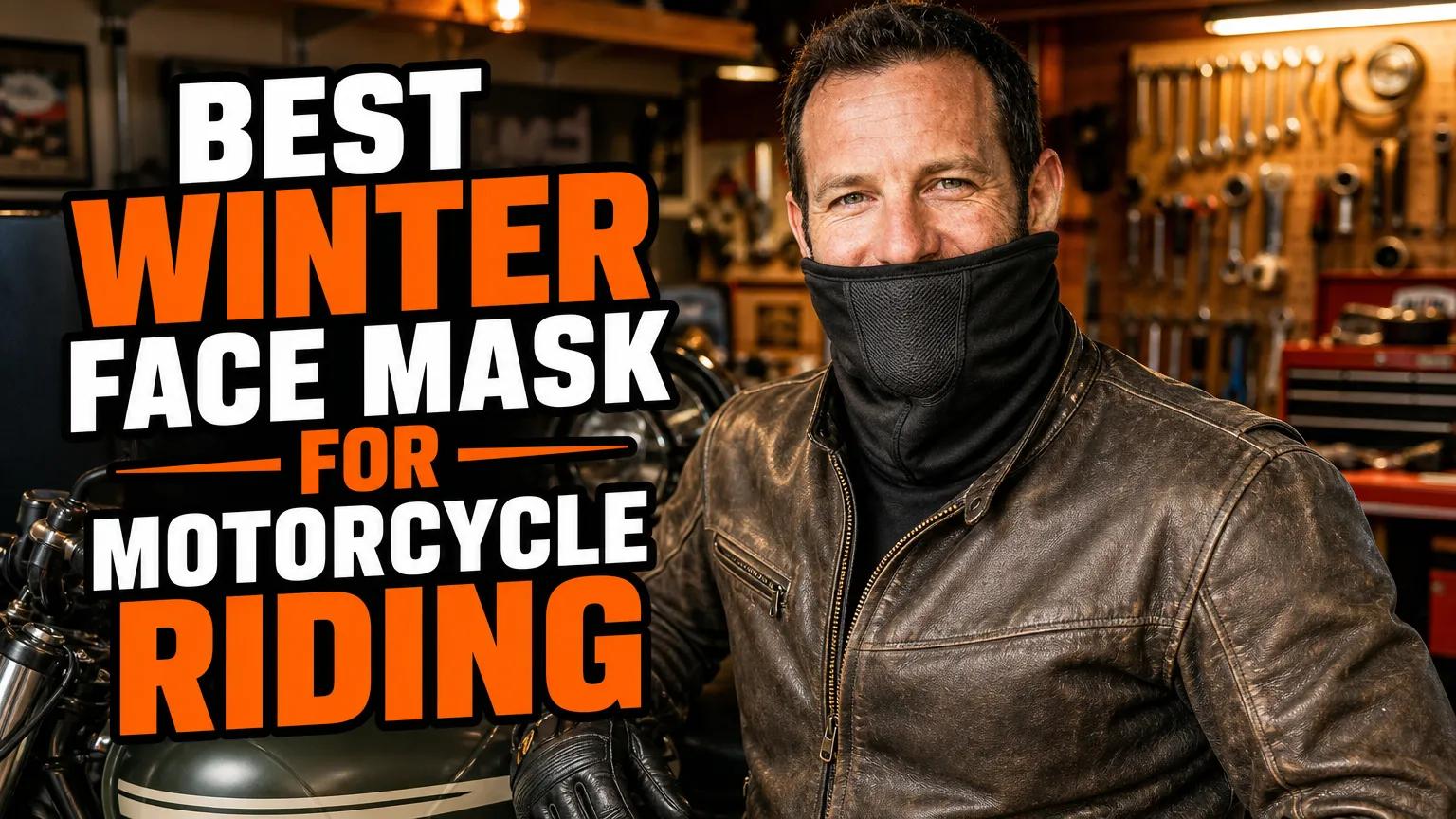
Cold wind can turn a pleasant ride into an uncomfortable one fast, especially when it finds the gap between my helmet and jacket. I look for the best winter face mask for motorcycle riding by balancing warmth with breathability, a secure helmet fit and clear vision. A thick mask is not automatically a better one: if it bunches up or sends warm breath onto my visor, it can make a ride less safe and less enjoyable.
Below, I compare seven real balaclavas and face coverings I’d consider for different kinds of winter riding. I focus on their intended materials and features, then explain what I’d check for fit and fogging before choosing one.
- I’d choose the KLIM Arctic Balaclava when blocking wind is my top priority.
- I’d pick the Dainese D-Core Balaclava for a close-fitting, lightweight layer.
- I’d try the Seirus Magnemask Combo Clava if I want an adjustable face covering.
- I always test mask fit with my helmet and check that my breath does not fog my visor.
How I choose a face covering for cold-weather riding
When I compare masks, I start with the part of my face and neck that my helmet leaves exposed. I want coverage that stays in place under my helmet and jacket without putting pressure on my ears, bunching at my forehead or making the chin strap uncomfortable.
Next, I consider wind protection and breathability together. A wind-blocking panel can help on an exposed road, but I still need to breathe easily. I also check how the mask sits around my nose: if exhaled air travels up toward my visor, fogging may become a bigger problem than cold cheeks.
I treat prices as approximate, since retailers and seasons affect what I pay. Before ordering, I check the current model details, sizing guidance and care instructions from the brand. Most importantly, I test the mask while stationary with my helmet on. If it affects my vision, breathing or helmet fit, I don’t ride in it.
1. KLIM Arctic Balaclava — My wind-blocking pick
When my main concern is wind chill, I look closely at the KLIM Arctic Balaclava. KLIM builds this balaclava around a GORE WINDSTOPPER fabric component, a useful feature for riders who spend time in cold air at highway speeds. The design aims to shield exposed areas without requiring me to pile a bulky scarf under my helmet.
Why I’d choose it
I’d consider the KLIM Arctic Balaclava for commuting, touring and other rides where wind protection matters more than having the thinnest possible layer. Its close-fitting balaclava shape covers the head and neck, which helps me reduce drafts around the helmet opening and jacket collar. I’d expect to pay roughly $50–$70, depending on the retailer and season.
My fitting check would be especially careful around the face opening and neck. I want the fabric to lie smoothly beneath my helmet, without pushing against my nose or interfering with the chin strap. I’d also make sure its coverage doesn’t direct my breath toward the visor; even a warm, windproof mask is a poor trade if it clouds my view.
2. REV’IT! Freeze 2 WB Balaclava — My option for focused wind protection
The REV’IT! Freeze 2 WB Balaclava is a winter-oriented option I’d consider when I want a dedicated wind-blocking layer rather than a basic fabric tube. The “WB” refers to its WindBarrier construction, which is intended to reduce wind penetration in covered areas. Stretch fabric helps it sit close to the head, a quality I value under a snug-fitting motorcycle helmet.
What I like about the design
I’d put the REV’IT! Freeze 2 WB on my shortlist for cool-weather commutes and longer rides where cold airflow around my cheeks and neck is distracting. Its balaclava shape provides more coverage than a neck gaiter alone, while its close fit should help limit folds beneath helmet padding. Prices commonly fall around $40–$60, although I’d check current listings before buying.
For me, the key test is whether the WindBarrier area lands where I need it without making the mask feel stiff or restrictive. I’d try it on with my own helmet and jacket, then turn my head as I would when checking traffic. If the fabric pulls, shifts or nudges my helmet, I’d try another size or style.
3. Dainese D-Core Balaclava — My lightweight layering pick
If I want a closer, lighter layer rather than a heavy winter mask, I’d consider the Dainese D-Core Balaclava. Dainese’s D-Core range uses Dryarn fabric, a lightweight technical fiber designed for moisture management and comfort against the skin. This model suits riders who want head and neck coverage without adding a thick layer beneath helmet padding.
Best for a low-bulk fit
I’d reach for the Dainese D-Core Balaclava on chilly days when I want to limit drafts but still keep my layers streamlined. Its lighter construction can be useful under a close-fitting full-face helmet, and it may also work as a base layer beneath a warmer outer covering. I’d expect a price in the neighborhood of $30–$45, depending on availability.
I wouldn’t choose the D-Core Balaclava expecting the same degree of wind blocking as a mask with a dedicated windproof panel. Instead, I see its appeal in breathability and low bulk. I’d pair it with a jacket that seals well at the neck, then add a separate wind-blocking layer if my route or weather calls for more protection.
4. 509 F.A.S.T. 2.0 Balaclava — My choice for extended face coverage
The 509 F.A.S.T. 2.0 Balaclava comes from a brand known for cold-weather riding and powersports gear. I’d consider it when I want a balaclava designed with winter use in mind and coverage that extends over the face as well as the neck. Its more protective shape makes it a candidate for exposed rides, provided I can get a comfortable fit beneath my helmet.
What I’d check before riding
With the 509 F.A.S.T. 2.0 Balaclava, I’d focus on the opening around my eyes and nose, along with how the lower section sits against my jacket collar. A secure fit matters: fabric that slides down or creeps toward my eyes is distracting, while an overly tight fit can make a long ride uncomfortable. I’d budget roughly $35–$50, with actual prices varying by retailer.
I’d also check the product’s current specifications for the exact fabric and construction details, since features can differ between versions and sellers. Before taking it on the road, I’d wear it with my helmet and check whether airflow from my nose or mouth fogs the visor. For me, that simple test is essential with any full-face covering.
5. Oxford ChillOut Balaclava — My practical everyday option
Oxford’s ChillOut Balaclava is a practical option I’d look at for regular cold-weather use. The ChillOut name is associated with Oxford’s range of wind-resistant riding accessories, and this balaclava is designed to add coverage under riding gear. I’d consider it for daily trips when I want a dedicated motorcycle accessory without jumping straight to a high-priced technical layer.
Where I think it fits best
I’d shortlist the Oxford ChillOut Balaclava for commuting and general road riding, especially if I want to cover the gap between my helmet and jacket. I’d expect it to cost around $25–$40, though I’d confirm the current price and product details before buying. For me, value depends on whether the mask fits comfortably and stays put, not just the number on the price tag.
I’d try the Oxford ChillOut Balaclava with my usual helmet liner and collar arrangement. That helps me catch a common issue: too many layers can bunch beneath the chin or lift the helmet slightly. I’d also check that the mask doesn’t cover or obstruct helmet vents, since airflow can help reduce moisture and visor fogging.
6. Seirus Magnemask Combo Clava — My adjustable-coverage pick
The Seirus Magnemask Combo Clava stands out to me for its combination design: it brings a balaclava together with a face mask that uses a magnetic attachment system. That setup can make it easier to adjust face coverage as conditions change. I’d consider it if I want the option to move the face covering rather than wear a single fixed panel all ride.
Why adjustability can help
I like the idea of being able to alter coverage when I stop, warm up or need to change how the mask sits around my nose. The Seirus Magnemask Combo Clava is marketed as a cold-weather accessory, but I’d still pay close attention to how the magnets and fabric sit beneath my helmet. A feature is only useful if it stays comfortable and doesn’t shift into my field of vision.
I’d expect to see the Seirus Magnemask Combo Clava priced at approximately $40–$60, depending on the version and seller. I’d check the current product description for its materials and care details, then practice adjusting the face panel with gloves on. On the bike, I want to make any fit changes while stopped, not while I’m moving through traffic.
7. BUFF ThermoNet Balaclava — My lightweight, breathable alternative
BUFF’s ThermoNet Balaclava is a lightweight cold-weather layer I’d consider when I want a familiar outdoor accessory in a helmet-friendly shape. BUFF’s ThermoNet fabric is designed to provide warmth without the bulk of a thick fleece layer. It isn’t a motorcycle-specific protective product, but I can see its appeal as a comfortable under-helmet layer for moderate winter conditions.
Best for layering and milder cold
I’d choose the BUFF ThermoNet Balaclava when I want flexible coverage and low bulk, rather than maximum wind blocking. Its lighter construction may suit shorter rides or a setup where my helmet and jacket already seal well. I’d typically look for it in the $25–$40 range, but I’d confirm the exact style and current price because BUFF offers several products with similar names.
I’d be cautious about relying on the BUFF ThermoNet Balaclava alone in very cold, fast-moving air. A breathable thermal fabric and a windproof face panel do different jobs, and I’d match the layer to my route and conditions. I’d also test it for visor fogging and make sure its seams don’t land on pressure points beneath my helmet.
How I avoid fogging and fit problems
Before I ride, I put on the face mask, fasten my helmet as usual and check the fit with the visor down. I breathe normally for a minute and watch for fog. If warm air is escaping upward, I adjust the mask or choose a model that leaves a better breathing path; I never accept a fogged visor as a minor inconvenience.
I also check that my mask doesn’t alter how the helmet sits. It shouldn’t push the helmet upward, crowd my ears or interfere with the chin strap. I move my jaw, turn my head and check over each shoulder to make sure the fabric stays in place and my range of motion feels normal.
For warmth, I focus on closing gaps rather than adding unlimited layers. A jacket collar or neck tube can complement a balaclava, but I make sure the combination doesn’t bunch beneath the helmet or restrict movement. If the day gets warmer, I stop somewhere safe before changing my setup.
My final picks for winter rides
For strong wind protection, I’d start by comparing the KLIM Arctic Balaclava and REV’IT! Freeze 2 WB Balaclava. For a lighter layer, I’d look at the Dainese D-Core Balaclava or BUFF ThermoNet Balaclava, while the Seirus Magnemask Combo Clava appeals to me if adjustable coverage is a priority.
The right choice depends on my helmet, riding position, local weather and how easily my visor fogs. I’d check the current product specifications, try the mask on with my full riding setup and make sure I can breathe, see and move comfortably. That’s the best way I know to find a winter face covering I’ll actually want to wear.
Frequently Asked Questions
What is the warmest type of face mask for motorcycle riding?
I look for a wind-blocking face panel, warm coverage over the neck and cheeks, and a breathable fit. A windproof balaclava such as the KLIM Arctic is a strong option for exposed, cold rides.
How do I stop a motorcycle face mask from fogging my visor?
I keep the mask below the nose or use a breathing panel designed to direct exhaled air downward. I also check that my helmet vents are open and that the mask does not interfere with the visor seal.
Should a motorcycle balaclava cover my nose?
I cover my nose only if the mask fits securely and lets me breathe comfortably without directing warm air onto my visor. If it fogs my view or shifts while riding, I adjust it or choose a different design.
Can I wear a balaclava under any motorcycle helmet?
I check the fit with my own helmet before riding. A balaclava should not create pressure points, interfere with the cheek pads or chin strap, or reduce my ability to see and breathe freely.

Related Articles

5 Motorcycle Wrist Braces and Guards I’d Choose for Confident Riding
Compare five wrist braces and guards I’d consider for street and dirt riding, with fit, support, glove compatibility, and buying…
Jake Miller
11 min read

7 Under Armour Base Layers I’d Choose for Comfortable Motorcycle Rides
Discover seven Under Armour base layers for hot and cold rides, plus my fit tips and safety advice for wearing…
Jake Miller
10 min read

8 Best Motorcycle Base Layers for Staying Warm on Cold Rides
Compare eight rider-ready thermal base layers, from merino to synthetic options, with fit, warmth, layering advice, and picks for cold-weather…
Jake Miller
11 min read