
8 Best Women’s Casual Motorcycle Riding Shoes I Actually Wear Off the Bike
 Jake Miller
10 min read
Jake Miller
10 min read
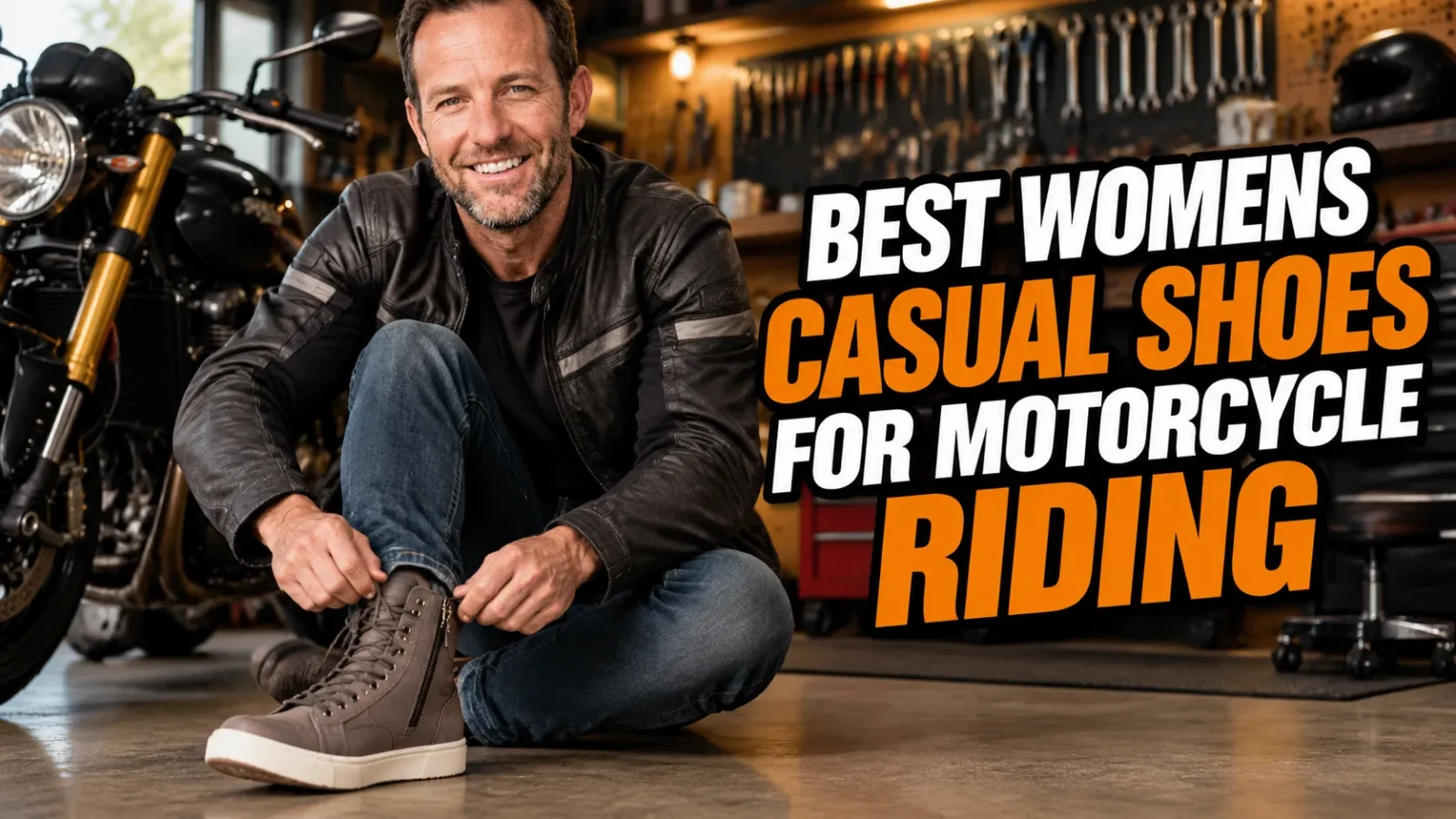
I still remember the day I went down at about 25 mph in a pair of canvas skate shoes. My jacket did its job, my gloves did their job, and my left foot got chewed up because the shoe I was wearing had about as much structure as a sock. That crash is the reason I started hunting for the best women’s casual shoes for motorcycle riding, and why I now own far too many pairs.
Here’s the thing I learned the hard way: “casual” and “unprotected” are not the same thing. There are genuinely good-looking lace-up riding shoes out there that pass CE testing, hide ankle armor under normal-looking leather, and let you walk into a coffee shop without clomping around like a stormtrooper.
I’ve put thousands of miles on the pairs below, on everything from a 250cc scrambler to a big touring bike. If you’re completely new to this, start with my Ultimate Guide to Motorcycle Boots so you understand the standards before you spend money. Then come back here for the actual picks.
- My overall pick is the Alpinestars Stella J-6 Waterproof — it looks like a skate shoe and protects like real gear.
- For hot weather, the Dainese Atipica Air is the most breathable women’s specific option I’ve worn.
- Budget riders should look at the Alpinestars Stella Sektor Waterproof at roughly $130 to $150.
- Every shoe on this list is CE certified to EN 13634 — never buy a “riding shoe” that isn’t.
- Fit matters more than brand for women: look for women’s specific lasts, and size up if you’re between sizes.
What I Actually Look For in a Casual Riding Shoe
After enough bad purchases, I stopped caring about how a shoe looks in photos and started checking four things in this order. The first is CE certification to EN 13634, the European standard for motorcycle footwear. If a shoe doesn’t carry it, it isn’t riding gear, no matter what the marketing says.
The second is ankle coverage. A shoe that stops below the ankle bone gives you almost nothing in a slide. I want at least a moulded ankle insert, ideally a dual-density one.
The third is a reinforced toe box and heel counter. Kicking a curb at walking speed hurts enough — hitting one at 40 mph without a reinforced toe is a different conversation.
The fourth is grip. A soft, patternless fashion sole slides on wet pavement at stoplights. I look for a proper rubber compound with real tread blocks. For more on how this compares to full-height footwear, my breakdown of the best motorcycle riding boots covers the trade-offs in detail.
1. Alpinestars Stella J-6 Waterproof — Best Overall
If I had to keep one pair and sell everything else, it would be the Stella J-6. It’s the women’s fit version of Alpinestars’ classic J-6, a shoe that has been the default “looks normal, actually protects” pick for years, and the Stella last genuinely fits my foot better through the heel and instep.
The upper is full-grain leather backed by a Drystar waterproof membrane, so my feet stay dry in a downpour and the leather doesn’t soak through and get heavy. Inside there’s a moulded dual-density ankle protector on both sides, a reinforced toe box, and a stiffened heel counter.
How it rides
The rubber sole has a decent tread pattern that grips pegs well and doesn’t slip when I put a foot down on oil-slick asphalt. Break-in took me about a week of daily wear, and after that it felt like a broken-in sneaker.
It’s CE certified to EN 13634, and expect to pay roughly $180 to $200. One note: it runs a touch narrow, so if you have wide feet, go up half a size.
2. TCX Street 3 Lady WP — Best Everyday Leather Sneaker
The TCX Street 3 WP is the pair I recommend to friends who want something that looks like a plain leather sneaker. The women’s version uses a narrower last, and TCX has been building riding footwear for so long that the shape just works.
You get a full-grain leather and suede upper, a waterproof lining, reinforced toe and heel counters, and moulded ankle protection. It’s CE certified, and the sole is a stiffer, grippier compound than anything you’d find on a fashion shoe.
Fit and sizing
My experience is that the Street 3 runs true to size but takes a solid two weeks to soften up at the flex point over the toes. That stiffness is the protection doing its job, not a defect.
Price lands around $170 to $190. It’s my go-to for commuting because it looks fine with jeans and doesn’t scream “motorcycle” when I walk into an office.
3. Dainese Atipica Air — Best Hot-Weather Pick
Summer riding is where most “casual” shoes fail me — leather plus a waterproof membrane equals swamp foot in August. The Dainese Atipica Air was built specifically for women and specifically for heat, with large ventilated mesh panels stitched into a leather structure.
Air moves through it noticeably, even at low speeds. That said, it still keeps a reinforced toe, a stiffened heel, and ankle protection, and it carries CE certification. It is not waterproof, which is the whole point.
It’s around $160 to $180. I wear mine from May through September and switch to the J-6 once the rain returns.
4. Alpinestars Stella Sektor Waterproof — Best Budget Pick
When someone tells me they can’t spend $200 on shoes, this is what I point them to. The Stella Sektor Waterproof gives you a waterproof membrane, a reinforced toe and heel, and TPU ankle protection for roughly $130 to $150.
The upper is a mix of microfiber and leather rather than full-grain, so it won’t age as beautifully as the J-6. But the protection is real and CE certified, and honestly that’s what I care about when the budget is tight.
It has a slimmer, sportier profile than the rest of this list, which makes it a good match if you ride a naked bike or a sportier machine. Sizing runs true in my experience.
5. TCX Dartwood WP — Best Boot-Height Casual Option
Sometimes I want more than a shoe but I still don’t want to look like I’m heading to a track day. The Dartwood WP is TCX’s vintage-styled answer: full-grain leather, a waterproof membrane, and a shaft that comes up higher than a sneaker without going full touring boot.
In my experience it’s the most versatile cold-weather pick here. I’ve worn it through 40-degree mornings with wool socks and stayed comfortable, and the leather has aged into a nice patina after two seasons. It’s CE certified, with reinforced toe and heel plus ankle inserts.
Expect around $190 to $210. If you ride in a wet climate and want one pair to do everything, this is a strong contender.
6. XPD X-Nashville — Best Heritage Look
If your bike is a café racer or a retro standard, the XPD X-Nashville is the shoe that matches the vibe without sacrificing protection. It’s a lace-up with a vintage leather finish, and the laces are the one thing I’d flag — double knot them and tuck the loops, or they’ll find your shift lever.
Underneath the styling you get CE certification, a reinforced toe and heel, and ankle protection. The sole is a chunky rubber lug pattern that grips well on pegs.
Around $170 to $190. I’d also point out that lace-up boots in general are a category worth understanding — if you like this style, my piece on the best combat boots for motorcycle riding covers similar silhouettes with more ankle coverage.
7. Icon 1000 Slabtown WP — Best Urban Street Boot
The Slabtown is closer to a short boot than a sneaker, and that’s exactly why I keep a pair. It’s full-grain leather with a waterproof membrane, a reinforced toe box, and a stiff, oil-resistant sole that handles gravel parking lots and greasy gas station pavement without drama.
It’s heavier than everything else on this list, so it’s not what I reach for on a 300-mile day. For city riding, it’s my pick when the weather is ugly and I want my ankles covered.
It’s CE certified and runs about $180 to $200. Sizing is generous — I went a half size down.
8. Stylmartin Rocket — Best Premium Italian Leather
Stylmartin is the brand I reach for when I want a riding shoe that looks genuinely handsome off the bike. The Rocket is handmade in Italy from full-grain leather, with a waterproof version available, and it’s CE certified with reinforced toe and heel protection and a slip-resistant sole.
The finish is a level above the mass-market brands. Stitching is even, the leather has real character, and mine have held up beautifully through two wet winters with nothing more than an occasional conditioner wipe.
You’ll pay for it — roughly $200 to $240. It’s the pair I wear when I’m riding somewhere nice and don’t want to carry a second set of shoes.
Fit Notes for Women Buying Riding Shoes
Buying women’s riding footwear online is genuinely annoying, so here’s what I’ve learned. First, always check whether the model has a women’s specific last or is just a small men’s size. The Stella and Atipica lines are genuinely built for narrower feet; a downsized unisex shoe usually isn’t.
Second, measure your foot at the end of the day and compare it to the brand’s own chart, not a generic conversion. Third, remember that a slightly snug fit that softens up is better than a loose fit that stays loose — a shoe that rotates on your foot in a crash is a shoe that isn’t protecting you.
If you want deeper guidance on sizing and women’s specific models, my guide to the best motorcycle riding boots for women walks through it step by step.
When I Stop Wearing Casual Shoes and Switch to Real Boots
Casual shoes are fantastic for commuting, city riding, and short trips. They are not what I wear for a 2,000-mile tour or a technical off-road route.
If you’re heading somewhere with rocks, water crossings, and long days in the saddle, the extra shaft height and structure of a proper adventure boot is worth the bulk. My roundup of the Best Motorcycle Boots for Adventure Riding covers the ones I trust on that kind of trip.
Plenty of riders also ask me about work and utility boots, since they’re sturdy, cheap, and easy to find. Some of them genuinely hold up. I’ve written about which ones work and which ones absolutely don’t in my guide to the best work boots for motorcycle riding, and the short version is that oil-resistant soles and steel toes aren’t the same thing as abrasion resistance.
My Final Verdict
If you’re buying one pair and one pair only, get the Alpinestars Stella J-6 Waterproof. It’s the best balance of looks, protection, weather resistance, and a genuinely women’s specific fit that I’ve found in years of riding.
If you ride in brutal summer heat, go with the Dainese Atipica Air. If you’re on a tight budget and just need something safe, the Alpinestars Stella Sektor Waterproof will do the job without excuses.
Whatever you choose, promise me one thing: leave the canvas sneakers at home. Your feet are the first thing to hit the ground, and they deserve gear that was actually built for it.
Frequently Asked Questions
Can I just wear regular sneakers on a motorcycle?
I did that for years and I regret it. Canvas or fashion sneakers have no abrasion resistance, no ankle armor, and no CE certification, so they can shred or slide off in a low side. If you want the sneaker look, pick a CE certified riding shoe instead.
Are women’s motorcycle shoes actually different from men’s?
Yes, and it matters. Women’s specific models like the Alpinestars Stella line use a narrower heel, shorter instep and a different last, which means better control on the pegs and less sliding around inside the shoe. You can read more in my guide to the best motorcycle riding boots for women.
How much should I budget for a good pair?
Expect roughly $130 to $220 for a properly certified casual riding shoe. The sub $100 options I have tried almost always skipped ankle armor or abrasion rated materials, which is exactly where you do not want to save money.
Are laces dangerous on a motorcycle?
They can be. Loose laces love to wrap around a shift lever or peg. I always double knot mine and tuck the loops under the tongue or inside the boot shaft before I ride.

Related Articles

10 Best Tennis Shoes for Motorcycle Riding: Honest Picks From a Rider Who Tried Them
I tested the best tennis shoes for motorcycle riding to find out what actually works behind the bars, plus the…
Jake Miller
10 min read

11 Best Footwear Options for Motorcycle Riding, Ranked by a Rider Who’s Worn Them All
I've put thousands of miles on moto boots. Here are the 11 best footwear options for motorcycle riding, from track-ready…
Jake Miller
10 min read

10 Best Non Riding Shoes That Actually Work on a Motorcycle
I have ridden thousands of miles in shoes that were never designed for a bike. Here are the best non…
Jake Miller
13 min read