
The Ultimate Guide to Motorcycle Boots: What I Wish I Knew Before My First Pair
 Jake Miller
11 min read
Jake Miller
11 min read
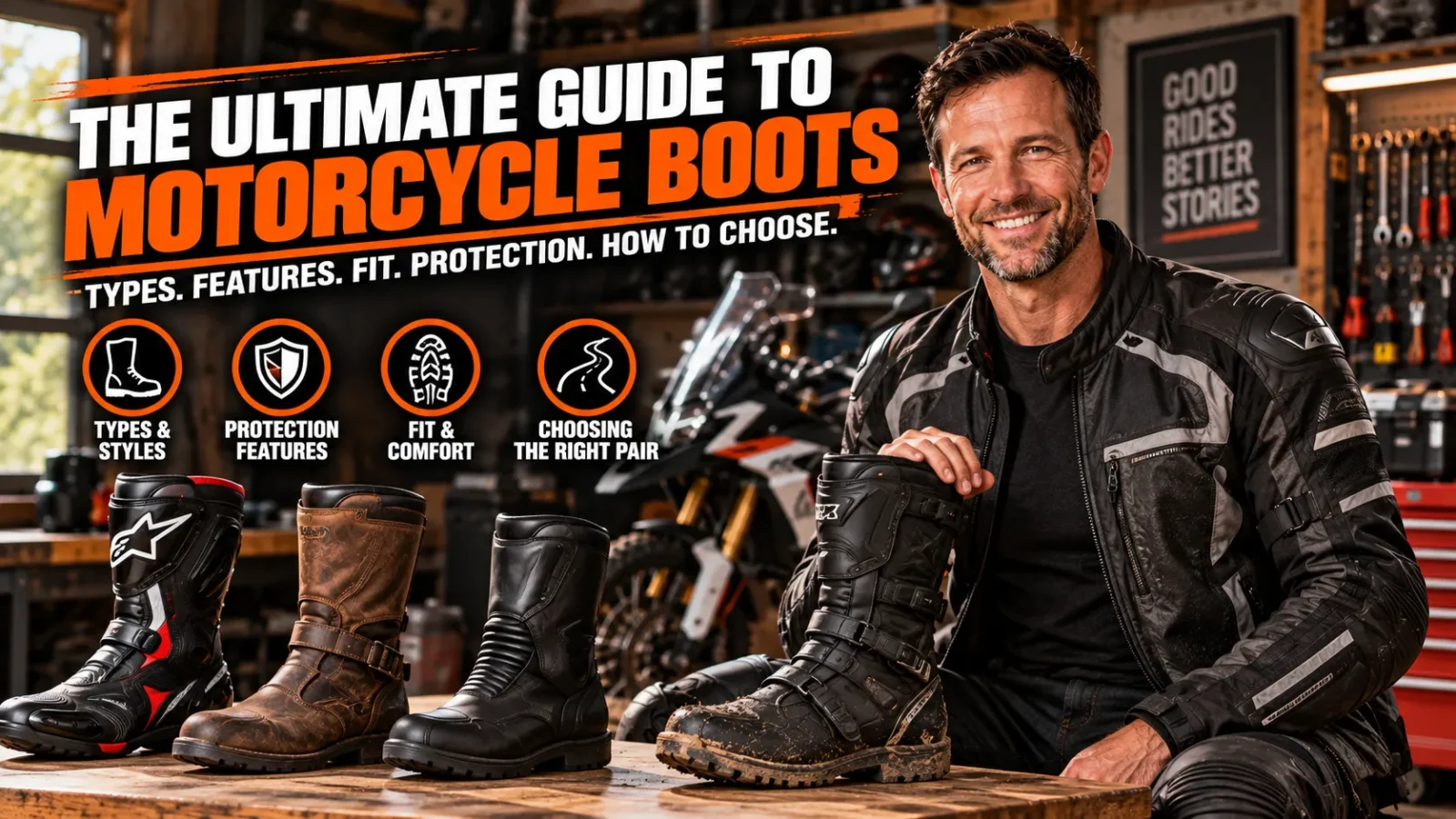
I’ve dumped my bike at low speed exactly twice in my riding career, and both times my boots saved my ankles from something a lot worse than a bruised ego. That’s when motorcycle boots stopped being “just gear” to me and became non-negotiable equipment.
Over the years I’ve cycled through cruiser boots, adventure touring boots, sport boots, and even a pair of stylish cafe racer boots that looked great but barely protected anything. I’ve made mistakes so you don’t have to.
This guide is everything I’ve learned from thousands of miles, sweaty summer commutes, freezing winter rides, and yes, a couple of unplanned trips across the pavement.
- The right motorcycle boots protect your ankles, shins, and feet from impact, abrasion, and crushing forces that regular shoes simply can’t handle.
- Match your boot style to your riding style—sport boots for track days, touring boots for long hauls, cruiser boots for laid-back rides.
- Fit matters more than looks; a boot that’s too loose or too tight can actually make you less safe.
- Look for reinforced ankle cups, abrasion-resistant materials, and oil-resistant soles as non-negotiable safety features.
- Good boots aren’t cheap, but I’ve found that investing once beats replacing a bad pair every season.
Why Motorcycle Boots Aren’t Just Another Riding Accessory
I used to think any sturdy boot would do. I rode in work boots for almost a year before I actually understood what I was missing.
Regular boots don’t have reinforced ankle protection, they slide off the pegs, and the soles get slick with even a little rain. None of that matters until the moment it really does.
Motorcycle boots are engineered specifically for the forces involved in riding and crashing. That means ankle support that resists twisting, materials that resist tearing against asphalt, and soles that grip pegs and pavement in wet or dry conditions.
What Actually Happens to Your Feet in a Crash
I know this sounds dramatic, but it’s worth understanding. In a slide, your foot and ankle can twist, get crushed under the bike, or scrape against the road at highway speeds.
Regular sneakers offer basically zero protection against any of that. I’ve seen riders end up with severe ankle fractures from crashes that would’ve been a non-issue with the right boots on.
That’s the whole point of this guide—helping you avoid learning these lessons the hard way, like I did.
The Main Types of Motorcycle Boots (and Which One Fits Your Riding Style)
Not all motorcycle boots are built the same, and honestly, that’s a good thing. Your riding style should dictate what’s on your feet.
Sport and Racing Boots
These are the boots you see on track days and sport bike riders. I wore a pair of these for two seasons on a sportbike, and they’re built like tank armor for your feet.
They typically feature hard plastic sliders, toe sliders, and heavy ankle bracing. They’re stiff, they’re serious, and honestly, they’re overkill for a casual cruiser ride.
My take: if you’re doing track days or aggressive street riding, these are worth every penny. For anything else, they might feel like overkill.
Touring Boots
Touring boots are my personal favorite for long-distance rides. I’ve put over 3,000 miles on a single pair during a cross-country trip, and my feet never once complained.
They balance protection with comfort, usually include waterproofing, and often have a more “normal shoe” look so you can walk into a gas station without looking like you’re heading to a race.
They tend to be taller than sport boots too, which gives extra coverage for your shins in bad weather or debris.
Cruiser and Casual Riding Boots
If you’re riding a cruiser or just commuting around town, cruiser boots offer a nice middle ground. They usually look more like classic boots—think leather, minimal external armor—but still have reinforced soles and some ankle protection.
I own a pair of these for weekend rides, and honestly, I get compliments on them more than any other boot I own.
Adventure and Off-Road Boots
These are the heavy-duty options built for dirt, gravel, and unpredictable terrain. If you ride an adventure bike or do any off-roading, you’ll want maximum ankle and shin protection.
They tend to be bulkier and stiffer than street boots, which takes some getting used to, but the protection is worth the adjustment period.
Quick Comparison
- Sport boots: maximum protection, stiffest feel, best for aggressive riding
- Touring boots: balanced comfort and protection, great for long rides
- Cruiser boots: stylish, comfortable, moderate protection
- Adventure boots: heavy-duty protection for off-road and mixed terrain
What to Actually Look for When Buying Motorcycle Boots
I’ve bought boots based on looks alone before, and I regretted it within a month. Here’s what I actually pay attention to now.
Ankle and Shin Protection
Look for reinforced ankle cups—usually hard plastic or composite inserts sewn into the boot around the ankle bone. This is the single most important safety feature in my opinion.
Some higher-end boots also include shin plates or shin guards built right into the design. If you ride aggressively or on a sportbike, I’d consider this a must-have, not a nice-to-have.
Material Matters
Full-grain leather is still my go-to for abrasion resistance. It’s tough, it molds to your foot over time, and it holds up incredibly well in a slide.
That said, I’ve also tried synthetic and textile boots with good reviews for abrasion resistance, and some perform nearly as well while being lighter and more breathable.
My honest opinion: if budget allows, go leather for the abrasion resistance. If you’re riding somewhere hot and humid, a quality textile boot might actually serve you better day-to-day.
Soles That Actually Grip
This one’s easy to overlook, but I learned it matters a lot after nearly slipping off my pegs in the rain with a cheap pair of boots. Look for oil-resistant, non-slip rubber soles specifically designed for motorcycle use.
Good soles also have a slight heel and enough flex to shift gears comfortably without feeling clunky.
Closure Systems
Zippers, buckles, laces, or a combination—each has trade-offs. I personally prefer a side zipper with a velcro strap over the top for quick on-and-off with a secure fit.
Pure lace-up boots look great but can be a hassle if you need to get your boots on quickly before a ride.
Height and Coverage
Taller boots protect more of your shin and calf but can feel restrictive, especially if you’re walking around a lot off the bike. Shorter boots are more comfortable off-bike but leave more skin exposed.
I generally recommend boots that at minimum cover your ankle bone completely, with taller options being ideal for touring and off-road riding.
Getting the Fit Right (This Is Where Most People Mess Up)
I cannot stress this enough: a poorly fitting motorcycle boot is almost as dangerous as no boot at all. Too loose, and your foot slides around during impact. Too tight, and you lose circulation and comfort on long rides.
How I Test Fit Every Time
I always try boots on in the afternoon when my feet are slightly swollen from the day, wearing the actual socks I ride in. This gives a much more realistic fit than trying them on first thing in the morning.
Your toes should have a little wiggle room, but your heel shouldn’t lift when you walk. If your heel moves, that boot isn’t the right size, no matter how good it looks.
I also always bend my knees and simulate a riding position in the store. If there’s pressure or pinching at the shin or ankle, that’s an immediate no from me.
Break-In Period: What’s Normal and What’s Not
Leather boots especially need a break-in period. I usually wear new boots around the house for a few hours before committing to a long ride in them.
Some stiffness is normal. Sharp pain, blistering, or numbness is not, and that usually means the boots are the wrong size or shape for your foot.
Caring for Your Motorcycle Boots So They Last Years, Not Months
I’ve had cheap boots fall apart in under a year, and I’ve had quality leather boots last me almost a decade with the right care. The difference isn’t always the boots themselves—it’s how you treat them.
Cleaning and Conditioning
I clean my leather boots after any ride in the rain or mud, and I condition them every couple of months to keep the leather from drying out and cracking. A good leather conditioner goes a long way.
For textile and synthetic boots, a simple wipe-down and occasional waterproofing spray usually does the trick.
Storage Tips
I never toss my boots in a pile in the garage. Boot trees or even just stuffing them with newspaper helps maintain their shape, especially important for taller touring and off-road boots.
Keeping them away from direct sunlight and extreme heat also helps prevent the material from drying out or warping over time.
Knowing When to Replace Them
Even the best motorcycle boots don’t last forever. I replace mine if the soles are worn smooth, if there’s any structural damage, or automatically after any crash, regardless of how they look on the outside.
Internal armor and padding can compress or crack from an impact even if the exterior leather looks perfectly fine.
Common Mistakes I’ve Made (So You Don’t Have To)
Buying for Looks Over Function
I’ve owned boots that looked incredible in photos but offered almost no real ankle protection. Looks matter, sure, but I now always check the safety features first and the style second.
Ignoring Weather Conditions
I once rode two hours in a downpour wearing non-waterproof boots. My feet were soaked, freezing, and honestly, it made the whole ride miserable and a little unsafe since I couldn’t feel the pegs properly.
Now I always check for waterproofing if I ride in unpredictable climates, which, let’s be honest, is most places.
Skipping the Try-On
Buying motorcycle boots online without ever trying a similar pair in person is risky. Sizing varies wildly between brands, and what fits perfectly in one brand might be completely wrong in another.
I always recommend trying boots on in a store first, even if you plan to buy online afterward for a better price.
My Personal Recommendations by Riding Style
For Daily Commuters
I’d lean toward a cruiser-style or short touring boot with a comfortable sole for walking around off the bike. You want something you can wear into the office or store without looking out of place.
For Long-Distance Touring
Go with a proper touring boot that includes waterproofing and good ventilation. Comfort over long hours matters just as much as protection here.
For Track Days and Sport Riding
Don’t skimp here. Sport or racing boots with sliders and heavy ankle protection are worth the investment if you’re pushing your bike and yourself at speed.
For Off-Road and Adventure Riding
Invest in a proper adventure boot with reinforced shin and ankle protection. Trust me, you’ll be grateful for it the first time you catch a rock or root the wrong way.
Final Thoughts From the Road
I know motorcycle boots aren’t the most exciting gear purchase compared to a new helmet or jacket, but I genuinely believe they’re one of the most important. Your feet and ankles take a beating in a crash, and the right boots make all the difference.
Take your time, try things on, and don’t be afraid to spend a little more for quality. My own boots have paid for themselves many times over in comfort, durability, and honestly, peace of mind every time I swing a leg over my bike.
Ride safe, and take care of your feet—they’re the only ones you’ve got.
Frequently Asked Questions
Do I really need motorcycle-specific boots, or will hiking boots work?
Hiking boots lack ankle armor, oil-resistant soles, and abrasion-resistant materials, so they won’t protect you in a slide the way real motorcycle boots will. I’ve tested both, and the difference in crash protection is huge.
How do I know if my motorcycle boots fit correctly?
A good fit means your toes barely brush the front, your heel doesn’t lift when you walk, and there’s no pressure on your shin when you’re in a riding position. Always try boots on with the socks you’ll actually ride in.
Are waterproof motorcycle boots worth the extra cost?
If you ride in unpredictable weather or commute year-round, yes. I learned this the hard way after a soggy commute ruined a non-waterproof pair within a season.
How often should I replace my motorcycle boots?
I replace mine every 3-5 years depending on wear, sole tread, and whether they’ve been in a crash. Any impact or road contact means it’s time for a new pair, even if they look fine on the outside.

Related Articles

9 Best Cowboy Boots for Motorcycle Riding You Can Actually Ride and Walk In
I break down the 9 best cowboy boots for motorcycle riding, covering heel height, shifter wear, ankle support, and comfort…
Jake Miller
11 min read

9 Best Motorcycle Boots for Hiking That Actually Work Off the Bike
I tested and researched the top hybrid motorcycle boots for hiking. Here are 9 real picks that protect on the…
Jake Miller
11 min read

9 Best Non-Motorcycle Boots for Cruisers That Still Ride Right
Not into moto-specific boots? I break down 9 real, non-motorcycle boots that hold up on cruisers—tough leather, good grip, and…
Jake Miller
13 min read