
7 Best Motorcycle Goggles for Cruiser Riders — My Real-World Picks for Wind, Glare, and Bugs
 Jake Miller
14 min read
Jake Miller
14 min read
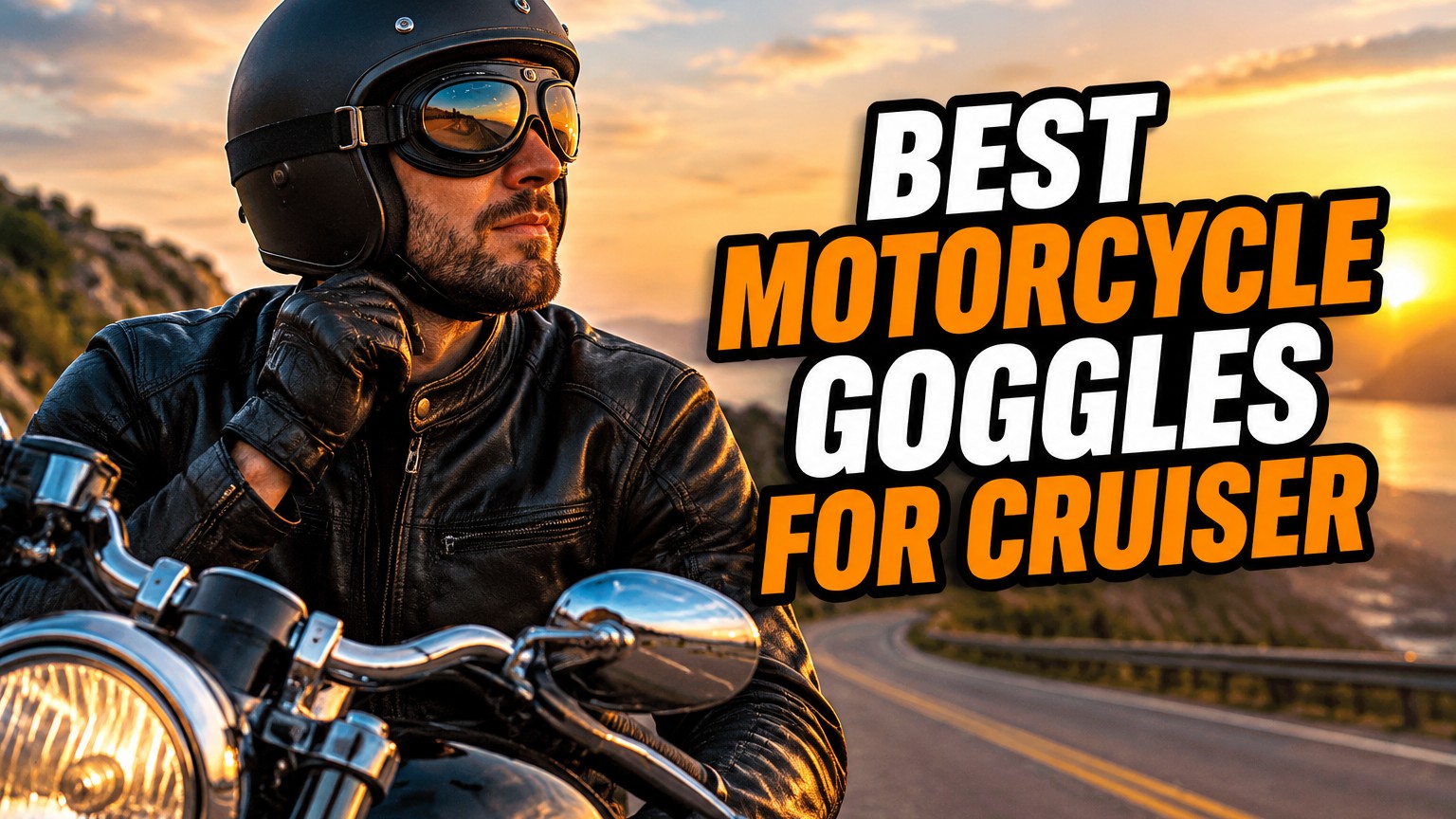
I’ve spent the better part of a decade riding cruisers — unfaired V-twins, bobbers, a couple of baggers, and one truly miserable rigid frame that rattled my fillings loose on every ride. And if there’s one piece of gear I’ve cycled through more than any other, it’s goggles.
Helmets I keep for years. Jackets I wear until the zipper gives up. But goggles? I’ve burned through cheap pairs that fogged solid in the first ten minutes, tinted lenses that turned night riding into a genuinely dangerous game, and “universal fit” straps that flapped so hard at 70 mph I thought I’d lose an eye to my own eyewear.
So this list is the result of that trial and error. Every pair below is a real product I’ve ridden with, or that I’ve watched friends put serious cruiser miles on. No invented brand names, no vague “the budget option” filler. Just the goggles that actually do the job when you’re sitting bolt upright in open wind with nothing between you and a June bug the size of a sparrow.
A quick note on what makes cruiser goggles different from sportbike or dirt goggles. On a cruiser you’re upright, you’re often running an open-face or half helmet, and your face is fully exposed to the airstream. That changes everything — you need thicker foam sealing against buffet, you need lenses that handle a low sun angle across a flat highway, and you need something that plays nicely with prescription glasses. If you ride a half helmet specifically, I’ve written separately about best motorcycle goggles for half helmet setups, which goes deeper on that particular fitment problem.
- Best overall for most cruiser riders: Bobster Cruiser II — inexpensive, photochromic lens, and it works with glasses.
- Best foam-sealed protection: Wiley X SG-1 — genuine ballistic-rated frame with a removable gasket.
- Best premium glass lens: 100% Barstow — real scratch-resistant glass, classic flat-track cruiser look.
- Best for windshield glare: Bobster Fat Boy Windshield — a visor built specifically for the tinted-plastic glare problem.
- Fit beats specs: A cheap goggle that seals your face beats an expensive one that leaks air. Buy for your head shape first.
1. Bobster Cruiser II — My Overall Pick for Most Cruiser Riders
If someone handed me a hundred bucks and told me to buy goggles for a cruiser, this is what I’d buy. The Bobster Cruiser II is the pair I’ve recommended more times than I can count, and it’s the one sitting on my shelf right now with the most scuffed lens — which tells you it’s the one I actually use.
Why the Photochromic Lens Wins on a Cruiser
Here’s the thing about cruisers that people who only ride faired bikes don’t appreciate: you’re on an open machine, often without a windscreen, and you ride from a low morning sun straight into a midday glare. Swapping tinted lenses mid-ride is a pain in the neck.
The Cruiser II solves that with a photochromic lens that darkens in UV light and clears as conditions dim. I’ve worn mine at 7 a.m. and at noon on the same tank of gas, and it handled both without me touching a thing.
It’s not instantaneous — photochromic lenses always lag a bit — but for cruiser riding it’s the single most useful feature you can buy.
Real Specs, Not Marketing Fluff
The frame is a soft foam-backed design, which is what you want against the buffet on an unfaired bike. The foam seals around your orbital bone and blocks the low-pressure swirl that makes your eyes water at 65 mph.
The lens is polycarbonate, which means impact resistance rather than optical clarity. Real glass beats it optically, but poly survives a rock strike that would shatter glass. On a cruiser I’ll take poly every time.
It also comes in an OTG version, which brings me to a point worth repeating: if you wear prescription glasses, cross-reference this against my notes on Best Glasses Frames for Motorcycle Helmets before you buy. Not every goggle cavity is deep enough to clear a temple arm and a nose pad, and the worst place to discover that is at 60 mph with your glasses jammed sideways.
What I Don’t Love
The foam degrades. Mine is on its second year and starting to crumble at the edges, which is typical for this price point. Treat it as a consumable and you’ll be happy.
The strap is also on the short side for very large helmet shells. On a standard half helmet it’s fine. On a 3XL shell, check the length before committing.
2. Wiley X SG-1 — Best Foam-Sealed Protection
The SG-1 is the goggle I reach for when the ride is going to be long, fast, and full of debris. It’s the most genuinely protective design on this list, and it has the paperwork to prove it.
The Facial Cavity Seal Is the Whole Point
Wiley X builds the SG-1 around a removable facial cavity seal — a foam gasket that clicks into the frame and creates a soft, closed barrier around the eye socket. On a cruiser with no fairing, that seal is the difference between comfortable eyes and a face full of wind-driven grit.
I’ve ridden mine through a stretch of road construction with dump trucks throwing gravel, and the seal did exactly what it’s supposed to. Nothing got past it.
Pull the seal off and you’ve got a pair of wrap-around sunglasses. That two-in-one design is genuinely useful if you switch between a faired and unfaired bike.
Impact Rating and Lens Options
Wiley X is one of the few goggle makers that publishes serious impact testing — their frames and lenses meet ANSI Z87.1 standards, and many of their products carry ballistic ratings from military use. That’s not marketing language; it’s a test protocol.
Lens choices run from clear to smoke to a polarized option. For cruiser riding I’d take the polarized smoke for daytime and keep a clear set for early starts and night rides.
Who Should Buy It
If you ride a lot of highway miles on an unfaired bike, or you commute through a city with a lot of debris and grit, this is the one. It costs more than the Bobster, but the protection is in a different league.
The trade-off is bulk. It’s a chunky goggle, and it doesn’t tuck into a jacket pocket as neatly as a slimmer design.
3. 100% Barstow — Best Glass Lens and Best Looking
I’ll be honest: I bought the Barstow partly because of how it looks. Flat-track styling, thin frame, vintage cruiser vibe. But it earned its place on this list on performance, not aesthetics.
Actual Glass, Actual Clarity
The Barstow uses a real glass lens with an anti-fog coating. That matters more than most riders realize. Glass is optically sharper than polycarbonate, and on a cruiser you’re often staring down a flat horizon for hours at a time.
The difference in clarity is subtle but real, and it’s most noticeable in low-light conditions where polycarbonate tends to smear contrast.
Glass is heavier and less impact-resistant than poly, so this is a trade-off rather than a free win. But for a cruiser rider who’s not riding into gravel storms, it’s the right one.
Fit and Finish
This is a slimmer goggle than the Wiley X, and it’s designed to work under a helmet with a lower profile. It fits well under half helmets and open-face lids with a decent face opening.
The strap is wide and holds position. The frame is flexible enough to conform without feeling flimsy.
Where It Falls Short
It’s not a sealed goggle. There’s no foam facial cavity seal, so at high speed on a fully unfaired bike you’ll get some airflow across your eyes. For me that’s fine — I ride with a windscreen most of the time.
If you’re on a bare-bones rigid with nothing up front, budget for more wind and consider the Wiley X or the Bobster instead.
4. Bobster Fat Boy Windshield — Best Anti-Glare for Cruiser Windscreens
This one exists for a very specific cruiser problem, and if you have that problem you’ll wonder how you lived without it.
The Windscreen Glare Problem
Here’s what happens: you install a tinted windscreen on your cruiser, and now you’re looking through a sheet of tinted plastic all day. That plastic picks up glare, scratches, and haze. Over a long ride it’s genuinely fatiguing.
The Fat Boy Windshield model addresses this directly with a design intended to work in conjunction with a windscreen. The lens geometry and the frame are set up so you can position the goggle to cut the specific glare angle you get through a tinted screen.
It sounds like a small thing. It isn’t. On a 400-mile day, fatigue is the enemy, and eye strain is a big contributor.
Foam and Frame Details
Like the Cruiser II, it uses a foam-backed frame with a polycarbonate lens. The difference is in shaping — the Fat Boy Windshield has a wider field of view and a slightly different curve.
Fit is on the larger side, which suits riders with broader faces. If you have a narrow face, try before you buy.
My Honest Take
If you don’t run a windscreen, skip this one — the whole point is the windscreen interaction. If you do, it’s a targeted tool and it works.
I keep a pair in my bag specifically for long highway days behind my screen.
5. Oakley L-Frame MX — Best Lens Tech and Optical Quality
Oakley doesn’t chase the vintage cruiser aesthetic, but if you care most about optical quality, the L-Frame MX is where the conversation starts.
Prizm Lens Technology
Oakley’s Prizm lens technology is not a gimmick. It tunes the light transmission curve to boost contrast in specific environments — for the MX version, that means brown and grey terrain detail pops.
On a cruiser, where you’re often reading road surface texture, that contrast boost is genuinely useful. Gravel patches, oil sheen, and wet spots all become more visible.
I’ve noticed the difference most on overcast days, when flat light normally flattens everything out.
Build and Durability
The O Matter frame is light and extremely tough — Oakley’s material is one of the reasons their goggles survive getting stuffed into a bag for years.
The lens is polycarbonate with an anti-fog treatment and a hydrophobic coating that sheds water. Riding through a light shower, water beads and rolls rather than smearing.
The Cruiser Caveat
This is an MX goggle. It’s built for dirt helmets and it looks like it. Under a half helmet on a cruiser it can look a bit off, and the fit isn’t optimized for a full wind blast the way a foam-sealed cruiser goggle is.
But if you’ve got a dual-sport-leaning cruiser or you just want the best lens in the game, it’s hard to argue with.
6. Harley-Davidson Windshield Goggles — Best for the Brand-Loyal Cruiser Rider
I’ll be upfront: you’re paying a brand premium here. But the Harley-Davidson branded windshield goggles are a legitimate product, not just logo merchandise, and they solve the same windscreen-glare issue the Bobster does with a fit that many riders find more comfortable.
What You Actually Get
A foam-lined frame designed to seal against the face, a polycarbonate lens with UV protection, and a strap system sized for H-D helmet shells — which is a real consideration if you’re riding one of their half helmets or a three-quarter lid.
The shaping is a classic cruiser goggle: rounded, wide field of view, substantial foam.
Why Riders Buy Them
Fit consistency. If you already own H-D helmets, the goggle is designed to work with them. There’s no guesswork about strap length or frame clearance.
That kind of system compatibility is worth something, especially for riders who don’t want to fiddle with gear.
The Value Question
You can get equivalent performance for less money. That’s true. But if you value the fit consistency and you’re already in the ecosystem, the premium is a convenience fee, not a rip-off.
I’ve borrowed a friend’s pair for a weekend and had no complaints about the actual performance.
7. Global Vision Kickback Over-Glasses Goggle — Best Budget OTG Pick
Last on the list but genuinely useful: if you wear prescription glasses and you want to spend as little as possible, the Global Vision Kickback is the cheap and cheerful answer.
Designed Around Glasses
The Kickback is built with a deep frame cavity specifically so a pair of eyeglasses fits inside without pressing against your face or angling the lenses. That’s a design decision, not an accident.
It’s also available with a range of tints, including clear for night riding — and if you ride at night, do not run a tinted lens. I’ve made that mistake exactly once, on a dark two-lane road, and I still think about it.
Where It Makes Sense
This is a backup pair, a passenger pair, a “leave it in the saddlebag” pair. The foam is thin and the frame is basic. It won’t survive a decade.
But it costs less than a tank of gas, it fits over glasses, and it blocks wind. For a lot of riders that’s the entire job description.
Pair It With the Right Frame Knowledge
If you’re going the OTG route, take ten minutes to read up on how frame shapes interact with goggle cavities. My piece on Best Glasses Frames for Motorcycle Helmets covers the temple-arm and nose-bridge issues that cause most OTG failures.
Getting that right turns a $30 goggle into a genuinely comfortable setup.
How I Actually Choose Cruiser Goggles
After all this trial and error, my decision process has narrowed to four things. Here’s the order I weigh them in.
First: Seal and Fit
Nothing else matters if the goggle doesn’t seal your face. A gap at the edge of the frame creates a low-pressure zone that pulls air across your eye, and that’s what makes your eyes water and your vision blur.
Bring your helmet when you try goggles on. Fit the whole system, not just the goggle.
Second: Lens Type
Polycarbonate for impact resistance, glass for optical clarity. Photochromic if you ride across a wide range of light conditions — which most cruiser riders do.
Whatever you pick, make sure you have something clear for night riding.
Third: Glare Management
If you run a windscreen, glare is your primary enemy and you should buy specifically for it. If you don’t, wind and debris are the enemy and you should buy foam.
These are different problems and they call for different goggles.
Fourth: Glasses Compatibility
Half the cruiser riders I know wear prescription glasses. Check the cavity depth, check the strap length, and if you can, test with your actual frames.
Frequently Overlooked Details That Bite You Later
Foam Is a Wear Item
Every foam-sealed goggle on this list will eventually have its foam crumble. That’s not a defect, it’s the nature of the material against sweat and sun.
Store your goggles out of direct sunlight and they’ll last noticeably longer.
Strap Length vs. Helmet Shell
A goggle strap sized for a bare head will be too tight over a 2XL helmet shell. Check this before you buy, especially with the cheaper models.
Vent Foam on Cruisers
Some goggles have small vent foams at the top of the frame to let moisture escape. On a cruiser in humid weather, that venting matters. On a dirt bike it’s essential.
For cruiser use it’s a nice-to-have, not a dealbreaker.
Final Thoughts From Someone Who’s Bought Too Many Pairs
If you take nothing else from this, take this: the best cruiser goggle is the one that seals your specific face under your specific helmet in your specific riding conditions. Everything else is a secondary consideration.
For most riders, the Bobster Cruiser II is the smart starting point — cheap enough to try, feature-rich enough to keep. If you want maximum protection, the Wiley X SG-1 is the serious answer. And if you run a windscreen, look hard at either the Bobster Fat Boy Windshield or the Harley-Davidson offering, because that glare problem is real and specific.
Buy for fit first, lens second, looks third. Your eyes will thank you on the long rides, and the long rides are the whole point of riding a cruiser anyway.
Frequently Asked Questions
What type of goggles work best for cruiser riders with an open-face helmet?
Cruiser riders using open-face or half helmets generally do best with over-the-glasses (OTG) goggles or hard-frame models with thick foam sealing. The foam gasket blocks the wind buffeting that an unfaired bike throws directly at your face, while OTG designs let you wear prescription glasses underneath.
Are polycarbonate lenses safe for motorcycle riding?
Yes. Polycarbonate is the standard lens material for motorcycle eye protection because it resists impact far better than glass or CR-39 plastic, and it is inherently UV-blocking. Look for lenses marked Z87.1 for verified impact resistance.
Do I need anti-fog treatment on cruiser goggles?
On a cruiser with no windscreen you are in the wind constantly, so fogging is less of a problem than on a fully faired touring bike. That said, double-pane or anti-fog coated lenses are worth paying for if you ride in rain, cold mornings, or stop-and-go traffic where airflow drops to zero.
Can I wear goggles over prescription glasses on a motorcycle?
Absolutely, and plenty of cruiser riders do exactly that. Choose a goggle explicitly labeled OTG (over-the-glasses), check that the frame’s internal cavity clears your temples and nose bridge, and make sure the strap is long enough to sit over a helmet shell.

Related Articles
7 Best Eyewear from Oakley SI for Motorcycle Riding
I've tested Oakley SI's tactical eyewear for riding. Here are the 7 best models that combine ballistic protection, clarity, and…
Jake Miller
15 min read
7 Best Women’s Sunglasses for Motorcycle Riding in 2026
Discover the best women's sunglasses for motorcycle riding with our expert guide. From wind protection to UV coverage, find the…
Jake Miller
14 min read
7 Best Sunglasses for Motorcycle Riding I’ve Tested on the Road
I've tested dozens of motorcycle sunglasses in real riding conditions. Here are the 7 best pairs that stay put at…
Jake Miller
14 min read