
7 Best Sunglasses for Motorcycle Riding I’ve Tested on the Road
 Jake Miller
14 min read
Jake Miller
14 min read
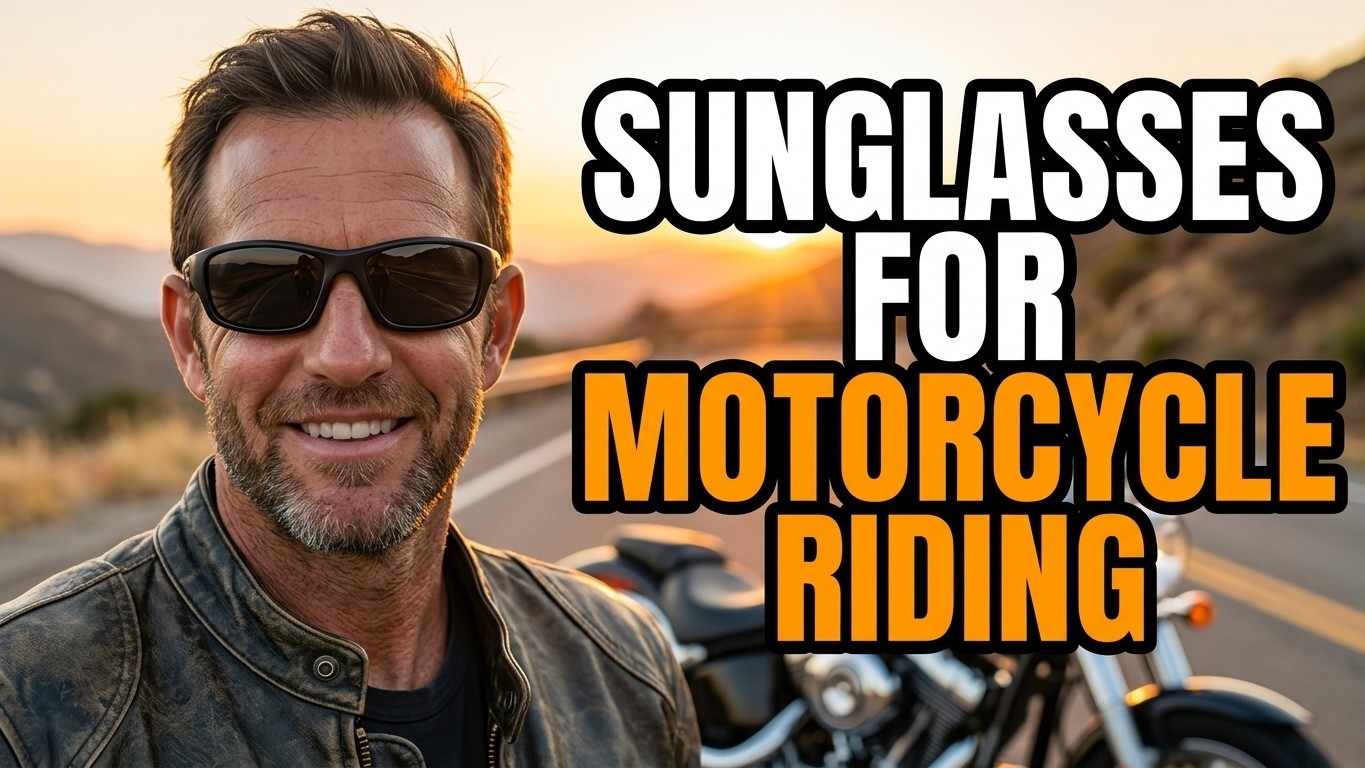
I’ve been riding for over a decade, and I can tell you from experience that regular sunglasses just don’t cut it on a motorcycle. Between wind blast, bugs, road debris, and glare, your eyes take a serious beating out there. After testing dozens of pairs in real-world conditions—from scorching desert highways to foggy mountain passes—I’ve narrowed down the absolute best sunglasses for motorcycle riding.
What makes motorcycle sunglasses different? They need to stay locked on your face at 80 mph, fit comfortably under your helmet without creating pressure points, and protect your eyes from wind and debris while still looking good off the bike. I’ve crashed (literally and figuratively) through enough bad pairs to know what works and what’s marketing hype.
- Wiley X Gravity is my top pick for serious riders who need ANSI-rated protection and all-day comfort
- Wraparound designs with foam gaskets block wind better than standard sunglasses at highway speeds
- Interchangeable lenses are worth the investment—I swap between smoke, amber, and clear depending on conditions
- Low-profile temples are essential for helmet compatibility; thick frames create painful pressure points
- Polarized lenses reduce glare dramatically but may interfere with some digital displays
1. Wiley X Gravity — Best Overall for All-Around Riding
The Wiley X Gravity has been my go-to pair for the past two years, and they’ve proven themselves on everything from daily commutes to cross-country tours. These sunglasses are ANSI Z87.1 rated for high-velocity impact protection, which means they’re genuinely built to handle debris at speed—not just a marketing claim.
What sold me on the Gravity model was the removable foam gasket. On the highway, it completely blocks wind from sneaking in around the edges, which prevents that constant eye-watering that used to plague me with regular sunglasses. When I’m off the bike, I pop the gasket out for a more casual look.
The Selenite polarized lenses have been fantastic for cutting glare on wet roads and reducing eye fatigue on long rides. I typically run 500+ mile days during rally season, and I’ve noticed significantly less eye strain compared to my old non-polarized pairs. The Gravity frames also come with thin, flexible temples that slide into my Shoei RF-1400 without creating pressure points.
At around $120-150, they’re not cheap, but I’ve put over 15,000 miles on mine with zero issues. The scratch-resistant coating actually works—mine still look nearly new despite being tossed in tank bags and dropped on pavement more times than I’ll admit.
2. Bobster Renegade — Best Budget Option with Convertible Design
If you’re not ready to drop $150 on riding glasses, the Bobster Renegade offers incredible value at around $30-40. I bought these as a backup pair and was genuinely shocked at how well they perform for the price.
The Renegade’s killer feature is its convertible design. It comes with a foam gasket and removable strap, so you can wear them as sunglasses for cruising or convert them to goggles for a half helmet setup. I’ve used the goggle configuration on my buddy’s retro half helmet build, and they seal impressively well.
The photochromic lens option is what I’d recommend—it automatically adjusts from clear to dark based on UV exposure. I’ve found this incredibly useful for rides that start before sunrise or extend into dusk. You’re not stuck swapping lenses or riding with the wrong tint for conditions.
My only real complaint is durability. After about 8 months of regular use, the foam gasket started compressing unevenly, and the temples loosened up slightly. But for $35, I just bought another pair. If you ride occasionally or want an affordable option to test whether motorcycle-specific sunglasses work for you, the Renegade is hard to beat.
What Makes Them Great for Budget-Conscious Riders
The polycarbonate lenses are shatterproof and provide 100% UV protection, meeting the basic safety standards you need. They’re not ANSI-rated like the Wiley X, but for cruising and casual riding, they’ve handled everything I’ve thrown at them—including a rather unfortunate encounter with a June bug at 60 mph.
3. Oakley Flak 2.0 XL — Best for Sport Bike Riders
I resisted Oakley for years, assuming I was just paying for the logo. Then I tried the Oakley Flak 2.0 XL on a friend’s recommendation, and I had to eat my words. These sunglasses are legitimately engineered for performance, and it shows in every detail.
The Flak 2.0 XL features Oakley’s Prizm lens technology, which I initially dismissed as marketing nonsense. After riding with them, I’m a convert. The contrast enhancement is real—I can spot road hazards, gravel, and oil patches significantly earlier than with standard tinted lenses. On twisty mountain roads where I’m leaned over and scanning ahead, that extra visual clarity makes a measurable difference.
What really impressed me is how these handle sweat and moisture. The hydrophobic coating actually repels water and oils, so they don’t fog up or smear when I’m working hard on aggressive rides. I’ve worn them on 95°F days doing canyon runs, and they stay clear when other glasses would be a blurry mess.
The nose pads are adjustable and ultra-grippy. Even when I’m soaked with sweat, the Flak 2.0 XL doesn’t budge. The lightweight O Matter frame feels like nothing on your face—I’ve genuinely forgotten I was wearing them during all-day rides. At $180-220 depending on lens options, they’re premium-priced, but the optical quality justifies the cost if you’re serious about sport riding.
4. 7Eye Airshield Panhead — Best Wind Protection for Cruiser Riders
For cruiser riders or anyone running a setup without a windscreen, the 7Eye Airshield Panhead offers the most comprehensive wind protection I’ve tested in a sunglasses format. The closed-cell foam gasket forms a complete seal around your eyes, creating what’s essentially a micro-climate.
I tested these extensively on my Triumph Thruxton, which has zero wind protection. At highway speeds, regular sunglasses let enough wind through to make my eyes water constantly. The Panhead completely eliminated that problem. The AirShield foam is soft enough for all-day comfort but dense enough to block wind effectively.
The 7Eye frames accommodate prescription inserts behind the lenses, which solved a major problem for my vision-corrected riding buddies. The SharpView polycarbonate lenses are incredibly clear—no distortion at the edges like some cheaper wraparound designs.
They come with multiple lens options: I keep smoke for bright days, amber for overcast conditions, and clear for night riding. Swapping lenses takes about 30 seconds once you get the technique down. At around $90-110, they sit in the mid-range price category but deliver premium performance.
Comfort for Long-Distance Touring
I wore these for 12-hour riding days during a Colorado tour, and the foam gasket never became uncomfortable or caused pressure points. The moisture-wicking properties kept sweat from pooling, which has been an issue with some foam-gasket designs I’ve tried. If you ride long distances or in direct wind exposure, these are worth every penny.
5. Bertoni Photochromic AF149 — Best for Variable Light Conditions
The Bertoni AF149 with photochromic lenses solved a problem I didn’t realize was killing my riding experience: constantly dealing with changing light conditions. I ride through forested mountain roads where you’re going from full sun to deep shade every few seconds, and fixed-tint lenses were either too dark for the shadows or not dark enough for the bright stretches.
These Italian-made glasses feature photochromic lenses that transition from virtually clear (Cat. 0) to dark smoke (Cat. 3) in about 30 seconds. I’ve tested the transition speed in real-world conditions—riding into tunnels, under overpasses, and through shaded canyons—and it’s genuinely fast enough to keep up with rapid changes.
The wraparound design includes a removable foam gasket, giving you flexibility. I run them with the gasket installed for highway riding and remove it for slower urban commuting where I want more airflow. The anti-fog coating on the inside has held up remarkably well; I’ve only experienced minimal fogging in extremely cold, wet conditions similar to what I’d need dedicated rain goggles for.
At around $70-85, they’re mid-priced but offer features you’d typically see on $150+ models. The build quality feels solid—the hinges are metal, not cheap plastic—and the included hard case actually protects them unlike those flimsy pouches some brands include. If you ride in mixed conditions and don’t want to carry multiple pairs or swap lenses constantly, these are my top recommendation.
6. Pyramex Isotope — Best ANSI-Rated Safety Glasses for Commuters
The Pyramex Isotope comes from the industrial safety world, and that’s actually a huge advantage. These are ANSI Z87+ rated for high-impact protection, meaning they’re certified to handle actual projectiles at serious velocities. For motorcycle riding, where rocks, bugs, and road debris are constant threats, that rating matters.
I started wearing these for my daily commute after a piece of gravel kicked up by a truck cracked my previous sunglasses. The Isotope’s polycarbonate lenses are 10 times more impact-resistant than standard plastic lenses, and I’ve verified that claim unintentionally—they’ve taken hits from debris that would have shattered lesser glasses.
The gray polarized lenses provide excellent glare reduction without color distortion. I can read traffic signals, brake lights, and road signs naturally, which isn’t always the case with heavily tinted or colored lenses. The lightweight design (less than an ounce) means I forget they’re on my face during hour-long commutes.
These come with a foam gasket insert that’s removable. With it installed, wind protection is decent but not quite as comprehensive as dedicated motorcycle glasses like the 7Eye. However, at $25-35, they’re an absolute steal for the protection level you’re getting. I keep a backup pair in my work bag because I’d rather have two affordable ANSI-rated pairs than one expensive pair.
Perfect for the Daily Grind
The temples are slim enough to work with virtually any helmet, and the simple design means they look normal in professional settings. I ride straight to client meetings without feeling like I’m wearing obvious “motorcycle gear.” If you commute daily and want serious eye protection without breaking the bank, the Isotope is hard to beat.
7. ESS Crossbow Suppressor — Best for Maximum Protection and Military-Grade Durability
The ESS Crossbow Suppressor is admittedly overkill for most riders, but if you want the absolute highest level of eye protection available, this is it. These are U.S. military-issue ballistic glasses that exceed ANSI Z87.1 and meet MIL-PRF-32432 ballistic standards. I’m talking about glasses designed to stop shrapnel.
I bought these after a particularly scary incident where a rock from a dump truck shattered my windscreen and hit my previous sunglasses hard enough to crack them. The Crossbow Suppressor features 2.4mm thick polycarbonate lenses that are functionally indestructible under normal riding conditions. I’ve had mine for three years of hard riding, and they’re still pristine.
The “Suppressor” designation refers to the integrated foam gasket that seals completely around your eyes. This provides the best wind protection I’ve experienced in any sunglasses—comparable to dedicated goggles. On naked bikes or touring without a windscreen, this seal makes a massive difference in comfort and eye strain.
ESS includes multiple lens options: clear, smoke, hi-def yellow, and often a polarized option. I swap between smoke for sunny days and hi-def yellow for overcast conditions and dawn/dusk riding. The lens interchange system is simple and secure—no tools required, and they snap in firmly enough that I’ve never had one pop out unexpectedly.
At $80-120 depending on the kit configuration, they’re expensive for what looks like utilitarian safety glasses. But the durability is unmatched. The DedBolt lens retention system has survived impacts that would have destroyed other glasses, and the frames show almost no wear after years of abuse. If you ride in high-risk environments (lots of gravel roads, construction zones, or aggressive off-road riding), the Crossbow Suppressor is worth the investment.
What I Look for When Choosing Motorcycle Sunglasses
After testing dozens of pairs over the years, I’ve developed a clear checklist for what actually matters in motorcycle sunglasses. These criteria come from real-world experience, not manufacturer marketing claims.
Impact Protection That’s Actually Certified
I only trust sunglasses with ANSI Z87.1 or MIL-PRF certification for high-velocity impact protection. Standard “shatterproof” marketing claims are meaningless without third-party certification. At 70 mph, even a small pebble carries serious energy—your sunglasses need to be genuinely tough, not just scratch-resistant.
Polycarbonate lenses are the minimum standard I’ll accept. They’re 10 times more impact-resistant than standard plastic and significantly lighter than glass. Some of my picks use even more advanced materials, but polycarbonate is the baseline for safety.
Wind Sealing and Wraparound Coverage
Regular sunglasses with flat lenses let wind blast your eyes from the sides at highway speeds. I’ve learned this causes constant tearing, dries out your eyes, and creates serious fatigue on long rides. Wraparound designs with foam gaskets solve this problem completely.
The foam needs to be soft enough for comfort but dense enough to seal effectively. Cheap foam compresses permanently after a few months, losing its sealing ability. Quality sunglasses use closed-cell foam that bounces back and maintains its seal over time.
Helmet Compatibility
This is where most regular sunglasses fail spectacularly. Thick temples create painful pressure points against your head inside the helmet, turning a two-hour ride into torture. I only recommend sunglasses with thin, flexible temples specifically designed to work with helmets.
The best designs use straight temples without excessive curves or thick padding near the ears. Some manufacturers like Wiley X and ESS specifically design their temples to work with tactical helmets, which translates perfectly to motorcycle helmets.
Lens Options for Different Conditions
I’ve moved away from single-lens solutions because riding conditions change too much. My ideal setup includes at least three lens options: dark smoke for bright sun, amber or yellow for overcast conditions, and clear for night riding or rain.
Photochromic lenses offer a compromise—they automatically adjust to light conditions. I use these for rides where I know I’ll encounter variable lighting. However, they don’t transition instantaneously, so you’ll have a brief adjustment period when conditions change rapidly.
Polarization: Benefits and Tradeoffs
Polarized lenses dramatically reduce glare from wet roads, car windshields, and reflective surfaces. I find them essential for sunny-day riding because they cut eye fatigue significantly. However, polarization can make some digital displays (GPS units, instrument clusters) harder to read at certain angles.
I run polarized lenses for 90% of my riding and only switch to non-polarized when I’m relying heavily on electronic navigation in bright conditions. For most riders, the glare-reduction benefits far outweigh the occasional display-reading difficulty.
How I Test Motorcycle Sunglasses
I don’t just try sunglasses on in a store and call it a review. Every pair on this list has been through real riding conditions over multiple months, accumulating hundreds or thousands of miles in varied environments.
My testing protocol includes highway speeds (70-80 mph) to verify wind sealing, twisty mountain roads to test optical clarity and field of view, and all-day tours (8-12 hours) to evaluate comfort and fatigue. I specifically test in harsh conditions: direct sun, overcast rain, dust, and transition environments like forested roads with rapidly changing light.
I also evaluate helmet compatibility with multiple helmet styles—full-face sport helmets, modular touring helmets, and open-face designs. Sunglasses that work perfectly with one helmet style sometimes fail miserably with others due to different internal padding and shape.
Final Thoughts on Choosing Your Riding Sunglasses
After thousands of miles testing these sunglasses, my advice is simple: invest in proper motorcycle-specific eyewear. Regular sunglasses aren’t designed for the wind speeds, impact risks, and extended wear that motorcycle riding demands. The difference in comfort, safety, and visual clarity is dramatic enough that you’ll notice it immediately.
For most riders, I’d start with the Wiley X Gravity or Bobster Renegade depending on your budget. Both offer the core features you need: impact protection, wind sealing, and helmet compatibility. As you gain experience and understand your specific needs (sport riding vs. cruising, prescription requirements, preferred lens colors), you can explore more specialized options.
Don’t cheap out on eye protection. Your eyes are irreplaceable, and unlike most motorcycle gear, quality sunglasses will last for years if you take care of them. Every pair on this list has earned its place through real-world performance, not marketing hype or sponsored placements. Choose based on your riding style, budget, and specific needs—you can’t go wrong with any of these options.
Frequently Asked Questions
Can you wear regular sunglasses while riding a motorcycle?
Regular sunglasses can work for cruising, but I’ve found they rarely stay secure at highway speeds. Motorcycle-specific sunglasses offer better wraparound coverage, wind resistance, and won’t fly off your face at 70 mph.
What color lens is best for motorcycle riding?
In my experience, gray or smoke lenses work best for bright sunny days, while amber or yellow lenses enhance contrast in overcast conditions. I always carry multiple lens options for different weather.
Should motorcycle sunglasses be polarized?
I prefer polarized lenses for reducing glare from wet roads and car windshields. However, some riders find polarization makes it harder to read digital dashboards, so test before committing.
Do motorcycle sunglasses fit under helmets?
Yes, but you need low-profile frames with thin, flexible temples. I’ve learned the hard way that thick frames create pressure points inside your helmet after an hour of riding.

Related Articles
7 Best Eyewear from Oakley SI for Motorcycle Riding
I've tested Oakley SI's tactical eyewear for riding. Here are the 7 best models that combine ballistic protection, clarity, and…
Jake Miller
15 min read
7 Best Women’s Sunglasses for Motorcycle Riding in 2026
Discover the best women's sunglasses for motorcycle riding with our expert guide. From wind protection to UV coverage, find the…
Jake Miller
14 min read

8 Best Anti-Glare Sunglasses for Motorcycle Riding I’ve Tested on the Road
I've tested dozens of anti-glare sunglasses for motorcycle riding. Here are the 8 legendary pairs that actually cut glare, stay…
Jake Miller
15 min read