
8 Best Anti-Glare Sunglasses for Motorcycle Riding I’ve Tested on the Road
 Jake Miller
15 min read
Jake Miller
15 min read
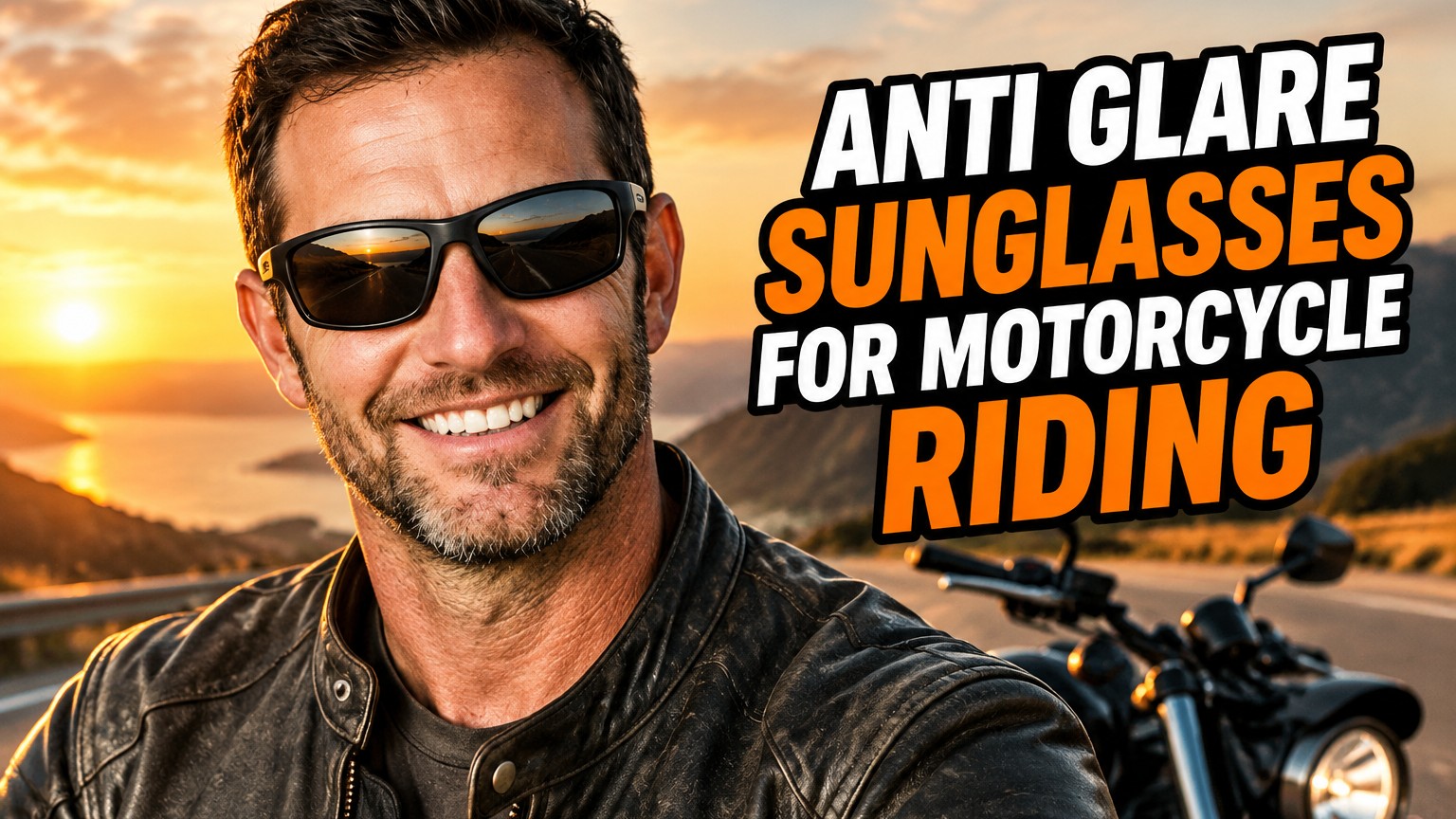
I’ve been riding for over a decade, and one of the most underrated pieces of safety gear is a solid pair of anti-glare sunglasses. Whether I’m cruising through mountain switchbacks at dawn or battling highway glare during a midday run, the right eyewear makes the difference between a comfortable ride and squinting my way through traffic.
Glare isn’t just annoying—it’s dangerous. Reflections from windshields, wet pavement, and chrome can hide hazards, obscure lane markers, and cause eye fatigue that slows your reaction time. I’ve learned the hard way that cheap gas station shades don’t cut it when you’re doing 70 mph with the sun bouncing off every surface around you.
Over the years, I’ve tested dozens of pairs of motorcycle sunglasses, from budget options to premium polarized lenses. Some fell off at speed, others fogged up in seconds, and a few actually delivered on their promises. Below are the eight legendary pairs that earned a permanent spot in my riding gear.
- Polarized lenses are essential for cutting glare from windshields, wet roads, and chrome—non-negotiable for highway riding
- Wraparound coverage blocks peripheral wind and debris while staying secure at speed under most helmets
- Photochromic lenses adapt to changing light, perfect for all-day rides through varying conditions
- Impact-resistant polycarbonate lenses (ANSI Z87.1 rated) provide real protection against road debris and bugs
- Secure, low-profile frames with rubberized grips won’t shift or create pressure points under your helmet
1. Oakley Gascan — Best Overall Polarized Sunglasses for Highway Riding
I’ve put thousands of miles on my Oakley Gascans, and they’re still my go-to for long highway runs. The polarized Plutonite lenses cut glare so effectively that I can actually see lane markers on wet pavement during afternoon rides when the sun sits low on the horizon.
The wraparound design blocks peripheral wind without feeling bulky, and the O Matter frame material is both lightweight and nearly indestructible. I’ve dropped these on asphalt more times than I care to admit, and they’ve never scratched or cracked.
What sets the Gascan apart is how well it fits under most full-face helmets. The low-profile temples slide in without pressure points, and the rubberized Unobtainium nose pads actually grip better when I start sweating on summer rides. That’s a feature I didn’t appreciate until I tried cheaper alternatives that slid down my nose every few miles.
The only downside is the premium price—expect to pay around $150 to $200 depending on lens options. But for the optical clarity, durability, and 100% UV protection, I consider them an investment in safer riding. If you’re serious about logging highway miles, these are worth every penny.
2. Wiley X Gravity — Best ANSI-Rated Impact Protection
When I want true ballistic-grade protection for aggressive riding or gravel roads, I reach for my Wiley X Gravity sunglasses. These meet ANSI Z87.1 high-velocity impact standards, meaning they’re tested to withstand projectiles traveling at 150 feet per second—overkill for most rides, but reassuring when a rock kicks up from a truck ahead.
The polarized lenses handle glare as well as my Oakleys, and the Selenite polycarbonate material is shatter-resistant to an extreme degree. I’ve had gravel ping off these lenses on backcountry roads without leaving a mark, which is more than I can say for some of my older pairs.
Wiley X includes a removable foam gasket that seals out wind and dust, transforming these from sunglasses into near-goggle performance. I don’t always use the gasket for street riding, but on dusty rural roads or when I’m wearing my half-helmet, it’s a game-changer. Speaking of which, if you ride with open-face helmets often, you might also want to check out the best motorcycle goggles for half helmet options.
The Gravity frames run about $100 to $140, and they’re built like tactical gear because that’s literally what they are—Wiley X supplies eyewear to military and law enforcement. For riders who prioritize impact protection without sacrificing optical clarity, these are legendary.
3. 7eye AirShield Churada — Best Wind Protection for Open-Face Helmets
The 7eye Churada looks like normal sunglasses but hides a secret weapon: a removable AirShield foam gasket that seals out 98% of peripheral wind. I discovered these after getting tired of watery eyes during cruiser rides with my three-quarter helmet, and they instantly solved the problem.
The polarized NXT lenses are some of the clearest I’ve tested, with zero distortion even at the edges of my peripheral vision. They’re also incredibly lightweight—only 28 grams—so I forget I’m wearing them after the first few minutes of a ride.
What I love most is the versatility. With the foam gasket attached, these perform like best motorcycle goggles for cruiser setups, blocking wind and keeping my eyes comfortable even at highway speeds. Remove the gasket, and they look like stylish everyday sunglasses I can wear off the bike without looking like I just stepped out of a fighter jet.
The frames are hypoallergenic and come in several styles, though I prefer the Churada for its larger lens coverage. At around $150 to $180, they’re priced competitively with premium Oakleys but offer features you won’t find anywhere else. If you split time between full-face and open-face helmets, these are essential.
4. Bobster Cruiser 2 Interchangeable — Best Convertible Goggles/Sunglasses
I was skeptical when I first saw the Bobster Cruiser 2 system—sunglasses that convert into goggles sounded gimmicky. But after using them for a full season of mixed riding, I’m a believer. This is the most versatile eye protection I own.
The system includes interchangeable temples and a goggle strap, plus swappable lenses in clear, smoke, and amber tints. When I’m riding my sport bike with a full-face helmet, I use the temple arms. Switch to my cruiser with a half-helmet, and I swap in the goggle strap for a secure, wind-sealed fit.
The anti-fog coating on all three lens options is surprisingly effective. I’ve worn these on cold morning rides where my breath would normally fog up regular sunglasses, and the Bobster lenses stayed clear. The polarized smoke lens is my default for daytime glare, while the amber lens is perfect for overcast conditions or late afternoon rides when contrast matters more than darkness.
Build quality is solid for the $45 to $60 price range—these aren’t Oakley-level optics, but they’re far better than most convertible systems I’ve tried. The foam padding is comfortable against my face, and the interchangeable system means I’m essentially getting three pairs of riding eyewear in one package. For budget-conscious riders or anyone who owns multiple helmet styles, these are legendary value.
5. ESS Crossbow Suppressor — Best Military-Grade Durability
My ESS Crossbow Suppressor sunglasses are what I wear when I know I’m going to abuse my gear—long adventure rides, unpaved forest roads, or any situation where I need eyewear that simply will not fail. These meet U.S. military MIL-PRF-32432 ballistic standards, and it shows in every detail.
The DedBolt lens lock system lets me swap between clear, smoke, and polarized lenses in about five seconds without tools. I keep the polarized gray lens on for sunny highway riding and switch to clear when I’m hitting trails at dusk. This modularity means I’m never stuck with the wrong tint for the conditions.
The high-speed low-drag frame geometry is designed to work with tactical helmets, which translates perfectly to motorcycle use. The thin, flexible temples fit under my helmet padding without creating pressure points, and the adjustable nose piece lets me dial in the perfect fit to prevent sliding.
At around $90 to $120, the Crossbow is more affordable than premium Oakleys while offering comparable (or superior) impact protection. The optics aren’t quite as refined—there’s slightly more distortion at the lens edges—but for pure durability and adaptability, these are hard to beat. If you ride in challenging conditions or just want eyewear that’s genuinely bomb-proof, the ESS Crossbow is legendary.
6. Oakley Flak 2.0 XL Polarized — Best for All-Day Comfort and Optics
When I’m planning an all-day ride covering 300+ miles through varying terrain and light conditions, I grab my Oakley Flak 2.0 XL sunglasses. The XL lens coverage is noticeably larger than standard Flak models, providing better peripheral protection without the bulky feel of full wraparounds.
The Prizm polarized lenses are where these really shine. Oakley’s Prizm technology doesn’t just reduce glare—it actually enhances contrast and color definition, making it easier to spot potholes, road debris, and subtle changes in pavement texture. I notice details I’d miss with regular polarized lenses, which translates directly to safer riding.
Comfort-wise, these are the most refined sunglasses I own. The Three-Point Fit holds the lenses in precise optical alignment, eliminating the pressure points that cause headaches on long rides. The Unobtainium nose pads and ear socks increase grip when wet, so they stay planted even during aggressive cornering or when I’m sweating through summer heat.
The Flak 2.0 XL runs about $180 to $220 depending on lens options, and you can order prescription inserts if needed. The build quality is impeccable—after two years of regular use, my pair shows no signs of wear beyond minor scratches on the case. For riders who spend serious time in the saddle and want the absolute best optical performance, these are legendary.
7. Ryders Strider Photochromic — Best Adaptive Lenses for Variable Light
I discovered Ryders Strider sunglasses on a recommendation from a fellow rider who swore by photochromic lenses, and now I’m a convert too. These lenses automatically adjust from light tint to dark polarized based on UV exposure, which is perfect for rides that start in morning shade and end in midday sun.
The transition happens smoothly over about 30 seconds, and I’ve tested them through everything from forest canopy shadows to open desert glare. Unlike some photochromic lenses that never get quite dark enough, the Strider’s NXT PhotoFusion lenses reach true sunglass darkness in full sun while staying clear enough for safe riding in overcast conditions.
The anti-fog coating is particularly effective—I’ve worn these during early morning rides when the temperature drops and my breath would normally fog any other glasses, and the Strider lenses stayed clear. This makes them great for transitional conditions that might otherwise require goggles, similar to what you’d need for best motorcycle goggles for riding in the rain scenarios.
At around $130 to $160, the Strider is priced competitively with single-tint premium sunglasses, but the photochromic feature essentially gives you multiple pairs in one. The only limitation is that photochromic lenses don’t transition behind windshields (UV doesn’t penetrate glass), so they work best for naked bikes, cruisers, or any situation where your eyes are exposed to direct sunlight. For all-day versatility, these are legendary.
8. Costa Del Mar Fantail Polarized — Best for Maximum Glare Reduction
Costa Del Mar builds sunglasses for offshore fishing, where glare reduction is literally a matter of professional success. I borrowed a pair of Fantail sunglasses from a friend for a coastal ride, and I was blown away by how much better they handled water and pavement glare compared to my other glasses.
The 580G glass lenses offer the absolute clearest optics I’ve experienced in motorcycle sunglasses. Glass is heavier and more fragile than polycarbonate, but the optical clarity is unmatched—zero distortion, perfect color accuracy, and glare reduction that makes wet roads look almost dry. For riders who prioritize vision quality above all else, the Costa Fantail is legendary.
The wraparound coverage blocks side wind effectively, and the hydrophobic coating sheds water instantly when I ride through light rain or morning dew. I’ve tested these on foggy coastal mornings and found they handle moisture better than most of my dedicated rain gear—though for heavy weather, you might still want proper best motorcycle goggles for riding in the rain.
The frames use Costa’s Hydrolite rubber for the nose pads and temples, which grips even better when wet. I’ve worn these on humid summer rides where my face was drenched in sweat, and they never budged. The only downside is weight—glass lenses are noticeably heavier than polycarbonate alternatives, and you’ll feel it after several hours of riding.
Expect to pay $200 to $280 for the Fantail with glass lenses, making these the most expensive option on this list. But for riders who spend a lot of time near water, ride in high-glare environments, or simply want the ultimate in optical clarity, these are worth the investment. The lifetime warranty on frames and lenses adds peace of mind I appreciate.
Choosing the Right Anti-Glare Technology for Your Riding Style
Not all anti-glare technologies are created equal, and I’ve learned through experience which features matter most for different riding scenarios. Polarization is non-negotiable for highway and coastal riding—it cuts reflected glare by 99%, making it possible to see clearly even when the sun is bouncing off every windshield and chrome surface around you.
Photochromic lenses excel for rides with variable conditions. I use my Ryders Strider for mountain rides that start in shaded valleys and climb into bright alpine sun, and for urban commutes that transition from shadowed streets to open highways. The automatic adjustment means I never have to stop and swap lenses mid-ride.
For night riding or low-light conditions, I skip sunglasses entirely and use clear or amber-tinted lenses. Polarized lenses can actually reduce visibility at night by cutting too much light, which is why I keep a pair of clear lenses handy. If you frequently ride after dark, check out best motorcycle goggles for night riding for dedicated low-light solutions.
Fit and Helmet Compatibility
I’ve learned the hard way that even legendary sunglasses are useless if they don’t fit properly under your helmet. Look for frames with thin, flexible temples that won’t create pressure points against your head. The Oakley Gascan and ESS Crossbow both excel here with their low-profile designs.
If you wear glasses frames regularly, finding motorcycle-compatible options is crucial. The best designs have minimal bulk and slight wraparound to block wind while fitting comfortably in helmet channels. For comprehensive guidance, I recommend reviewing Best Glasses Frames for Motorcycle Helmets.
Test the fit by putting on your helmet with the sunglasses in place. There should be no pressure on your temples, and the glasses shouldn’t shift when you turn your head quickly. If they do, try adjustable nose pads or look for a different frame geometry—comfort on a 10-minute test ride becomes pain after two hours on the road.
Lens Materials and Impact Protection
Polycarbonate lenses are the standard for motorcycle eyewear because they’re lightweight, impact-resistant, and block 100% of UV rays. My Wiley X Gravity and ESS Crossbow both use high-grade polycarbonate that meets ballistic impact standards—serious overkill for most riding, but reassuring when debris is flying.
Glass lenses, like those on my Costa Fantail, offer superior optical clarity but are heavier and more prone to shattering on impact. I only wear glass lenses for casual cruiser rides where I’m confident I won’t encounter road debris at speed. For sport riding, adventure touring, or any aggressive riding, I stick with polycarbonate.
NXT polymer lenses, found on the 7eye Churada and Ryders Strider, split the difference—lighter than glass with better impact resistance, and nearly matching glass for optical clarity. They’re more expensive than polycarbonate but worth it if you prioritize both safety and vision quality.
Anti-Fog and Weather Performance
Fogging is the enemy of safe riding, and I’ve tested enough glasses to know that “anti-fog coating” varies wildly in effectiveness. The best performers in my experience are the Bobster Cruiser 2 and Ryders Strider, both of which stayed clear even during temperature swings that fogged my helmet visor.
For maximum fog resistance, look for glasses with venting or removable foam gaskets. The 7eye AirShield system works particularly well—the gasket seals out wind but includes small vents that allow just enough airflow to prevent fogging without compromising protection.
In rain, hydrophobic coatings are essential. My Costa Fantail and Oakley Flak 2.0 XL both shed water instantly, keeping my vision clear even in light precipitation. For heavy rain, though, I prefer full goggles with better seal and coverage.
Value vs. Premium: What You Actually Get
After testing everything from $50 Bobsters to $280 Costas, I can tell you the premium price buys you three things: optical clarity, durability, and refined fit. The Oakley and Costa lenses deliver noticeably sharper, more color-accurate vision than budget alternatives, which matters during long rides when eye fatigue accumulates.
Build quality is the other major difference. My Oakleys and Wiley X glasses have survived years of abuse—drops on pavement, getting stuffed in tank bags, extreme temperature swings—without the frame loosening or lenses scratching significantly. Cheaper glasses tend to develop frame wobble and lens scratches within a season.
That said, the Bobster Cruiser 2 proves you don’t need to spend $200 to get functional, reliable eye protection. For riders on a budget or those who want a versatile backup pair, spending $50 to $100 gets you genuine protection and comfort—you just sacrifice some optical refinement and long-term durability.
My Everyday Carry Strategy
I don’t rely on a single pair of sunglasses for all conditions. My primary pair is the Oakley Gascan for highway and mixed riding, backed up by the Ryders Strider photochromic for all-day variable conditions. I keep the Bobster Cruiser 2 system as a versatile backup that lives in my saddlebag, and I reach for the Wiley X Gravity or ESS Crossbow when I know I’ll be riding aggressively or hitting gravel roads.
For cruiser rides with my half-helmet, the 7eye Churada with its wind-sealing gasket is unbeatable. And when I’m near water or facing extreme glare conditions, the Costa Fantail comes out of retirement. Each pair has earned its spot in my gear rotation based on real-world performance, not marketing hype.
The key is matching the eyewear to your riding style, helmet type, and typical conditions. No single pair does everything perfectly, but the right combination of two or three options will cover every scenario you’re likely to encounter on the road.
Frequently Asked Questions
Do I need polarized sunglasses for motorcycle riding?
Polarized lenses dramatically reduce glare from windshields, wet roads, and car hoods. I never ride without them on sunny days, especially for long highway stretches.
What makes sunglasses good for motorcycle riding?
Look for wraparound coverage, shatter-resistant lenses, secure fit that won’t shift at highway speeds, and 100% UV protection. Anti-fog coating is a huge bonus.
Can I wear regular sunglasses under my motorcycle helmet?
You can, but Best Glasses Frames for Motorcycle Helmets should have low-profile temples and wraparound design to fit comfortably without pressure points.
Are photochromic lenses worth it for motorcycle riding?
Absolutely. I love photochromic lenses for all-day rides because they adapt from bright sun to overcast or shaded roads without me needing to swap glasses.

Related Articles
7 Best Eyewear from Oakley SI for Motorcycle Riding
I've tested Oakley SI's tactical eyewear for riding. Here are the 7 best models that combine ballistic protection, clarity, and…
Jake Miller
15 min read
7 Best Women’s Sunglasses for Motorcycle Riding in 2026
Discover the best women's sunglasses for motorcycle riding with our expert guide. From wind protection to UV coverage, find the…
Jake Miller
14 min read
7 Best Sunglasses for Motorcycle Riding I’ve Tested on the Road
I've tested dozens of motorcycle sunglasses in real riding conditions. Here are the 7 best pairs that stay put at…
Jake Miller
14 min read