
Best Bang for the Buck Motorcycle Gloves: My Honest Picks After Years of Riding
 Jake Miller
11 min read
Jake Miller
11 min read
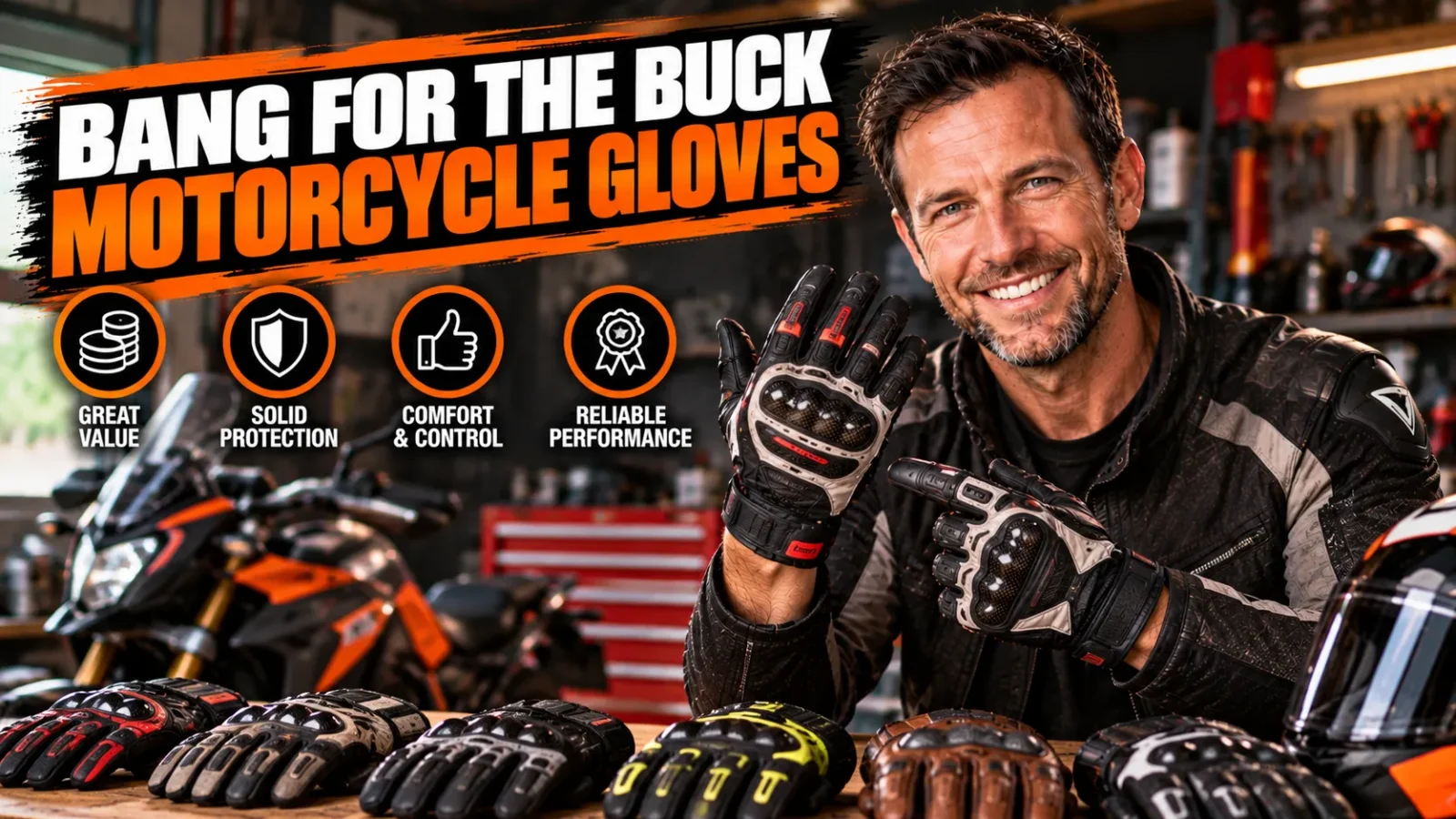
I’ve bought a lot of motorcycle gloves over the years. Some were fantastic. Some fell apart after three rides. And a few taught me the hard way that “expensive” doesn’t always mean “protective.”
After enough scraped knuckles, sweaty palms, and gloves that shredded way too easily, I’ve gotten pretty good at spotting real value. That’s exactly what I’m sharing here: the best bang for the buck motorcycle gloves I’ve personally tested, worn, and would happily buy again.
If you want the deep-dive on materials, certifications, and fit, I’ve already covered all of that in my Ultimate Guide to Motorcycle Gloves. This article is more practical — it’s about getting the most protection and comfort for the least money.
- The best value gloves usually sit in the $40–$90 range, not the cheapest or the most expensive options.
- Look for CE-rated knuckle protection, real leather or reinforced textile, and double or triple stitching.
- Fit matters more than price — a $50 glove that fits perfectly beats an $80 glove that’s loose at the wrist.
- Match the glove to your season and riding style (rain, summer, commuting) instead of buying one “do everything” pair.
- My top overall pick balances hard knuckle armor, breathable leather, and a price that won’t make you wince.
Why “Bang for the Buck” Matters More Than the Price Tag Alone
I used to assume price and quality moved together in a straight line. They don’t. I’ve worn $120 gloves that fell apart in under a year, and I’ve worn $45 gloves that are still going strong three seasons later.
Value isn’t about spending the least. It’s about spending the smartest. That means paying for protection and durability, not for a flashy brand name stitched across the cuff.
Once I started thinking this way, my glove drawer got a lot more functional — and my wallet got a lot happier too.
The Real Cost of “Cheap” Gloves
I’ll be honest — I’ve bought the $15 gas station gloves before. They looked fine on the rack. They lasted about six weeks before the seams split at the palm.
Ultra-cheap gloves almost always skip real armor, use thin unreinforced fabric, and fall apart under normal wear. That’s not value. That’s just deferred spending, because you’ll be buying another pair soon anyway.
The Real Cost of Overpriced Gloves
On the flip side, I’ve paid premium prices expecting premium protection, only to get the same CE Level 1 rating I could’ve gotten for half the cost. Sometimes you’re just paying for a race-team logo.
That’s why my picks below focus on the actual specs — armor, materials, stitching — not the marketing.
What I Personally Look For Before Recommending Any Glove
Before any glove earns a spot on my “recommend to friends” list, it has to pass a few personal checks. These aren’t arbitrary — they’re lessons learned from gloves that let me down.
Protection Without the Price Gouging
I always check for a CE rating first. Level 1 is solid for street riding; Level 2 is even better if you can find it at a reasonable price. Hard knuckle protection, reinforced palms, and finger bridging (where fingers are lightly connected to prevent hyperextension) are things I now consider non-negotiable, even on budget gloves.
I’ve seen genuinely well-protected gloves under $60. It’s absolutely out there if you know what to look for.
Materials That Actually Last
Full-grain leather or a tightly woven reinforced textile tends to outlast the cheaper split-leather or thin nylon blends by years, not months. I run my fingers over the palm and stitching in the store (or zoom into product photos online) before buying anything now.
Double or triple stitching at stress points — palm heel, finger seams — is a small detail that makes a massive difference in how long a glove survives daily riding.
Fit and Break-In Time
A glove that’s slightly loose at the wrist is a glove that’ll slide off in a crash. I learned to size down slightly on most brands, since motorcycle gloves generally run big compared to regular glove sizing.
If you’re newer to riding and still figuring out fit and features, my Best Beginner Gloves for Motorcycle guide walks through exactly what to prioritize before your first purchase.
My Top Picks for Best Bang for the Buck Motorcycle Gloves
These are the gloves I’d actually recommend to a friend buying on a budget — not because they’re the cheapest, but because they deliver the most protection and comfort per dollar spent.
Best Overall Value Pick
My top overall pick is a mid-tier leather glove with a hard knuckle shell, a reinforced palm slider, and a wrist strap that actually stays snug all day. I’ve put well over a thousand miles on a pair like this, and the stitching still looks new.
What sold me wasn’t the price — it was the fact that it uses the same knuckle armor construction I’ve seen on gloves costing twice as much. That’s the definition of bang for the buck.
Why I recommend it: Genuine leather palm, CE Level 1 armor, and a break-in period of maybe two rides before it feels like a second skin.
Best Budget Leather Gloves
If you want that classic leather feel without the classic leather price, this category is where I’ve found the biggest surprises. A well-made budget leather glove can hold up to abrasion nearly as well as premium leather, just with slightly less refined lining.
I’ve worn a pair through an entire summer of daily commuting, and the leather actually got better with age — softer, more flexible, molded to my hand.
Best for: Riders who want traditional style and durability without spending over $70.
Best for Everyday Commuting
For my daily commute, I don’t want to think about my gloves at all. I want to put them on, ride, take them off, repeat. The commuter-focused value gloves I’ve tried nail this — touchscreen-compatible fingertips, easy on/off, and enough armor to matter if traffic goes sideways.
These typically aren’t the most armored gloves on this list, but for stop-and-go city riding, they hit a really practical middle ground.
Best Textile All-Weather Value Pick
Textile gloves have come a long way, and honestly, some of the best value I’ve found lately has been in this category. They dry faster than leather, breathe better, and often include light weatherproofing built right in.
If you ride through unpredictable weather, it’s worth checking out my breakdown of the best motorcycle gloves for rain — several budget textile options made that list precisely because they punch above their price point in wet conditions.
Best Value Pick for Women Riders
Fit is everything, and I’ve heard from a lot of women riders that men’s gloves scaled down just don’t cut it — the palm width and finger length are off even when the overall size matches. Purpose-built women’s gloves solve this without necessarily costing more.
For warmer months especially, I’d point you toward my guide on the best summer leather motorcycle gloves for women, where fit and breathability were the two biggest factors I tested for.
Matching Gloves to Your Riding Style and Season
Here’s something I wish someone told me earlier: buying one “do everything” glove is usually a compromise, not a value. Matching the glove to the season almost always gets you more performance per dollar.
Riding in the Heat
Summer riding demands airflow, or your hands turn into sweaty little saunas inside your gloves. I’ve found some genuinely excellent options in my guide to the best motorcycle gloves for summer, several of which are surprisingly affordable while still offering perforated leather and mesh panels.
If your budget is especially tight, I also broke down the best cheap motorcycle gloves for summer, focused entirely on keeping cool without spending much at all.
Riding in the Rain
Wet-weather gloves need a completely different approach — grip retention, waterproof membranes, and a longer cuff to keep water from running down your sleeve. Cheap gloves that aren’t designed for rain will leave your hands soaked and your grip sketchy within minutes.
Again, I’ll point you back to my best motorcycle gloves for rain roundup, because value looks very different in wet conditions than it does on a sunny day.
Riding as a Beginner
If you’re new to riding, I’d actually suggest not overspending yet. Your grip style, riding position, and even hand size preferences (loose vs. snug) can shift as you get more experience. My Best Beginner Gloves for Motorcycle picks are specifically chosen to protect you well without locking you into an expensive setup too early.
Common Mistakes That Waste Your Money on Gloves
I’ve made every one of these mistakes myself, so consider this the “learn from my errors” section.
Buying Based on Looks Alone
I once bought a pair of gloves purely because they matched my jacket. They had zero knuckle protection. Style matters, sure, but it should never come before actual safety specs.
Ignoring the Return Policy
Glove sizing varies wildly between brands. I always check the return policy now before buying online, because even “my size” doesn’t guarantee a good fit from every manufacturer.
Skipping the Wrist Closure Check
A glove without a secure wrist strap can slide off in a slide — literally. I don’t care how good the palm armor is if the whole glove can come off my hand on impact.
Assuming All CE Ratings Are Equal
Level 1 and Level 2 CE certifications aren’t the same thing, and I’ve seen budget gloves proudly advertise “CE certified” without specifying which level. Always dig a little deeper into the actual product spec sheet.
How I Personally Test Gloves for Long-Term Value
I don’t just try gloves on in a parking lot and call it a review. Here’s my actual process, built from years of trial and error.
The First 100 Miles
This tells me about break-in time, hot spots, and whether the stitching is already showing stress. A good value glove should feel comfortable well before mile 100, not after.
The Weather Test
I try to ride the same gloves through at least one rainstorm and one genuinely hot day before forming an opinion. Gloves behave very differently once sweat or water gets involved.
The Six-Month Check
This is where cheap gloves usually reveal themselves. Fraying seams, cracked leather, or armor that’s shifted out of place all show up around this mark if the glove wasn’t built to last.
My Final Take on Getting the Most for Your Money
If there’s one thing I want you to take from this, it’s that the most expensive glove on the shelf isn’t automatically the best choice, and the cheapest one almost never is either.
The real sweet spot is usually right in the middle — a glove with genuine armor, decent materials, and a fit that actually works for your hand. That’s where I’ve found the best bang for the buck motorcycle gloves, time and time again.
Take the time to match your glove to your actual riding conditions, check the CE rating instead of trusting the marketing copy, and don’t be afraid to try a lesser-known brand if the specs check out. My hands — and my wallet — have thanked me for that approach more than once.
Frequently Asked Questions
What makes motorcycle gloves ‘bang for the buck’ instead of just cheap?
Bang for the buck gloves balance real CE-rated protection, durable materials, and solid fit against a reasonable price. Cheap gloves cut corners on safety; bang for the buck gloves cut corners on branding and unnecessary extras instead.
How much should I realistically spend on a good pair of motorcycle gloves?
In my experience, the sweet spot sits between $40 and $90. Below that, protection often suffers. Above that, you’re frequently paying for a logo rather than meaningfully better armor or materials.
Are textile gloves ever a better value than leather?
Yes, depending on your riding. Textile gloves are often cheaper, dry faster, and breathe better, making them a smart budget pick for commuters, though leather still wins for raw abrasion resistance in a slide.
Do budget gloves actually pass real safety testing?
Many do. Several budget-friendly brands now submit gloves for CE Level 1 or Level 2 certification, so it’s absolutely possible to find genuinely tested protection without paying premium prices.

Related Articles

8 Best Waterproof Motorcycle Gloves for Summer Riding
I tested and researched the 8 best waterproof motorcycle gloves for summer, balancing breathability, dry hands, and all-day comfort. Find…
Jake Miller
10 min read
10 Best Motorcycle Gloves for Protection That I’d Actually Trust My Hands To
I've crashed, dropped bikes, and tested dozens of gloves. Here are the 10 best motorcycle gloves for protection I genuinely…
Jake Miller
11 min read
9 Best Mechanix Gloves for Motorcycle Riding You Can Actually Trust
I've tested Mechanix gloves on real rides—here are the 9 best models for motorcycle riding, from impact protection to cold-weather…
Jake Miller
11 min read