
Best Cold Weather Gloves for Motorcycle Riding: My Tested Picks for Numb-Free Winters
 Jake Miller
11 min read
Jake Miller
11 min read
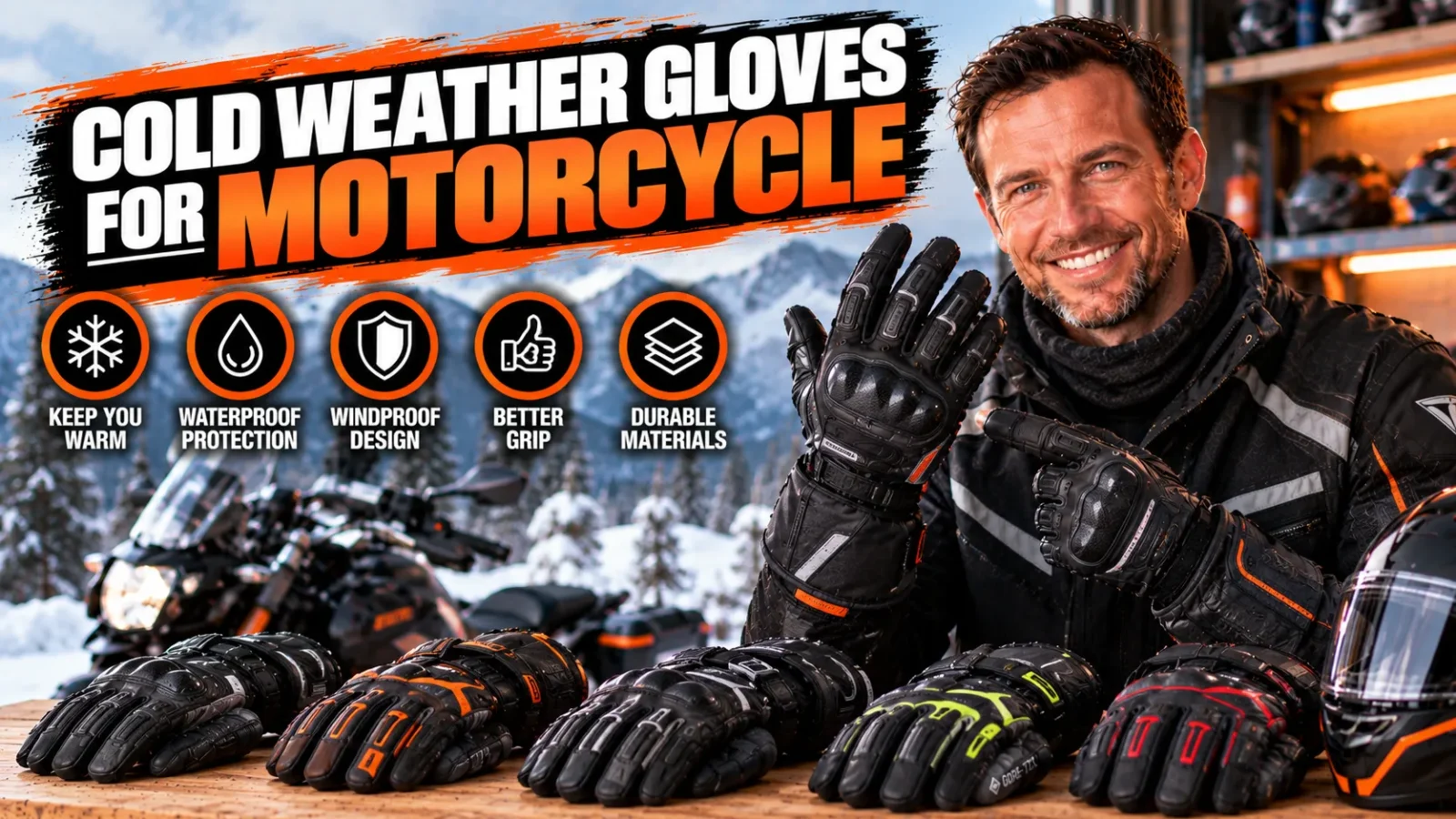
My fingers have gone numb on a motorcycle more times than I’d like to admit. There’s a specific kind of misery that comes with losing feeling in your hands at 65 mph, and it’s usually followed by a white-knuckle (literally) fight to find the clutch lever.
After years of chasing riding season into December and starting it back up in February, I’ve tried more cold weather gloves than I care to count. Some were garbage. A few genuinely changed how I ride through winter.
This isn’t a list I pulled from spec sheets. Every glove here has been on my hands, in real cold, on real rides. If you want the full breakdown of glove types, materials, and fit before you buy, my Ultimate Guide to Motorcycle Gloves covers all of that in depth. But if you’re here specifically for winter warmth, let’s get into it.
- My top overall pick balances warmth, dexterity, and waterproofing without feeling like oven mitts.
- Heated gloves are a game changer if you ride below freezing regularly, but they cost more and need charging.
- Fit matters more than insulation thickness. A too-big glove traps cold air and kills your feel for the controls.
- Gauntlet-style cuffs that overlap your jacket sleeve keep wind from sneaking up your arm.
- Budget doesn’t have to mean cold hands. A few affordable options here perform shockingly well.
Why Regular Gloves Just Don’t Cut It in Winter
I learned this the hard way on a 40-degree morning commute wearing gloves that were fine for fall. Within ten minutes, my fingers felt like they belonged to someone else.
Cold weather motorcycle gloves need three things working together: wind blocking, insulation, and moisture management. Miss any one of those and your hands lose the battle fast, especially once wind chill enters the picture.
Wind chill is the sneaky killer here. A 40°F day feels a lot colder at 60 mph than it does standing still, and your hands take the brunt of that airflow more than almost any other part of your body.
What Actually Makes a Glove “Cold Weather Ready”
I look for a few non-negotiables before I even consider a winter glove. These aren’t marketing fluff, they’re the difference between a comfortable ride and a painful one.
- Windproof outer shell — usually a treated textile or leather with a membrane behind it
- Waterproof/breathable membrane — something like Gore-Tex or a proprietary equivalent
- Insulation that doesn’t kill dexterity — thin, high-loft materials beat bulky foam
- Gauntlet cuff — long enough to go over your jacket sleeve, not under it
- Touchscreen-compatible fingertips — because nobody wants to strip a glove off to check GPS
My Top Picks for the Best Cold Weather Gloves for Motorcycle Riding
I’ve grouped these by what kind of rider I think they suit best, because “best” really depends on your commute, your climate, and your budget.
1. My Overall Favorite: A Gauntlet Glove That Does It All
The glove I reach for most on genuinely cold rides is a full gauntlet-style winter glove with a Gore-Tex membrane and a soft thermal liner. I’ve worn this pair down to about 25°F comfortably, and lower than that with a liner underneath.
What sold me was the pre-curved finger construction. A lot of winter gloves feel stiff and clunky, but this one still lets me feel the clutch lever and front brake without fighting the glove itself.
The gauntlet cuff is long enough to seal completely over my jacket sleeve, which stops that awful draft that creeps up your wrist on the highway. Hard knuckle armor is baked in too, so I’m not sacrificing protection for warmth.
Best for: Daily commuters and long-distance riders who need one glove to handle everything from 25°F mornings to unexpected drizzle.
2. My Pick for Extreme Cold: Heated Gloves
I resisted heated gloves for years, thinking they were overkill. Then I rode through a 20°F morning with the battery pack running and completely changed my mind.
Heated gloves use a rechargeable battery (or a wired connection to your bike’s electrical system) to warm carbon-fiber heating elements across the back of the hand and fingers. It’s not subtle, it’s genuinely warm, almost like holding a mug of coffee the entire ride.
The downside is bulk and cost. Battery packs add weight to the cuff, and a good pair with reliable batteries isn’t cheap. But if you’re riding through actual winter and not just “chilly fall mornings,” this is the category that solves the problem for good.
Best for: Riders in genuinely cold climates, year-round commuters, or anyone with poor circulation who gets cold hands even in mild weather.
3. My Budget Pick That Still Performs
Not everyone wants to drop premium money on gloves they’ll wear a few months a year. I tested a budget-friendly textile winter glove that surprised me with how well it handled 35-40°F rides.
It’s not going to compete with a $150 pair in a downpour, but for dry, cold mornings it holds its own. The insulation is simple synthetic fill, nothing fancy, but it works.
I’d pair this with a thin liner glove if you’re regularly dipping below freezing, since the insulation alone starts to lose the fight around there.
Best for: New riders or anyone who only deals with cold weather a handful of times a season.
4. Best for Wet, Cold Rides
Cold and wet together is its own special punishment. I’ve had gloves that were warm but soaked through in minutes, and that combination is arguably worse than just being cold.
For truly miserable weather, I go back to a fully waterproof gauntlet glove with sealed seams. If you ride in a region where cold rain is the norm rather than the exception, it’s worth checking out my breakdown of the best motorcycle gloves for rain since a lot of that overlaps with cold-weather needs.
The key feature here is a membrane that’s actually sealed at the seams, not just a “water-resistant” coating on the outer shell. I learned that distinction the expensive way after buying a pair that soaked through on my third ride.
How I Actually Test Cold Weather Gloves
I don’t just try gloves on in a warm garage and call it a day. Real testing means riding in the conditions the gloves claim to handle.
The Real-World Ride Test
I do at least three rides of 30+ minutes in temperatures the glove is rated for, checking in on finger feeling at the 10, 20, and 30-minute marks. If my fingers are cold by minute 15, the glove fails for me regardless of what the tag says.
I also test at highway speeds specifically, since wind chill exposes weak gloves fast. A glove that feels fine in city traffic can fall apart completely once you hit 65 mph.
The Dexterity Check
Warmth means nothing if I can’t operate my bike safely. I check whether I can still work the clutch smoothly, hit the horn button on the first try, and pull the brake lever with precise pressure.
If a glove is so thick I’m fumbling for controls, it goes in the “warm but useless” pile. Safety has to come first, even in freezing weather.
Fit and Sizing: Where Most Riders Go Wrong
I made this mistake myself early on: buying a size up “for extra warmth.” It backfired badly because loose gloves trap cold air pockets around your fingers instead of holding heat close to your skin.
The correct approach is to size for a snug fit *with* your liner glove already on, if you plan to wear one. Try them on that way in the store, or measure carefully if buying online.
A Quick Sizing Checklist
- Fingers should reach the tips without excess material bunching at the end
- You should be able to make a full fist without the glove pulling tight across the knuckles
- The gauntlet cuff should close snugly around your jacket sleeve, not flap loosely
- Wiggle room for your fingers to move, but no extra dead space around them
If you’re newer to riding and still figuring out what fit and features matter most, my guide to the Best Beginner Gloves for Motorcycle riders walks through the basics in more detail before you commit to a winter-specific purchase.
Layering Strategy: My Personal System
I’ve found that one great pair of gloves rarely solves every cold-weather scenario on its own. Layering is where the real comfort comes from.
Liner Gloves
A thin merino wool or silk liner underneath my main riding glove adds a surprising amount of warmth without bulk. Merino specifically wicks moisture, so my hands stay dry even if they sweat a little inside the glove.
I keep a pair of liners in my tank bag year-round now. On borderline days, I can decide on the spot whether I need them or not.
Hand Guards and Heated Grips
If your bike has or can be fitted with heated grips, combine them with your gloves rather than relying on either alone. I’ve found the combo lets me use a slightly thinner, more dexterous glove even in genuinely cold weather.
Handlebar wind deflectors also help more than people expect. They’re not glamorous, but cutting direct wind off your hands makes a real difference over a 45-minute ride.
Materials Breakdown: What’s Actually Keeping You Warm
I get asked a lot about which material is “best,” and honestly it depends on your priorities between warmth, feel, and durability.
Leather
Leather gloves with a warm liner give you the best combination of abrasion resistance and a natural feel for the controls. The downside is that leather alone isn’t windproof, so you need a good liner or membrane behind it.
Textile
Textile (usually nylon or polyester blends) tends to pack more insulation and waterproofing tech per dollar. It’s often warmer for the price, though I find it slightly less precise for clutch and throttle feel compared to leather.
Hybrid Construction
My favorite winter gloves actually combine both: leather palms for grip and feel, textile backs and cuffs for insulation and waterproofing. It’s the best of both worlds if you can find a well-made pair.
Common Mistakes I See (and Made Myself)
Let me save you some frustration by sharing the mistakes that cost me cold fingers and wasted money over the years.
Buying Based on Temperature Rating Alone
Manufacturer temperature ratings are optimistic at best. I treat any listed rating as “add 10-15 degrees of margin” before trusting it on a real ride, especially at highway speeds.
Ignoring the Wrist Seal
I underestimated how much cold air sneaks in through a loose wrist gap. A properly sealed gauntlet that overlaps your jacket sleeve solves this instantly, and it was one of the biggest upgrades I made.
Skipping the Liner on “Just a Short Ride”
Cold hands happen fast, sometimes within the first five minutes. I stopped assuming short rides didn’t need full gear after one miserable 15-minute ride to the store in gloves I thought were “good enough.”
What About Off-Season Gear?
Once winter passes, your glove needs flip completely. I keep totally separate gloves for summer, and honestly the difference in construction is night and day.
If you’re building out a full seasonal glove rotation, I’ve also covered the best motorcycle gloves for summer riding, along with best cheap motorcycle gloves for summer options if you’re watching your budget. And for the women riders out there, I put together a list of the best summer leather motorcycle gloves for women that’s worth a look when the weather flips.
Having a proper glove for every season sounds excessive until you realize how much it improves your riding comfort year-round. I used to tough it out with one “all-purpose” pair, and honestly, I was uncomfortable about eight months of the year because of it.
My Final Take
If I had to boil this down to one piece of advice: don’t buy cold weather gloves based on warmth alone. Fit, dexterity, and wind sealing matter just as much, and skimping on any of them undoes the benefit of thick insulation.
My personal rotation now includes a solid all-around gauntlet glove for most cold rides, a heated pair for the genuinely brutal mornings, and a thin liner tucked in my jacket pocket just in case. That combination has kept my hands functional through winters I used to just avoid riding in altogether.
Whatever you choose, don’t wait until your fingers go numb on the highway to figure out your gloves aren’t cutting it. Test them on a short, cold ride first, and adjust before you’re committed to a longer trip.
Frequently Asked Questions
What temperature rating should I look for in cold weather motorcycle gloves?
Look for gloves rated for at least 20-30°F below the actual temperature you’ll be riding in, since wind chill at highway speeds drops the felt temperature significantly. A glove rated to 20°F is a safer bet than one just rated to 40°F if you’re commuting in freezing conditions.
Are heated motorcycle gloves worth the investment?
Yes, if you ride regularly in sub-freezing temps. Heated gloves solve the circulation problem that thick insulation alone can’t fix, especially for riders with poor blood flow to their hands. The battery packs and wiring add bulk and cost, but the payoff in comfort is significant.
Can I use my regular winter gloves for motorcycling?
I wouldn’t recommend it. Regular gloves lack the abrasion resistance, knuckle protection, and gauntlet cuffs that keep wind and water out and protect your hands in a crash. Purpose-built motorcycle gloves are worth the extra cost.
How do I keep my hands warm without buying bulky gloves?
Try a thin merino wool glove liner underneath a slightly looser-fitting winter motorcycle glove. This traps warm air without sacrificing feel for the controls, and it’s a cheaper fix before you invest in heated gear.

Related Articles
8 Best Waterproof Motorcycle Gloves for Summer Riding
I tested and researched the 8 best waterproof motorcycle gloves for summer, balancing breathability, dry hands, and all-day comfort. Find…
Jake Miller
10 min read
10 Best Motorcycle Gloves for Protection That I’d Actually Trust My Hands To
I've crashed, dropped bikes, and tested dozens of gloves. Here are the 10 best motorcycle gloves for protection I genuinely…
Jake Miller
11 min read
9 Best Mechanix Gloves for Motorcycle Riding You Can Actually Trust
I've tested Mechanix gloves on real rides—here are the 9 best models for motorcycle riding, from impact protection to cold-weather…
Jake Miller
11 min read