
Best Gloves for Motorcycle Mechanics: My Grease-Tested Picks for 2024
 Jake Miller
10 min read
Jake Miller
10 min read
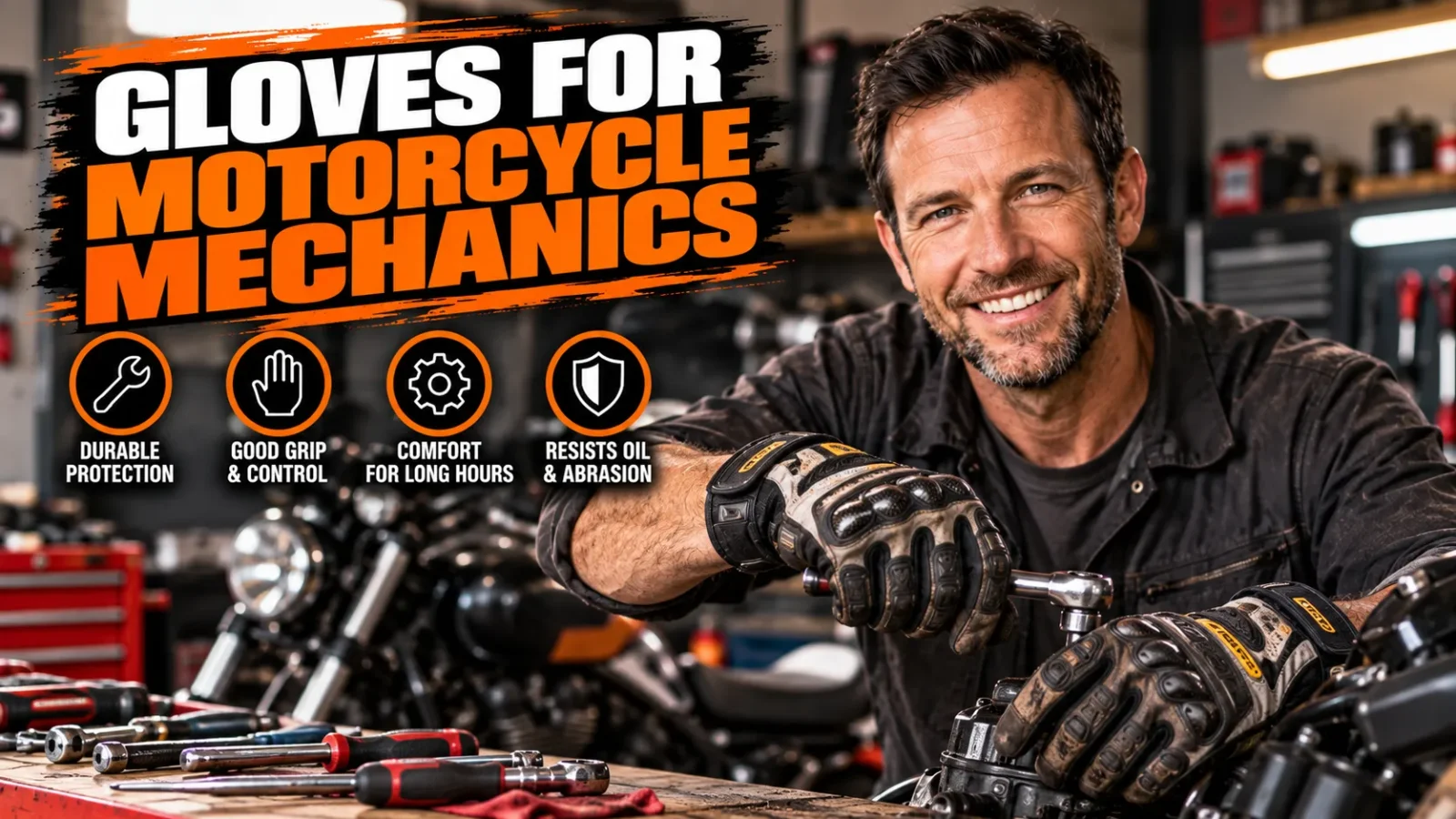
I’ve ruined more pairs of jeans and knuckles than I care to admit working on bikes without proper hand protection. After enough scraped knuckles, chemical burns from brake cleaner, and losing feeling in my fingertips from cold garage floors, I finally got serious about finding gloves that actually work for wrenching.
This isn’t a riding glove roundup. I’ve already covered that ground in my Ultimate Guide to Motorcycle Gloves. This is about the gloves I actually reach for when I’m under the bike, not on it.
I’ve spent the last few years testing gloves during oil changes, chain adjustments, carb rebuilds, and full engine teardowns. Some held up beautifully. Others fell apart or made me want to just work bare-handed. Here’s everything I learned.
- The best mechanic gloves balance dexterity, grip, and chemical resistance without feeling bulky.
- Nitrile-coated or synthetic leather palms outperform cotton or plain fabric for garage work.
- My top overall pick is a snug-fitting nitrile-dipped glove that survives brake cleaner and still lets me feel small fasteners.
- Cheap gloves fail fast around the fingertips and seams — spend a little more for gloves that last through dozens of jobs.
- Fit matters more than material specs; a glove that’s too thick will slow you down more than protect you.
Why Regular Work Gloves Don’t Cut It
I used to grab whatever cheap gloves were on sale at the hardware store. Big mistake. Most of those are built for gardening or light construction, not the specific abuse a motorcycle garage dishes out.
Bike work is uniquely hard on hands. You’re dealing with hot exhaust pipes, sharp fin edges, sticky chain lube, and tiny fasteners that require real finger sensitivity to install correctly.
Bulky gloves make you drop bolts into the frame. Thin gloves leave you exposed to burns and cuts. Finding that middle ground is the whole game here.
The Specific Demands of Motorcycle Wrenching
Unlike car work where you’ve got more room to move, motorcycle mechanics often means working in tight spaces with limited visibility. Your hands do a lot of guessing by feel alone.
I also deal with way more chemical exposure than I expected when I started. Brake cleaner, chain lube, carb cleaner, gasoline, and various greases all touch my hands regularly, and cheap glove materials break down fast under that kind of exposure.
What I Look for in a Mechanic Glove
After going through more pairs than I’d like to admit, I’ve narrowed down the qualities that actually matter. This isn’t guesswork anymore, it’s from real trial and error in my own garage.
Dexterity First, Always
If I can’t feel a bolt threading correctly, the glove is useless to me. I test every pair by trying to start a small M6 bolt by hand while wearing them.
The best gloves I’ve tried use a snug, almost second-skin fit through the fingers. Anything loose or bunchy around the fingertips gets tossed aside immediately.
Grip That Survives Oil and Grease
A grippy palm matters more than people think. I’ve dropped enough sockets and bolts into deep engine cases to know that grip isn’t optional.
Nitrile-coated palms have consistently outperformed everything else I’ve tested for wet or oily grip. Even when my hands are covered in chain lube, these gloves keep holding on.
Chemical and Solvent Resistance
This is where most cheap gloves fail immediately. I’ve watched fabric gloves practically dissolve after a few sprays of brake cleaner.
Nitrile and certain synthetic leathers hold up far better against solvents. If you’re doing any carb or brake work regularly, this feature alone should be a dealbreaker.
Breathability for Long Garage Sessions
I’ve spent entire Saturdays doing full valve adjustments, and sweaty hands inside stuffy gloves get uncomfortable fast. Look for gloves with some mesh paneling on the back of the hand.
It’s a small detail, but it makes a real difference three hours into a job when you’re still trying to keep a steady grip on delicate parts.
My Top Picks for Motorcycle Mechanic Gloves
I’ve broken these down by use case because honestly, no single glove does everything perfectly. I keep at least three different pairs hanging in my garage depending on the job.
Best Overall: Nitrile-Dipped Precision Gloves
My go-to pair for 90% of general maintenance is a lightweight, nitrile-dipped glove with a snug knit back. I use these for oil changes, chain adjustments, and general bolt-turning.
The palm coating grips tools and fasteners incredibly well, even when covered in grease. The knit backing breathes enough that my hands don’t overheat during longer sessions.
Why I keep buying these: they’re cheap enough to replace every few months, but durable enough that I usually get a solid six months of regular use out of one pair.
Best for Heavy Grease and Chemical Jobs
When I’m doing carb cleaning, brake fluid flushes, or anything involving heavy solvent exposure, I switch to a thicker nitrile glove with extended cuffs. These cover more of my wrist and forearm too.
They’re noticeably less dexterous than my everyday pair, but the trade-off is worth it when I’m elbow-deep in old brake fluid or degreaser.
I’ve had brake cleaner soak straight through cheaper gloves within minutes. These held up through entire cleaning sessions without a single spot of breakthrough.
Best for Cold Weather Garage Work
Working in an unheated garage during winter is brutal, and thin nitrile gloves just don’t cut it when it’s below 40 degrees. I switch to a fleece-lined mechanic glove with a textured palm for grip.
They’re bulkier, so I lose some fine dexterity, but my fingers actually stay warm enough to work through an entire brake job without needing constant breaks to warm up.
If you’re also dealing with wet, cold rides and not just garage work, it’s worth checking my breakdown of the best motorcycle gloves for rain since a similar layering logic applies there.
Best Budget Option
I don’t think you need to spend a fortune to protect your hands properly. A basic synthetic leather palm glove with reinforced fingertips has been my reliable budget pick for years.
They don’t have the same solvent resistance as nitrile, but for general wrenching, tire changes, and light maintenance, they get the job done without breaking the bank.
I usually buy these in bulk since they wear out faster, but at their price point, that’s an easy trade-off to accept.
Best for Fine Detail Work
For carb jets, electrical connectors, and anything requiring surgeon-level finger sensitivity, I use ultra-thin touchscreen-compatible gloves. These are barely thicker than a second layer of skin.
They offer almost zero protection against sharp edges or chemicals, so I only use them for short, precise tasks where feel matters more than durability.
The touchscreen fingertips are genuinely useful too. I can pull up a wiring diagram on my phone without stopping to strip a glove off every time.
Common Mistakes I Made Early On
Looking back, I wasted a lot of money buying the wrong gloves for the wrong jobs. A few lessons took longer to learn than they should have.
Buying One Pair for Everything
I used to think one “do it all” glove would cover every job in the garage. That’s simply not realistic if you want proper protection and dexterity for different tasks.
Now I keep a small rotation: nitrile-dipped for daily use, thick chemical-resistant for solvents, and thin touchscreen gloves for detail work. It’s a small investment that’s paid off repeatedly.
Ignoring Fit Because “Gloves Are Gloves”
I grabbed whatever size was available for way too long, assuming a slightly loose fit wouldn’t matter. It matters a lot, especially around the fingertips where dexterity lives or dies.
Measure your hand properly before buying, and don’t be afraid to size down if a brand runs large. A snug fit beats a loose one every single time for mechanic work.
Skipping Gloves Entirely for “Quick Jobs”
The scraped knuckles and chemical burns I mentioned earlier all happened during jobs I thought were too quick to bother gloving up for. Every single time, I regretted it.
Now I glove up even for a five-minute oil check. The habit has saved my hands more times than I can count.
How These Gloves Compare to Riding Gloves
People sometimes ask if their riding gloves double as work gloves, and my honest answer is: not really, not well. Riding gloves are built around abrasion resistance and impact protection for crashes, not chemical exposure or fine mechanical work.
If you’re newer to motorcycles and building out your gear collection, my guide to the Best Beginner Gloves for Motorcycle covers what to look for on the riding side specifically.
Mechanic gloves and riding gloves serve completely different purposes, and I keep separate pairs for each. Mixing the two just leads to disappointing results on both fronts.
Caring for Your Mechanic Gloves
Even the best gloves won’t last if you don’t take basic care of them. I rinse my nitrile-dipped pairs with water after particularly greasy jobs and let them air dry fully before storing.
Avoid tossing them in a hot dryer or leaving them baking in direct sunlight, since heat breaks down the nitrile coating faster than normal wear does. I learned this one the hard way after a pair cracked within weeks.
Signs It’s Time to Replace Them
I retire a pair once I notice thinning at the fingertips, visible seam separation, or a noticeable drop in grip. Once grip goes, the glove is basically dead weight on your hands.
I keep a rough mental note of replacement timing too. Most of my daily-use pairs last somewhere between six months and a year depending on how often I’m in the garage.
My Final Take
Finding the best gloves for motorcycle mechanics really comes down to matching the glove to the job rather than searching for one perfect pair. I’ve settled into a small rotation that covers everything from quick oil checks to full solvent-heavy teardowns.
Start with a solid nitrile-dipped pair for everyday use, then build out from there based on what kind of work you find yourself doing most. Your hands will thank you, and honestly, so will your knuckles.
Frequently Asked Questions
What makes a glove good for motorcycle mechanic work versus riding?
Mechanic gloves prioritize dexterity, grip, and chemical resistance over impact protection and abrasion resistance. You need to feel small bolts and connectors, and you’ll be exposed to oil, brake fluid, and solvents constantly.
Can I use my riding gloves for wrenching on my bike?
You can in a pinch, but I don’t recommend it. Riding gloves aren’t built for solvent exposure and will degrade fast. Check out my Ultimate Guide to Motorcycle Gloves if you’re shopping for the riding side of things too.
Do mechanic gloves need to be touchscreen compatible?
It’s a nice bonus but not essential. I like being able to check torque specs on my phone without stripping a glove off, so I lean toward gloves with at least one touchscreen-friendly fingertip.
How often should I replace my mechanic gloves?
I replace mine every 6 to 12 months depending on use, or sooner if the palm material thins out, seams start splitting, or they lose grip. A worn glove is basically just a fabric liability at that point.

Related Articles

8 Best Waterproof Motorcycle Gloves for Summer Riding
I tested and researched the 8 best waterproof motorcycle gloves for summer, balancing breathability, dry hands, and all-day comfort. Find…
Jake Miller
10 min read

10 Best Motorcycle Gloves for Protection That I’d Actually Trust My Hands To
I've crashed, dropped bikes, and tested dozens of gloves. Here are the 10 best motorcycle gloves for protection I genuinely…
Jake Miller
11 min read

9 Best Mechanix Gloves for Motorcycle Riding You Can Actually Trust
I've tested Mechanix gloves on real rides—here are the 9 best models for motorcycle riding, from impact protection to cold-weather…
Jake Miller
11 min read