
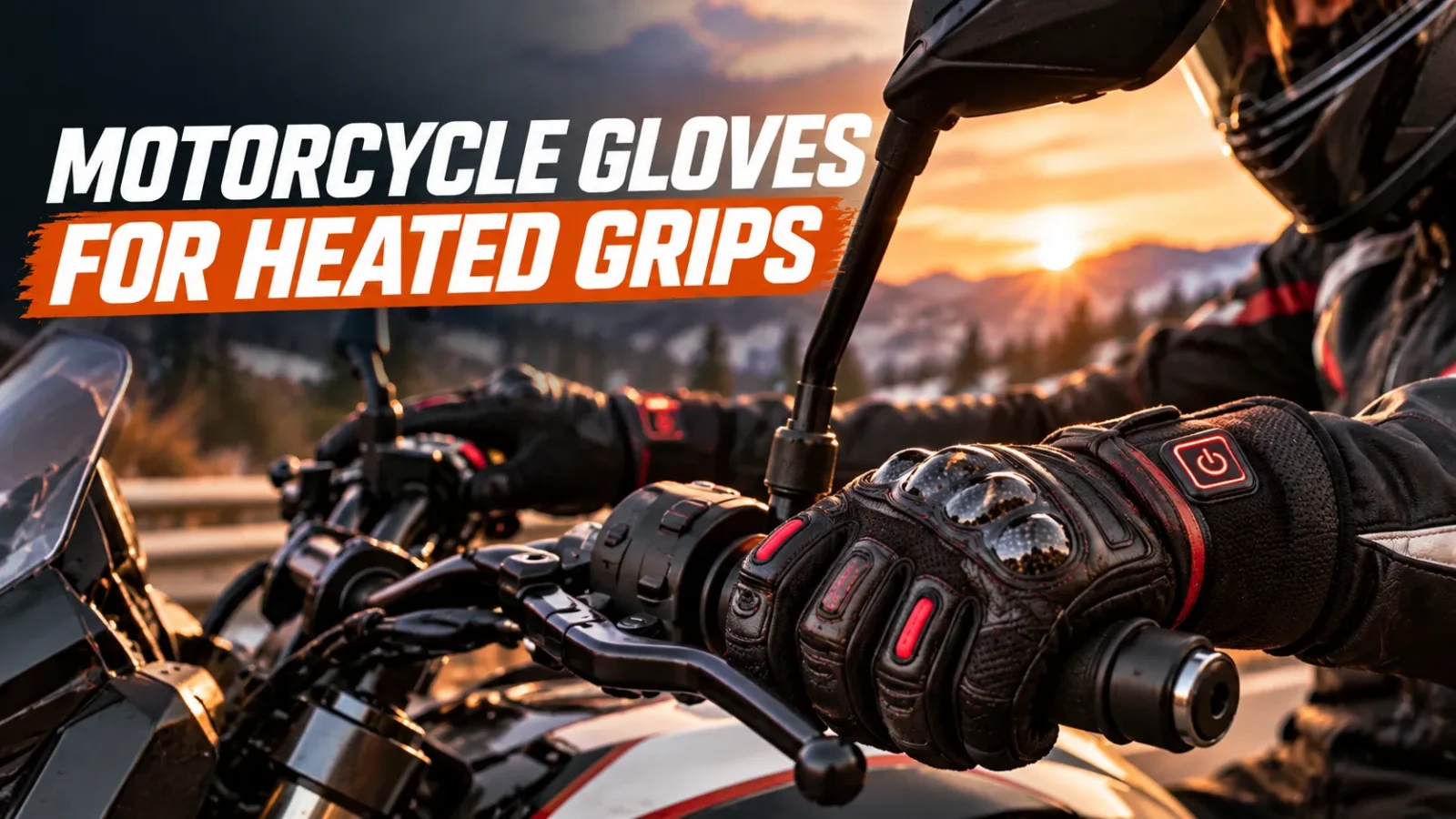
I’ve burned through more pairs of motorcycle gloves than I care to admit, and I can tell you this: heated grips only work as well as the gloves you’re wearing over them. Slap on a pair of bulky winter gauntlets and you’ll barely feel the warmth. Go too thin and you lose wind protection entirely.
Finding that sweet spot took me years of cold commutes and shoulder-season rides to figure out. If you want the full rundown on glove anatomy, materials, and fit before diving in, my Ultimate Guide to Motorcycle Gloves is a great place to start. But if you just want my tested picks for pairing with heated grips, keep reading.
- My top overall pick is the Held Satu — thin goat leather that transfers heat from grips beautifully without sacrificing durability.
- For cold-weather touring, the Klim Adventure GTX Short and Rukka Virium GTX balance warmth with grip feel best.
- Budget-conscious riders should look at the Alpinestars Andes v3 Drystar, which won’t break the bank but still plays nicely with heated grips.
- Thinner isn’t always better — you need a glove with a supple palm but enough backhand insulation to block wind chill.
- If you ride in genuinely brutal cold, consider pairing your grips with actual heated gloves rather than relying on grips alone.
1. Held Satu — Best Overall Glove for Heated Grips
The Held Satu is my go-to recommendation whenever someone asks me about gloves for heated grips, and I’ve recommended it more times than I can count. It’s made from incredibly supple kangaroo and goat leather, which sounds fancy, but the real benefit is how thin and flexible it stays while still offering solid abrasion resistance.
Because the palm material is so thin, heat from your grips transfers through almost immediately. I noticed a difference within a minute or two of turning my grips on, which isn’t something I can say about thicker gloves.
The Satu also has a short cuff design that tucks neatly under a jacket sleeve, so you’re not fighting bulky gauntlets when you’re trying to feel the bars. Pricing usually sits in the $150-$180 range, which is reasonable for the quality of leather you’re getting.
Why It Works So Well With Heated Grips
The lack of heavy padding on the palm is actually the Satu’s superpower here. Most gloves add foam or gel padding across the palm for comfort, but that same padding insulates your hand from the grip’s heat. Held skipped the heavy palm padding and it pays off.
2. Klim Adventure GTX Short — Best for Cold-Weather Touring
When temperatures really start dropping, I reach for the Klim Adventure GTX Short. It’s a GORE-TEX lined glove built for adventure and touring riders who need waterproofing without sacrificing dexterity, and it happens to work great with heated grips too.
The palm uses a goat leather and synthetic blend that’s thinner than you’d expect from a glove this weatherproof. I’ve worn these on 35°F mornings with my heated grips cranked up, and my fingers stayed warm within a few miles.
At around $170-$190, it’s not cheap, but the GORE-TEX membrane means water simply isn’t a factor, which matters a lot if you’re commuting through unpredictable weather. If rain is your bigger concern than cold, I’d also point you toward my breakdown of the best motorcycle gloves for rain.
Touchscreen and Visor Wipe Features
The Adventure GTX Short includes a touchscreen-compatible fingertip and a visor wipe on the left index finger. Small details, but ones I actually use every single ride, especially when I need to glance at GPS without pulling over.
3. Rukka Virium GTX — Best Premium Winter Option
Rukka doesn’t get talked about as much in the US as European brands deserve, but the Rukka Virium GTX is genuinely one of the best cold-weather gloves I’ve tested. It combines a GORE-TEX insert with Outlast lining technology, which actively regulates temperature rather than just trapping heat.
What impressed me most is how this glove doesn’t feel like a typical winter gauntlet. The palm remains thin enough that heated grips still make a noticeable difference, which isn’t always true of heavily insulated winter gloves.
Expect to pay a premium here, often $250 or more, but if you ride through genuinely miserable winter conditions, it’s worth the investment. For a deeper dive into cold-weather specific options, check out my guide to the best winter motorcycle gloves for heated grips.
4. Alpinestars SP-8 v3 — Best for Sport Riders Who Still Want Heat
Sport riders often assume heated grips and race-style gloves don’t mix, but the Alpinestars SP-8 v3 proves otherwise. It’s a short-cuff leather glove built for sport and street riding, with a leather and textile chassis that’s thin enough to let grip heat through easily.
I’ve used this glove on my naked bike during shoulder-season rides, and the combination of hard knuckle protection and grip-friendly palm thickness felt like a genuine best-of-both-worlds setup. It typically runs $130-$150.
The SP-8 v3 also has a PU external palm slider, which some might assume adds bulk, but Alpinestars kept it low-profile enough that it doesn’t interfere with grip contact.
Fit and Sizing Notes
Alpinestars gloves tend to run slightly narrow in my experience, so if you’re between sizes, I’d size up rather than down, especially if you plan to layer a thin liner underneath during cooler rides.
5. Five WFX City Evo — Best Waterproof Mid-Weight Pick
The Five WFX City Evo has quietly become one of my favorite everyday commuting gloves. It’s a waterproof, breathable glove using a Hipora membrane, with a soft goat leather palm that stays thin despite the weatherproofing layer built in.
I wear these on my daily commute through unpredictable spring weather, and they’ve held up through downpours while still letting my heated grips do their job. Pricing usually lands around $90-$110, making it one of the more affordable weatherproof options on this list.
If waterproofing is your top priority over pure heat transfer, it’s worth comparing this against other options in my roundup of the best waterproof gloves for motorcycle riding.
6. REV’IT! Sand 4 H2O — Best All-Rounder for Mixed Conditions
I’ve put a lot of miles in the REV’IT! Sand 4 H2O, and it remains one of the most versatile gloves I own. It uses a Pittards leather palm with a Hydratex waterproof insert, giving you weather protection without the stiff, bulky feel some waterproof gloves have.
The palm stays flexible enough that heat from grips comes through reliably, and I’ve used this glove comfortably from about 40°F up into the 60s. Above that, it starts to feel a touch warm, but for spring and fall riding it’s close to ideal.
Pricing typically sits around $150-$170. REV’IT also includes a visor wiper and touchscreen-compatible fingertips, both of which I use constantly.
A Great Pick for Newer Riders Too
Because the Sand 4 H2O balances protection, comfort, and weather resistance so well, I often point newer riders toward it. If you’re still building your gear collection, it’s worth browsing my picks for Best Beginner Gloves for Motorcycle as well.
7. Alpinestars Andes v3 Drystar — Best Budget Pick
Not everyone wants to spend $150+ on gloves, and I get that. The Alpinestars Andes v3 Drystar is my go-to budget recommendation, typically priced around $60-$70, and it still performs well with heated grips.
It uses a soft-touch textile and leather construction with a Drystar waterproof, breathable membrane. The palm isn’t as premium as full leather options on this list, but it’s thin enough that grip heat still transfers reasonably well.
I’ve recommended this glove to friends just getting into riding who don’t want to overspend before they know what style of gloves they actually prefer. It’s a genuinely solid value pick.
8. Dainese Tempest 3 D-Dry — Best for All-Season Versatility
The Dainese Tempest 3 D-Dry has become a staple in my glove rotation because it works in more conditions than most gloves I’ve tested. It features a D-Dry waterproof membrane, a soft leather and textile palm, and a knuckle protector that doesn’t add bulk where it counts.
I’ve worn this glove from chilly 45°F mornings through warmer afternoon rides, and the heat from my grips still comes through noticeably on the palm. It’s not the thinnest glove on this list, but it strikes a comfortable middle ground.
Expect to pay around $130-$150. Dainese also offers touchscreen compatibility on the index finger and thumb, a small feature I appreciate every time I need to check my phone at a stoplight.
9. Racer Gloves USA High Racer — Best Thin Leather Option for Maximum Heat Feel
If your main priority is feeling every bit of warmth your heated grips produce, the Racer Gloves USA High Racer is about as thin and unpadded as a quality glove gets while still offering real protection. It’s built with a soft, minimal-padding leather construction favored by riders who want maximum bar feel.
I’ve used this glove specifically on cool mornings when I wanted the fastest possible heat transfer from my grips, and it delivered better than almost anything else I’ve tried. It runs around $100-$130 depending on the retailer.
Keep in mind this glove sacrifices some wind resistance for that thinness, so it’s best paired with heated grips rather than relying on the glove alone for warmth in very cold conditions.
Best Paired With Heated Grips, Not Instead Of Them
This is really the glove that sums up the whole philosophy behind this list: thinner gloves plus heated grips often beats thick gloves alone. The High Racer just takes that idea to its logical extreme.
How I Chose These Gloves
I didn’t just pick popular names off a shelf. Every glove on this list was selected based on palm thickness, material flexibility, waterproofing where relevant, and real-world testing or well-documented rider feedback from people I trust in the riding community.
I also paid close attention to how each glove performs specifically with heated grips, not just how warm it is on its own. That distinction matters more than most buying guides admit.
What Makes a Glove “Heated Grip Friendly”
In my experience, three things matter most: palm thickness, insulation placement, and material flexibility. A glove can be warm overall but still block heat transfer if the palm padding is too thick.
- Thin, supple palms transfer heat from grips far better than padded or gel-lined palms.
- Backhand insulation keeps wind chill out without interfering with grip contact.
- Flexible materials like goat or kangaroo leather conform to the grip shape for better contact.
Tips for Getting the Most Out of Heated Grips and Gloves Together
Even the best glove won’t help much if you’re not using your heated grips correctly. I’ve learned a few things over the years that make a real difference.
First, turn your grips on a few minutes before you start riding, not after your hands are already cold. It’s much easier to maintain warmth than to recover from being chilled.
Second, avoid gloves with thick gel padding across the entire palm if heated grips are a priority for you. That padding is comfortable on long rides, but it’s the biggest culprit in blocking heat transfer.
Third, if you’re riding in truly extreme cold, don’t expect gloves and grips alone to solve everything. That’s when I’d suggest layering in actual heated gloves, which you can read more about in my best heated gloves for motorcycle review and buying guide.
Layering Strategy for Extreme Cold
On the coldest days I ride, I’ll wear a thin liner glove underneath one of the gloves on this list, still relying on my heated grips for the bulk of the warmth. It’s a simple trick that extends my riding season by weeks on either end.
Final Thoughts From My Garage
After years of testing gloves against my own heated grips, my honest takeaway is this: don’t assume “warmer glove” automatically means “warmer hands.” The relationship between glove thickness and heat transfer is more nuanced than most riders realize.
My personal rotation includes the Held Satu for most rides, the Klim Adventure GTX Short for genuinely cold mornings, and the Alpinestars Andes v3 Drystar when I just need a reliable, affordable backup pair.
Whichever glove you choose, make sure it fits snugly, doesn’t bunch up in the palm, and lets you actually feel your grips rather than just insulating your hand from the world. That’s really the whole secret here.
Frequently Asked Questions
Do I need special gloves for heated grips?
Not exactly special, but you want gloves that are thinner and more flexible than heavy winter gloves so your palm and fingers can actually feel the heat. Bulky, heavily insulated gloves can trap heat away from your skin and reduce the benefit of heated grips.
Can heated grips damage my motorcycle gloves?
Generally no, as long as your gloves are made from quality leather or synthetic materials rated for normal riding temperatures. Just avoid leaving your grips on max heat with very thin summer gloves for extended periods, as prolonged direct heat can dry out leather over time.
Are heated gloves better than heated grips?
They solve different problems. Heated grips warm your palms and fingers touching the bars, while heated gloves warm your entire hand. Many riders use both together; check out my best heated gloves for motorcycle review and buying guide if you want full-hand warmth on top of heated grips.
What’s the best glove thickness for heated grips in winter?
I recommend a mid-weight glove with a thin, supple palm and a bit of insulation on the back of the hand. This lets heat transfer through while still blocking wind chill. For deep winter rides, pair thinner gloves with heated grips rather than relying on either alone.

Related Articles
8 Best Waterproof Motorcycle Gloves for Summer Riding
I tested and researched the 8 best waterproof motorcycle gloves for summer, balancing breathability, dry hands, and all-day comfort. Find…
 Jake Miller
10 min read
Jake Miller
10 min read
10 Best Motorcycle Gloves for Protection That I’d Actually Trust My Hands To
I've crashed, dropped bikes, and tested dozens of gloves. Here are the 10 best motorcycle gloves for protection I genuinely…
Jake Miller
11 min read
9 Best Mechanix Gloves for Motorcycle Riding You Can Actually Trust
I've tested Mechanix gloves on real rides—here are the 9 best models for motorcycle riding, from impact protection to cold-weather…
Jake Miller
11 min read