
9 Best Motorcycle Gloves for Touring That Won’t Let You Down at Mile 300
 Jake Miller
10 min read
Jake Miller
10 min read
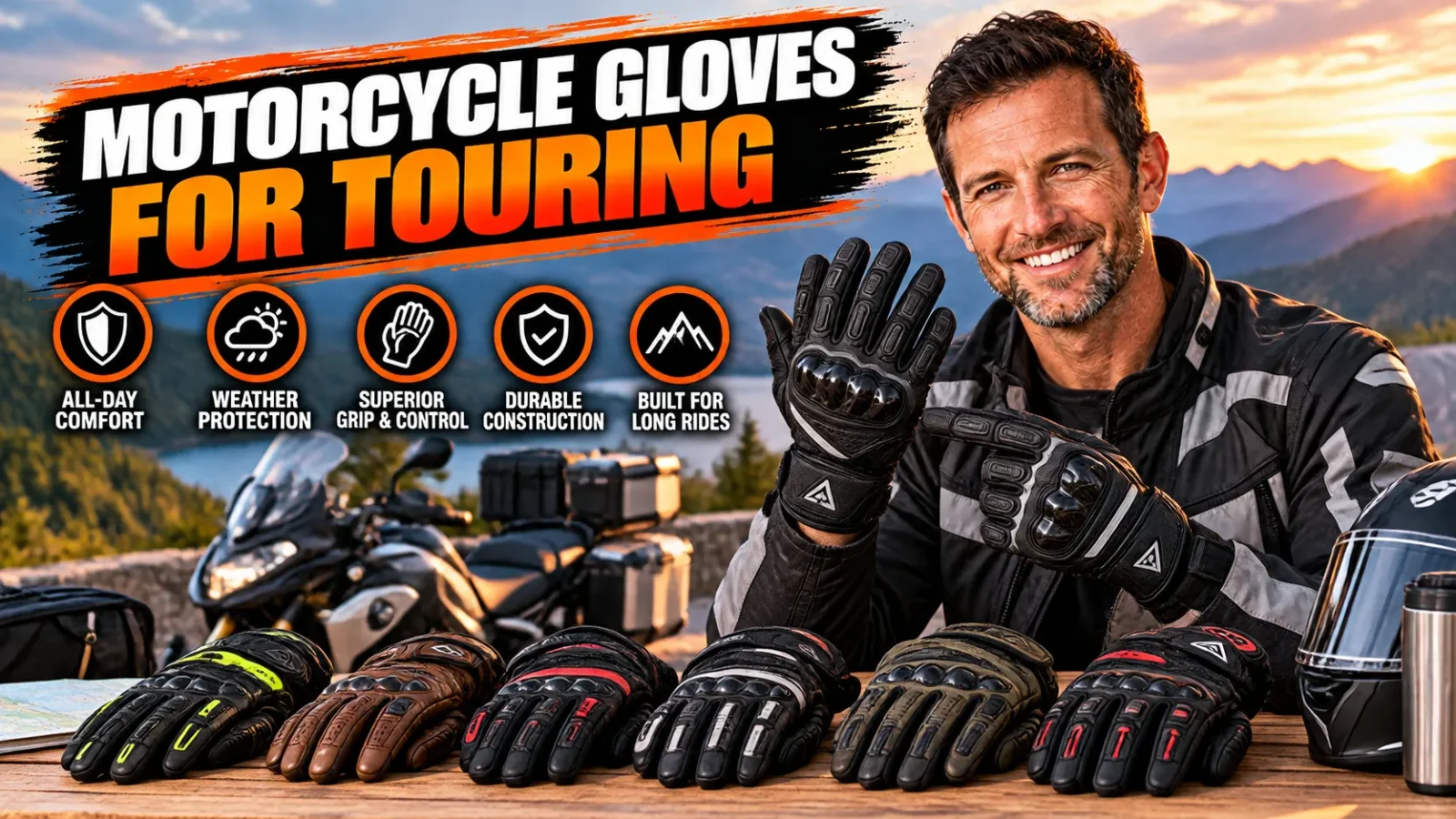
I’ve put a lot of miles behind the bars over the years, and if there’s one piece of gear that can make or break a long day of riding, it’s my gloves. A jacket can be slightly wrong and I’ll survive. Gloves that don’t fit, don’t breathe, or leak the moment it drizzles? That’s a miserable 400-mile day.
Touring gloves are a different animal from the short-commute pair in my gear bag. I need weatherproofing, all-day comfort, solid armor, and enough dexterity to work the clutch, brake lever, and phone mount without peeling them off every stop. Below are the gloves I keep reaching for, or that I’ve watched fellow long-haul riders swear by.
If you want the full breakdown of glove construction, materials, and sizing before you buy, my Ultimate Guide to Motorcycle Gloves is a great companion read to this list.
- My top all-rounder is the REV’IT! Sand 4 H2O, thanks to its waterproof insert and near-perfect climate balance.
- For adventure touring in the dirt and rain, the Klim Adventure GTX Long is the toughest, most weatherproof option I’ve worn.
- Budget-minded riders should look at the Alpinestars Andes V3 Drystar or the Five RS-WP for genuine waterproof performance under $100.
- Cold-climate tourers should seriously consider a heated pair like Gerbing’s 12V gloves before writing off winter riding altogether.
- Fit matters more than price. A cheaper glove that fits perfectly beats a premium glove that’s half a size off.
1. REV’IT! Sand 4 H2O — Best All-Around Touring Glove
The REV’IT! Sand 4 H2O is the glove I recommend most when someone asks me for a single pair that does everything. It’s got a Hipora waterproof and breathable insert, pre-curved goatskin leather palm, and a knuckle protector that doesn’t feel bulky on the bars.
What sold me on the Sand 4 H2O is the ventilation. There are perforations across the fingers and a mesh panel on the back of the hand that actually moves air at highway speed, yet the waterproof membrane keeps my hands dry when the sky opens up.
At around $150-160, it’s not the cheapest touring glove out there, but the *versatility* justifies the price. I’ve worn mine from 40-degree mornings to sweaty afternoon stops without ever wanting to swap gloves mid-ride.
2. Alpinestars Andes V3 Drystar — Best Budget Waterproof Pick
If you’re touring on a budget, the Alpinestars Andes V3 Drystar is one of the smartest purchases you can make. It runs around $70-80 and still includes a genuine Drystar waterproof/breathable membrane, which is rare at this price point.
The palm is a soft goat leather with a lightly padded knuckle area, so it’s not race-spec protection, but for touring at moderate speeds it’s more than adequate. I’ve used mine on rainy commutes and weekend rides alike.
The gauntlet cuff cinches down tight over a jacket sleeve, which matters a lot on tour when you’re fighting wind and rain at 70 mph for hours. If you’re newer to riding and want something reliable without overspending, this one pairs nicely with what I cover in my Best Beginner Gloves for Motorcycle guide.
3. Klim Adventure GTX Long — Best for Adventure Touring
For riders who split their touring time between pavement and gravel roads, the Klim Adventure GTX Long is, in my experience, the most rugged option that still feels civilized on a long asphalt stretch. It uses a genuine Gore-Tex membrane, so waterproofing is best-in-class here.
The outer shell mixes goat leather with a tough textile, and there’s a solid hard-knuckle guard plus extra padding on the palm to handle vibration on rough terrain. It’s a longer gauntlet too, built to seal fully over adventure jacket cuffs.
It’s a premium buy at roughly $200, but if your touring routes include unpaved sections, dust, and unpredictable weather, I think it earns every dollar. This is the glove I grab for multi-day ADV trips without a second thought.
4. Dainese Tempest 2 D-Dry — Best for Long-Distance Comfort
The Dainese Tempest 2 D-Dry has become one of my go-to gloves for pure mile-eating comfort. Dainese’s D-Dry waterproof insert keeps things dry, but what really stands out is the ergonomic pre-curved fit that reduces hand fatigue on long stints.
It’s got a soft goatskin palm, a lightly armored knuckle, and touchscreen-compatible fingertips, which is a small feature I genuinely use every single ride to adjust my GPS without stopping.
Priced around $130-150, the Tempest 2 sits comfortably in the mid-range. I find the fit runs true to size and slightly narrower than the REV’IT!, so if you have wider hands, try before you buy or size up.
5. Held Air n Dry — Best Warm-Weather Touring Glove
Touring doesn’t always mean cold or wet. For summer road trips, I lean on the Held Air n Dry, a German-made glove built around a clever removable waterproof liner. Pull the liner and you’ve got a highly ventilated summer glove; pop it back in and you’re covered for a surprise storm.
It uses kangaroo leather in key areas, which is thinner and more supple than cowhide while still being remarkably abrasion resistant. The knuckle protector is low-profile, so it never feels like I’m wearing armor at all.
This is a premium glove, typically $180-plus, but the 2-in-1 design genuinely replaces two gloves in my gear bag. If you’re focused purely on hot-weather touring, it’s worth comparing against my picks in the best motorcycle gloves for summer roundup.
6. Rukka Realer — Best Premium Touring Glove
The Rukka Realer is about as close to a “buy it for life” touring glove as I’ve found. Rukka is a Finnish brand obsessed with foul-weather riding, and it shows in the construction here: a Gore-Tex membrane, goat and cowhide leather blend, and reinforced palm sliders.
What I appreciate most is the articulated finger design. Even after eight hours on the bars, my hands don’t feel like they’ve been clenched around a chicken wing the whole day. The stitching and materials feel genuinely built for European four-season touring.
It’s expensive, often north of $220, and it’s a niche brand in North America, so sizing can take some research. But for riders doing serious continental touring in changeable weather, I think it’s one of the best gloves money can buy.
7. Five RS-WP — Best Budget Pick for Wet Climates
The Five RS-WP is a glove I recommend constantly to riders who tour in unpredictable, rainy regions but don’t want to spend premium money. It’s usually under $90 and includes a genuine waterproof/breathable insert along with a soft leather and textile shell.
It’s not the most armored glove on this list, but the fit is snug and precise, which I actually prefer for clutch and brake feel on long rides. The cuff is adjustable and long enough to seal properly over jacket sleeves.
If rain is your biggest touring concern rather than cold or abrasion resistance, this glove punches well above its price tag. It’s also worth cross-checking against my dedicated best motorcycle gloves for rain picks.
8. Gerbing’s 12V Heated Gloves — Best for Cold-Climate Touring
Once temperatures drop into the 40s and below, no amount of insulation alone keeps my fingers happy for a full touring day. That’s where Gerbing’s 12V heated gloves come in, and honestly, they changed how I plan cold-weather trips entirely.
These gloves wire directly into your bike’s electrical system (or a battery pack) and use carbon-fiber heating elements across the fingers and back of the hand. Even at highway speed in near-freezing air, I can dial in enough warmth to ride comfortably for hours.
They run around $150-200 depending on the kit, plus wiring accessories. It’s an investment, but if you tour into shoulder seasons or mountain passes, I genuinely consider this a safety upgrade, not just a comfort one, because cold hands mean slow reactions.
9. Racer Mickey — Best Lightweight Glove for Hot-Weather Touring
For scorching summer touring days, the Racer Mickey is a glove I keep coming back to. It’s a minimalist, perforated leather glove that prioritizes airflow and feel over heavy armor, which makes it a favorite for riders touring through desert or high-heat regions.
The goat leather construction is thin enough that it barely feels like I’m wearing gloves at all, yet it still offers a real layer of abrasion protection over bare skin. There’s no waterproof membrane here, so it’s strictly a dry-weather companion.
Priced around $100, it’s not the cheapest minimalist glove out there, but the fit and breathability are excellent. Riders who prioritize feel and airflow over weatherproofing, including many women riders I’ve talked gear with, might also want to browse the best summer leather motorcycle gloves for women for more warm-weather options.
How I Actually Choose Touring Gloves
Weatherproofing Comes First
On tour, you don’t get to pick your weather. I always prioritize a genuine waterproof/breathable membrane like Gore-Tex, Drystar, or Hipora over a glove that just claims to be “water-resistant” with treated leather.
Treated leather will hold up for a light sprinkle, but a determined two-hour downpour on the interstate will find its way through eventually. A membrane glove keeps my hands dry and, more importantly, keeps my grip strength intact.
Fit and Dexterity Matter More Than You’d Think
A touring glove that’s slightly too tight will numb your fingers by hour three. One that’s too loose bunches in the palm and messes with lever feel right when you need precision the most.
I always try gloves on gripping an actual set of bars if possible, or at least a broom handle at home, before committing to a size. Pre-curved fingers, like those on the Dainese Tempest 2 or REV’IT! Sand 4, make a noticeable difference over long days.
Don’t Underestimate Ventilation
It’s easy to focus only on rain and cold and forget that touring often means baking in traffic or sitting at a fuel stop in full sun. Gloves like the Held Air n Dry and Racer Mickey solve this with removable liners or straight-up perforation.
If your touring season leans heavily toward summer, it’s also worth checking my best cheap motorcycle gloves for summer guide for more budget-friendly warm-weather options that pair well as a second pair alongside your main touring glove.
Armor and Abrasion Resistance
Touring gloves generally trade some hardcore track-level armor for comfort, but I still look for a hard knuckle protector, palm sliders, and reinforced stitching at the seams. Your hands hit the ground first in most low-speed drops, so this isn’t an area to skip.
Leather thickness matters too. Goatskin and kangaroo leather offer a great strength-to-thinness ratio, which is why you’ll see them repeatedly across almost every glove on this list.
My Final Take
If I had to pick just one pair for a cross-country trip tomorrow, I’d grab the REV’IT! Sand 4 H2O without hesitation. It’s the most balanced glove I’ve tested across weather, comfort, and price.
But touring is personal. If you chase gravel roads, the Klim Adventure GTX Long is worth every extra dollar. If you’re riding into genuinely cold mornings, don’t sleep on heated gloves like Gerbing’s, they’re not a gimmick, they’re a real upgrade to your riding season.
Whatever you choose, spend the time getting the fit right and check the weatherproofing claims before you leave the store. Your hands will thank you somewhere around mile 250.
Frequently Asked Questions
What makes a glove good specifically for touring versus everyday riding?
Touring gloves need a balance of weatherproofing, ventilation, and long-wear comfort since you’re often in the saddle for 6+ hours. Look for gauntlet cuffs, breathable-yet-waterproof membranes, and pre-curved fingers that won’t fatigue your hands over hundreds of miles.
Should I buy waterproof gloves even if I mostly tour in dry climates?
Yes, I always recommend it. Weather changes fast on multi-day trips, and a membrane like Gore-Tex or Drystar adds very little bulk while saving your ride if you get caught in a storm. Check out my thoughts in the best motorcycle gloves for rain guide too.
How do I know if a touring glove fits correctly?
A good touring glove should feel snug but not tight when new, with no bunching in the palm when you grip the bars. Wiggle your fingers into the tips fully; if there’s dead space at the fingertips, size down.
Are heated gloves worth it for touring riders?
If you ride into fall, early spring, or through mountain passes, absolutely. I consider heated gloves a genuine game-changer for three-season touring, not just a cold-weather luxury item.

Related Articles
8 Best Waterproof Motorcycle Gloves for Summer Riding
I tested and researched the 8 best waterproof motorcycle gloves for summer, balancing breathability, dry hands, and all-day comfort. Find…
Jake Miller
10 min read
10 Best Motorcycle Gloves for Protection That I’d Actually Trust My Hands To
I've crashed, dropped bikes, and tested dozens of gloves. Here are the 10 best motorcycle gloves for protection I genuinely…
Jake Miller
11 min read
9 Best Mechanix Gloves for Motorcycle Riding You Can Actually Trust
I've tested Mechanix gloves on real rides—here are the 9 best models for motorcycle riding, from impact protection to cold-weather…
Jake Miller
11 min read