
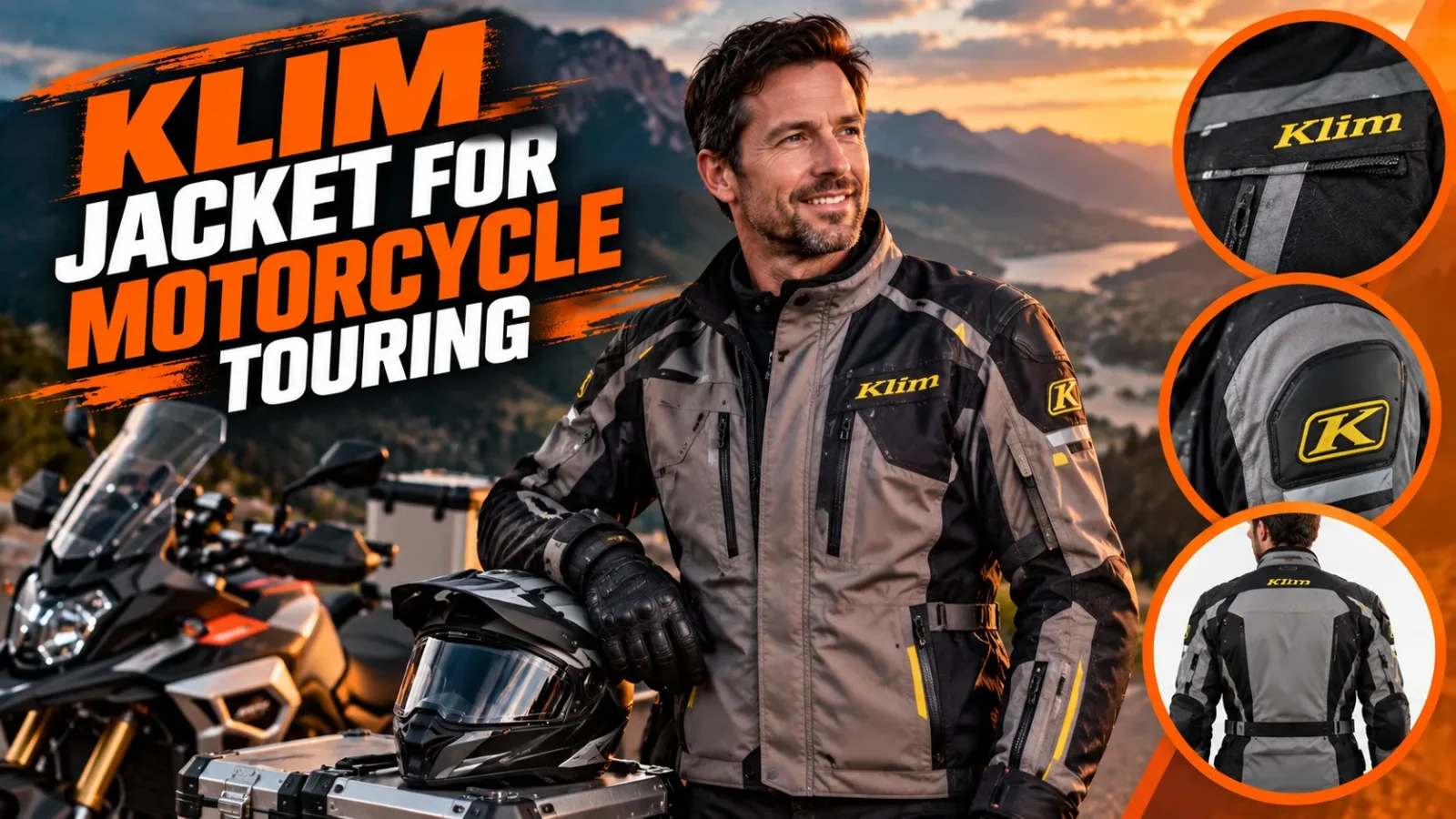
I’ve put a lot of miles under my wheels wearing Klim gear, from scorching desert highways to soaked mountain passes. When people ask me what jacket actually holds up to real touring abuse, Klim is almost always the first brand I mention.
This isn’t a brand that cuts corners. Klim jackets tend to cost more than most competitors, but I’ve found the durability, weatherproofing, and protection usually justify the price tag over years of use.
In this guide, I’m breaking down my top picks for touring specifically, not commuting or track days. If you want the bigger picture first, my Ultimate Guide to Motorcycle Jackets covers everything from materials to fit across every brand I’ve tested.
- The Klim Badlands Pro A3 is my top overall pick for serious long-distance touring in all conditions.
- The Klim Latitude offers the best balance of price, protection, and versatility for most riders.
- The Klim Induction is my go-to for hot-weather touring where airflow matters more than waterproofing.
- Gore-Tex Pro models cost more but genuinely last longer and perform better in sustained rain.
- Fit and armor placement matter just as much as fabric choice, so always check sizing charts before buying.
1. Klim Badlands Pro A3 — Best Overall Klim Jacket for Touring
If I had to pick one jacket to own for the rest of my touring life, it would honestly be the Klim Badlands Pro A3. It’s the flagship for a reason, and I’ve worn it through everything from Colorado hailstorms to Baja dust storms without a single complaint.
The shell uses a 3-layer Gore-Tex Pro laminate, which in my experience is the most reliable waterproofing membrane on the market. It breathes well too, something a lot of “waterproof” jackets fail to deliver once you’re actually sweating on a long climb.
Armor-wise, it comes with D3O Level 1 protectors at the shoulders and elbows, upgradeable to Level 2, plus a certified back protector pocket. That level of protection puts it firmly in line with what I’d recommend after reviewing motorcycle jacket safety ratings explained.
Why I Keep Coming Back to It
The pocket layout is genuinely thought through, not just tacked on. I can access my phone, wallet, and tools without unzipping the whole jacket, which matters more than people realize on multi-week trips.
Expect to pay north of $1,300 for this one. It’s expensive, but I’ve had mine for several seasons and it still looks and performs like new.
2. Klim Latitude — Best Value Touring Jacket
The Klim Latitude is the jacket I recommend most often when friends ask me where to start with premium touring gear. It doesn’t have every bell and whistle of the Badlands Pro, but it covers 90% of what most riders actually need.
It uses a Gore-Tex membrane as well, just not the Pro-grade version, which keeps the price more reasonable at around $700-$800. In my testing, it still handled multi-hour downpours without leaking through the seams.
Ventilation is solid thanks to large intake and exhaust vents across the chest and back. On a 95-degree day in Arizona, I was surprised how manageable the heat felt with the vents fully open.
Fit and Comfort Notes
The Latitude runs true to size in my experience, which isn’t always the case with adventure-style touring jackets. I’d still recommend trying one on if you can, especially if you plan to layer heavily in cold weather.
For riders comparing options across brands, I’d suggest checking my broader roundup of the best motorcycle jacket for touring 2026 to see how the Latitude stacks up against non-Klim alternatives.
3. Klim Kodiak — Best Heavy-Duty Adventure Touring Jacket
When I know I’m heading into genuinely rough conditions, gravel roads, cold rain, unpredictable weather, I reach for the Klim Kodiak. It’s built more like armor than a jacket, and that’s exactly the point.
This jacket uses a heavier Gore-Tex Pro shell combined with reinforced Cordura panels at high-wear points like the shoulders and forearms. I’ve dragged this jacket against rocks during a tip-over and it didn’t tear.
The Kodiak includes D3O Level 2 armor as standard, which is genuinely rare at this price point. That’s a meaningful upgrade over Level 1 protection if you’re touring through remote areas far from help.
It’s a heavier, warmer jacket overall, so I don’t reach for it in summer. But for cold-weather, high-mileage adventure touring, I haven’t found much that beats it.
4. Klim Carlsbad — Best Retro-Styled Touring Jacket
Not every touring rider wants to look like they’re headed to the moon, and that’s where the Klim Carlsbad comes in. It’s got a more streamlined, street-inspired look while still packing serious touring capability underneath.
The Carlsbad uses a waxed-cotton-look textile shell that’s actually treated with a durable water repellent finish. It’s not fully waterproof like the Gore-Tex models, but I’ve ridden through moderate rain in it without issue.
Armor comes standard at the shoulders and elbows, and there’s a pocket for an optional back protector. I appreciate that Klim didn’t skip protection just because this jacket leans more casual.
I’d recommend this one specifically if your touring routes mix highway miles with coffee shop stops. It transitions off the bike far better than the bulkier adventure-style jackets on this list.
5. Klim Induction — Best Hot-Weather Touring Jacket
Touring through the desert Southwest taught me that airflow matters more than almost anything else once temperatures climb past 100°F. The Klim Induction has become my dedicated summer touring jacket for exactly that reason.
It’s built from a highly abrasion-resistant mesh with reinforced 900D Cordura in impact zones. Air moves through this jacket in a way that genuinely surprised me the first time I wore it on a triple-digit day.
D3O armor is included at the shoulders and elbows, and there’s a back protector pocket if you want to add one. Despite being a mesh jacket, it doesn’t feel like Klim compromised on protection to get there.
A Quick Reality Check on Mesh Jackets
Mesh jackets like the Induction aren’t meant for cold or wet touring days, obviously. I always pack a lightweight rain layer underneath just in case a storm rolls in unexpectedly, which happens more often than you’d think on long trips.
6. Klim Artemis — Best Klim Touring Jacket for Women
My partner has put serious miles on the Klim Artemis, and it’s easily one of the better women’s-specific touring jackets either of us has tested. Too many brands just shrink a men’s cut and call it done, but Klim actually redesigned the fit here.
It uses a 3-layer Gore-Tex shell similar to what you’ll find in the men’s Latitude, so waterproofing and breathability are both excellent. The articulated shoulders and adjustable waist give a noticeably better range of motion.
D3O armor comes standard at the shoulders and elbows, with a back protector pocket ready for an upgrade. Pricing sits around $700, putting it right in line with the men’s Latitude.
If you’re shopping for a partner or yourself, I’d genuinely put this jacket ahead of most “women’s fit” jackets I’ve seen from other brands.
7. Klim Marrakesh — Best Adventure-Touring Hybrid Jacket
The Klim Marrakesh sits in an interesting middle ground between pure adventure gear and traditional touring jackets. I’ve found it particularly good for riders who split time between pavement and light off-road sections.
It features a durable textile shell with strategic stretch panels for comfort during long days in the saddle. Ventilation is generous, with large zippered vents that actually flow air rather than just looking functional.
Armor includes D3O at the shoulders and elbows, consistent with the rest of Klim’s touring lineup. Pricing typically lands in the $500-$600 range, making it one of the more accessible Gore-Tex-free options from the brand.
I’ll be honest, this isn’t the jacket I’d pick for a week of sustained heavy rain. But for mixed-condition touring where flexibility matters more than max weatherproofing, it’s a strong choice.
8. Klim Traverse — Best Lightweight Packable Touring Jacket
For riders who value packability, the Klim Traverse is worth a serious look. I’ve used mine as both a standalone shell and a mid-layer, and it compresses down small enough to stash under a seat or in a pannier.
It uses a Gore-Tex Paclite shell, which trades a bit of long-term durability for significantly reduced weight and bulk. On multi-week tours where luggage space is tight, that trade-off has been worth it for me.
It doesn’t come with the heavy armor package of the Badlands Pro or Kodiak, so I tend to treat this more as a rain layer over a base jacket than a standalone protective piece. Still, for adding weatherproofing without adding bulk, it’s excellent.
How I Actually Choose Between These Jackets
Honestly, the “best” Klim jacket depends entirely on where and how you ride. I never recommend the same jacket to two riders without asking about their typical routes and climate first.
Climate Should Drive Your Decision
If you tour through consistently wet or cold regions, I’d lean toward the Badlands Pro A3 or Kodiak. Both use full Gore-Tex Pro shells that have never let me down in sustained downpours.
For hot climates, the Induction is genuinely hard to beat. I’ve tried other “cooling” jackets that just don’t move air the way this one does.
Budget Matters More Than Marketing Admits
Not everyone needs, or can justify, a $1,300 jacket. The Latitude and Artemis both deliver excellent performance for roughly half that price, and I don’t think most riders will notice a huge difference in daily use.
If you’re still weighing Klim against other premium brands, my dedicated comparison on the best klim jacket for motorcycle touring digs even deeper into pricing and fit across the whole lineup.
Don’t Forget Visibility
Most Klim touring jackets come in darker, adventure-inspired colorways, which I personally like aesthetically but which don’t do much for visibility. If you ride a lot of highway miles at dusk or in fog, it’s worth pairing your jacket with reflective layers or checking out options in my guide to the best hi viz motorcycle jacket for touring.
My Final Take on Klim for Touring
After years of testing gear across dozens of brands, Klim consistently ranks near the top of my list for serious touring. The materials are premium, the armor is legitimate, and the attention to detail shows up in ways you only notice after thousands of miles.
My personal pick remains the Badlands Pro A3 for anyone doing serious long-distance, multi-climate touring. But the Latitude is where I’d point most riders looking for genuine value without sacrificing quality.
Whichever model you land on, I’d still encourage you to try it on with your actual riding position in mind, sitting on the bike, not just standing in a shop. Fit changes everything once you’re six hours into a ride.
And if you want to see how these stack up against the newest releases from other brands, my full breakdown of the best motorcycle touring jackets for 2026 is a good next stop.
Frequently Asked Questions
Are Klim jackets worth the money for touring?
In my experience, yes. Klim jackets use premium materials like Gore-Tex and Cordura, offer excellent armor and ventilation, and hold up for years of heavy touring use, which justifies the higher upfront cost.
What is the most versatile Klim jacket for touring?
I’d point most riders toward the Klim Latitude. It balances weather protection, ventilation, and price better than almost anything else in Klim’s touring lineup.
Do I need a Gore-Tex Klim jacket if I mostly ride in warm weather?
Not necessarily. If you ride primarily in hot climates, a mesh option like the Klim Induction will keep you far more comfortable than a heavier waterproof shell.
How do Klim jackets compare on safety ratings?
Most premium Klim touring jackets use D3O or similar CE-rated armor. It’s worth reviewing motorcycle jacket safety ratings explained before choosing a specific model.

Related Articles

8 Best Motorcycle Jacket Materials (And the Real Jackets That Use Them Best)
I break down the best motorcycle riding materials for jackets—leather, textile, mesh, and laminate—with real jacket picks I've tested for…
 Jake Miller
11 min read
Jake Miller
11 min read

9 Best Paints for Nylon Motorcycle Riding Jackets That Actually Hold Up on the Road
I tested 9 paints for nylon motorcycle jackets so you don't have to guess. Here's what actually sticks, flexes, and…
Jake Miller
12 min read

9 Best Female Motorcycle Jackets That Actually Fit Right in 2026
I've tested dozens of women's motorcycle jackets over the years. Here are my 9 favorites for fit, protection, and style—from…
Jake Miller
11 min read