
Motorcycle Jacket Safety Ratings Explained: What Every Rider Needs to Know
 Jake Miller
8 min read
Jake Miller
8 min read
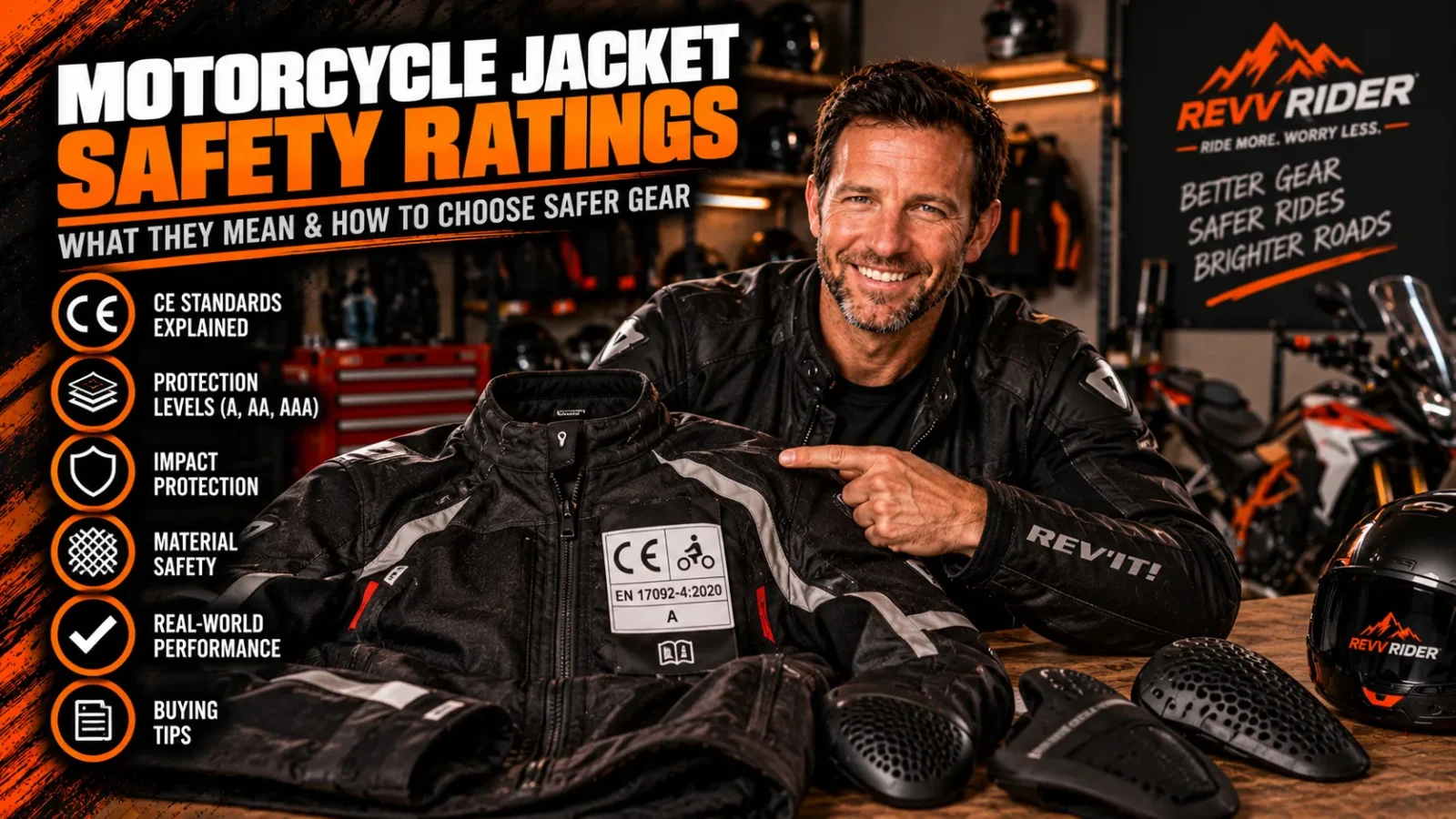
When you’re shopping for riding gear, it’s easy to get distracted by style, color, and brand names. But here’s the truth every seasoned rider learns eventually (often the hard way): motorcycle jacket safety ratings matter more than how good you look on your bike.
These ratings are the difference between walking away from a slide with minor road rash and suffering serious injuries that could have been prevented.
Just like choosing the right helmet involves understanding certification standards—something we cover in depth in our Ultimate Guide to Motorcycle Helmets—selecting a jacket requires the same level of scrutiny.
Unfortunately, jacket safety ratings are far less understood by the average rider, and manufacturers don’t always make it easy to decode the alphabet soup of certifications stamped on their labels.
In this guide, we’re breaking down exactly what those ratings mean, how they’re tested, and how to use this knowledge to buy gear that will actually protect you when it counts.
Why Motorcycle Jacket Safety Ratings Exist
Motorcycle jackets aren’t just fashion statements—they’re your second layer of skin when things go wrong. A crash at even 30 mph can result in your body sliding dozens of feet across asphalt. Without proper protection, that translates to severe abrasion injuries, road rash, and in worse cases, broken bones from impact.
Safety ratings exist to give riders a standardized, independently verified way to compare protective performance across brands and price points. Without them, you’d be relying purely on marketing claims, which—let’s be honest—aren’t always trustworthy.
The Two Major Rating Bodies You Should Know
There are two primary certification systems you’ll encounter when shopping for motorcycle jackets:
- CE (Conformité Européenne) – The European standard, widely recognized as the global benchmark for protective riding gear.
- AAA Rating System – Used primarily in the U.S. by organizations like Motorcyclist magazine’s testing partners, rating gear on a scale that considers abrasion resistance, seam strength, and impact protection.
Understanding CE Ratings for Motorcycle Jackets
If you’ve shopped for gear recently, you’ve probably seen “CE Level 1” or “CE Level 2” printed on jacket tags. This certification is arguably the most important one to understand, and we’ve dedicated an entire breakdown to it in our CE Rating Explained article. But here’s the quick version:
CE Level 1 vs. Level 2
CE Level 1 armor provides a baseline level of impact protection, tested to transmit no more than 18 kN of force to the body during an impact. It’s lighter, more flexible, and generally more comfortable—but offers less protection than Level 2.
CE Level 2 armor is the gold standard, limiting force transmission to just 9 kN—half of what Level 1 allows. This means significantly better protection for your shoulders, elbows, and back in the event of a crash. The tradeoff? Level 2 armor is typically bulkier and slightly less flexible, though modern materials have closed this gap considerably.
Pro tip: Always check whether CE ratings apply to the entire jacket or just the individual armor inserts. Some jackets use CE-rated armor but haven’t been tested as a complete garment, which is an important distinction.
Breaking Down the AAA Rating System
While CE ratings dominate globally, American riders often encounter the AAA system, which rates jackets on a scale from A (lowest protection) to AAA (highest protection). This system evaluates several factors:
What AAA Testing Actually Measures
- Abrasion resistance – How long the material withstands sliding friction before wearing through
- Burst strength – The fabric’s resistance to tearing under impact
- Seam integrity – Whether stitching holds up under stress
- Impact zone coverage – Presence and quality of armor at critical impact points
A jacket rated AAA typically uses premium materials like full-grain leather or high-denier textile blends, combined with CE Level 2 armor. These jackets are built for serious mile-eaters and track-day enthusiasts who demand maximum protection.
Materials Matter: How Fabric Choice Affects Safety Ratings
Not all jackets are created equal, and material selection plays a massive role in how a jacket performs in real-world testing.
Leather Jackets
Full-grain leather remains the benchmark for abrasion resistance. It’s naturally tough, flexible, and ages beautifully with proper care. If you’re investing in a quality leather jacket, learning how to clean a leather jacket properly will help preserve both its protective qualities and appearance for years. New leather jackets also require a proper break-in period—check out our guide on how to break in a new leather motorcycle jacket without sacrificing comfort or safety.
Textile and Mesh Jackets
Modern textile jackets use materials like Cordura and ballistic nylon, which can achieve impressive abrasion ratings while offering better weather versatility. Mesh jackets, while fantastic for hot-weather riding, typically sacrifice some abrasion resistance for breathability—something worth considering if you’re comparing options for scorching summer rides.
Airbag Technology: The Next Frontier
Perhaps the most exciting development in jacket safety is airbag technology. These systems deploy in milliseconds during a crash, providing protection that traditional armor simply can’t match for torso and spine protection. If you’re curious about this cutting-edge safety feature, our guide to the best airbag jackets for motorcycle riders breaks down the top options currently available.
Impact Zones: Where Protection Matters Most
Understanding safety ratings also means understanding where protection is concentrated on the jacket. Most quality jackets include armor or reinforced padding at these critical impact zones:
- Shoulders – One of the most common impact points in a slide
- Elbows – Highly vulnerable during lateral falls
- Back/spine – Often upgradeable to a full back protector
- Forearms – Increasingly common in premium jackets
When evaluating a jacket, don’t just look at the overall rating—check whether armor is CE-rated individually at each of these zones, as some budget jackets include “protection” that’s really just foam padding without any certification.
How to Choose the Right Rated Jacket for Your Riding Style
Safety ratings shouldn’t be considered in isolation. The right level of protection depends heavily on how and where you ride. Our comprehensive guide on how to choose the right motorcycle jacket for your riding style dives deeper into this, but here’s a quick overview:
Track and Sport Riding
If you’re pushing speeds on a sportbike, you need maximum protection—CE Level 2 armor, AAA-rated abrasion resistance, and reinforced stitching at high-stress points are non-negotiable.
Touring and Adventure Riding
Long-distance riders need a balance of protection, comfort, and weather resistance. Many touring-specific jackets, like those featured in our best motorcycle touring jackets for 2026 roundup, incorporate CE-rated armor alongside waterproofing and ventilation systems.
Urban Commuting
Even short daily commutes carry risk. Beginners especially should prioritize certified protection—our list of the best motorcycle jackets for beginners highlights affordable options that don’t skimp on safety ratings.
Common Mistakes Riders Make with Safety Ratings
Assuming All “Armor” Is Created Equal
Many budget jackets include foam padding marketed as “armor” that hasn’t undergone any CE testing whatsoever. Always verify certification labels before assuming a jacket offers real protection.
Ignoring Jacket Age and Wear
Just like helmets have a shelf life—something we explain thoroughly in our article on when to replace your motorcycle helmet—jackets degrade over time too. UV exposure, repeated washing, and general wear can compromise both fabric integrity and armor effectiveness.
Overlooking Fit
A perfectly rated jacket won’t protect you effectively if armor pads shift out of position due to poor fit. Just as proper helmet fitment is crucial for head protection, jacket fit directly impacts how well armor stays positioned during a crash.
Final Thoughts: Don’t Compromise on Ratings
Understanding motorcycle jacket safety ratings empowers you to make informed decisions rather than relying on guesswork or flashy marketing. Whether you’re comparing CE Level 1 versus Level 2 armor, evaluating AAA abrasion ratings, or considering cutting-edge airbag technology, the goal remains the same: protecting yourself every time you throw a leg over your bike.
Remember, the safest gear is the gear you actually understand and trust. Take the time to research certifications, try on jackets for proper fit, and never sacrifice safety ratings purely for style points.
FAQs
What is the difference between CE Level 1 and CE Level 2 jacket ratings?
CE Level 1 armor limits impact force transmission to 18 kN, while CE Level 2 armor cuts that number in half to just 9 kN, offering significantly greater protection. Level 2 armor is generally bulkier but provides superior crash protection, making it the preferred choice for serious riders and track enthusiasts.
Do all motorcycle jackets need to be CE certified?
No, CE certification isn’t legally required in most regions, but it’s highly recommended. Uncertified jackets may include padding that looks like armor but hasn’t been independently tested for impact protection, leaving riders with a false sense of security.
How long do safety-rated motorcycle jackets last before needing replacement?
Most quality jackets maintain their protective properties for 5-7 years with proper care, though this varies based on material, usage frequency, and exposure to sun and weather. Any jacket involved in a crash should be replaced immediately, as armor and fabric integrity may be compromised even if damage isn’t visible.
Are airbag motorcycle jackets safer than traditional armored jackets?
Airbag jackets offer superior protection for the torso, spine, and collarbone area by deploying instantly during a crash, distributing impact force far more effectively than foam or hard armor alone. However, they work best when combined with traditional CE-rated armor at the shoulders and elbows for comprehensive protection.

Related Articles

8 Best Motorcycle Jacket Materials (And the Real Jackets That Use Them Best)
I break down the best motorcycle riding materials for jackets—leather, textile, mesh, and laminate—with real jacket picks I've tested for…
Jake Miller
11 min read

9 Best Paints for Nylon Motorcycle Riding Jackets That Actually Hold Up on the Road
I tested 9 paints for nylon motorcycle jackets so you don't have to guess. Here's what actually sticks, flexes, and…
Jake Miller
12 min read

9 Best Female Motorcycle Jackets That Actually Fit Right in 2026
I've tested dozens of women's motorcycle jackets over the years. Here are my 9 favorites for fit, protection, and style—from…
Jake Miller
11 min read