
9 Best Paints for Nylon Motorcycle Riding Jackets That Actually Hold Up on the Road
 Jake Miller
12 min read
Jake Miller
12 min read
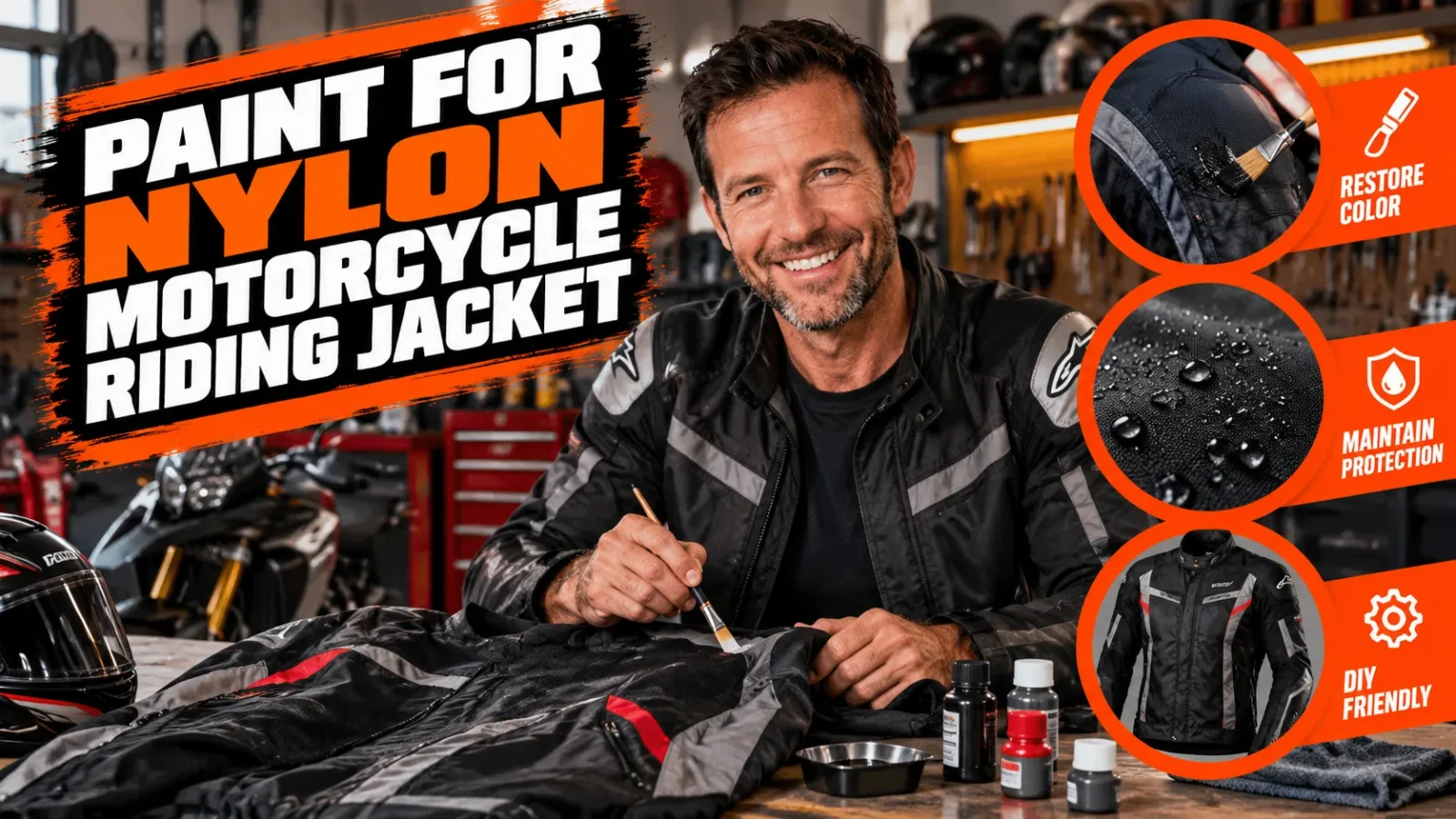
I’ve painted, touched up, and completely re-dyed more nylon riding jackets than I probably should admit. Between scuffed logos, sun-faded panels, and jackets I bought used with someone else’s questionable color choice, I’ve learned the hard way which paints actually bond to nylon and which ones flake off after one rainy commute.
Nylon is slick, synthetic, and honestly kind of stubborn when it comes to paint adhesion. Most fabric paints are made for cotton, and most spray paints are made for plastic or metal. Finding something that flexes with a riding jacket, survives sweat and weather, and doesn’t crack at the seams takes some trial and error.
Before we get into my picks, if you’re still shopping for the jacket itself rather than customizing one you already own, my Ultimate Guide to Motorcycle Jackets breaks down materials, armor, and fit so you start with the right base layer for any future paint job.
- My top overall pick is Angelus Leather Paint for its flexibility and durability on nylon panels.
- For a full color change instead of touch-ups, Jacquard iDye Poly or Rit DyeMore for Synthetic Fibers actually dye the fiber itself.
- Always prep with alcohol and never paint over seam tape, armor pockets, or reflective safety panels.
- Fine detail work like logos and pinstripes is best done with Angelus 2Thin or a Molotow ONE4ALL marker.
- Sealing your work with a flexible topcoat is what separates a paint job that lasts years from one that peels in weeks.
1. Angelus Leather Paint — My Overall Favorite for Nylon Panels
I keep coming back to Angelus Leather Paint even though it was technically designed for leather. The acrylic formula flexes really well, and I’ve had zero cracking issues after applying it to nylon shoulder panels and logo patches on my own jacket.
A single 4 oz bottle runs around $8-$10, and it comes in dozens of colors including metallics and neons, which matters if you’re trying to match factory jacket branding. I use a fabric medium mixed in at about a 10% ratio to loosen it up slightly for nylon’s slicker surface.
What I love most is how well it survives washing once cured. I’ve machine washed a painted panel on cold and gentle cycle multiple times with almost no fading. It’s not indestructible, but for logos, accent stripes, and small custom touches, it’s my go-to.
Where it falls short
It’s not ideal for covering large areas quickly since it’s thick and best applied in thin coats. If you’re trying to repaint an entire jacket panel, it’ll take patience and multiple light layers rather than one heavy pass.
2. Jacquard iDye Poly — Best for a Full Color Change
Jacquard iDye Poly is the one I reach for when I want to actually change the color of a nylon jacket rather than paint designs on top of it. Unlike surface paints, this dye bonds with the synthetic fiber itself, so there’s no flaking, cracking, or stiffness afterward.
It requires a stovetop pot or a large simmer setup since you need boiling water to activate the dye properly on polyester and nylon blends. It’s about $4-$5 per packet, and one packet handles roughly a pound of fabric, which usually covers a jacket shell if you remove the liner first.
I used this to revive a faded olive green textile jacket back to near-original color, and honestly it looked factory-fresh. If your jacket has reflective piping or safety-rated inserts, though, remove or mask those first since dye will discolor them too.
3. Rit DyeMore for Synthetic Fibers — Best Liquid Dye for Large Jackets
When I’m dyeing something bigger than a single panel, I switch to liquid Rit DyeMore for Synthetic Fibers instead of the powder packets. It’s formulated specifically for nylon, polyester, and acrylic, which most standard Rit dyes actually can’t handle well.
A bottle costs around $6-$8 and works in a large stovetop pot or even a front-loading washing machine on a hot cycle, provided your machine can handle sustained heat. This is the method I used on a full jacket shell that had turned a blotchy yellow from years of sun exposure.
The color payoff is strong, and it’s genuinely permanent once set. Just know that DyeMore only works on synthetic fibers, so if your jacket has a cotton lining sewn in, that part won’t take the color at all.
4. Krylon Fusion for Plastic — Best for Hard Armor and Trim Pieces
Nylon jackets aren’t just fabric. Most have plastic zipper pulls, vent covers, and sometimes hard armor sliders that paint peels off almost immediately. That’s where Krylon Fusion for Plastic earns its spot on this list.
It’s a spray paint, roughly $6-$7 a can, formulated to bond directly to plastic and vinyl without needing a primer. I use it exclusively on the non-fabric bits of a jacket, like snap buttons, plastic buckles, and shoulder armor housings, rather than the nylon shell itself.
It dries fast, holds color well outdoors, and resists chipping better than any generic craft spray I’ve tried. Just tape off the fabric carefully because overspray on nylon will sit on top rather than bonding and can flake off within weeks.
5. Createx Wicked Detail Colors — Best for Custom Artwork and Logos
If you’re airbrushing a design, I genuinely think Createx Wicked Detail Colors is the best option for nylon riding jackets right now. It’s a professional airbrush paint line built for flexibility, and it lays down incredibly fine detail for logos, flames, or custom lettering.
Bottles run about $6-$9 each depending on size, and the pigment is dense enough that you rarely need more than two light coats. I’ve used it on custom builds for friends who wanted their jacket to match their bike’s paint scheme, and it held up through multiple seasons of riding.
It does require an actual airbrush setup, so it’s not the most beginner-friendly option here. But if you already have one, or you’re getting artwork done professionally, ask if the shop stocks Createx specifically for textile work.
6. Tulip Soft Fabric Spray Paint — Best Beginner-Friendly Option
For anyone who’s never painted fabric before, Tulip Soft Fabric Spray Paint is genuinely the easiest entry point. It’s a spray can, so there’s no brush technique to worry about, and it dries soft rather than stiff, which matters a lot on a jacket you actually plan to wear and move in.
At around $8-$9 a can, it’s marketed for cotton apparel, but I’ve found it adheres reasonably well to nylon as long as you rough up the surface first with a light alcohol wipe. It’s best for broad coverage or stenciled shapes rather than fine detail work.
It won’t outlast something like Angelus Leather Paint on flex points like elbows, but for a weekend project refreshing a faded logo panel, it’s hard to beat the price and simplicity.
7. Dupli-Color Vinyl and Fabric Coating — Best for Matching Factory Colors
Dupli-Color Vinyl and Fabric Coating was actually designed for car interiors, but I discovered it works surprisingly well on nylon jacket panels too. It’s a spray, roughly $9-$12 a can, and it comes in a wide range of automotive-matched colors, which is genuinely useful if you’re trying to color-match your jacket to your bike.
The finish is semi-flexible once cured, and I’ve had good luck applying it to larger flat sections like the back panel or sleeves. It self-levels nicely, so brush strokes aren’t a concern like they can be with hand-applied paints.
One tip from experience: apply thin coats and let each one flash off for a few minutes. Going heavy with this one leads to a tacky finish that takes longer to fully cure and can attract dust while drying.
8. Angelus 2Thin Acrylic Leather Paint — Best for Fine Lettering and Pinstripes
When I need precision, like painting a rider’s name or a thin pinstripe accent along a seam, I switch to Angelus 2Thin. It’s a thinner, more fluid version of standard Angelus paint, designed specifically for fine detail brushwork.
At about $9-$11 per bottle, it flows more like ink than paint, which makes it perfect for a small detail brush. I’ve used it on custom club patches and lettering, and the lines stay crisp instead of bleeding into the nylon weave.
It still benefits from the same fabric medium mixing trick as regular Angelus paint if you’re applying it to a larger area, but for lettering and thin lines, I usually use it straight from the bottle.
9. Molotow ONE4ALL Acrylic Paint Marker — Best for Quick Touch-Ups
Sometimes I don’t want to break out brushes and paint trays for a small scuff or scratch on a panel. That’s when the Molotow ONE4ALL Acrylic Paint Marker comes in. It’s technically a graffiti and sign-painting marker, priced around $6-$8, but the acrylic ink adheres surprisingly well to nylon in a pinch.
It’s refillable and has interchangeable tips, so I can go from a thick 4mm tip for filling in a logo to a fine 1.5mm tip for edge touch-ups. It’s not meant for large surfaces, but for keeping small nicks and faded spots looking fresh between bigger paint jobs, it’s genuinely one of my most-used tools.
Just give it a light heat-set with a hair dryer on low after it dries fully. It noticeably improves wash durability compared to letting it air-cure alone.
How I Prep a Nylon Jacket Before Any Paint Touches It
Every good paint job starts before the paint even comes out. I always wash the jacket first on a gentle cycle and let it air dry completely, since any factory finish or dirt will block adhesion.
Deglazing the surface
Nylon often has a slight coating from waterproofing treatments. I wipe the area I’m painting with isopropyl alcohol on a rag to cut through that layer without damaging the fabric’s weather resistance elsewhere.
Masking off the zones you shouldn’t paint
I always tape off seams, vents, and any CE-rated armor pockets. Painting over structural seams or safety panels can actually compromise how the jacket performs in a slide, so I’d genuinely recommend reading through motorcycle jacket safety ratings explained before deciding what’s fair game to customize.
Sealing the finished work
Once the paint is fully cured, usually 24-48 hours depending on the product, I apply a flexible fabric sealant or clear topcoat over the design. This step is what actually determines whether your paint job survives six months of riding or six washes.
A Few Things I Wish I’d Known Sooner
If you’re customizing a jacket you also plan to wear seriously for commuting or touring, think about how paint interacts with fit and layering. A stiff, heavily painted panel can feel different once you’re moving through a full range of motion on the bike.
I’d suggest checking a motorcycle jacket fitting guide beforehand if you’re painting a jacket you haven’t wear-tested extensively yet, just so you know which areas flex most during riding and should get the most flexible paint.
Seasonal riders should also factor in temperature. A jacket meant for best motorcycle jacket for spring riding conditions gets exposed to more rain and temperature swings than a summer-only jacket, and that affects how long a paint job realistically holds up before needing a touch-up.
And if you’re painting a jacket as a gift or customizing one for someone else, fit and cut matter just as much as color. I always point people toward guidance on the best jacket for women to wear when riding a motorcycle when the jacket in question is a women’s cut, since paint placement often needs to work around a different panel layout than a men’s jacket.
My Honest Final Take
If I had to grab just one paint off this list for a typical nylon riding jacket touch-up, it’s still Angelus Leather Paint. It’s flexible, affordable, and forgiving for beginners while still looking clean enough for logos and detailed accents.
For anyone wanting a genuine color transformation rather than added detail, Jacquard iDye Poly or Rit DyeMore for Synthetic Fibers are the only two I’d trust to actually bond with the nylon fiber itself instead of sitting on the surface.
Whatever you choose, take your time with prep and sealing. And if you’re still deciding what kind of jacket fits your riding first, my thoughts on how to choose the right motorcycle jacket for your riding style is a solid place to start before you ever pick up a paintbrush.
Frequently Asked Questions
Can you paint a nylon motorcycle jacket without ruining the waterproofing?
Yes, if you avoid painting over seam-taped areas and stick to acrylic-based fabric paints like Angelus Leather Paint or Createx Wicked Detail that flex with the fabric instead of cracking the coating.
Do I need to prep a nylon jacket before painting it?
Absolutely. I always wash the jacket, let it fully dry, and lightly scuff or deglaze the area with rubbing alcohol so the paint has something to grip. Skipping this step is the number one reason paint peels.
Will painting my jacket affect its safety rating?
It can if you paint over armor pockets, reflective panels, or seams. I recommend checking motorcycle jacket safety ratings explained before you start so you know which zones to leave untouched.
What’s the best all-around paint for a full nylon jacket color change?
For a total color overhaul rather than small touch-ups, I lean on Jacquard iDye Poly or Rit DyeMore for Synthetic Fibers since they dye the actual fiber instead of just sitting on top of it.

Related Articles

8 Best Motorcycle Jacket Materials (And the Real Jackets That Use Them Best)
I break down the best motorcycle riding materials for jackets—leather, textile, mesh, and laminate—with real jacket picks I've tested for…
Jake Miller
11 min read

9 Best Female Motorcycle Jackets That Actually Fit Right in 2026
I've tested dozens of women's motorcycle jackets over the years. Here are my 9 favorites for fit, protection, and style—from…
Jake Miller
11 min read

8 Best Klim Jackets for Motorcycle Touring: My Real-World Picks
I've logged thousands of touring miles in Klim gear. Here are the 8 best Klim jackets for motorcycle touring, tested…
Jake Miller
10 min read