
The Ultimate Motorcycle Jacket Fitting Guide: How to Get a Perfect, Protective Fit
 Jake Miller
10 min read
Jake Miller
10 min read
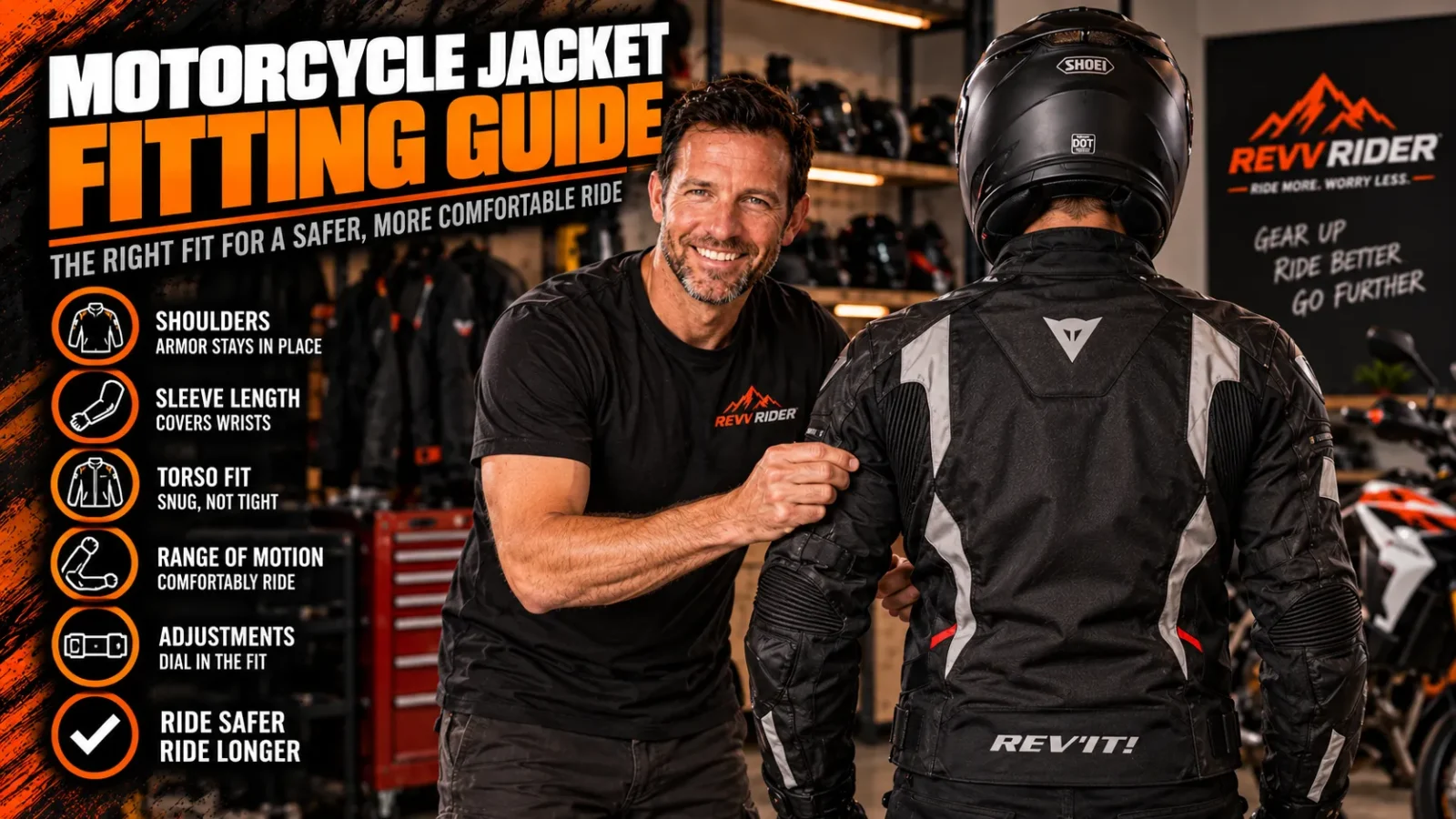
You wouldn’t buy a helmet that wobbles on your head, so why would you settle for a jacket that bunches up at your elbows or leaves a gap at your wrist? A properly fitted motorcycle jacket is just as critical to your safety as a well-fitted lid—and just like our Ultimate Guide to Motorcycle Helmets walks you through choosing the right brain bucket, this motorcycle jacket fitting guide will walk you through every measurement, fit-check, and adjustment you need to nail before you ever hit the throttle.
A jacket that fits correctly does more than look sharp—it keeps armor in place during a crash, prevents wind and water from sneaking in, and lets you move naturally on the bike. Let’s break down exactly how to find that sweet spot between “comfortable” and “protective.”
Why Jacket Fit Is a Safety Issue, Not Just a Style Choice
Riding gear isn’t fashion—it’s your second skin of protection. If a jacket is too loose, the built-in armor at the shoulders and elbows can shift out of position during a slide, leaving bare fabric (and bare skin) exposed to the road. If it’s too tight, it restricts blood flow, limits your reach to the handlebars, and can even tear at the seams on impact.
The goal is a snug, athletic fit—close enough that armor stays put, but roomy enough to layer underneath in cold weather or twist your torso in a turn without feeling strangled.
The Connection Between Fit and CE-Rated Protection
Most quality jackets include CE-rated armor at the shoulders, elbows, and sometimes the back. But armor only works if it stays exactly where it’s supposed to.
That’s why understanding the CE Rating Explained breakdown matters just as much as the fit itself—a Level 2 pad in the wrong spot won’t protect you the way it should.
For a deeper dive into how these ratings are tested and what they mean for real-world crashes, check out our motorcycle jacket safety ratings explained resource.
Start With the Right Measurements
Before you try anything on, grab a soft tape measure and take these four numbers. Write them down—brands vary wildly in sizing, and having your own measurements handy saves you from guessing based on a size label alone.
1. Chest Measurement
Wrap the tape around the fullest part of your chest, under your arms, while wearing a t-shirt. Keep the tape level and don’t hold your breath—breathe normally for an accurate reading.
2. Waist Measurement
Measure around your natural waistline, roughly where your jacket will cinch or zip closed. This is especially important for jackets with adjustable waist straps.
3. Arm Length
With your arm slightly bent (mimicking a riding position on the handlebars), measure from the center of your back at the neck, over the shoulder, and down to your wrist bone. This bent-arm measurement is more accurate than a straight-arm reading because it reflects your actual riding posture.
4. Torso Length
Measure from the base of your neck down to where you want the jacket hem to sit. This helps determine whether you need a “regular,” “short,” or “tall” cut.
The In-Store (or Living Room) Fit-Check Checklist
Once you’ve got a jacket on, don’t just glance in the mirror—go through this checklist while sitting in a riding position, ideally leaning forward slightly.
Shoulder Seams and Armor Alignment
The shoulder seam should sit right at the edge of your shoulder, and the internal armor pad should rest directly over your shoulder joint, not slipping toward your bicep or up near your collarbone.
Sleeve Length in the Riding Position
Lean forward and grip an imaginary handlebar. Sleeves should not ride up past your wrist. If there’s a gap between your glove and jacket cuff, that’s a direct path for wind, rain, and road debris.
Elbow Articulation
Bend your arms fully. The elbow armor should stay centered over your elbow joint, not twist to the side. Pre-curved sleeves (common in performance and sport jackets) help keep this alignment locked in.
Torso and Hem Length
When seated, the back of the jacket should stay tucked and not ride up to expose your lower back. A slightly longer back hem (a “drop tail” design) is a smart feature for touring and sportbike riders who spend a lot of time leaning forward.
Collar Comfort
The collar should sit snugly against your neck without choking you when zipped fully—especially important if you’re also wearing a helmet, so revisit our Motorcycle Helmet Fitment Guide to make sure your jacket collar and helmet base play nicely together.
Fit Considerations by Jacket Material
Different fabrics behave differently, and that affects how you should size your jacket.
Leather Jackets
Leather is famously stiff out of the box and loosens with wear. If you’re unsure how much room to leave, our guide on how to Break In a New Leather Motorcycle Jacket explains exactly how much a quality hide will stretch over the first few weeks of riding.
Buy leather snug, not loose—it will relax into a perfect fit. Also keep in mind proper care extends the life of that fit; see our guide on How to Clean a Leather Jacket to avoid shrinking or stiffening the material.
Textile and Mesh Jackets
Textile jackets typically hold their shape from day one, so what you try on is what you get. Mesh jackets, popular for hot-weather riding, should still fit snugly at the shoulders and elbows even though the fabric feels airy.
Check out options like the best mesh motorcycle jackets for men to see how top brands balance airflow with a secure, armor-friendly fit.
Adventure and Touring Jackets
These jackets are built with extra room for layering, so the “athletic snug” rule loosens slightly. If you’re shopping for long-distance comfort, our roundup of the best motorcycle touring jackets for 2026 highlights models with adjustable panels designed specifically for this kind of flexible fit.
Fitting Different Body Types
Off-the-rack sizing doesn’t work for everyone, and that’s okay—there’s a jacket built for nearly every body shape and riding style.
Tall and Broad Riders
Standard sizing often leaves tall riders with short sleeves and a gaping torso. Brands now offer extended cuts—see our picks for the best motorcycle jacket for tall riders and, for a leaner tall frame, the best motorcycle jacket for tall skinny builds.
Plus-Size and Big-Framed Riders
A properly cut plus-size jacket shouldn’t just be a bigger version of a standard jacket—it needs adjusted proportions for the shoulders, arms, and torso.
Browse our guides on the best motorcycle jacket for fat guys and the best motorcycle jacket for big guys for models specifically graded for larger frames.
Women’s Fit Considerations
Women’s jackets need a different shoulder slope, shorter torso, and adjusted bust room. If a standard cut isn’t working, check out our recommendations for the best motorcycle jacket for large boobs and stylish options like Faux Leather Biker Jackets for Women that are cut with a true feminine silhouette rather than a unisex afterthought.
Young and Teen Riders
Kids and teens grow fast, so fit needs to be checked more frequently. Explore our sizing advice for the best motorcycle jacket for kids and the best motorcycle jacket for teenager to find gear that offers room to grow without sacrificing protection.
Fit and Function: Matching Your Jacket to How You Ride
The “correct” fit also depends on your riding position and climate. A sportbike jacket cut for an aggressive forward lean will feel completely different than a cruiser jacket meant for an upright seating position.
If you haven’t settled on a style yet, our guide on How to Choose the Right Motorcycle Jacket for Your Riding Style is a great starting point before you even worry about sizing charts.
Climate-Specific Fit Adjustments
If you ride somewhere hot, you’ll want a slightly looser, more ventilated fit—see our picks for the best motorcycle jacket for 100 degrees or the best motorcycle jacket for texas.
Cold-climate riders should size up slightly to accommodate thermal layers—check the best motorcycle jacket for cool weather and best heated jacket for motorcycle options, which are designed with extra room for base layers or heating elements without compromising armor placement.
Naked Bikes, Cafe Racers, and Cruisers
Upright riding positions demand a straighter cut jacket rather than an aggressively curved sport fit. If that’s your style, our lists of the best motorcycle jacket for naked bike and best motorcycle jackets for cafe racer riding are tailored to that relaxed posture.
Common Fitting Mistakes Riders Make
- Sizing based on street clothes: A jacket that fits like your favorite hoodie is usually too tight to layer under or move freely in.
- Skipping the riding-position test: Fit always changes when you lean forward. Never judge fit standing straight up in front of a mirror.
- Ignoring adjustment straps: Waist and bicep straps exist for a reason—use them to eliminate excess fabric flapping at speed.
- Buying leather too loose: Remember, leather stretches. Buy snug and let it break in naturally.
- Forgetting seasonal layering: If you plan to wear a base layer in winter, factor that extra bulk into your size choice from the start.
Don’t Forget the Rest of Your Gear
A perfectly fitted jacket works best as part of a complete, well-fitted system. Just as you’d compare Full Face vs. Modular vs. Open Face Helmets to find the right head protection, take time to also review Helmet Safety Ratings Explained so your entire kit—jacket, helmet, gloves—offers consistent, layered protection.
And once your gear is dialed in, remember maintenance matters too: know When to Replace Your Motorcycle Helmet and how to Wash Your Motorcycle Helmet Liner, since fit can shift as padding compresses over time.
Final Tips Before You Buy
If you’re still building your gear collection, start with our comprehensive Ultimate Guide to Motorcycle Jackets, which covers everything from materials to armor types in far more depth.
Budget-conscious riders should also browse the Best Motorcycle Jackets Under $500 and Best Motorcycle Jackets for Beginners lists—both curated with true-to-size fit in mind, so first-time buyers don’t get burned by inconsistent sizing charts.
Remember: the best jacket isn’t the most expensive one—it’s the one that fits your body, your bike, and your riding style so well that you forget you’re wearing it until you need it most.
FAQs
How tight should a motorcycle jacket fit?
A motorcycle jacket should fit snugly like an athletic layer—close enough that armor stays in place over your shoulders and elbows, but loose enough to move your arms freely and layer a base or thermal shirt underneath. You should be able to fully extend your arms into a riding position without the jacket riding up or restricting movement.
Should I size up or down for a leather motorcycle jacket?
Generally, buy leather jackets snug rather than loose, since quality leather naturally stretches and molds to your body over the first few weeks of wear. Sizing up to compensate for stiffness usually results in a jacket that stays too baggy even after it breaks in.
How do I know if the armor in my jacket is positioned correctly?
Bend your arms and lean into a riding position while wearing the jacket. The shoulder and elbow armor should stay centered directly over those joints without twisting or sliding toward your bicep or forearm. If the padding shifts noticeably when you move, the jacket is likely too large or the wrong cut for your torso length.
Do I need a different jacket fit for winter riding versus summer riding?
Yes. In colder months, size slightly larger or choose a jacket designed for layering so you can add thermal liners without compressing the armor’s positioning. In hot weather, a closer, more ventilated fit with mesh panels helps maximize airflow while still keeping protective padding secure.

Related Articles

8 Best Motorcycle Jacket Materials (And the Real Jackets That Use Them Best)
I break down the best motorcycle riding materials for jackets—leather, textile, mesh, and laminate—with real jacket picks I've tested for…
Jake Miller
11 min read

9 Best Paints for Nylon Motorcycle Riding Jackets That Actually Hold Up on the Road
I tested 9 paints for nylon motorcycle jackets so you don't have to guess. Here's what actually sticks, flexes, and…
Jake Miller
12 min read

9 Best Female Motorcycle Jackets That Actually Fit Right in 2026
I've tested dozens of women's motorcycle jackets over the years. Here are my 9 favorites for fit, protection, and style—from…
Jake Miller
11 min read