
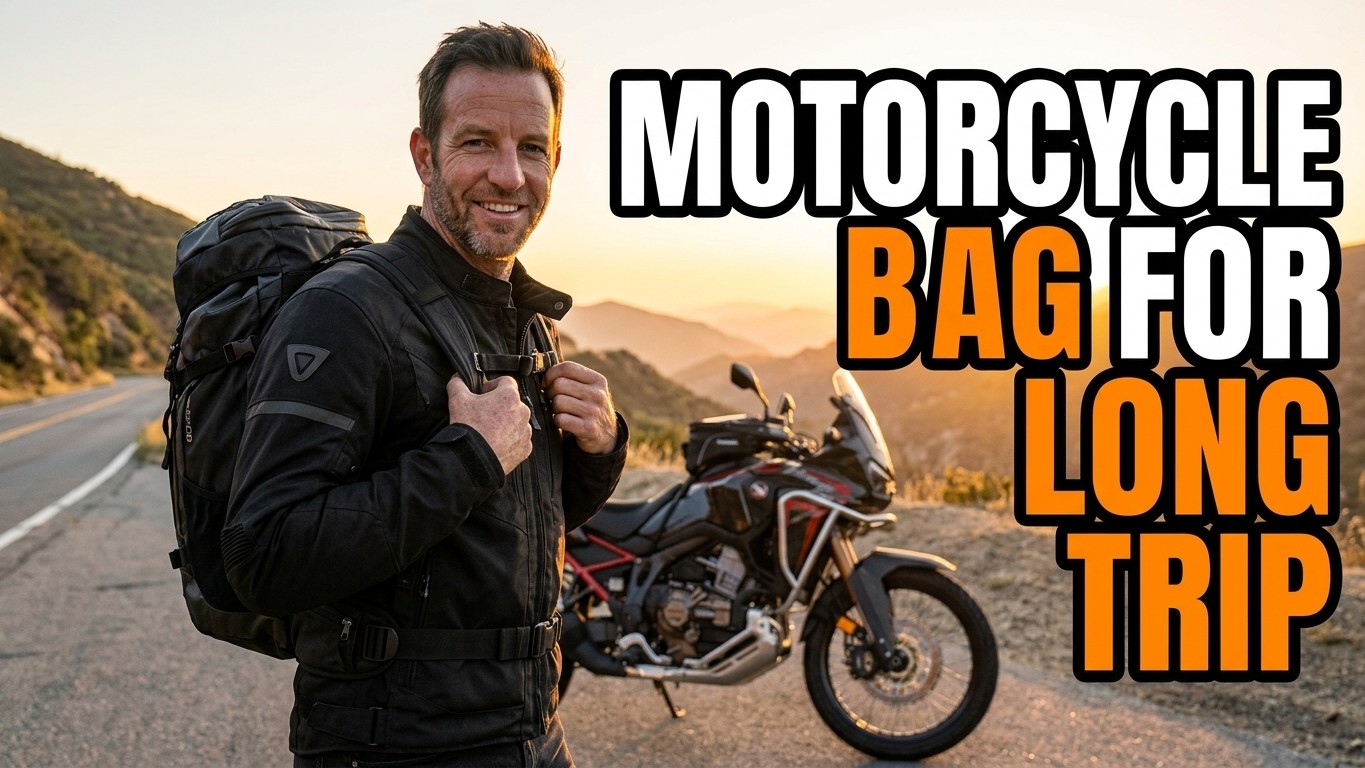
I’ve spent the last eight years riding across North America, Europe, and parts of Asia, and I can tell you right now: the wrong luggage will ruin a long motorcycle trip faster than almost anything else. I learned this the hard way during my first multi-week tour when a cheap tail bag disintegrated in a rainstorm somewhere in Montana.
Since then, I’ve tested dozens of motorcycle bags on rides ranging from weekend getaways to month-long expeditions. I’ve learned which bags hold up to daily abuse, which ones keep your gear dry through torrential rain, and which ones aren’t worth the money no matter how good the marketing looks.
In this guide, I’m sharing the seven bags I trust most for long-distance touring. These are the ones I actually pack when I’m heading out for weeks at a time, not just the ones that look good in photos.
- Hard panniers (like SW-MOTECH TRAX) offer the best security and weather protection for long tours
- Soft luggage systems (like Kriega or Wolfman) provide more flexibility and are easier on your wallet
- Always prioritize mounting stability over capacity — a 40L bag that stays put beats a 60L bag that shifts
- Budget at least $400-600 for a complete quality luggage setup that will last multiple tours
- I always use dry bags inside my luggage as backup waterproofing, regardless of the bag’s claims
1. SW-MOTECH TRAX ADV Panniers — My Top Pick for Serious Touring
I’ve put over 30,000 miles on my SW-MOTECH TRAX ADV panniers, and they’re still going strong. These aluminum hard cases are my go-to recommendation for anyone planning extended tours where security and weatherproofing matter more than saving a few pounds.
The TRAX ADV system comes in 37L and 45L sizes, and I run the 45L version on my adventure bike. The build quality is exceptional — thick aluminum construction with reinforced corners and heavy-duty latches that have never failed me. I’ve dropped my bike multiple times on rough terrain, and these panniers just keep protecting my gear.
What sets the TRAX apart is the quick-release mounting system. I can remove both panniers in under 30 seconds, which is crucial when I need to carry gear into a hotel or leave my bike parked in questionable areas. The system uses SW-MOTECH’s PRO side carriers, which distribute weight better than any other hard luggage mount I’ve tested.
Real-World Performance
I’ve ridden through week-long rainstorms in the Pacific Northwest with these bags, and everything inside stayed bone dry. The rubber gasket seals are excellent, and the lid design prevents water from pooling anywhere that could eventually leak through.
The capacity is perfect for long trips. I can fit a week’s worth of clothing, camping gear, tools, spare parts, and electronics in the 45L pair with room to spare. The internal dimensions are well-designed too — no weird angles that waste space.
Price range: $800-900 for the complete system with mounts. Yes, that’s expensive, but I’ve had cheaper panniers fail and cost me more in replaced gear and frustration.
2. Kriega OS-Base and OS-Packs — Best Modular Soft Luggage System
When I want more flexibility than hard bags offer, I reach for my Kriega OS-Base with OS-18 and OS-12 packs. This modular system has revolutionized how I think about soft motorcycle luggage, and I’ve used it on tours through Central America and across the American Southwest.
The genius of the Kriega system is how the components work together. The OS-Base mounts permanently to your bike’s subframe using simple loops and hooks. Then the OS-Packs attach to the base via a rail system that’s stupidly easy to use — you just slide them on and clip them down. Total attachment time is about 10 seconds per bag.
I run an OS-18 (18 liters) and OS-12 (12 liters) for a combined 30L capacity. That’s enough for most week-long trips if you pack smart. The bags are completely waterproof — I mean actually waterproof, not “water-resistant with a rain cover.” I’ve submerged them in rivers (accidentally) and everything inside stayed dry.
Why I Love the Modular Design
The modularity means I can adjust my setup based on trip length. Weekend ride? Just the OS-12. Week-long tour? Both packs. Need to carry extra gear? Add an OS-6 on top. This flexibility is something hard panniers simply can’t match.
The bags attach low and tight to the bike, which keeps the center of gravity optimal. I’ve ridden aggressive mountain roads with this setup fully loaded, and the bike handles almost like it’s unloaded. The Kriega mounting system doesn’t allow any lateral movement whatsoever.
Build quality is outstanding. These bags use 420D nylon with a TPU laminate that’s incredibly tough. I’ve been using the same OS-18 for five years now, and it shows wear but zero functional degradation.
Price range: $250-300 for the OS-Base plus one OS-18. You can build your system gradually, which spreads out the cost.
3. Wolfman Expedition Dry Saddle Bags — Best Value Soft Panniers
My Wolfman Expedition Dry Saddle Bags have been on more budget tours than I can count. At around $300 for the pair, they deliver exceptional performance for riders who want quality soft luggage without spending $500+.
These bags offer 70 liters of total capacity (35L per side), which is genuinely generous for soft panniers. I’ve packed two weeks of gear in them for trips where I needed to be completely self-sufficient. The roll-top closure with QuikClip makes them reliably waterproof — not just resistant, but actually waterproof in sustained heavy rain.
The mounting system uses simple straps that loop through your passenger pegs and subframe. It’s not as quick as the Kriega system, but it’s secure and works on virtually any bike. I’ve mounted these bags on everything from sport bikes to adventure bikes without issues.
Durability Where It Counts
Wolfman uses 1000D Cordura for the main body and 2100D Cordura for the bottom panels. After thousands of miles, my bags show scuffs but no tears or structural damage. The zippers are heavy-duty YKK units that have never snagged or broken.
One feature I really appreciate: the bags have internal dividers that help organize gear. Many soft panniers are just big open spaces where everything tumbles together. The Wolfman dividers let me keep clean clothes separate from dirty, tools separate from electronics, etc.
The bags do require a rack or support system on certain bikes to prevent them from melting on the exhaust. I fabricated simple aluminum stays for my bike, which took about an hour and $20 in materials. It’s worth mentioning because some bikes (especially sportier models) need this consideration.
Price range: $280-320 for the pair. Best value-to-performance ratio I’ve found in soft luggage.
4. Givi Trekker Outback — Best Aluminum Cases for Adventure Bikes
I ran Givi Trekker Outback cases on my previous adventure bike for three years, and they’re excellent if you want hard luggage with a more adventure-oriented aesthetic than the TRAX. The Outback series uses natural aluminum finish that looks rugged and actually improves with patina over time.
Available in 37L and 48L sizes, these panniers use Givi’s Monokey Cam-Side mounting system. I prefer the 48L version because the extra capacity makes a real difference on extended tours. The cases are notably lighter than the SW-MOTECH TRAX while maintaining comparable durability.
What impressed me most was how well these cases handled abuse. I dropped my bike hard in Colorado while fully loaded, and the Outback took the impact on its corner. The case got a decent dent, but the lid still sealed perfectly and nothing inside was damaged. The aluminum construction just absorbs impacts differently than plastic cases.
Practical Design Details
The Trekker Outback has an internal honeycomb aluminum panel that stiffens the lid. This prevents flexing when you stack gear inside, which is something cheaper aluminum cases struggle with. The latch system is simple and robust — just one central lock with two rotating clasps.
I like that Givi includes mounting plates and all necessary hardware. Some luggage systems charge extra for mounts, but the Trekker Outback typically includes everything you need for a complete install on compatible bikes.
The cases are genuinely waterproof with a rubber gasket seal, though I did add a thin bead of silicone grease to the gaskets after the first year to keep them supple. This maintenance takes five minutes and ensures long-term sealing performance.
Price range: $700-850 for a pair with mounting hardware. Competitive with the TRAX but with a different aesthetic that some riders prefer.
5. Giant Loop Great Basin Saddlebag — Best for Minimalist Touring
When I want to pack light and fast, my Giant Loop Great Basin Saddlebag is what I reach for. This single 35-liter bag mounts directly to the rear seat and subframe without any rack or support system, making it perfect for bikes where you don’t want permanent luggage mounts.
I’ve used the Great Basin for dozens of weekend trips and several week-long tours where I committed to minimal gear. The bag forces you to pack efficiently, which I’ve found actually improves my touring experience. Less stuff means less to worry about and faster packing/unpacking at each stop.
The construction is bombproof. Giant Loop uses a proprietary waterproof material that’s held up through years of abuse. I’ve strapped this bag down so tight that it compresses to half its volume, and it just bounces back to shape. The mounting straps are simple cam-buckle types that thread through loops on the bag and tie down to the bike.
Perfect for Multi-Terrain Adventures
Where the Great Basin really shines is on mixed pavement and dirt rides. The bag sits low and centered, so it doesn’t affect the bike’s handling on technical terrain. I’ve taken this setup on gnarly forest service roads where hard panniers would be sketchy, and the bike remained planted and predictable.
The roll-top closure is legitimately waterproof. I’ve ridden through all-day rain with electronics and sleeping gear inside, and everything stayed dry. The bag also has lash points all over it for strapping extra gear on top — I’ve used these for tent poles, boots, and even a small cooler on day rides from base camp.
One limitation: 35 liters isn’t much for longer tours. I make it work by wearing my riding gear instead of packing it and by choosing multi-use items. For two-week trips, I supplement with a tank bag for daily essentials.
Price range: $240-280. Excellent value for the quality and versatility you get.
6. Ortlieb Moto Panniers — Best Waterproof Performance
I’m a huge fan of Ortlieb for waterproofing, and their Moto Panniers are the most reliably waterproof soft bags I’ve ever used. These German-made bags use welded seams instead of stitched seams, which eliminates the most common leak point in soft luggage.
The Moto Panniers come in pairs with 40L total capacity (20L each), which is modest but sufficient for smart packers. I’ve used them primarily on street touring where I’m staying in hotels and don’t need camping gear. For that use case, they’re absolutely perfect.
The mounting system uses Ortlieb’s proprietary Quick-Lock clips that attach to standard racks. The system is secure and allows tool-free removal in seconds. I can walk up to my bike with both bags slung over my shoulder and have them mounted in under a minute.
Waterproofing That Actually Works
Here’s what sets Ortlieb apart: I’ve ridden through legitimate downpours where water was running down the inside of my jacket, and these bags kept everything completely dry. Not damp. Not slightly moist. Completely dry. The roll-top closure and welded construction create a seal that rivals hard cases.
The material is thick PVC-coated fabric that resists abrasion better than nylon. After five years of use, my bags look worn but have no punctures or tears. The fabric does become slightly stiff in very cold weather (below 20°F), but it remains flexible enough to function normally.
The internal organization is minimal — basically just one big waterproof compartment per bag. I use packing cubes inside to keep things organized. Some riders want more built-in organization, but I prefer the simplicity of a waterproof shell that I can organize however I want.
Price range: $380-420 for the pair. Premium pricing, but the waterproofing justifies it if you ride in wet climates.
7. Nelson-Rigg CL-1060-ST Adventure Saddlebags — Best Budget Option
Not every rider needs $800 luggage, and that’s where the Nelson-Rigg CL-1060-ST comes in. I recommend these bags to new touring riders who want decent quality without massive investment. At under $200 for the pair, they’re remarkably capable for the price.
These soft saddlebags offer 60 liters total capacity (30L per side), which is generous for budget luggage. I’ve used them on several week-long trips, and while they don’t match premium bags for durability or features, they get the job done without drama.
The construction uses 600D polyester, which is less robust than 1000D Cordura but still reasonably tough. My bags have held up through about 8,000 miles of mixed riding. They show wear faster than premium bags, but they haven’t failed. The mounting straps are simple nylon webbing with quick-release buckles.
What You Get at This Price Point
The bags are water-resistant with included rain covers. I want to be clear: they’re not waterproof. In heavy rain, moisture will eventually penetrate. I always use dry bags inside for anything that can’t get wet. With that precaution, the water resistance is adequate for most touring.
The mounting system requires care to get right. The straps can loosen over time, so I check tension at every fuel stop. Once properly adjusted and secured, they stay in place, but this isn’t a set-it-and-forget-it system like the Kriega or SW-MOTECH.
Nelson-Rigg includes nice features like reflective piping for visibility and multiple external pockets for quick-access items. The zippers are basic but functional — I’ve had no failures yet, though I’m gentle with them because I know they’re not heavy-duty YKK units.
Price range: $160-200 for the pair. If you’re on a tight budget or new to touring, these are a solid starting point that will teach you what you need from luggage before you invest in premium gear.
How I Choose Motorcycle Bags for Long Tours
After years of testing luggage on extended rides, I’ve developed a framework for evaluating what makes a bag suitable for serious touring. Here’s what I prioritize, in order of importance.
Mounting Stability Over Everything
The best bag in the world is useless if it shifts around on the bike. I’ve learned this the hard way. A secure mounting system matters more than capacity, waterproofing, or price. A bag that moves even slightly affects handling, wears through mounting points, and constantly demands attention.
I test mounting stability by loading bags to capacity and riding aggressively. If I can feel the load shifting in corners or under hard acceleration, the system isn’t adequate for long tours. The bike should feel planted and neutral with luggage mounted.
Real Waterproofing, Not Marketing Claims
I’ve tested waterproofing by literally submerging bags in my bathtub before trusting them with expensive electronics. Many “waterproof” bags are actually just water-resistant. True waterproofing requires welded seams or roll-top closures with proper gaskets.
My rule: if a manufacturer says “waterproof with included rain cover,” the bag isn’t actually waterproof. Genuinely waterproof bags don’t need rain covers because they’re sealed vessels.
Capacity That Matches Your Riding Style
I used to think bigger was always better. Now I know that appropriate capacity depends entirely on how you tour. Hotel-to-hotel riders need less space than camping tourers. Warm-weather trips require less volume than cold-weather adventures.
For reference, I can pack a week of clothing, toiletries, electronics, tools, and spare parts in about 50-60 liters. If I’m camping, I need another 20-30 liters for sleeping gear and cooking equipment. If I’m doing laundry every few days, I can get by with 40 liters total.
Build Quality That Lasts Multiple Seasons
I calculate the per-mile cost of luggage by dividing the purchase price by how many miles I expect to get from it. My SW-MOTECH panniers cost $900, but at 30,000+ miles, that’s $0.03 per mile. My cheap bags that failed after 3,000 miles cost $200, or $0.07 per mile. Quality luggage is cheaper in the long run.
I look for reinforced stitching, heavy-duty zippers (YKK #8 or #10), thick base material, and metal hardware instead of plastic. These details indicate a manufacturer that’s building for durability, not just minimizing cost.
Final Thoughts on Long-Distance Motorcycle Luggage
Choosing motorcycle bags for extended touring comes down to understanding your priorities and being honest about your riding style. I’ve made the mistake of buying bags that looked perfect but didn’t match how I actually tour. The bags that have served me best are the ones that match my real needs, not my idealized vision of touring.
If I could only own one luggage system, I’d choose the SW-MOTECH TRAX ADV panniers. They’re expensive, but they’ve never let me down, and I trust them completely for any tour I plan. If I needed to minimize cost, I’d go with the Wolfman Expedition bags and accept the tradeoffs in convenience.
The most important advice I can give: test your luggage on a weekend trip before committing to a long tour. Load it with realistic gear, ride varied roads, and pay attention to how the bike handles and how easy the bags are to access. A shakedown ride will reveal issues while you still have time to adjust or exchange equipment.
Your luggage is as critical as your tires or suspension for long-distance comfort and safety. Choose wisely, maintain it properly, and it will serve you for tens of thousands of miles of unforgettable adventures.
Frequently Asked Questions
What size motorcycle bag do I need for a long trip?
For week-long trips, I recommend 40-60 liters of total capacity. This gives you enough room for clothing, tools, and camping gear without overloading your bike. I always pack lighter than I think I need.
Are hard bags or soft bags better for motorcycle touring?
In my experience, hard bags offer better security and weather protection, while soft bags are more affordable and versatile. I use hard panniers for valuable items and soft luggage for clothing and gear that can handle some moisture.
How do I keep my motorcycle bags waterproof on long rides?
Even ‘waterproof’ bags can leak in heavy rain. I always use dry bags inside my luggage for electronics and clothing. Double-bagging critical items has saved me countless times during unexpected downpours.
Can I fly with motorcycle luggage bags?
Most soft motorcycle bags work as checked luggage, but I remove any hard mounting hardware first. I’ve flown with my tank bags and tail bags dozens of times by packing them inside a duffel. Hard panniers typically need to be shipped separately.

Related Articles

7 Best Hydration Backpacks for Motorcycle Riding in 2026
Discover the best hydration backpacks for motorcycle riding. I've tested top models to help you stay hydrated on long rides…
 Jake Miller
15 min read
Jake Miller
15 min read

7 Best Motorcycle Tires for a New Bagger in 2026
Discover the top motorcycle tires for your new bagger in 2025. I've tested these models for grip, longevity, and touring…
Jake Miller
11 min read

7 Best Bagger Motorcycles for Beginners in 2026
Discover the best bagger motorcycles for beginners. I've tested and reviewed 7 top models that blend comfort, manageability, and touring…
Jake Miller
15 min read