
7 Best Sleeping Bags for Motorcycle Camping I’ve Tested on the Road
 Jake Miller
13 min read
Jake Miller
13 min read
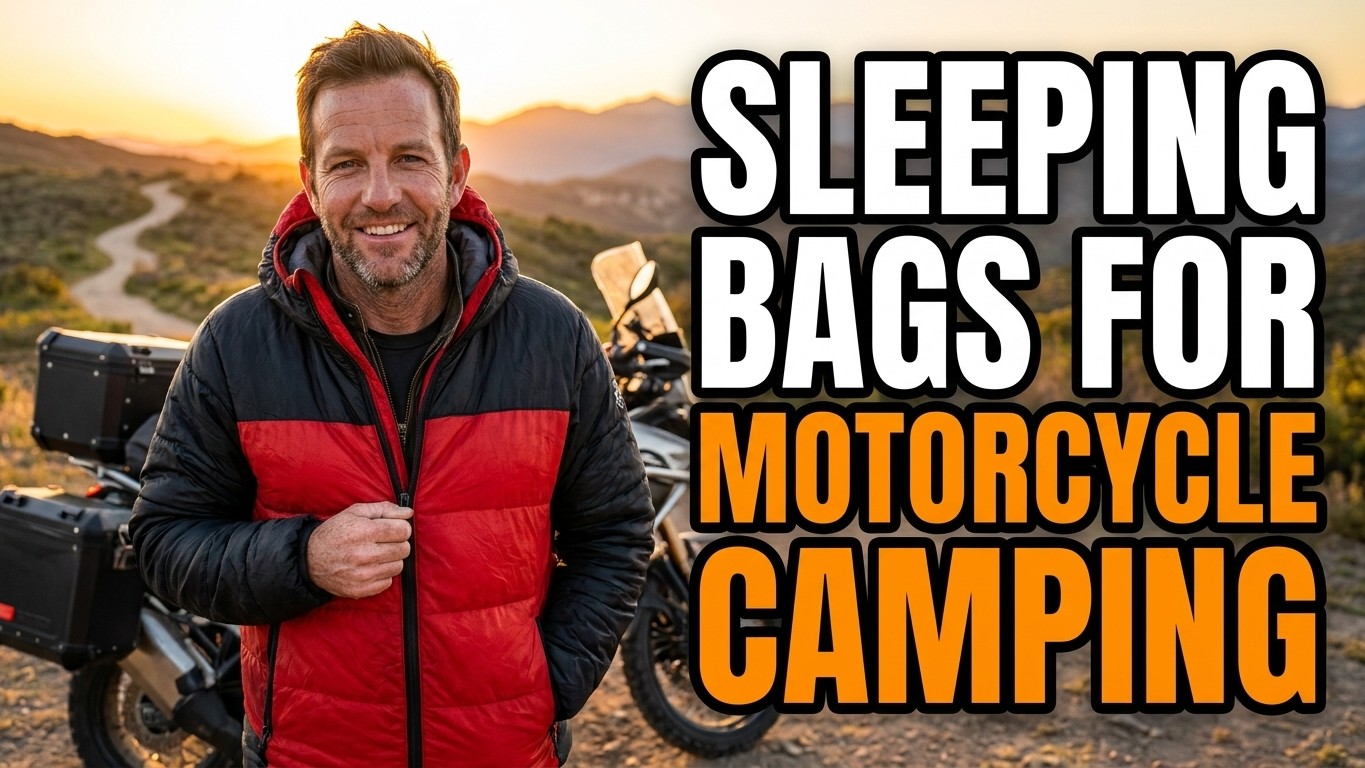
I’ve spent countless nights under the stars on motorcycle camping trips, from the Blue Ridge Parkway to remote desert trails in Utah. After years of testing different sleeping bags—some that left me shivering at 3 AM, others that took up half my pannier space—I’ve finally narrowed down the best options for riders who actually value a good night’s sleep on the road.
The right sleeping bag for motorcycle camping isn’t the same as what backpackers use. We need packability without sacrificing warmth, durability to handle rough handling, and the ability to stuff it into irregularly shaped luggage spaces. I’ve tested over a dozen bags in real-world conditions, and these seven consistently deliver.
- The Kelty Cosmic 20 offers the best warmth-to-packability ratio I’ve found for under $150
- Down bags compress smaller but synthetic fills perform better if your gear gets wet in a sudden storm
- A 20°F to 30°F rating handles most three-season motorcycle camping without overheating in summer
- Compression stuff sacks are essential—they reduce packed size by 40-50% compared to standard storage bags
- Mummy bags pack tighter than rectangular styles, crucial when every cubic inch of pannier space counts
1. Kelty Cosmic 20 — Best Overall Value for Moto Campers
I’ve used my Kelty Cosmic 20 on at least fifteen overnight trips, and it’s become my default recommendation for riders who want quality without spending $400. This synthetic-fill bag compresses down to about the size of a volleyball when stuffed properly, which fits perfectly in a standard side pannier alongside my clothes and rain gear.
The 20°F comfort rating is spot-on in my experience. I’ve slept comfortably in 25°F mountain temperatures wearing just base layers, and the bag doesn’t overheat on warmer 50-60°F nights if I keep the zipper partially open. At 3 pounds 1 ounce, it’s not ultralight, but the weight is reasonable for motorcycle travel where a few extra ounces don’t matter like they do for backpackers.
What I really appreciate about the Kelty Cosmic 20 is the draft tube along the zipper that actually prevents cold spots. Cheaper bags skip this detail, and you feel it immediately on chilly nights. The stuff sack it comes with is adequate, but I replaced it with a compression sack that gets it down to about 7×14 inches—small enough to leave room for other essentials.
The price typically hovers around $120-140, which I consider the sweet spot for motorcycle camping gear. It’s built well enough to last years of regular use, and Kelty’s warranty has covered the one issue I had (a broken zipper pull after two seasons, replaced free).
2. REI Co-op Magma 15 — Best Lightweight Down Option
When I’m planning longer trips where luggage space is at a premium, my REI Co-op Magma 15 is the bag I reach for. This 850-fill down bag compresses to roughly the size of a Nalgene bottle—I’m talking seriously compact—and weighs just 1 pound 10 ounces. That compression ratio is unbeatable for the warmth it provides.
I’ve tested the Magma 15 in temperatures down to 18°F, and while I needed to wear a puffy jacket to stay truly comfortable at that extreme, it performed admirably. For most spring and fall motorcycle camping where temps bottom out around 30-35°F, this bag keeps me toasty in just a thermal layer.
The downside, and it’s worth mentioning, is the $400 price tag. That’s a significant investment, and down bags require more careful maintenance than synthetic options. I learned this the hard way when a surprise thunderstorm soaked my pannier on a trip through Tennessee—down loses almost all insulating ability when wet, and it took forever to dry out at camp.
But if you’re committed to long-distance touring where every cubic inch matters, and you’re diligent about waterproofing your luggage, the REI Co-op Magma 15 is worth every penny. The quality is exceptional, from the ripstop nylon shell to the precisely-tailored hood that seals out drafts without feeling claustrophobic.
3. Teton Sports Celsius — Best Budget Pick Under $75
Not everyone wants to drop $300+ on a sleeping bag, and I respect that. The Teton Sports Celsius (available in both -5°F and +20°F variants) is what I recommend to riders who camp occasionally and need something reliable without the premium price. I picked up the 20°F version for $65 on sale, and it’s served me well on a dozen trips.
This is a synthetic-fill rectangular bag, which means it’s bulkier than the mummy-style options—think football-sized when compressed. It weighs about 5 pounds, which is hefty compared to the ultralight options, but again, on a motorcycle that extra weight is negligible. What matters is that it actually fits in my tail bag when I compress it properly.
I’ve slept in the Teton Sports Celsius in temperatures ranging from 35°F down to 22°F, and the 20°F rating seems honest. I was comfortable at 25°F with just long underwear. The extra room compared to mummy bags is actually nice if you’re a restless sleeper like me—I don’t feel constricted when I roll over at night.
The build quality is decent for the price point. After two seasons, the zipper still works smoothly and the seams show no signs of separation. It’s not going to last a decade like premium bags, but for occasional motorcycle camping, the Teton Sports Celsius delivers solid value. Plus, at this price, I don’t stress about it getting dirty or compressed in my luggage between trips.
4. Nemo Disco 15 — Best for Side Sleepers and Comfort
I’m a side sleeper, which makes most mummy bags uncomfortable after a few hours. The Nemo Disco 15 changed that for me with its unique spoon-shaped design that adds room at the elbows and knees. I can shift positions freely without feeling restricted, which makes a huge difference on multi-day trips when quality sleep matters.
This bag uses synthetic insulation (650-fill down version also available) and compresses down to about 9×18 inches—not the smallest on this list, but manageable in a pannier. At 3 pounds 2 ounces, it’s right in the reasonable weight range for motorcycle camping. I’ve used my Nemo Disco 15 in temperatures from 45°F down to 20°F, and the 15°F comfort rating is accurate.
What sets the Nemo Disco apart is the integrated pillow sleeve at the hood. I can stuff my jacket or a small pillow into this sleeve, and it actually stays in place all night instead of migrating away like loose pillows do. Small detail, but it makes a noticeable difference in sleep quality after a long day in the saddle.
The price runs around $280-320 depending on sales, which is mid-range territory. I think it’s worth it if comfort is your priority and you have the luggage space. The extra room does mean it’s not the most packable option, but when you’re packing panniers and a tail bag—maybe organizing items the way you’d think about whether can an e zpass tag be read in a bag on a motorcycle matters for toll roads—there’s usually enough space for gear that enhances your trip experience.
5. Western Mountaineering UltraLite — Best Premium Compact Option
This is the bag I use when I’m doing serious long-distance touring and need to pack light. The Western Mountaineering UltraLite uses 850+ fill goose down and weighs an absurd 1 pound 6 ounces. When compressed, it’s roughly the size of a softball—I can literally fit it in the corner of one pannier and still have room for days of clothes.
I tested mine extensively on a two-week trip through the Rockies where nighttime temps varied from 55°F down to 18°F. The 20°F comfort rating is conservative; I was genuinely warm at 22°F wearing just base layers. The differential cut construction means the inner and outer shells are different lengths, which prevents cold spots at the seams—premium engineering that you actually feel.
The price is steep at around $500-550, and this is absolutely a splurge purchase. Western Mountaineering bags are handmade in California with meticulous quality control, and you’re paying for that craftsmanship. Mine is going on five years of regular use and looks almost new aside from some dirt on the stuff sack.
Down requires care, though. I always store it loose (never compressed) between trips, and I’m religious about keeping it dry. If your luggage system isn’t completely waterproof, this might not be the right choice. But for dedicated touring riders who value packability and longevity, the Western Mountaineering UltraLite is the best bag I’ve ever used.
6. Big Agnes Lost Ranger 15 — Best Hybrid Design
The Big Agnes Lost Ranger 15 takes a clever approach by using down on top and synthetic insulation on the bottom. This hybrid design solves a real problem I’ve encountered: down compresses under your body weight and loses effectiveness, while synthetic maintains loft better under pressure. The result is better insulation where you need it most—underneath.
I’ve used this bag on trips where I was sleeping directly on a foam pad rather than an inflatable sleeping pad with high R-value. The synthetic bottom kept me warm even when the ground was cold, something pure down bags struggle with. At 2 pounds 10 ounces, it’s lighter than most synthetics but heavier than pure down options.
Packed size is respectable at about 8×16 inches when compressed properly. The Lost Ranger 15 fits comfortably in a standard side pannier with room left over. I appreciate the pad sleeve on the bottom that keeps your sleeping pad from sliding around—minor feature, but it prevents that annoying 2 AM wake-up when you’ve rolled off your pad.
Pricing runs around $320-350, which feels fair for the hybrid construction. The 15°F rating is honest based on my testing down to 19°F where I was comfortable in a light fleece layer. Build quality from Big Agnes is consistently good; after two seasons, my Lost Ranger shows normal wear but no structural issues.
7. Outdoor Vitals Atlas 15 — Best Direct-to-Consumer Value
Outdoor Vitals sells directly to consumers online, cutting out retail markup, and the Atlas 15 represents exceptional value at around $190-210. This is a 650-fill down bag that compresses surprisingly well—about 8×14 inches in my compression sack—and weighs 2 pounds 7 ounces. Those specs would typically cost $100+ more from big-name brands.
I bought my Atlas 15 specifically to test whether the direct-to-consumer model delivers comparable quality to established brands, and I’ve been impressed. The trapezoidal baffles prevent down from shifting, maintaining even insulation throughout the bag. I’ve used it in conditions from 40°F down to 17°F, and the 15°F comfort rating seems accurate—I was warm but not sweating at 20°F.
Construction quality is solid for the price. The YKK zipper operates smoothly, the shell fabric is 400T ripstop nylon that’s held up to being stuffed in panniers repeatedly, and the draft collar effectively blocks cold air. After a full season of use, I have no concerns about durability.
The tradeoff is less established customer service compared to REI or Big Agnes. Outdoor Vitals is a smaller company, though they do offer a lifetime warranty. For riders comfortable buying online without trying gear first, the Atlas 15 delivers premium-level performance at a mid-tier price. I recommend it to riders who want down benefits without spending $400+.
Key Factors I Consider When Choosing Sleeping Bags for Motorcycle Camping
After testing these bags extensively, I’ve identified what actually matters for motorcycle-specific camping. Packability is the top priority—you’re not carrying weight on your back, but you do have limited, irregularly-shaped storage spaces. A bag that compresses to 8 inches diameter or less fits better in panniers without wasting space.
Temperature rating matters more than people think. I always go 10-15°F lower than the coldest temps I expect because comfort ratings assume you’re wearing layers and using a good sleeping pad. A 20°F bag works for most three-season camping, while a 0°F bag is overkill unless you’re riding in winter or high-altitude conditions.
Durability trumps ultralight specs for motorcycle use. Your bag will get compressed repeatedly, possibly sit in a dusty pannier, and might get rained on despite your best waterproofing efforts. Synthetic fills handle this abuse better than down, though premium down bags with quality shells like the Western Mountaineering hold up well if maintained properly.
How I Pack and Protect My Sleeping Bag on the Road
I learned through expensive mistakes that how you pack matters as much as what you pack. I use a Sea to Summit compression stuff sack that reduces volume by 40-50% compared to standard storage. The key is stuffing (not rolling) the bag into the sack randomly—this prevents permanent creases in the insulation and actually compresses better.
Everything goes inside waterproof panniers or dry bags, even if the sleeping bag has a water-resistant shell. I’ve been caught in downpours where water found its way into supposedly waterproof luggage, and a wet sleeping bag can ruin a trip. The extra layer of protection is worth it.
Between trips, I always store my bags loosely in a large mesh sack or hanging in a closet, never compressed. This maintains the loft of both down and synthetic insulation. My bags that I’ve treated this way have lasted 4-5 years of regular use, while ones I left compressed degraded noticeably after just one season.
Final Thoughts From the Road
The “best” sleeping bag for motorcycle camping ultimately depends on your specific priorities. If I could only own one, it would be the Kelty Cosmic 20 for its unbeatable value and versatility. But I actually keep three in my garage: the Kelty for most trips, the REI Magma 15 for long-distance touring where space is critical, and the Teton Sports Celsius as a loaner for friends who join me on rides.
Whatever you choose, invest in a quality compression sack and waterproof storage. The best sleeping bag in the world won’t help if it’s soaked or takes up your entire pannier. Test your setup on a short overnight trip before committing to a multi-day adventure, and adjust your packing strategy based on what works for your specific bike and luggage configuration.
I’ve slept in everything from budget bags to premium down cocoons, and the difference between a mediocre night’s sleep and waking up refreshed is significant when you’re riding long days. These seven bags represent the best options I’ve found for motorcycle camping—bags that balance packability, warmth, durability, and value for riders who actually live this lifestyle.
Frequently Asked Questions
What temperature rating do I need for motorcycle camping?
I recommend a 20°F to 30°F rated bag for three-season riding. It handles cool summer nights and unexpected cold snaps without adding too much bulk to your luggage.
How do I pack a sleeping bag on a motorcycle?
I use compression stuff sacks to reduce volume by 40-50%, then secure the bag in a waterproof pannier or tail bag. Side panniers work best since weight distribution matters for handling.
Are down or synthetic sleeping bags better for motorcycle camping?
I prefer synthetic for moto camping because they dry faster if your luggage gets soaked, and they’re more affordable. Down is lighter and packs smaller but loses insulation when wet.
Can I strap a sleeping bag to the outside of my motorcycle?
Technically yes, but I don’t recommend it. Road grime, rain, and UV exposure degrade the materials fast. If you must, use a waterproof compression bag and check it frequently for wear.

Related Articles

7 Best Hydration Backpacks for Motorcycle Riding in 2026
Discover the best hydration backpacks for motorcycle riding. I've tested top models to help you stay hydrated on long rides…
Jake Miller
15 min read

7 Best Motorcycle Tires for a New Bagger in 2026
Discover the top motorcycle tires for your new bagger in 2025. I've tested these models for grip, longevity, and touring…
Jake Miller
11 min read

7 Best Bagger Motorcycles for Beginners in 2026
Discover the best bagger motorcycles for beginners. I've tested and reviewed 7 top models that blend comfort, manageability, and touring…
Jake Miller
15 min read