
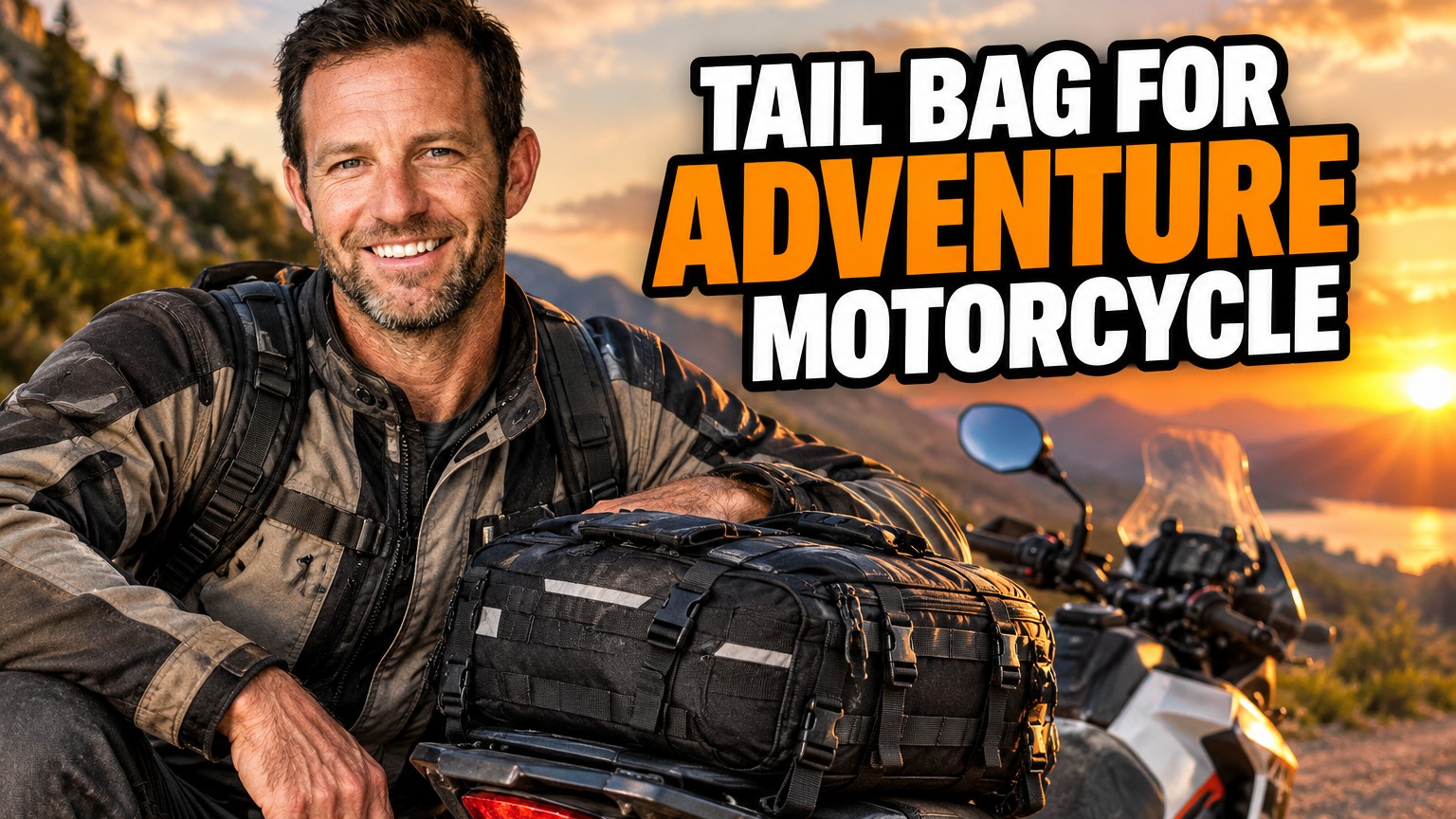
Why I Trust Tail Bags for Adventure Touring
I’ve spent the last eight years riding adventure bikes across everything from desert trails to mountain passes, and I’ve learned one crucial truth: your luggage choice can make or break a multi-day trip. After testing more than twenty different tail bag systems, I’ve developed strong opinions about what actually works when you’re miles from civilization.
Tail bags offer something panniers can’t match—genuine versatility. I can compress them down for day rides or expand them for week-long expeditions. They’re lighter than hard cases, cheaper than full luggage systems, and when I hit technical single-track, I don’t worry about damaging expensive aluminum boxes.
The adventure motorcycle tail bag market has exploded in recent years, but not all options deliver on their promises. I’ve had bags rip apart on washboard roads, zippers fail in rainstorms, and mounting systems come loose at highway speeds. The products I’m sharing here have survived real-world abuse on my own bikes.
- The Kriega US-30 Drypack offers the best balance of waterproofing and durability for serious adventure riders
- For budget-conscious riders, the Nelson-Rigg SE-3050 Hurricane delivers impressive weather protection at half the price of premium options
- Capacity needs vary: 30-50L for weekends, 50-70L for extended tours—choose bags with compression straps for flexibility
- Secure mounting systems matter more than capacity—I’ve seen cheap straps fail on rough terrain with dangerous consequences
- Waterproofing isn’t optional for adventure riding; even “water-resistant” bags will soak through in sustained rain
1. Kriega US-30 Drypack — Best Overall Waterproof Tail Bag
The Kriega US-30 Drypack has been strapped to my Africa Twin for three years and 40,000 miles. This bag uses a roll-top closure with RF-welded seams that create a completely waterproof seal—I’ve ridden through torrential downpours without a single drop getting inside.
What sets the Kriega US-30 apart is its modular Quadloc harness system. Instead of traditional straps that loosen over time, this design uses four anchoring points that distribute weight evenly and stay locked tight even on brutal off-road sections. I can remove the bag in under thirty seconds without fumbling with buckles.
The 30-liter capacity hits the sweet spot for weekend trips. I’ve packed three days of gear including a full rain suit, tools, and camping essentials without issue. The bag’s shape sits low and tight against the seat, which maintains proper weight distribution and doesn’t affect handling at speed.
I particularly appreciate the built-in non-slip base that protects my seat material. After years of use, there’s zero wear on my bike’s upholstery. The Kriega US-30 retails around $260, which feels steep until you realize you’ll never need to replace it. This is investment-grade gear that simply doesn’t fail.
2. Giant Loop Great Basin Saddlebag — Best for Extended Expeditions
When I’m planning trips longer than a week, I reach for the Giant Loop Great Basin Saddlebag every time. This American-made bag offers 54 liters of capacity in its standard configuration, expandable to 64 liters when you need maximum volume for remote expeditions.
The Great Basin uses military-grade Cordura construction with a bomber-proof roll-top closure. I’ve dragged this bag through sand, scraped it against rocks on technical trails, and subjected it to UV exposure in the Australian Outback—it still looks nearly new after two years of hard use.
Giant Loop’s mounting system relies on ROK straps and frame attachment points rather than traditional compression straps. This creates a rock-solid connection that doesn’t shift even when you’re standing on the pegs through whoops. The system takes about five minutes to install initially, but removal afterward is quick.
One clever feature I love: the Great Basin includes internal compression straps that let me cinch down the load when I’m not carrying maximum gear. This prevents contents from shifting around and keeps the center of gravity stable. At $399, it’s premium-priced, but the lifetime warranty and USA manufacturing justify the cost for serious adventure riders.
3. Mosko Moto Backcountry 40L — Best for Off-Road Focus
The Mosko Moto Backcountry 40L tail bag has become my default choice when I know I’ll be spending more time on dirt than pavement. Mosko designed this bag specifically for aggressive off-road riding, and it shows in every detail.
The Backcountry uses a unique mounting system that combines compression straps with a built-in tail rack alternative. This distributes load across the subframe rather than just the seat, which I’ve found dramatically reduces fatigue during long days in the saddle. The bag sits slightly higher than traditional tail bags, improving ground clearance on technical terrain.
Mosko’s proprietary fabric is both waterproof and incredibly abrasion-resistant. I’ve had the Backcountry 40L slide across rocks during a low-speed tip-over, and it didn’t even scuff the material. The roll-top closure includes a secondary weatherproof zipper for quick access to frequently needed items without opening the main compartment.
At 40 liters, this bag handles three to four days of gear comfortably. I appreciate the external lash points for securing additional items like a tent or sleeping pad. The $350 price point is competitive for the build quality you’re getting. If you’re serious about single-track and technical riding, the Backcountry’s secure mounting and durability make it worth every penny.
4. Nelson-Rigg SE-3050 Hurricane — Best Budget Option
Not everyone can justify spending $300+ on a tail bag, which is why I recommend the Nelson-Rigg SE-3050 Hurricane to riders watching their budget. At around $130, this 50-liter bag delivers shocking performance for the money.
I tested the Hurricane on a two-week trip through the Pacific Northwest, and it handled constant rain without leaking. The waterproof construction uses welded seams and a roll-top closure similar to premium bags. Yes, the materials feel less substantial than Kriega or Mosko products, but they’ve held up through a full season of regular use on my V-Strom.
The SE-3050’s mounting system uses traditional compression straps and plastic buckles. These aren’t as refined as modular systems, and you need to check tension more frequently on rough roads. However, I’ve never had the bag shift dangerously or come loose when properly secured.
One limitation: the Hurricane’s capacity is generous at 50 liters, but the bag’s shape is bulkier than premium options. This affects aerodynamics slightly at highway speeds, creating more wind resistance. For riders who stay mostly on pavement or moderate dirt roads, though, this bag represents exceptional value. It proves you don’t need to spend a fortune to get functional, waterproof luggage for adventure touring.
5. SW-MOTECH PRO Cargobag — Best for Modular Mounting Systems
The SW-MOTECH PRO Cargobag solves a problem I’ve wrestled with for years: integrating a tail bag with hard luggage systems. This 50-liter bag includes mounting adapters that work with SW-MOTECH’s Quick-Lock system, but it also functions as a standalone bag with traditional straps.
I run the PRO Cargobag on my GS with aluminum panniers, and the integration is seamless. The bag sits perfectly centered on the pillion seat, and the mounting system doesn’t interfere with my pannier racks. When I remove the panniers for more aggressive trail riding, the Cargobag stays put using its included strap system.
The construction quality is excellent—German engineering delivers consistent reliability. The bag uses waterproof 840-denier polyester with taped seams and a roll-top closure. After six months of mixed use, including several multi-day dirt road expeditions, the material shows minimal wear and zero leaks.
SW-MOTECH includes a padded base panel that protects your bike’s finish, plus external compression straps for lashing extra gear. The 50-liter capacity works well for week-long trips when paired with panniers, or weekend adventures when used alone. At $240, it’s mid-range pricing for genuinely versatile functionality. If you run multiple luggage configurations depending on the trip, this bag adapts better than any other I’ve tested.
6. Wolfman Expedition Dry Duffel — Best for Extreme Weather Protection
I’ve used the Wolfman Expedition Dry Duffel in conditions that would destroy lesser bags. This 60-liter monster uses 20-ounce vinyl-coated polyester—the same material found in whitewater rafting bags—and it’s genuinely submersible.
During a river crossing in Colorado where water came up to my luggage rack, the Wolfman kept everything inside bone dry. The roll-top closure requires at least three full rolls to achieve a proper seal, but once secured, water simply cannot penetrate. I’ve also used this bag in desert environments where dust intrusion ruins electronics, and it seals out fine particles just as effectively as water.
The mounting system uses heavy-duty compression straps with metal buckles rather than plastic. These straps are adjustable for different bike configurations, though initial setup takes some experimentation to get perfect. Once dialed in, the bag stays planted even through aggressive off-road riding.
At 60 liters, the Expedition Dry Duffel is substantial—this is luggage for serious expeditions, not weekend jaunts. The size and weight (about 3 pounds empty) make it overkill for casual riding. But for remote adventure touring where weather protection is non-negotiable, the Wolfman delivers absolute confidence. The $280 price reflects the military-grade construction and American manufacturing.
7. Ortlieb Rack-Pack 49L — Best for Commuter Crossover
The Ortlieb Rack-Pack 49L occupies a unique position in my gear collection. While the other bags on this list excel at pure adventure touring, the Rack-Pack serves double duty as both touring luggage and daily commuting gear on my bike.
Ortlieb’s German engineering shines in the details. The bag uses PU-coated Cordura with fully welded seams—zero stitching means zero leak points. I’ve commuted through months of Pacific Northwest winter rain with my laptop inside, and it’s always arrived completely dry. The roll-top closure includes a stiffening plate that maintains the seal even when the bag isn’t fully packed.
The mounting system is simpler than dedicated adventure bags, using traditional compression straps and side handles. This makes the Rack-Pack easy to remove and carry once you reach your destination—I often take it into hotel rooms rather than unpacking individual items. The handles and shoulder strap give it luggage-like versatility.
At 49 liters, capacity is generous for weekend trips or week-long commuting. The bag’s rectangular shape packs more efficiently than cylindrical designs, though this creates slightly more wind resistance at speed. For riders who want one bag that handles both adventure touring and daily use, the Rack-Pack’s $200 price point and proven Ortlieb durability make it my top crossover recommendation.
How I Choose the Right Tail Bag for Each Trip
After years of testing different configurations, I’ve developed a systematic approach to selecting the right tail bag for each adventure. The decision isn’t just about capacity—it involves considering terrain, weather conditions, trip duration, and whether I’m running additional luggage.
For weekend trips on maintained gravel roads, I typically run a 30-40 liter bag like the Kriega US-30. This size handles camping gear, tools, and clothing without becoming unwieldy. The smaller profile maintains better aerodynamics and doesn’t affect handling negatively.
Capacity Planning Based on Trip Length
I use a simple formula: 15-20 liters per day of self-supported touring. A three-day trip requires roughly 45-60 liters of total capacity. This accounts for clothing layers, camping equipment, food, tools, and emergency supplies.
When I’m running both a tail bag and panniers, I’ll choose a smaller tail bag (30-40L) and use the panniers for heavier items like tools and cooking gear. This keeps the weight distribution lower and more balanced. The tail bag then carries lighter items like clothing and sleeping gear.
Mounting System Considerations
I’ve learned that mounting system quality matters more than most riders realize. A 50-liter bag that shifts around on rough terrain is far worse than a secure 40-liter option. I always test the mounting system thoroughly before committing to a multi-day trip.
For aggressive off-road riding, I prefer bags with four-point mounting systems like the Kriega or integrated frame mounts like the Mosko Moto. Traditional strap systems work fine on pavement and moderate dirt roads, but they require frequent tension checks when conditions get rough.
One practical tip: I always carry spare straps or bungee cords as backup. Even the best mounting systems can fail, and being able to jury-rig a secure attachment 200 miles from the nearest town has saved multiple trips. This is where knowing how bags mount and perform in real conditions becomes crucial field knowledge.
Waterproofing Reality Check
Marketing materials love to claim “waterproof” construction, but I’ve learned to distinguish between truly waterproof bags and water-resistant imposters. After getting soaked electronics and ruined clothing on early trips, I now test every bag’s weather protection before trusting it with important gear.
Genuine waterproof bags use welded or taped seams, not stitched construction. Stitching creates thousands of tiny puncture holes where water eventually penetrates. Bags like the Kriega, Wolfman, and Ortlieb use RF welding or heat-sealed seams that create continuous waterproof barriers.
Roll-top closures provide better protection than zippers in my experience. Even “waterproof” zippers can fail when clogged with dirt or under sustained rain exposure. I always roll the closure at least three full turns and secure it tightly with the buckle system.
Testing Your Bag’s Weather Protection
Before any major trip, I run a simple waterproof test: I put paper towels inside the bag, close it properly, and spray it thoroughly with a garden hose for several minutes. If the paper towels stay dry, the bag passes. This five-minute test has saved me from discovering leaks hundreds of miles from home.
I also recommend using dry bags or waterproof stuff sacks for critical electronics and documents even inside “waterproof” tail bags. This provides redundant protection that’s saved my phone and wallet during unexpected river crossings and sustained rainstorms.
Final Thoughts on Adventure Motorcycle Tail Bags
After testing these seven bags across tens of thousands of miles, I’ve learned that there’s no single “perfect” option for every rider and every trip. The Kriega US-30 remains my default choice for most adventures, but I reach for different bags depending on specific trip requirements.
What I can say with confidence: every bag on this list has proven itself in real-world conditions. I haven’t included products I haven’t personally used and trusted with my own gear in remote locations. These bags represent genuinely reliable options that won’t leave you stranded with failed zippers or torn mounting straps.
The most important lesson I’ve learned is that cheap luggage always costs more in the long run. A $130 bag that fails after six months and ruins $500 of electronics isn’t actually economical. Investing in quality luggage from established brands like Kriega, Mosko Moto, or SW-MOTECH pays dividends in reliability and longevity.
Start with a versatile 40-50 liter bag that handles weekend trips comfortably. As you gain experience and understand your specific needs, you can add specialized options for longer expeditions or more technical terrain. The adventure motorcycle community has never had better luggage options than what’s available today—take advantage of this golden age of gear development and choose equipment that matches your ambitions on two wheels.
Frequently Asked Questions
What size tail bag do I need for adventure motorcycle touring?
For weekend trips, I recommend 30-50 liters. For week-long adventures, look for 50-70 liters. I always choose bags with compression straps to adjust volume based on what I’m carrying.
Are tail bags better than panniers for adventure riding?
In my experience, tail bags offer better flexibility and lower cost, but panniers provide easier access and better weight distribution. I often use both systems together on long expeditions.
How do I keep my tail bag from damaging my seat or bodywork?
I always use a protective layer between the bag and bike — most quality tail bags include this. Make sure straps don’t rub painted surfaces, and check tension regularly to prevent shifting.
Can tail bags handle serious off-road riding?
Absolutely. I’ve taken quality tail bags through gnarly terrain without issues. Look for reinforced construction, waterproof materials, and secure mounting systems that won’t bounce loose on rough trails.

Related Articles

7 Best Hydration Backpacks for Motorcycle Riding in 2026
Discover the best hydration backpacks for motorcycle riding. I've tested top models to help you stay hydrated on long rides…
 Jake Miller
15 min read
Jake Miller
15 min read

7 Best Motorcycle Tires for a New Bagger in 2026
Discover the top motorcycle tires for your new bagger in 2025. I've tested these models for grip, longevity, and touring…
Jake Miller
11 min read

7 Best Bagger Motorcycles for Beginners in 2026
Discover the best bagger motorcycles for beginners. I've tested and reviewed 7 top models that blend comfort, manageability, and touring…
Jake Miller
15 min read