
Your Roadmap to Riding: Get Licensed for a Motorcycle in Ontario
 Jake Miller
11 min read
Jake Miller
11 min read
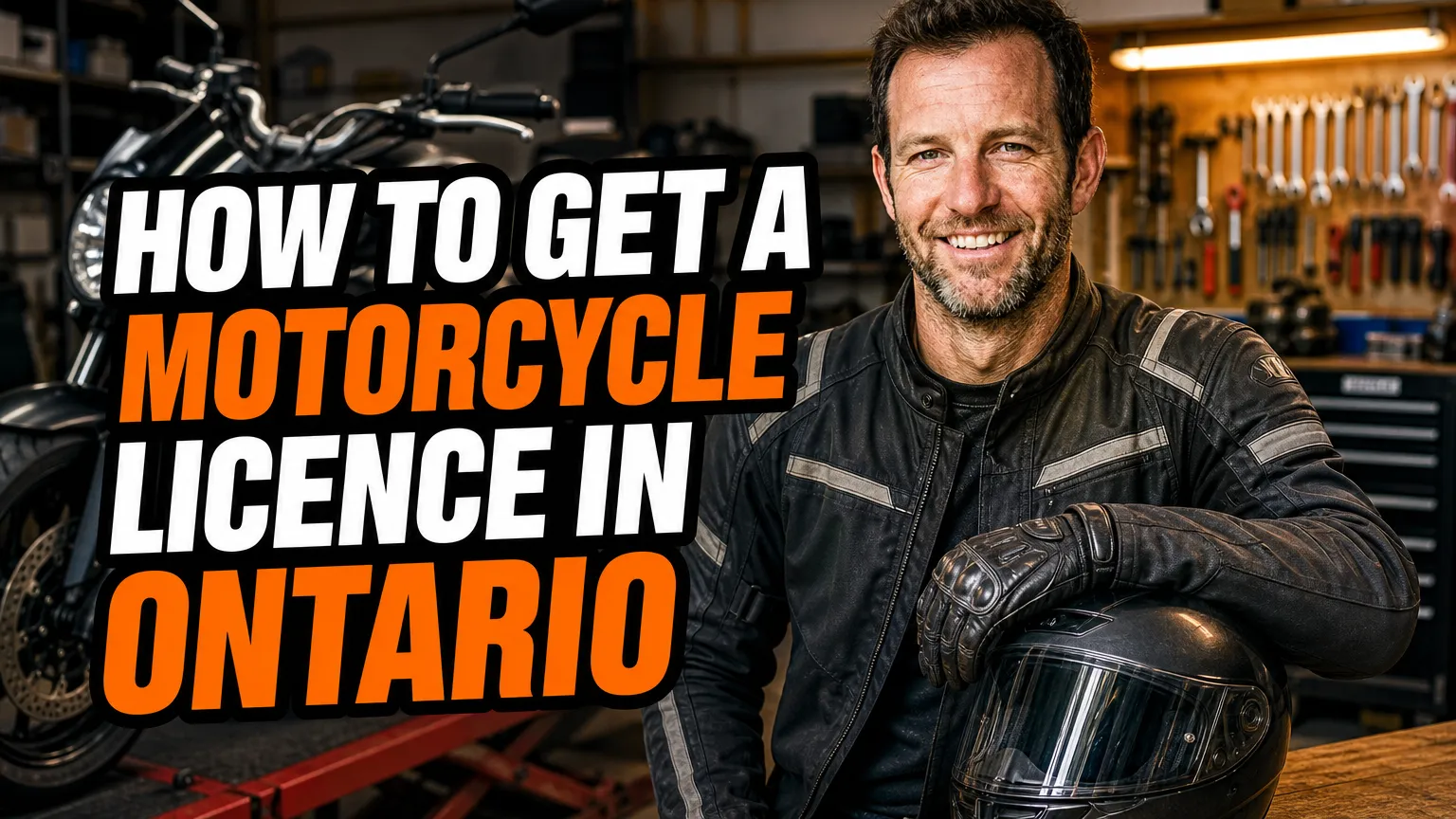
Getting my motorcycle licence in Ontario was less intimidating once I understood the steps: start with an M1, graduate to an M2, then pass the test for a full M licence. The process gives new riders time to learn, practise and build confidence before riding without novice-stage restrictions.
In this guide, I’ll walk you through each stage, explain what I’d prepare for the tests, and share the practical details I wish I’d known before getting started. Licence rules and fees can change, so I always recommend checking the latest information with Ontario and DriveTest before booking.
- I start with the M1 knowledge and vision tests at a DriveTest centre.
- I use the M1 stage to practise within its restrictions, then move to M2 by road test or approved training.
- I take the full M test after the required M2 waiting period: usually 22 months, or 18 months with an approved course.
- I check current fees, test availability and licence rules before making plans.
How Ontario’s motorcycle licensing stages work
Ontario uses graduated licensing for motorcycles. I think of it as a three-step progression: M1 is the entry stage, M2 is the intermediate stage, and M is the full motorcycle licence. Each stage comes with different conditions, so I pay attention to which rules apply to me at every point.
The process begins with an M1 knowledge test and vision test. After that, I can work toward M2 by passing a road test or successfully completing an approved motorcycle safety course. To graduate from M2 to a full M, I need to meet the waiting-period requirements and pass another road test.
Who can apply?
I can apply for an M1 licence when I’m at least 16 years old. I need to pass the required vision screening and motorcycle knowledge test, and I must provide acceptable identification and pay the applicable fees at a DriveTest centre.
If I already hold a valid Ontario driver’s licence, I still need to complete the motorcycle-specific licensing steps. My existing driving experience may be useful on the road, but it doesn’t replace the M1 knowledge test or the motorcycle tests required to progress.
Step one: Prepare for and pass the M1 test
Before I visit DriveTest, I study the official Ontario motorcycle handbook. I use it to review road signs, safe riding practices, lane positioning, protective equipment and the rules that apply specifically to motorcycles. I find that reading the material in short sessions works better than trying to cram everything the night before.
The M1 knowledge test is multiple choice. I also need to pass a vision test as part of the application process. Test formats and fees can change, so I check the current DriveTest instructions before going, including whether I need an appointment and what identification to bring.
What I focus on while studying
I don’t just memorise answers. I try to understand why a rule exists, since that makes it easier to remember and more useful once I’m riding. I give extra attention to motorcycle-specific hazards, such as how road surfaces, weather and visibility can affect control and stopping distance.
- I review the motorcycle handbook and make notes on unfamiliar rules.
- I practise sample questions if they’re available from a reliable source.
- I check that my identification meets the current requirements.
- I leave enough time for the visit instead of arriving in a rush.
When I pass the required tests, I receive an M1 licence. That’s an important first milestone, but I treat it as permission to continue the learning process, not as a signal that I’m ready for every road or condition.
Step two: Ride within the M1 restrictions
The M1 stage is temporary. It is generally valid for 90 days, and I need to plan ahead because I can’t hold it indefinitely while I decide what to do next. I can usually take the M2 road test after holding M1 for at least 60 days, which gives me a window to practise and book the next step.
While I’m riding with an M1, I follow the novice-stage restrictions carefully. These include riding only during permitted daylight hours, keeping my blood alcohol level at zero, not carrying a passenger, and staying off 400-series highways and other high-speed expressways. I confirm the current conditions with Ontario before I ride, since restrictions matter and can carry serious consequences.
How I make the M1 period count
I use this stage to build steady habits in lower-pressure settings. I practise smooth starts and stops, controlled turns, shoulder checks and keeping a safe following distance. I also make a point of checking the weather and road surface before a ride, because rain, gravel and cold tyres can make a familiar route feel very different.
If I’m new to motorcycles, I don’t rely on a friend’s advice alone. I consider professional instruction, especially before practising in traffic. A trained instructor can spot habits I might not notice and help me prepare for the exact skills I’ll need for the next stage.
Step three: Move from M1 to M2
I have two main routes to an M2. I can book and pass the M2 road test, or I can complete an approved motorcycle safety course that qualifies me to move to M2. I check that a course is officially approved before paying, because not every riding class necessarily counts toward licensing.
Option one: Take the M2 road test
If I choose the road test, I book through DriveTest and prepare to demonstrate safe motorcycle handling and decision-making. The specific test format, booking availability and requirements can change, so I review the latest instructions before test day rather than relying on old advice from another rider.
I also confirm what motorcycle I’m allowed to use and what condition it must be in. I make sure the bike is properly insured and roadworthy, and I arrive with the required documents and protective equipment. Showing up prepared gives me one less thing to worry about when it’s time to ride.
Option two: Complete an approved safety course
I consider an approved safety course a strong choice if I want structured practice and feedback. Courses typically combine instruction with practical riding exercises, although schedules, equipment requirements and course details vary by provider. I check exactly what’s included before enrolling.
Completing an approved course can qualify me for an M2 without taking the regular M2 road test. It can also shorten the M2 waiting period before the full M test. I confirm how the course completion is reported and what proof I need to provide, so there’s no uncertainty when I update my licence.
How I choose a course
I compare the provider’s approval status, schedule, location and total cost. I also ask what I need to bring, whether a motorcycle and helmet are supplied, and what happens if the weather affects the practical sessions. For me, clear answers to those questions are part of choosing a course that fits.
A course isn’t a substitute for practice, but I find it can make practice more focused. I’d rather learn a technique correctly from the start than spend time trying to undo a risky habit later.
Step four: Build experience with an M2
After I move to M2, I continue learning under the rules for that stage. I can ride in a wider range of situations than I could with M1, but I still need to follow the M2 conditions, including a zero blood alcohol level. I check the current rules so I don’t assume that M2 means every restriction has disappeared.
I use this period to expand my experience gradually. I practise different routes and traffic conditions when I feel ready, and I avoid treating a longer licence stage as a reason to rush. Good judgement, smooth control and consistent observation matter just as much after the test as they did before it.
When I can take the full M test
In general, I can take the M2 exit test after holding M2 for 22 months. If I complete an approved motorcycle safety course, the waiting period can be reduced to 18 months. I verify that my course qualifies and that my licence history meets the requirements before I book.
I keep an eye on the expiry date for my novice licence. The graduated licensing process has a time limit, so I don’t leave the M test until the last minute. If a licence expires before I finish the process, I may have to restart or meet additional requirements, depending on my circumstances.
Step five: Pass the M2 exit test
The M2 exit test is the final road test on the path to a full M licence. I prepare by reviewing the current DriveTest test requirements, checking my motorcycle and practising the skills I’ll be expected to demonstrate. I book early when possible, since appointment availability can vary by location and season.
For my preparation, I focus on being predictable and controlled rather than trying to look fast or overly confident. I practise observation, positioning, turns, stops and communication with other road users. I also make sure I understand the test-day instructions, so I can concentrate on riding safely instead of sorting out paperwork at the last minute.
When I pass and complete the required licensing steps, I can move to a full M licence. I still treat every ride as a chance to keep learning. A full licence is a milestone, not a guarantee that every road condition or situation will be easy.
Costs, timing and test-day planning
The total cost depends on the current government fees, whether I take a training course, and whether I need to book more than one test. Since fees and service details can change, I check the current amounts directly with DriveTest and the course provider instead of budgeting from an old online post.
I also plan for the time involved. I need to fit in the M1 stage, arrange my M2 route, complete the M2 waiting period and book the final test. A course may affect the timeline, but I still check the exact eligibility dates that apply to me.
My practical checklist
- I study the Ontario motorcycle handbook before attempting the M1 test.
- I confirm identification, fees and appointment details before visiting DriveTest.
- I check the current restrictions for my licence stage before every ride.
- I verify that a safety course is approved before enrolling.
- I keep track of waiting periods, test bookings and licence expiry dates.
- I inspect my motorcycle and bring the required documents and protective gear.
Common mistakes I try to avoid
One mistake is treating the M1 like a full licence. The M1 restrictions are specific, and overlooking a time limit, passenger rule or highway restriction can put me and other road users at risk. I read the conditions carefully and don’t rely on assumptions based on someone else’s experience.
Another is booking a course without checking whether it counts toward licensing. I confirm approval and ask how completion is recorded before I pay. If my goal is to shorten the M2 waiting period or use a course instead of the M2 road test, those details matter.
I also avoid leaving test preparation until the last few days. Practising gradually gives me a better chance to develop consistent skills and notice what I still need to work on. If I feel unsure about a manoeuvre, I get qualified instruction rather than hoping it will sort itself out on test day.
My approach to getting licensed with confidence
When I break the process into stages, getting a motorcycle licence in Ontario feels manageable: study for M1, ride within its restrictions, earn M2 through a test or approved course, and then complete the M2 exit requirements. Each stage gives me a chance to improve before taking on more responsibility.
I’d focus on learning safely, keeping track of the dates and checking official requirements whenever I’m unsure. The licence gets me onto the road legally, but thoughtful practice is what helps me become a more confident and responsible rider.
Frequently Asked Questions
How old do I have to be to get a motorcycle licence in Ontario?
You must be at least 16 to apply for an M1 licence in Ontario.
How long do I have to wait before taking the M2 test?
You can take the M2 road test after holding your M1 for at least 60 days. Your M1 is generally valid for 90 days.
Can an approved motorcycle course help me get licensed faster?
Yes. An approved course can qualify you for an M2 without the regular road test, and it can reduce the M2 waiting period before your full M test.
How long does it take to get a full M licence in Ontario?
Most riders can take the M test after holding an M2 for 22 months, or after 18 months if they complete an approved motorcycle safety course.

Related Articles

Your Roadmap to Riding: Getting a Motorcycle Licence in Alberta
Learn how I’d approach Alberta’s motorcycle licence process, from eligibility and the Class 6 knowledge test to supervised practice, road…
Jake Miller
11 min read
Your Roadmap to Riding Legally: UK Motorcycle Licence Steps, Tests and Age Rules
Learn the UK motorcycle licence route, from CBT and theory to A1, A2 or unrestricted A. I explain age rules,…
Jake Miller
10 min read

Utah Motorcycle License Costs: Fees, Training, and What I’d Budget
Find Utah motorcycle endorsement fees, permit and training costs, testing options, and realistic total budgets, plus the steps I’d take…
Jake Miller
10 min read